
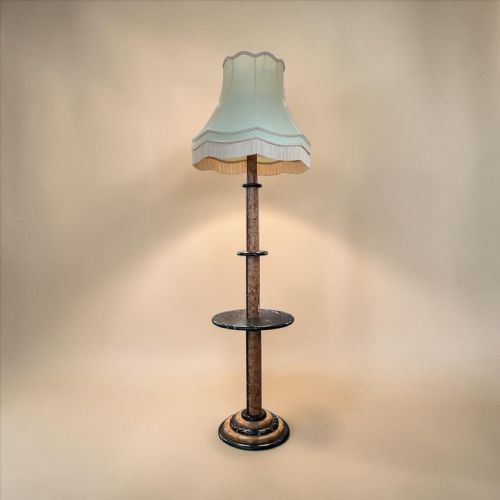
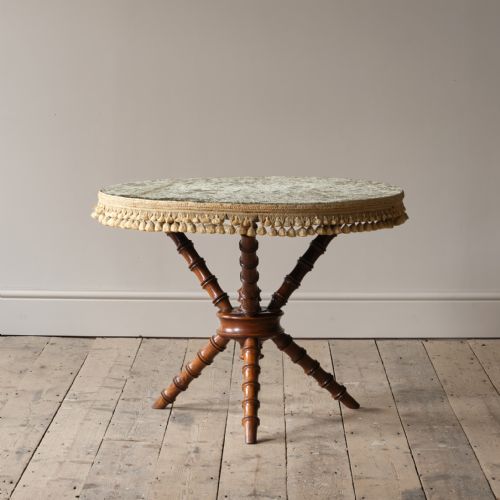
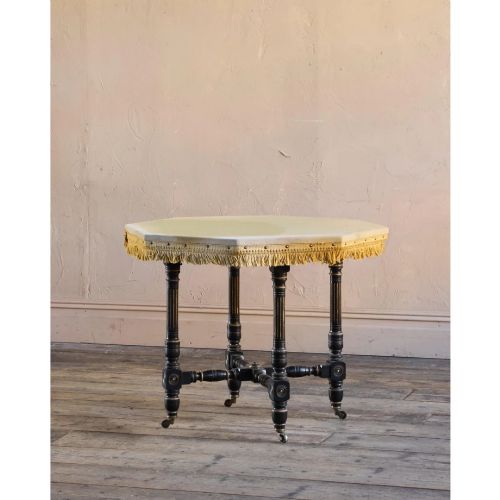
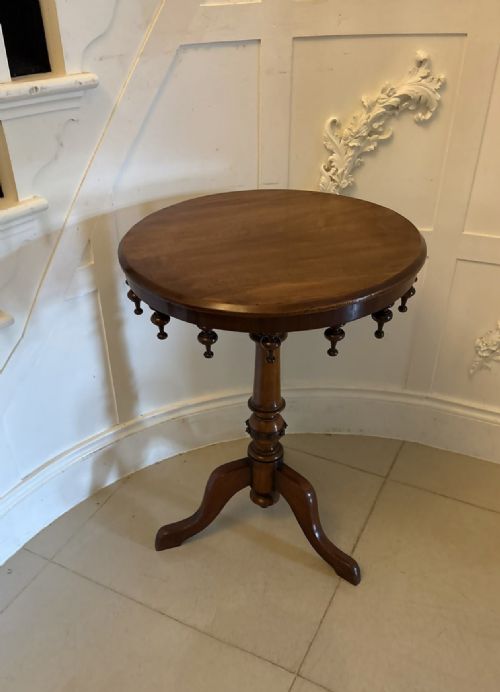


Antique Fringe Side Table
An antique fringe side table brings textured fabric and period wood or ebonised frames together to create a distinctive, tactile surface for a room.
Antique Fringe Side Table
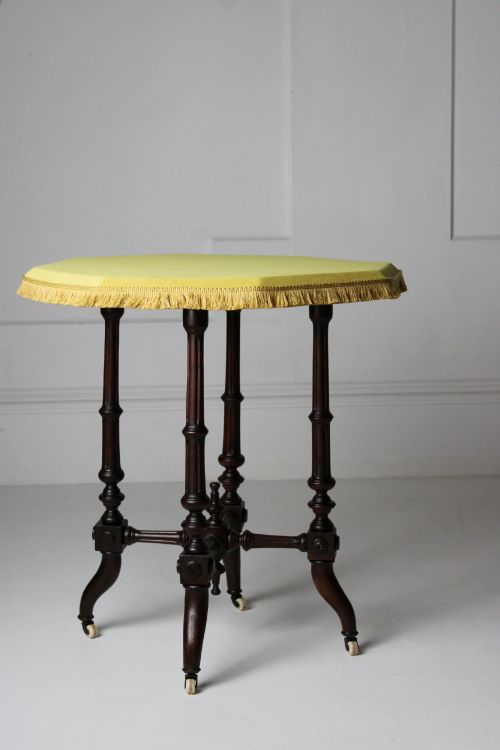
An antique fringe side table encompasses small occasional, card, and gypsy tables produced across the nineteenth century and into the early twentieth century. These pieces often incorporate soft textiles, velvet, and fringed detailing alongside wooden, bamboo-simulated, or ebonised frames.
The versions most commonly met on this page span Victorian and Edwardian eras, featuring stylistic influences ranging from the Aesthetic Movement to classical revivals. Buyers encounter compact occasional forms designed to sit beside seating or within smaller reception spaces.
Materials and construction
Makers utilised a combination of timber, such as mahogany, walnut, and ebonised wood, alongside structural metals including brass and gilt finishes. Fabric and velvet formed key components for draped surfaces and trims.
Construction techniques balanced sturdy joinery with decorative elements like bobbin turnings, simulated bamboo, and applied brass or ormolu mounts to achieve distinct period styles.
Listings feature items from the nineteenth century, the Victorian and Edwardian periods, utilising materials such as velvet, brass, mahogany, and ebonised wood.
Evaluating quality and design
Quality reveals itself in the integrity of the timber frame, the crispness of turning details like bobbin work, and the weight of brass or gilt mounts. Superior examples demonstrate thoughtful proportion and harmonious material pairing.
The handling of upholstered or draped elements also distinguishes better pieces, where fabric choice and fringe application complement the structural lines of the table rather than concealing poor joinery.
Hindley And Sons·John Taylor Edinburgh
The Antique Fringe Side Table Glossary
- Gypsy table
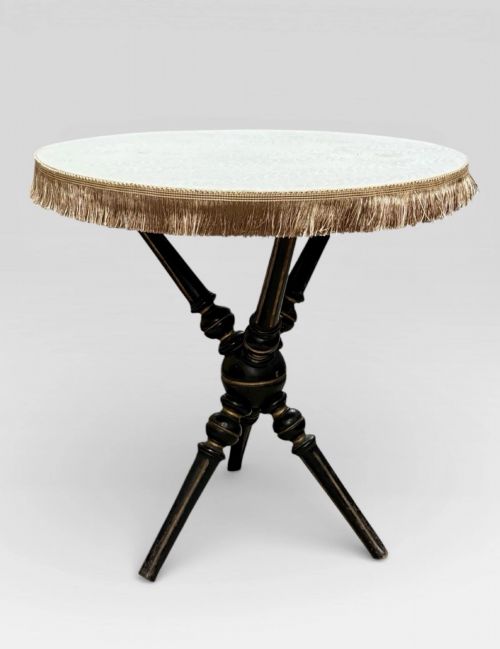
- A lightweight occasional table traditionally featuring three wooden legs and a draped fabric top often finished with fringe. These pieces gained popularity during the Victorian aesthetic movement.
- Ebonised wood
- Timber treated with a chemical or stain to resemble expensive ebony. It provides a dense black finish seen frequently on nineteenth-century decorative furniture.
- Bobbin turning
- A method of woodturning that produces a series of spherical or spool-like shapes along the length of a leg or stretcher. This decorative technique appears on numerous Victorian tables.
- Aesthetic movement
- A late nineteenth-century design ethos prioritising visual beauty over narrative or moral function. It encouraged diverse influences, including Japanese and classical motifs, in furniture and decorative arts.
Antique Fringe Side Table: Frequently Asked Questions
What is a gypsy side table?
A gypsy side table is a small, portable occasional table featuring a fabric-covered top, often trimmed with fringe, supported by three slender legs. These tables became fashionable in British interiors during the late nineteenth century.
They were designed for flexibility within reception rooms, serving as display surfaces for small decorative objects rather than heavy use.
How do I date an ebonised table?
Dating an ebonised table involves examining the underlying timber, joinery methods, and secondary woods used in the construction. Pieces from the nineteenth century often display hand-cut joints and distinct turning styles.
Stylistic cues such as aesthetic movement motifs or bobbin turnings further help narrow the period of manufacture to the Victorian era.
Where were fringe tables placed?
Fringe tables typically stood beside armchairs, in corners, or as central accents in Victorian and Edwardian drawing rooms. Their modest scale allowed them to fit easily into smaller domestic spaces.
They functioned primarily as decorative surfaces for holding lamps, books, or small ornaments.
What woods were used for these tables?
Makers utilised a variety of timbers, including mahogany, walnut, and turned woods finished with ebonisation to mimic ebony. Some pieces also incorporated simulated bamboo elements.
The choice of wood depended on the prevailing style, with aesthetic movement and classical revival pieces demanding specific finishes.