


Victorian Fringe Table
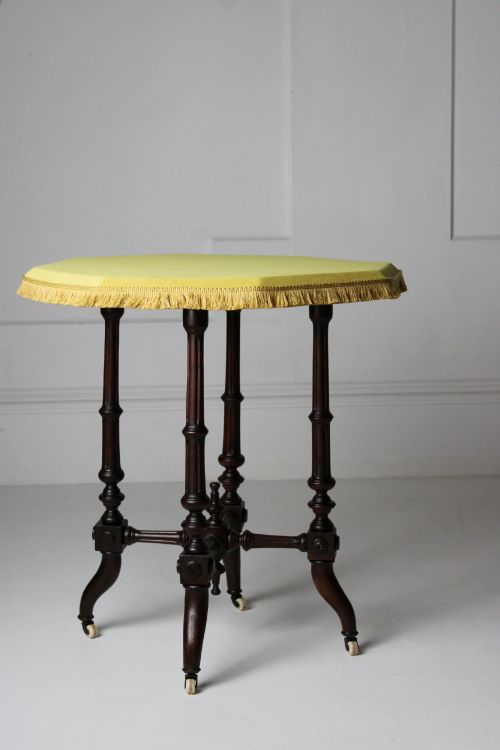
A victorian fringe table brings tactile texture and period charm to a room, combining practical display space with decorative drapery.
Victorian Fringe Table
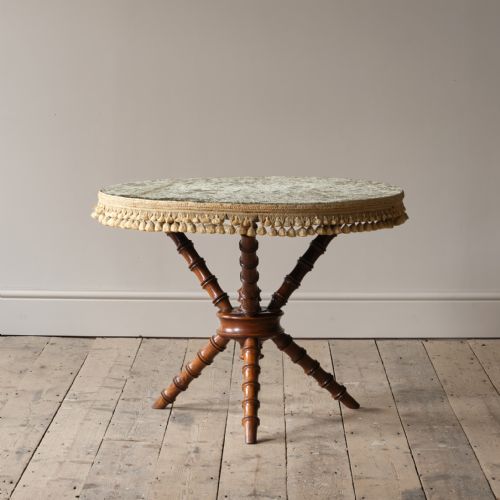
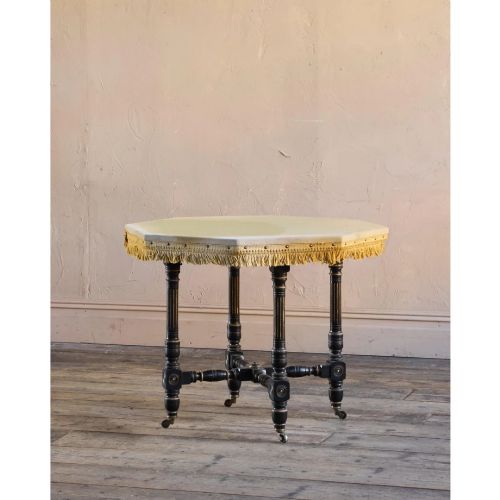
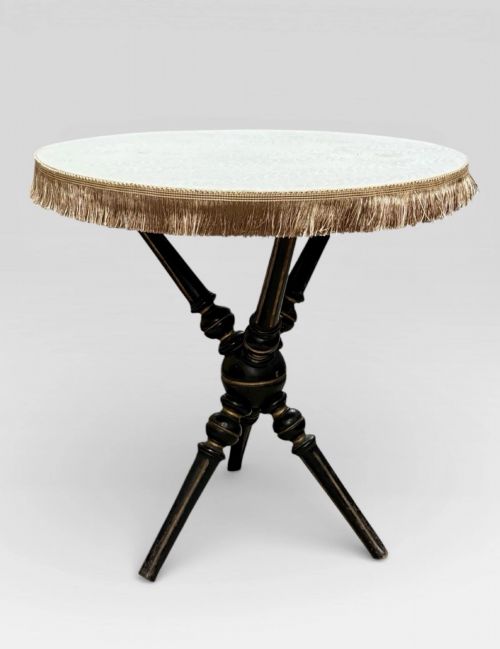
A victorian fringe table typically appears as a small occasional, side, or centre table designed for display in nineteenth-century interiors. These pieces often feature specific stylistic treatments such as the characteristic gypsy table form.
The selection here encompasses items from the Victorian and Edwardian eras, alongside related nineteenth-century designs. You will encounter variations spanning styles from Aesthetic Movement and Regency to Gothic and Rococo Revivals.
Makers such as Hindley and Sons and John Taylor of Edinburgh demonstrate the range of workshop production. The forms vary from simple tripod frames to elaborate tables paired with antique velvet.
Materials and Construction
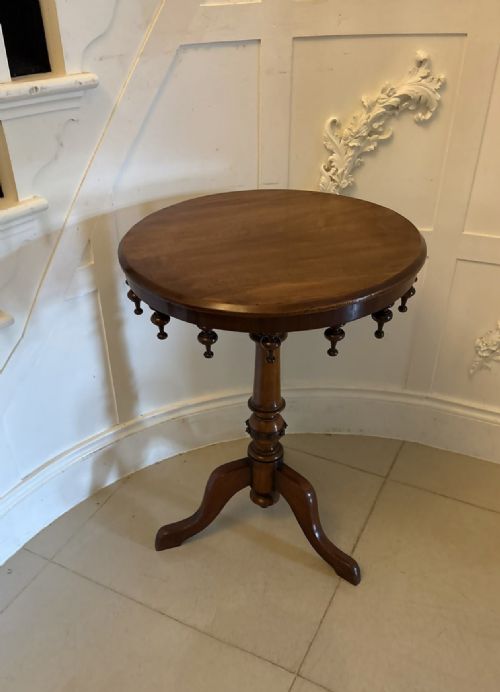
Makers utilised woods such as walnut alongside simulated bamboo to construct the primary frames of these tables. Gilding, brass elements, and turned wooden components like bobbin galleries frequently appear in the construction.
Surfaces are often finished with textiles including silk and velvet to provide a tactile top layer. Fabric fringes and trims complete the edge ornamentation characteristic of these domestic furnishings.
Listings feature pieces spanning the Victorian, Edwardian, and Regency periods, utilising materials such as walnut, brass, velvet, and silk.
Assessing Quality and Execution
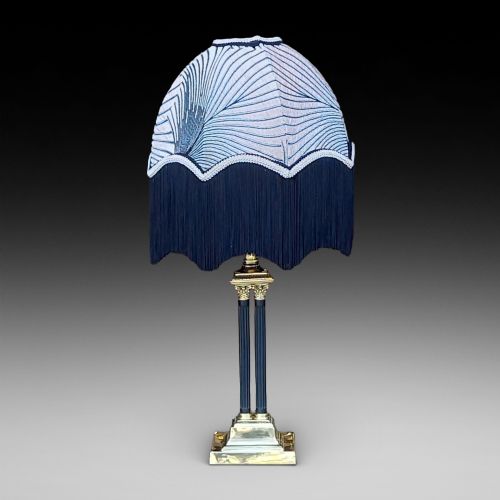
Quality reveals itself in the rigidity of the frame construction and the precision of the woodturning, such as bobbin legs or Corinthian details. Finer examples display superior joinery and more substantial materials like solid walnut or well-cast brass.
The selection of textiles and trimmings also distinguishes higher grades of manufacture. Original fabrics and intact silk or velvet coverings demonstrate better preservation and superior original commissioning.
Hindley and Sons·John Taylor Edinburgh
The Victorian Fringe Table Glossary
- Gypsy table
- A lightweight occasional table featuring a fabric-draped top, often associated with nineteenth-century bohemian interiors. These tables typically have three wooden legs.
- Bobbin gallery
- A raised decorative wooden border around a table top composed of turned spool or bobbin shapes. This feature kept small decorative objects from sliding off.
- Aesthetic movement
- A late nineteenth-century design style emphasising visual and compositional beauty over narrative or moral themes. Furniture from this movement often employs simplified forms and contrasting surface finishes.
- Occasional table
- A small, versatile table designed for intermittent use around a principal room. These pieces served to hold lamps, books, or decorative accessories.
Victorian Fringe Table: Frequently Asked Questions
What is a gypsy table?
A gypsy table is a small occasional table traditionally featuring a draped fabric top and three slender legs. They became popular in the nineteenth century for informal sitting rooms and parlours.
These pieces often utilised textiles like velvet or silk with fringed borders. Their lightweight construction allowed them to be moved easily around the home.
How do I date a Victorian table?
Dating involves examining the timber species, construction methods, and stylistic cues present in the piece. Victorian furniture spans from the mid-nineteenth century to the early twentieth century.
Cross-referencing specific revival styles, such as Gothic or Rococo, helps narrow the decade of manufacture. Maker stamps or labels, where present, provide definitive attribution.
Where should I place an occasional table?
Occasional tables suit placement beside armchairs, in corners, or as central display surfaces in reception rooms. Their compact proportions allow them to fit into spaces where larger furniture would overwhelm the room.
They function well for holding small lamps, decorative objects, or books. The decorative fringe and textile top add warmth and texture to a scheme.
What woods were used in the nineteenth century?
Cabinet makers utilised a variety of timbers including walnut, alongside alternative materials like simulated bamboo. The choice depended on the specific aesthetic movement and the workshop's intended price point.
Surfaces were frequently polished, painted, or gilded to complement the textile elements. Woodturning was commonly employed for legs and gallery rails.