
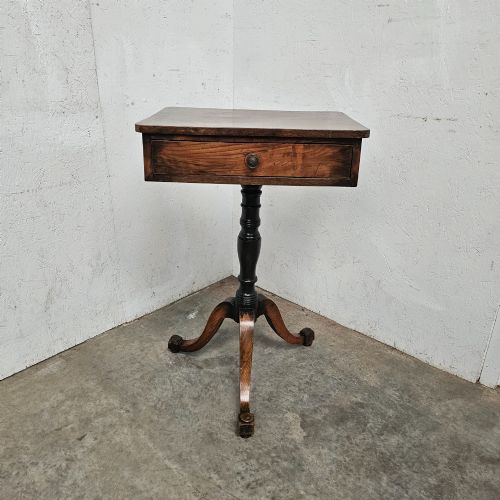
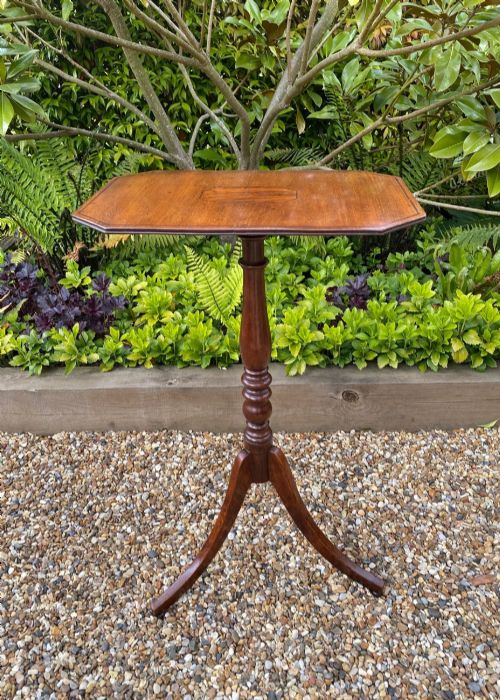
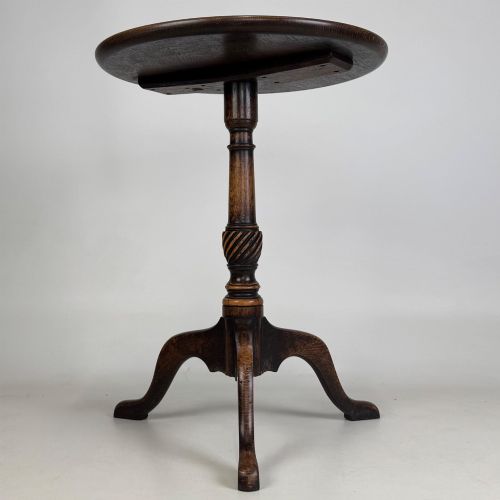
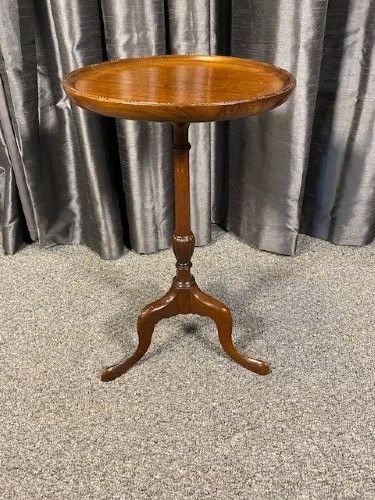

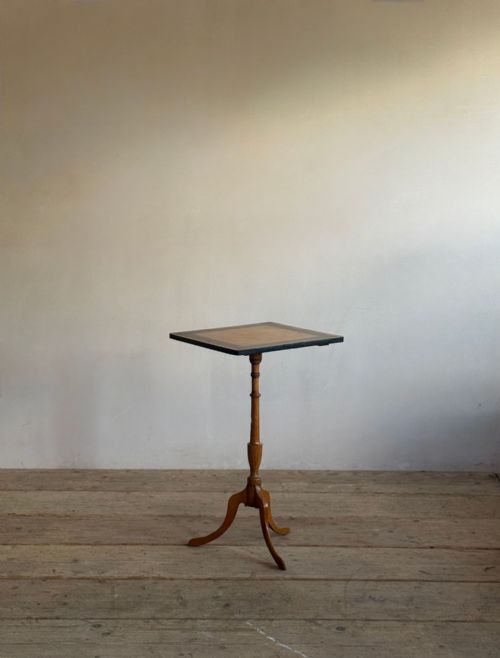
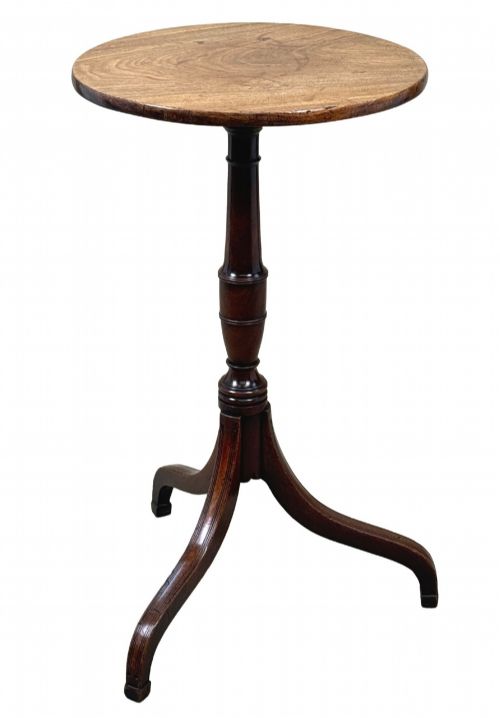
Turned Stem Side Table
A turned stem side table is a stable small surface raised on a central pillar, valued for holding drinks or lamps beside a chair.
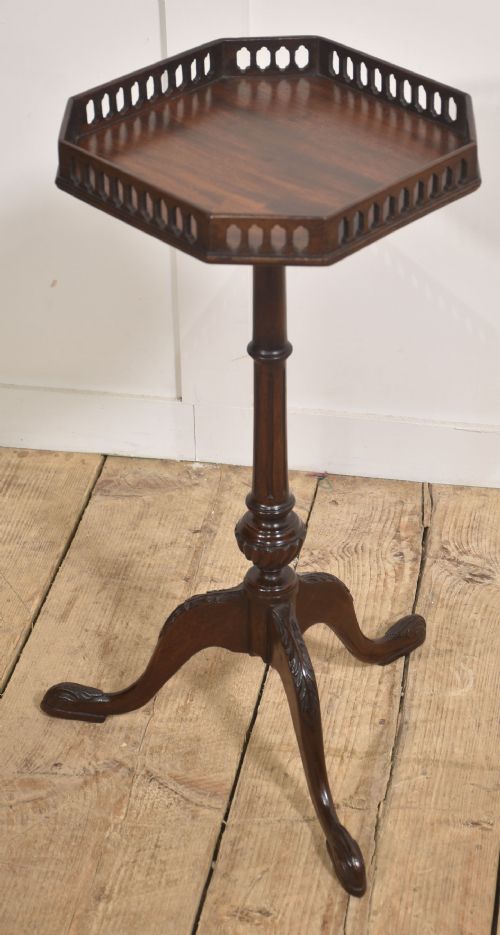
Turned Stem Side Table
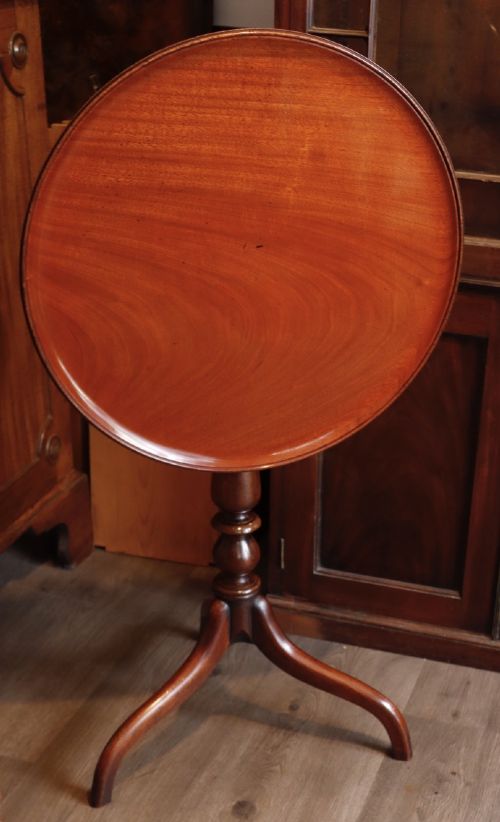
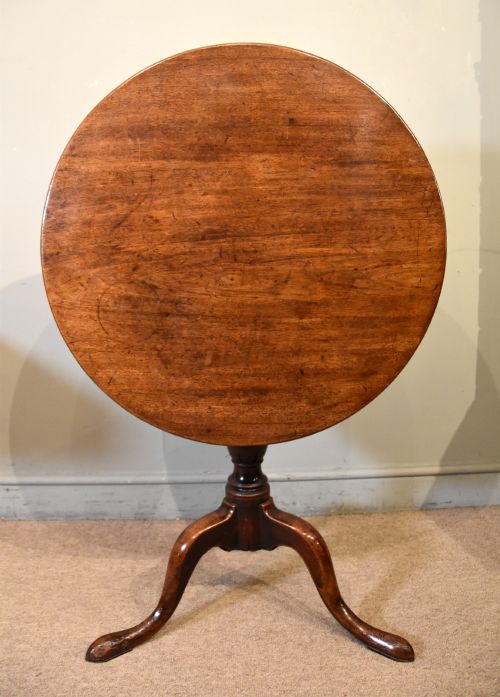
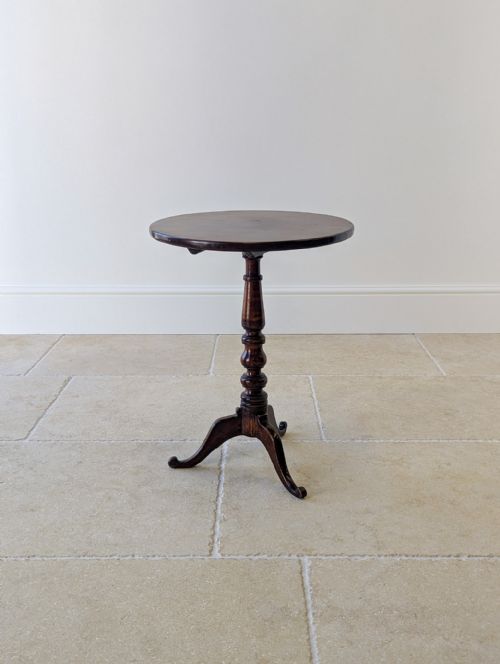
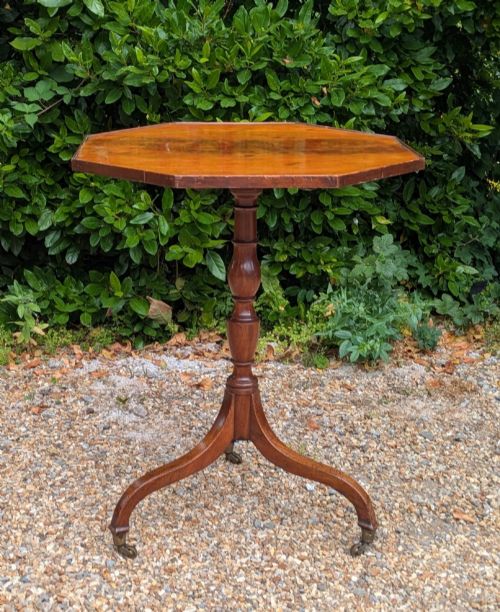
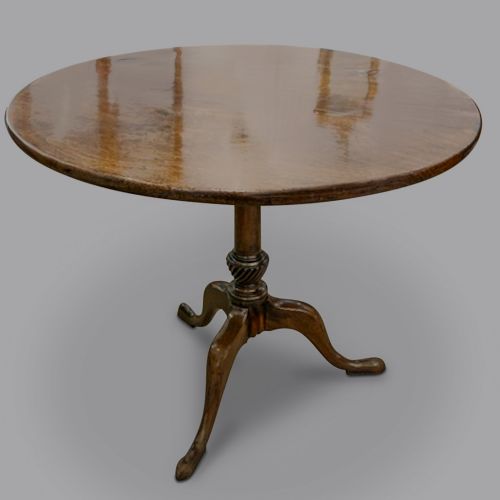
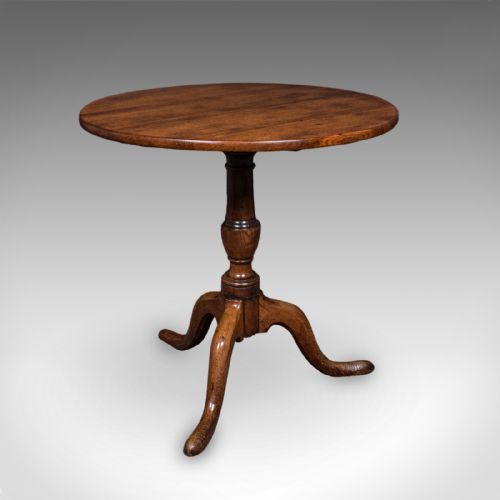
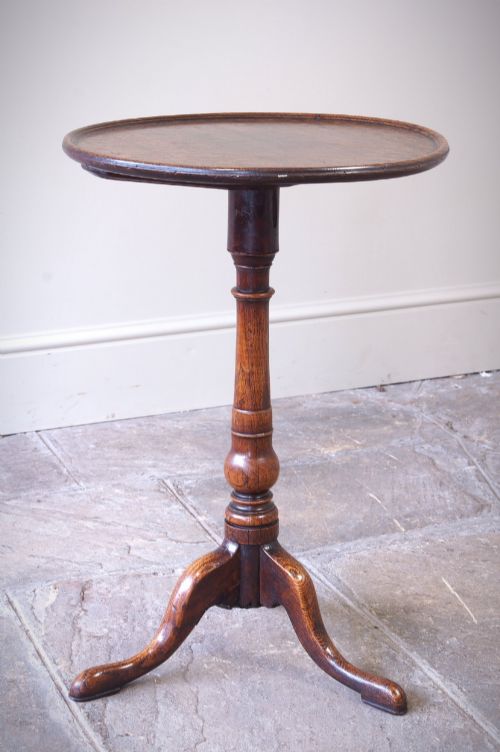
A turned stem side table is a compact form designed to sit neatly beside seating, serving traditionally as a wine table, candle stand, or occasional surface. When you examine this selection, you encounter pieces that rely on a central pedestal rather than four corner legs to support the top.
The versions you meet most frequently on this page belong to the Georgian and Victorian periods, often taking the shape of circular tilt-top tables or small lamp stands. Makers shaped these surfaces from woods like mahogany and oak, adapting them for everyday domestic utility in sitting rooms and parlours.
Makers also produced specialised variants such as kettle stands and miniature pieces, demonstrating the versatility of the central pillar design. Each example offers a manageable footprint, making these tables practical for modern interior placement where floor space is limited.
Materials and construction methods
Makers relied on solid hardwoods such as mahogany, oak, and elm, often selecting figured timber like plum pudding mahogany or fruitwood for the circular tops. These woods were turned on a lathe to create the characteristic central pillar, joined securely to a three-legged tripod base.
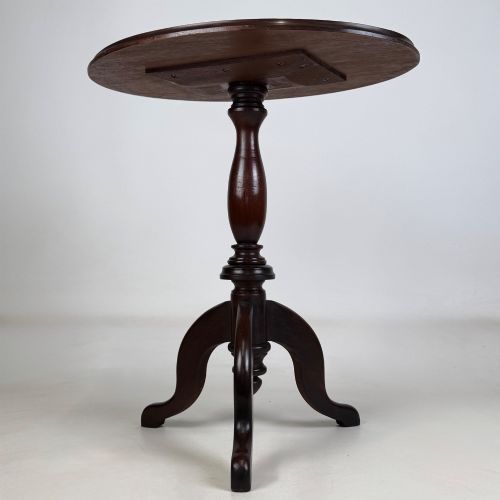
Construction frequently incorporated a birdcage or tilt-top mechanism, allowing the surface to fold vertically when not in use. Joinery techniques such as dovetails and tenons ensured stability despite the slender profile of the pedestal.
Turned Stem Side Table Retail Price Guide 2026
Typical asking prices for turned stem side table among the pieces listed under this phrase on Sellingantiques today, from the lower quarter to the upper quarter. They describe what is for sale here now, not the wider market.
Current listings feature pieces spanning the eighteenth, nineteenth, and early twentieth centuries, utilising mahogany, oak, elm, and yew wood.
Distinctions in craftsmanship
The division between standard and superior pieces rests in the handling of the timber and the precision of the turning on the stem. Finer examples display crisply carved tripod legs and carefully selected wood grain on the table top, whereas simpler utilitarian versions utilise plain elm or beech.
Proportion and balance dictate the success of the form, with better workshops achieving a harmonious relationship between the diameter of the top and the spread of the base. Alterations or later surface decorations can also shift the character of a piece from its original state.
The Turned Stem Side Table Glossary
- Tilt-top
- A tabletop mounted on a hinge mechanism that allows the surface to rotate and lock vertically against the pedestal when stored.
- Tripod base
- A support structure consisting of three shaped legs radiating from the central turned stem to provide stability.
- Dish top
- A circular tabletop with a raised rim carved directly from the solid wood to prevent items from sliding off.
- Birdcage
- A wooden framework beneath the tabletop that allows the surface to both rotate and tilt independently of the central column.
Turned Stem Side Table: Frequently Asked Questions
What rooms suit a turned stem side table?
These compact surfaces fit easily beside armchairs in a sitting room or function as bedside stands in a bedroom.
Their small footprint allows them to occupy tight corners without cluttering the floor space.
How do I identify a tilt-top mechanism?
Look beneath the circular surface for a wooden catch or block that releases the top from the vertical support.
This functional detail was designed to save space when the table was not actively in use.
What is the difference between a wine table and a lamp table?
Wine tables traditionally featured smaller circular tops intended for holding a single glass or bottle during evening gatherings.
Lamp tables often provided slightly broader surfaces to accommodate heavier lighting fixtures or decorative items.
Are these tables sturdy on carpeted floors?
The three-legged tripod base rests firmly on most surfaces, though thick carpets may require careful placement to ensure balance.
The central weight distribution keeps the table stable during normal daily use.