



Turkish Prayer Mat
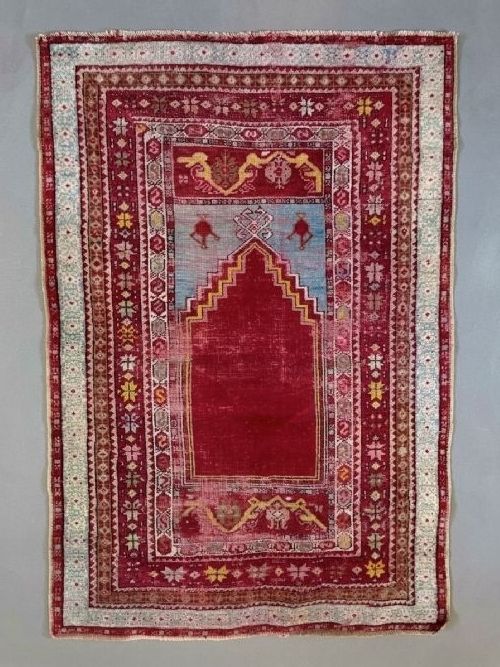
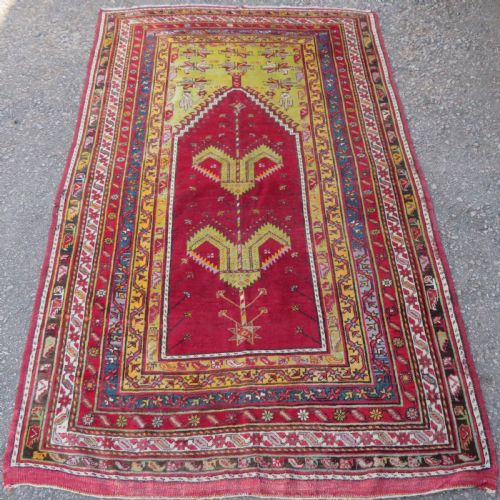
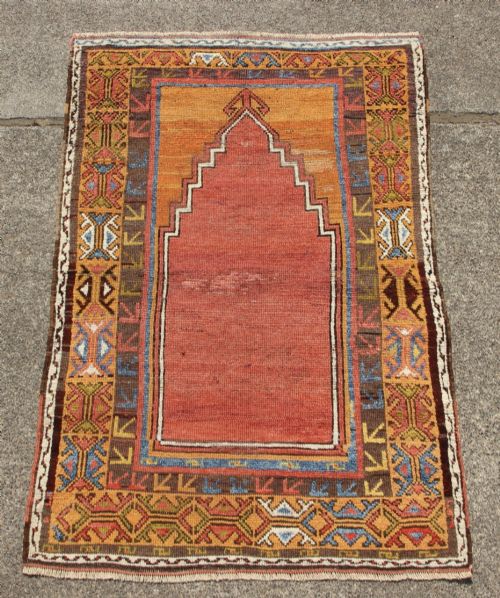
A turkish prayer mat brings centuries of Anatolian tradition into a room through distinctive mihrab arches and geometric motifs.
Turkish Prayer Mat
A turkish prayer mat is a sacred textile designed with a specific directional field terminating in a niche, known as a mihrab, which indicates the direction of prayer. These woven works primarily hail from Anatolian weaving centres and reflect centuries of regional design traditions. Buyers encountering this selection will find formats ranging from village examples to court-influenced compositions.
The material record spans the nineteenth and early twentieth centuries, drawing on historical production centres such as Konya, Ghiordes, Ladik, and Kirsehir. Pieces often feature central architectural arches, columns, or repeating floral elements that identify their specific provenance. Traditional formats function both as devotional objects and as decorative rugs within contemporary interiors.
Materials and Craftsmanship
The construction of these textiles relies on natural materials, predominantly hand-spun wool and cotton, alongside occasional finer silk examples. Weavers utilised sheep's wool for pile and foundation yarns, imparting a durable yet supple handle to village and regional pieces. Cotton frequently serves as a sturdy warp and weft foundation for urban workshop rugs.
Colour derives from traditional natural and vegetable dyes, which yield deep, variegated tones that age gracefully over generations. Dyers extracted hues from local plants and minerals, creating rich grounds of ivory, red, and blue. Each knot secures the pile firmly to the foundation, resulting in a dense textile structure.
Turkish Prayer Mat Retail Price Guide 2026
Typical asking prices for turkish prayer mat among the pieces listed under this phrase on Sellingantiques today, from the lower quarter to the upper quarter. They describe what is for sale here now, not the wider market.
Materials across current items include hand-spun wool, cotton, silk, and natural vegetable dyes applied to foundational prayer formats.
Evaluating Quality and Expression
The distinction between ordinary and exceptional examples rests upon the clarity of the design and the saturation of the dye palette. Finer pieces demonstrate superior knot density and precision in rendering the architectural details of the mihrab. Superior colour consistency and the use of vibrant natural dyes elevate the visual harmony of the weaving.
Artistic execution within regional village workshops also dictates the standing of a piece, where idiosyncratic tribal interpretations command attention. The handling of secondary borders and guard stripes reveals the weaver's mastery over proportion and scale. Original side cord finishes and preserved end kelims further distinguish well-survived specimens.
Tuduc
The Turkish Prayer Mat Glossary
- Mihrab
- The arched niche on a prayer rug that symbolises the direction of Mecca, orienting the worshipper during devotion. Its shape often serves as the primary diagnostic feature for identifying specific Anatolian weaving towns.
- Ghiordes
- A historic town in West Anatolia renowned for classical prayer rug designs featuring tiered arches and floral motifs. Pieces attributed to this tradition display refined knotting and delicate colour palettes.
- Kirsehir
- A Central Anatolian centre famous for distinctive prayer rugs with stylised botanical motifs and saturated grounds. The local palette frequently incorporates contrasting shades of yellow, red, and blue.
- Konya
- A major Anatolian region producing village and workshop prayer rugs characterised by rich field colours and bold geometric elements. These weavings often showcase ivory or deeply saturated primary grounds.
- Kilim
- A flat-woven textile produced without a pile, occasionally utilised for prayer formats in regional Anatolian traditions. The technique creates a crisp graphic pattern through interlocking horizontal weft threads.
Turkish Prayer Mat: Frequently Asked Questions
How do I identify a Ghiordes rug?
Ghiordes pieces typically display a characteristic tiered arch within the mihrab, often flanked by columns and floral borders. Their refined construction separates them from bolder village weavings.
Look for classical Ottoman design influences and a sophisticated handling of natural dye palettes. These structural cues point directly to the West Anatolian tradition.
How should I care for a historic rug?
Protect antique textiles by placing them in low-traffic areas away from direct, strong sunlight to preserve natural dyes. Regular gentle vacuuming without a beater bar removes trapped dust from the pile.
Rotate the piece periodically to ensure even wear across the surface. Professional textile cleaning should be undertaken sparingly by specialists in historic rugs.
Can I use these mats on the floor?
These textiles function effectively as floor coverings in light-traffic spaces when paired with a breathable, high-quality underlay. The robust wool construction handles gentle daily footfall while adding warmth and historical character to a room.
Alternatively, many collectors choose to mount exceptional or fragile examples on walls as textile art. Wall display prevents physical wear and showcases the detailed iconography of the mihrab.
What distinguishes village rugs from workshop pieces?
Village weavings display spontaneous, geometric interpretations of traditional motifs created by independent makers using local materials. Their designs possess a charming asymmetry and bold use of colour.
Workshop pieces from centres like Kayseri or Ghiordes exhibit greater symmetry, finer knot counts, and court-influenced floral patterns. Both styles offer distinct insights into historical Anatolian textile production.