





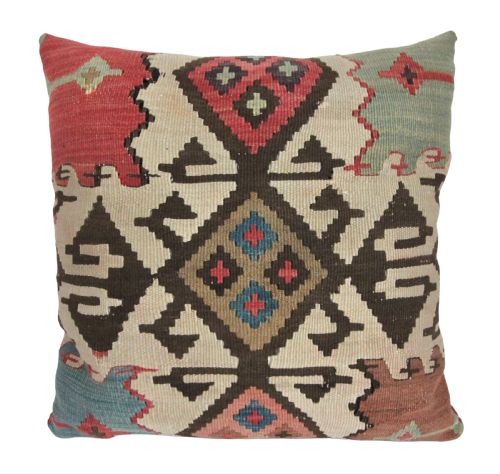
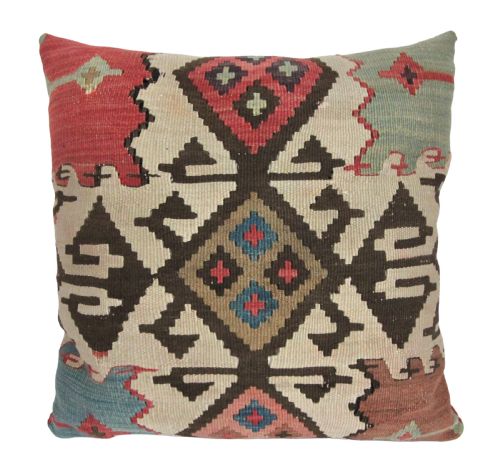


Turkish Kilim Cushion
These turkish kilim cushion pieces are repurposed tribal flatweaves bringing rich Anatolian texture and earthy wool warmth to modern seating.

Turkish Kilim Cushion
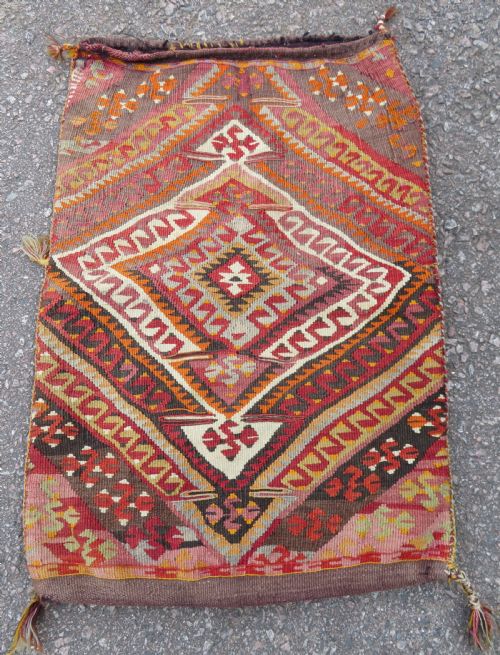
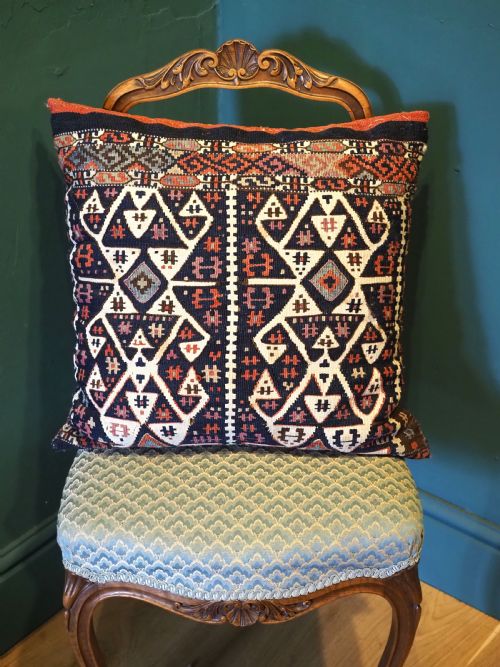
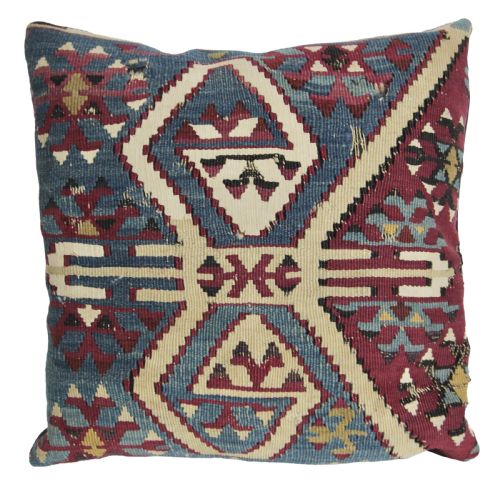
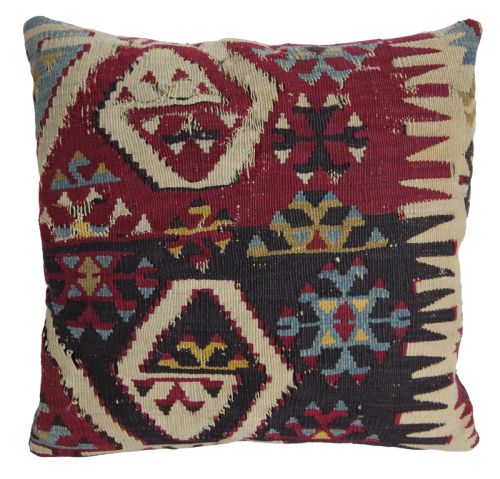
When you search for a turkish kilim cushion, you are looking at repurposed hand-woven flatweaves originating from Anatolian tribal and nomadic traditions. The pieces listed here span the mid-nineteenth century to the early twentieth century, taking the form of throw cushions and converted saddle bags or bag faces.
How they were made
These cushions are constructed from traditional flatwoven textiles made entirely of wool and cotton. Artisans used hand-woven techniques to create the original tribal bag faces and flatweaves before they were subsequently adapted into cushions.
The materials reflect traditional Anatolian methods, relying on durable wool yarns for the patterned face and sturdy cotton structural elements. This combination ensured the original bags could withstand daily nomadic use, making them robust enough for modern upholstery.
Many a nomadic horse's saddle bag now spends its retirement propping up lower backs on modern sofas.
What varies in quality
Quality in these cushions rests upon the integrity and fineness of the original hand-woven textile. Pieces derived from older Anatolian tribal bag faces often display superior tightness of weave and more complex geometric patterning.
The distinction between standard examples and the finer pieces lies in the preservation of the wool pile and the clarity of the tribal motifs. Condition and authenticity of the nineteenth-century flatweave heavily influence the character of each finished cushion.
The Turkish Kilim Cushion Glossary
- Kilim
- A flatwoven carpet or rug produced in countries of the former Ottoman Empire, Persia and Central Asia. These textiles are made by tightly interweaving warp and weft strands without producing a pile.
- Juval
- A large tent bag made by nomadic tribes for storage and transport. They feature intricate tribal designs that often find new life as decorative cushions.
- Anatolian
- Pertaining to the peninsula of Asia Minor that forms the major portion of modern Turkey. This region is renowned for its rich history of nomadic and tribal weaving.
- Malatya
- A city and province in eastern Turkey associated with distinct regional weaving styles. Malatya pieces frequently exhibit bold tribal motifs and specific colour palettes.
Turkish Kilim Cushion: Frequently Asked Questions
What is a turkish kilim cushion made from?
These cushions are constructed from traditional hand-woven flatweaves utilising wool and cotton materials.
The textiles originate from nineteenth and early twentieth-century Anatolian tribal pieces and repurposed saddle bags.
How old are these kilim cushions?
The pieces listed on this page date from the mid-nineteenth century through to the early twentieth century.
Specific production dates span from eighteen-fifty up to nineteen-twenty according to the available evidence.
Where do these cushions originate?
They originate from Turkey, drawing upon traditional Anatolian, tribal and nomadic weaving practices.
Specific regional styles represented include Malatya and Kurdish traditions.
How should I live with a kilim cushion?
You can use them as throw cushions or decorative pillows to add texture and history to seating areas.
Their robust wool construction makes them suitable for everyday interior use while retaining their antique character.