



Tudor Wooden Chest
A tudor wooden chest is a heavy storage piece built from oak or walnut, offering rugged utility and historic character for any room.
Tudor Wooden Chest
When you search for a tudor wooden chest, you enter a domain of solid oak storage built for security and utility in sixteenth-century households. These sturdy trunks and coffers served multiple domestic purposes, from storing precious linens to housing household documents.
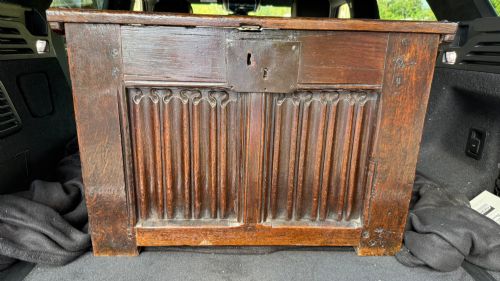
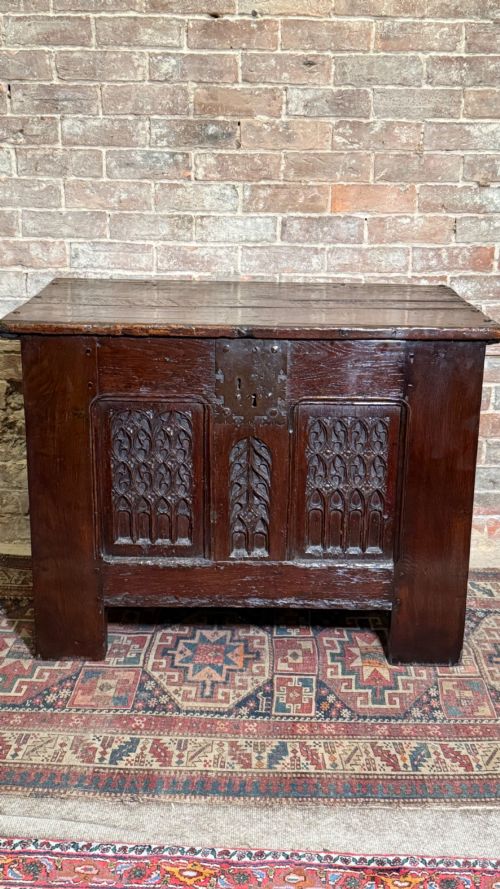
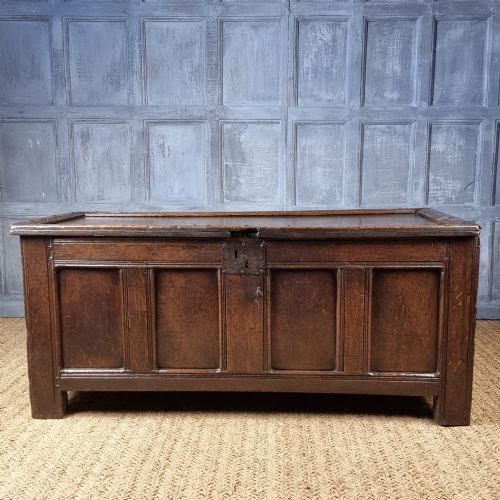
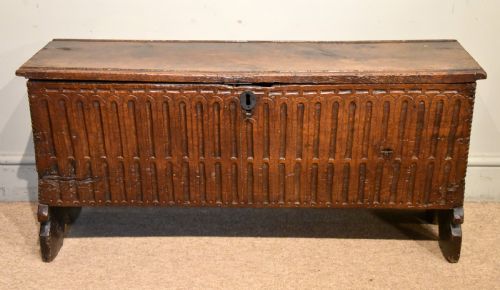
You are most likely to encounter robust plank coffers and carved pieces dating from the sixteenth century, alongside later revival iterations. The selection ranges from plain boarded constructions to intricately carved examples bearing linenfold panels or fluted decoration.
Beyond basic storage boxes, the inventory includes specialised forms such as long sword chests and iron-bound coffers designed for extra security. Timbers like oak and walnut dominate, occasionally complemented by inlaid wood or wrought iron reinforcement.
How they were made
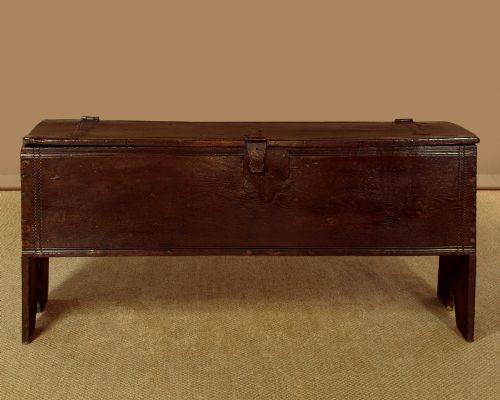
Carpenters constructed these heavy vessels primarily from native oak, utilising thick planks joined with pegged mortise and tenon joints or simple six-plank assemblies. Blacksmiths provided essential reinforcement through hand-wrought iron hinges, straps, and brackets that secured the lids and corners.
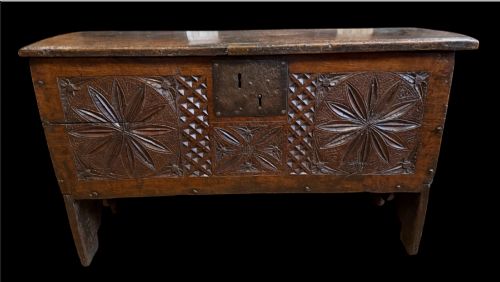
Surface decoration relied on straightforward hand-carving techniques, producing bold fluting, geometric patterns, and distinctive linenfold panels that mimic folded cloth. Master makers selected quarter-sawn timber to ensure stability, allowing the wood to age and darken over centuries.
Listings feature sixteenth-century pieces constructed from solid oak and walnut, incorporating wrought iron and inlaid wood.
What varies in quality
The distinction between standard examples and superior pieces rests on the crispness of the original hand-carving and the integrity of the timber. Untouched surfaces with deep patination command greater appreciation than heavily restored boards.
Structural honesty also defines the hierarchy, where original ironwork and untouched planking elevate a piece far above heavily rebuilt alternatives. The complexity of the joinery, from simple six-plank construction to sophisticated panel framing, marks the maker's skill.
The Tudor Wooden Chest Glossary
- Coffer
- A heavy wooden chest traditionally used for storing valuables and personal belongings. These secure boxes often featured robust iron locks.
- Linenfold
- A carved wooden panel motif popular in the Tudor period that resembles stiffly folded vertical linen. This decorative technique added texture to flat cabinet doors and chest fronts.
- Plank chest
- A primitive storage box constructed from joined solid boards rather than a framed structure. Six-plank examples represent the earliest and simplest form of this tradition.
- Mortise and tenon
- A traditional joint where a projecting tongue fits snugly into a matching cavity to lock timbers together at right angles. This method provided the rigid framework for Elizabethan furniture.
- Quarter-sawn
- Timber cut radially from the growth rings to produce a stable board with distinctive figuring. This method minimised warping in large oak panels.
Tudor Wooden Chest: Frequently Asked Questions
How were these chests used?
These robust vessels served primarily as secure storage for valuable household textiles, documents, and personal belongings in domestic spaces.
Due to their sturdy construction, they also doubled as seating benches or tables within the main hall of a Tudor household.
What wood was used?
Makers relied heavily on native English and Welsh oak for its exceptional strength, durability, and availability.
Walnut and inlaid wood appear occasionally in more ambitious commissions, whilst wrought iron provided essential structural reinforcement.
How do I date a chest?
Dating relies on examining the construction methods, such as primitive board joints versus framed panel assembly, alongside tool marks.
Stylistic indicators like linenfold carving, fluting, and ironwork hardware also help place a piece within the sixteenth century or later revival periods.
Are Tudor chests heavy?
These pieces possess substantial weight due to the use of thick solid oak planks and heavy wrought iron hardware.
Moving them typically requires two people, reflecting their original purpose as fixed architectural furniture rather than portable luggage.