


Carved Walnut Blanket Box
A carved walnut blanket box brings dense timber and centuries of Continental craft directly into a hall or bedroom.
Carved Walnut Blanket Box
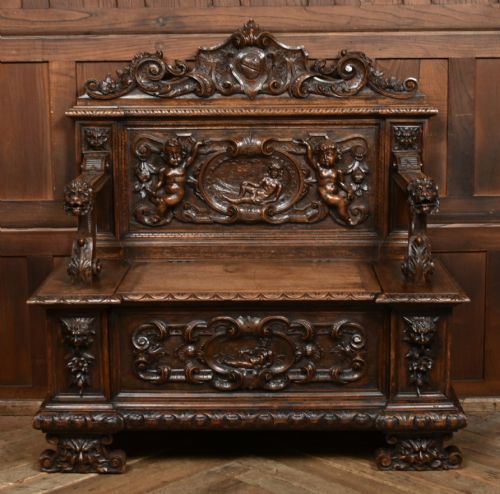
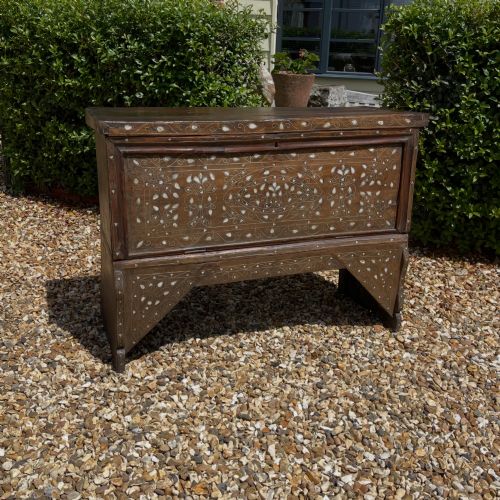
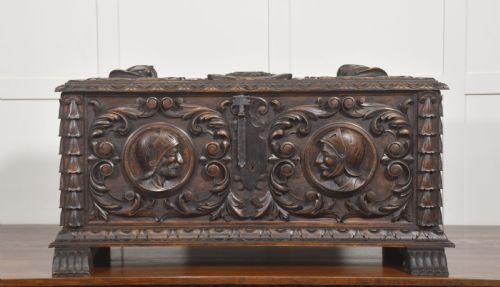
A carved walnut blanket box encompasses heavy timber chests, coffers, and cassapanques originating from sixteenth-century workshops up to the nineteenth century. Buyers searching for a carved walnut blanket box encounter Continental forms including Italian cassones, Spanish Baroque chests, and Syrian inlaid trunks.
The selections span grand Italian Renaissance revival benches with figural medallions alongside simpler eighteenth-century Spanish boxes. Most pieces on offer function as heavy storage containers or hall seating, constructed primarily in walnut with occasional iron or wrought iron hardware.
How they were made
Cabinetmakers constructed these chests using solid walnut, applying deep relief carving to panel fronts and incorporating iron or wrought iron hinges and locks for security. Certain examples integrate elaborate decorative elements such as mother-of-pearl, bone, giltwood, or fabric linings within the timber structure.
Workshop methods varied across regions, from the Gothic decoration and gilding found on early Italian cassones to the intricate geometric inlay work characteristic of Syrian trunk construction. Structural integrity relied on thick plank construction and robust joinery designed to contain textiles and valuables.
Materials extend beyond plain walnut to incorporate wrought iron, bone, mother-of-pearl, and giltwood highlights.
What varies in quality
Quality rests upon the crispness of the walnut carving, the depth of figural medallions, and the original integrity of the timber panels. Pieces retaining contemporary gilt decoration, intact hardware, and authentic period surfaces command greater respect among collectors than heavily restored examples.
The sophistication of regional design sets the standard, distinguishing utilitarian storage boxes from monumental Italian cassone chests adorned with architectural mouldings and figural reliefs.
The Carved Walnut Blanket Box Glossary
- Cassone
- A traditional Italian chest or coffer used for storing household valuables and trousseau linens. These large storage pieces often featured elaborate carving, gilding, or painted panels.
- Cassapanca
- An Italian wooden bench featuring a high back, armrests, and a storage box situated beneath the seat. This dual-purpose form served as both seating and secure storage in grand halls.
- Coffer
- A heavy wooden box used historically for keeping money, jewels, or precious documents. They typically feature robust timber construction and secure iron locks.
- Renaissance Revival
- A nineteenth-century architectural and decorative arts style that drew inspiration from fifteenth and sixteenth-century European design. Makers utilised historic motifs such as figural medallions and heavy relief carving.
Carved Walnut Blanket Box: Frequently Asked Questions
Where did these chests originate?
These storage pieces hail primarily from continental European workshops, with particular representation from Italy and Spain across several centuries. Makers utilised local hardwoods to build sturdy furniture for wealthy households.
Specific regional styles developed distinct decorative traditions, ranging from Italian Renaissance carvings to intricate Syrian inlay work.
How were these boxes used?
Historically, households utilised these heavy containers to store precious textiles, blankets, garments, and family documents. The sturdy timber construction and iron locks kept valuable contents secure.
Certain forms like the cassapanca doubled as seating furniture for hallways and great rooms while concealing storage beneath the hinged lid.
How do I date an old chest?
Dating relies on examining the construction methods, tool marks, joinery, and stylistic vocabulary of the carving. Earlier pieces from the sixteenth and seventeenth centuries exhibit distinct regional motifs and hand-split timber characteristics.
Later nineteenth-century revival examples often combine historical styles with manufacturing techniques specific to that era.
How do I live with a wooden chest?
These substantial chests anchor a room well when placed in a hallway, at the foot of a bed, or beneath a window. Maintain stable indoor humidity levels to protect the antique walnut timber from splitting.
Ensure the heavy lids are opened with care, supporting the original iron hinges and hardware against sudden strain.