


Italian Renaissance Coffer
An italian renaissance coffer is a robust storage piece of historic weight, prized for bringing rich carved timber and classical presence into a room.
Italian Renaissance Coffer
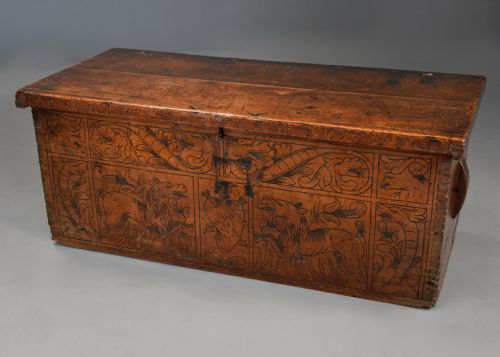
An italian renaissance coffer is a substantial chest designed for domestic storage and ceremonial use, often forming the focal point of a historic interior. The examples on this page span from authentic seventeenth-century constructions to nineteenth-century revival interpretations.
Most pieces seen here adopt classic forms including the traditional cassone, table caskets, and hall benches built with deep storage compartments. Walnut and cypress dominate the physical evidence, accompanied by occasional fruitwood, cedarwood, and oak variants.
Origins stretch across northern Italy, taking in regional workshops from Lombardy alongside seventeenth-century prototypes and later Victorian revivals. Buyers encounter everything from heavily carved marriage chests to smaller bone-inlaid caskets.
How they were made
Makers utilised solid timbers such as walnut, cypress, and cedarwood, forming the main body of each coffer to withstand heavy domestic demands. Iron hardware reinforced the structures, providing functional hinges and clasps alongside decorative strapwork.
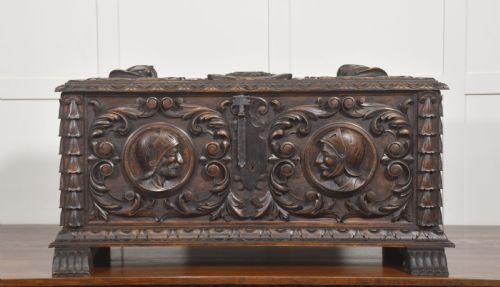
Carving formed the primary decorative technique, yielding figural medallions and gothic motifs directly into the dense wood. Giltwood accents, fabric linings, and bone inlay added contrasting textures to the carved walnut and fruitwood surfaces.
Some nineteenth-century tables manage to double as miniature caskets, proving that Victorians loved hiding their trinkets inside classical architecture.
What varies in quality
The depth and execution of the carving separate standard workshop output from exceptional examples, particularly where figural medallions and gothic decoration appear. Crisp relief work and balanced proportions indicate a higher tier of craftsmanship.
The survival of original surfaces and patination dictates the character of each piece, distinguishing untouched historic timber from heavily restored or replaced sections. Selection of woods, from figured walnut to fragrant cypress, further defines the grade of the coffer.
The Italian Renaissance Coffer Glossary
- Cassone
- A traditional Italian chest or coffer, often decorated for marriage ceremonies with carved panels and gilt details.
- Casket
- A smaller box or container, sometimes featuring intricate bone inlay and multi-wood construction for tabletop display.
- Giltwood
- Timber treated with gold leaf or gold paint to highlight carved motifs and architectural mouldings.
- Patina
- The surface sheen and colour developed by aged wood through decades of handling and wax polishing.
- Medallion
- A circular or oval decorative panel containing carved figural scenes or classical profiles.
Italian Renaissance Coffer: Frequently Asked Questions
What is an italian renaissance coffer used for?
These chests served primarily for storing valuable textiles, garments, and household documents in wealthy historic homes. Today they function effectively as statement storage pieces, coffee tables, or hallway seating.
Their robust timber construction allows them to endure daily domestic use while anchoring the design of a room.
How do I date an italian renaissance coffer?
Dating relies on examining the timber species, construction joints, and stylistic details such as gothic tracery or revival motifs. Seventeenth-century examples display authentic period wear and simpler joinery, while nineteenth-century pieces often reflect revival eclecticism.
Tool marks, iron hardware, and the natural ageing of walnut or cypress provide further clues to the exact era of production.
Where were these coffers made?
The evidence points to workshops across northern Italy, including specific regions like Lombardy. Makers in these areas utilised locally available woods such as cypress, cedarwood, and walnut.
Later revival pieces from the nineteenth century often replicated these regional Italian styles in response to European collecting trends.
How do I care for historic wood?
Maintain stable indoor humidity levels to prevent the dense walnut, fruitwood, or cypress from splitting or warping over time. Apply a microcrystalline wax occasionally to nourish the surface and preserve the original patina.
Avoid placing these chests near direct heat sources or in strong sunlight, which can fade giltwood and dry out ancient timbers.