





16th Century Trunk
A 16th century trunk delivers absolute domestic history into a room, bringing enduring presence through heavy timbers and ironwork.
16th Century Trunk
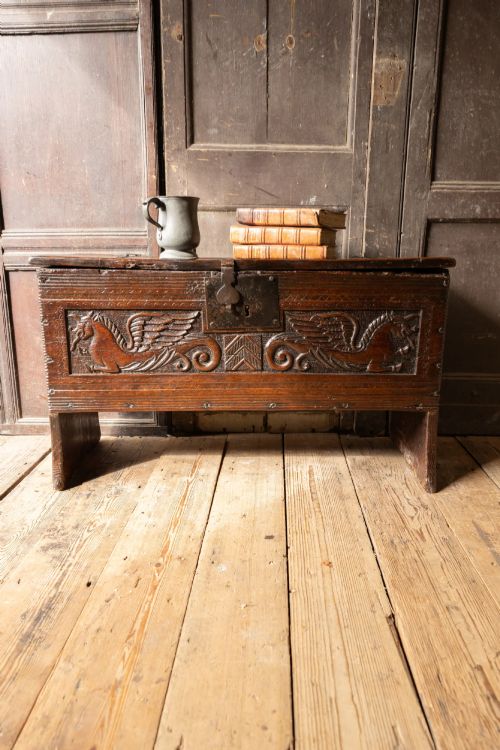
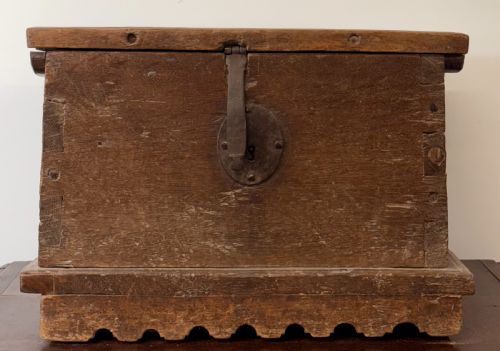
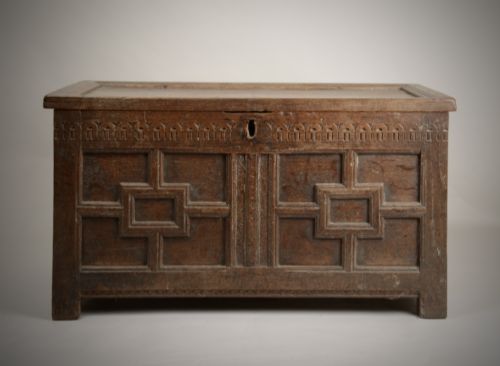
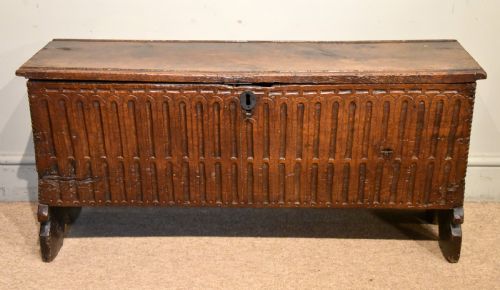
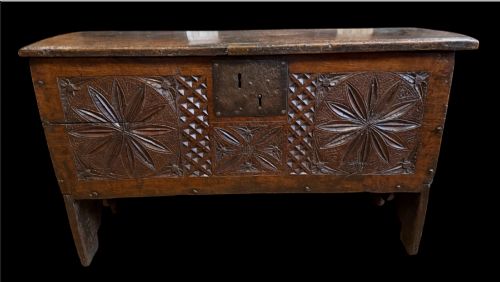
A 16th century trunk appears as a substantial wooden coffer or chest utilised for secure storage in domestic and civic settings. Buyers searching this phrase meet boarded structures, plank coffers, and heavily carved receptacles originating from English, Welsh, Flemish, German, Spanish, and Italian workshops.
The dominant forms on this page include Tudor and Elizabethan boarded coffers alongside continental Renaissance examples. These pieces span from the reign of Henry VIII through to the late sixteenth century, frequently recorded under alternative descriptions such as kists, meal arks, and caskets.
Makers of the period constructed these receptacles primarily for utility before they evolved into decorative household focal points. Their survival demonstrates centuries of domestic service, moving from secure chambers to collector interiors.
How they were made
Joiners and carpenters built these pieces predominantly from solid oak, alongside supplementary selections of walnut, cypress wood, and inlaid timber. Boards were joined using traditional pegged framing, heavy plank construction, and dovetailed corners designed to withstand shifting humidity.
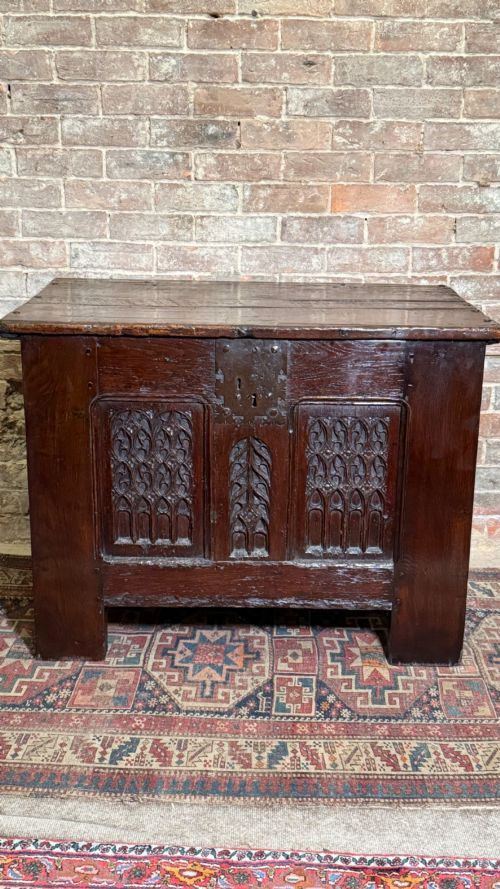
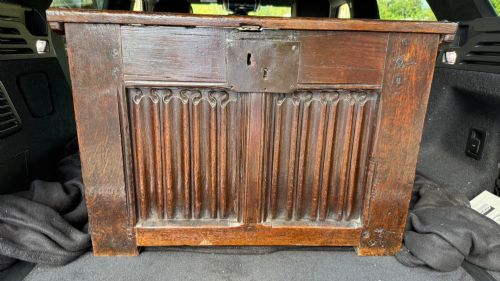
Iron and wrought iron provide essential structural reinforcement through decorative straps, corner brackets, and complex locking mechanisms. Carving techniques include linenfold patterns, fluting, and deep relief work executed directly onto the primary wood surface.
16th Century Trunk Retail Price Guide 2026
Typical asking prices for 16th century trunk among the pieces listed under this phrase on Sellingantiques today, from the lower quarter to the upper quarter. They describe what is for sale here now, not the wider market.
Many of these sixteenth century trunks retain secret compartments inside, built specifically for hiding gold sovereigns from inquisitive relatives.
What varies in quality
Quality separates through the ambition of the carver and the integrity of the surviving timber frame. Pieces displaying crisp linenfold panels, intricate Renaissance motifs, or original ironwork command greater attention than plain plank assemblies.
The degree of original material remaining in the boards, lid, and iron fittings dictates the standing of each example. Untouched surfaces retaining early patination outweigh heavily restored or reconstituted surfaces.
The 16th Century Trunk Glossary
- Coffer
- A strongbox or chest traditionally utilised for storing valuables, documents, or textiles. These sturdy receptacles typically feature hinged lids and reinforced locking systems.
- Linenfold
- A style of wood carving that imitates folded linen cloth, popular on panels during the Tudor period. This decorative technique creates vertical folds of drapery across the wooden surface.
- Boarded chest
- A primitive form of furniture constructed from thick planks nailed or pegged together at the edges. Such pieces represent some of the earliest surviving domestic storage forms.
- Armada chest
- A heavy iron-bound strongbox of German manufacture, typically featuring a complex multi-bolt locking mechanism beneath the lid. These portable safes were utilised for securing currency and valuables.
- Meal ark
- A specialised storage chest designed to keep flour or grain dry and secure in domestic kitchens. These regional country pieces reflect rural utility from the Tudor era.
16th Century Trunk: Frequently Asked Questions
How were these trunks used?
These receptacles served primarily for storing household valuables, precious textiles, documents, and provisions in secure domestic chambers. Their heavy construction and iron locks protected contents from theft and damp conditions.
Over subsequent centuries, their function shifted from utilitarian strongboxes to decorative statement furniture placed within hallways and living spaces.
Where did these pieces originate?
The pieces originate from various European workshops spanning England, Wales, Flanders, Germany, Spain, and Italy. Regional preferences dictated the choice of timber, such as native oak in Britain and cypress in Italy.
Stylistic influences followed broader artistic movements like the Tudor, Elizabethan, and continental Renaissance periods.
How do I tell periods apart?
Periods are identified by examining the evolution of carving styles, construction methods, and regional motifs. Early examples display simple boarded planks or linenfold panels associated with the Tudor era.
Later sixteenth-century pieces incorporate complex Flemish or Elizabethan strapwork, fluting, and architectural Renaissance details.
How do I live with one?
Living with these pieces involves placing them away from direct heat sources and sudden humidity changes to protect the ancient timber. Their robust presence makes them suitable as coffee tables, window seats, or focal storage units.
Regular application of suitable wax helps maintain the dry patination accumulated over hundreds of years.