



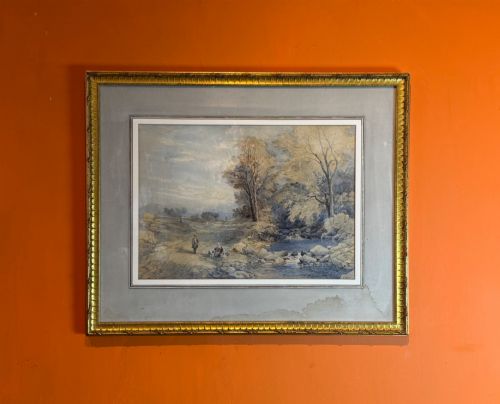
Traditional River Painting
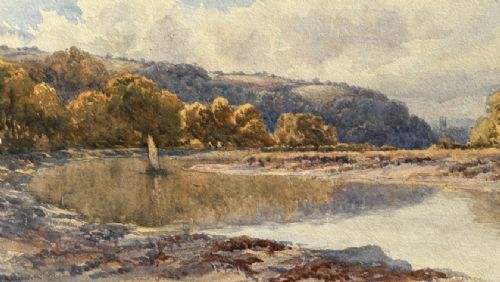
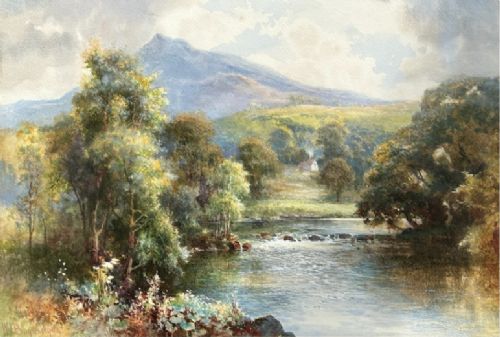
When you search for a traditional river painting, you enter a quiet world of Victorian watercolours, Edwardian oils, and nineteenth-century canvas landscapes depicting pastoral waters.
Traditional River Painting
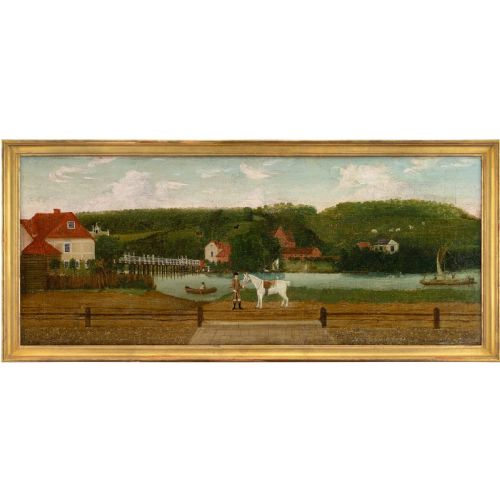
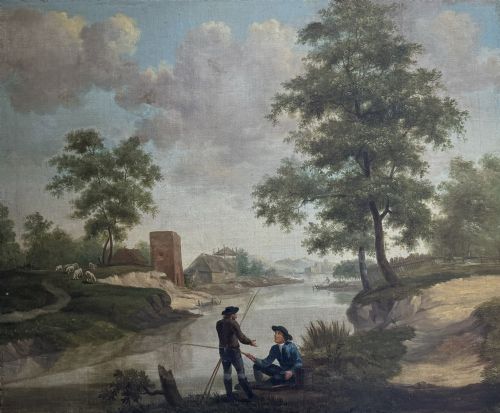
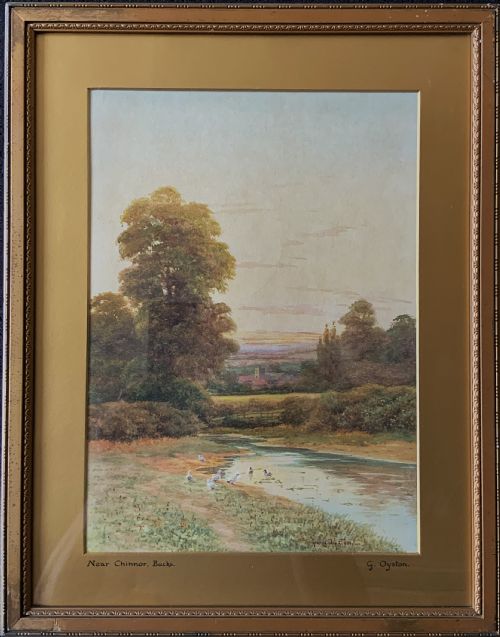
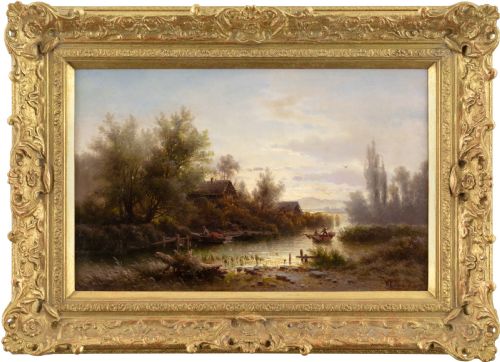
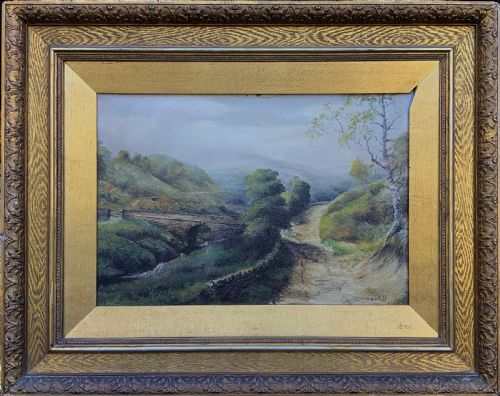
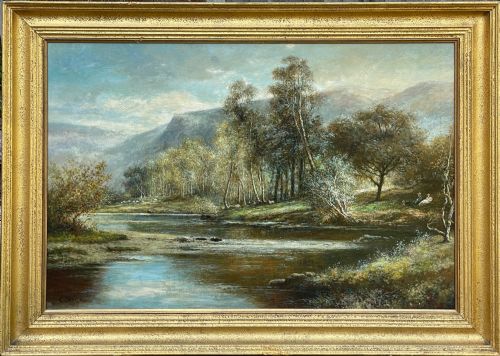
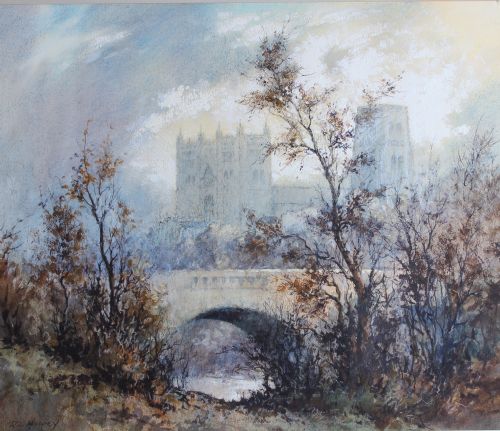
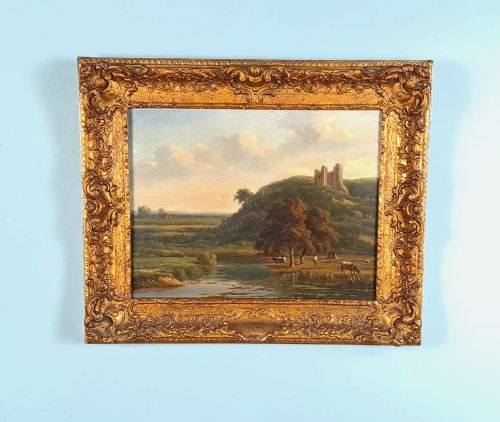
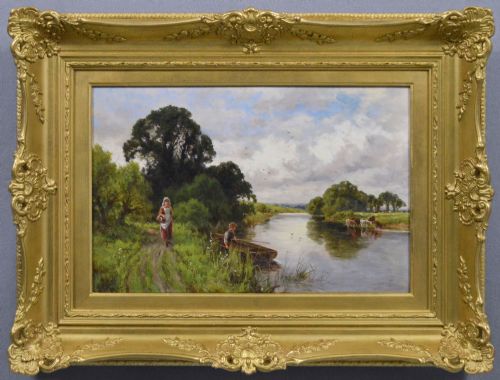
A traditional river painting captures British and European waterways, featuring pastoral scenes, figures fishing, mills, locks, and riverside cottages. The selections span the nineteenth century through the early twentieth century, encompassing Victorian and Edwardian works alongside continental interpretations.
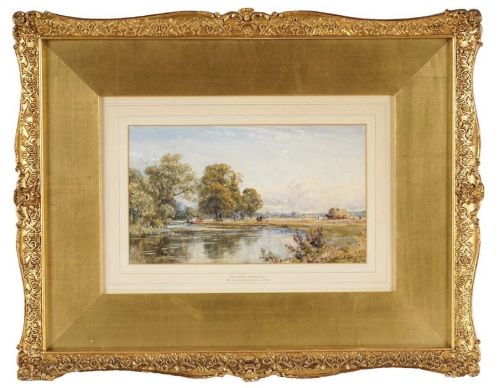
The dominant forms are oil paintings on canvas or wood panels and watercolour paintings on paper. These pieces range from intimate cabinet watercolours to large framed oils showing scenes along the Thames, the Tyne, and Welsh or Dutch waterways.
How They Were Made
Artists painted primarily with oil on canvas, oil on wood panel, or watercolour on paper, frequently framing the finished works in giltwood or gesso frames. Some canvases were later laid onto board for preservation during the nineteenth century.
Brushwork varies from the tight detail of nineteenth-century realism to the looser application found in British impressionist and Flemish-style works. Pigments were applied to primed canvas or absorbent paper to capture the shifting light of morning moods and sunsets over water.
Listings feature works created across the nineteenth and twentieth centuries, using oil on canvas, wood panel, and watercolour on paper.
What Varies in Quality
Quality rests in the handling of light, atmospheric perspective, and water reflection, distinguishing competent topographical records from masterly compositions. The surety of the draughtsmanship in figures and architecture, such as locks, bridges, and distant cathedrals, marks the distinction.
The integrity of the original support and the frame contributes significantly to the standing of a piece. Works retaining their period giltwood frames and stable, unlined canvases command greater appreciation among collectors.
GEORGE GRAHAM·Alfred Young Nutt·William Joseph Boyes·ROBERT THORNE WAITE·George Oyston·Albert Rieger·E Brown·Robert Leslie Howey·T C Hofland·Henry H Parker·Sydney Yates Johnson·John Horace Hooper·Archibald Kay·Alexandre Le Bihan·Thomas Baker·Thomas Bush Hardy·Alfred Augustus Glendening Jnr·Owen Bowen·William Sydney Cooper·Stanley Leader·J Phipps
The Traditional River Painting Glossary
- Giltwood
- Wood carved and coated with gold leaf or a gold-coloured metallic finish. These frames frequently accompany nineteenth-century oil paintings.
- Watercolour
- A painting method where fine pigment is suspended in a water-soluble binder on paper. Many river landscapes utilise this technique for its translucent washes.
- Wood Panel
- A rigid flat piece of timber used as a support for oil paint prior to the common adoption of stretched canvas. Several nineteenth-century river scenes utilise these panels.
- Gesso
- A plaster-like mixture applied to wood or canvas as a base for painting or moulded to create decorative relief on frames. It is a defining component of antique framing.
Traditional River Painting: Frequently Asked Questions
What subjects appear in traditional river paintings?
These works typically depict British and continental rivers, featuring lock gates, mills, stone bridges, and figures engaged in fishing or boating. Scenes range from the Thames and the River Kennet to Welsh streams and Dutch waterways at sunset.
Artists focused on capturing the changing light on water, often incorporating surrounding cottages, cathedrals, or wooded banks into the composition to anchor the landscape.
How do I care for an antique oil painting?
Protect oil paintings on canvas or wood panel from direct sunlight and sudden humidity shifts to prevent cracking in the paint layer and warping of the support. Keep the surface free from dust using a soft, dry brush without applying moisture or cleaning agents.
Ensure the hanging environment remains stable and consult a professional conservator if the canvas slackens or the varnish yellows over time.
How do I care for a watercolour painting?
Watercolour paintings on paper require protection from direct sunlight to prevent fading of the pigments. Framing behind conservation glass with acid-free mounts safeguards the paper from atmospheric pollutants.
Keep these works in rooms with moderate, stable humidity levels away from damp walls or heat sources to preserve the integrity of the paper support.
How do I distinguish watercolours from oil paintings?
Watercolours are painted on paper, typically displayed under glass, showing a translucent quality where the white of the paper illuminates the pigments. Brushstrokes are fluid and fine details rely on delicate washes.
Oil paintings utilise canvas or wood panels with opaque pigments that sit on the surface with visible texture and impasto. They are rarely displayed behind glass.