



River Landscape Watercolour
Discover a river landscape watercolour to bring historic British waterways and pastoral scenes into your home.
River Landscape Watercolour
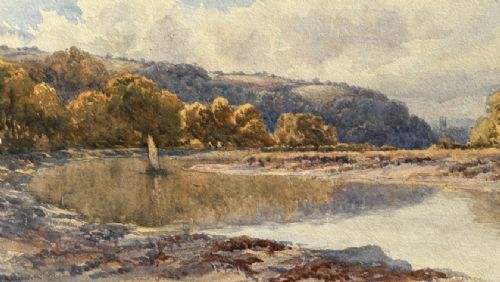
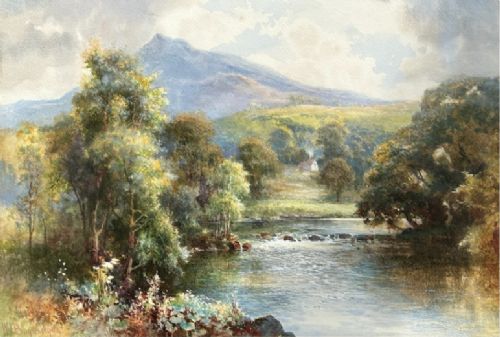
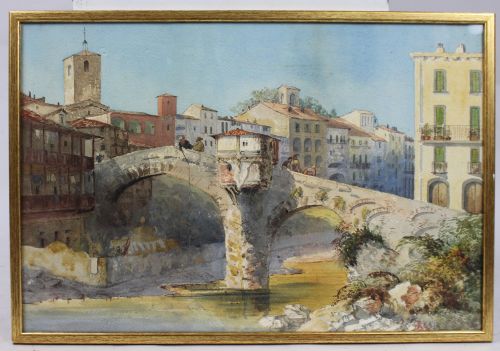
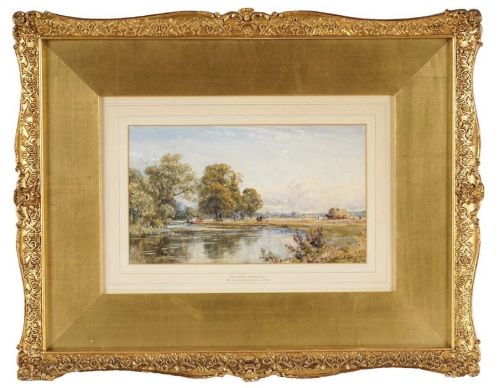
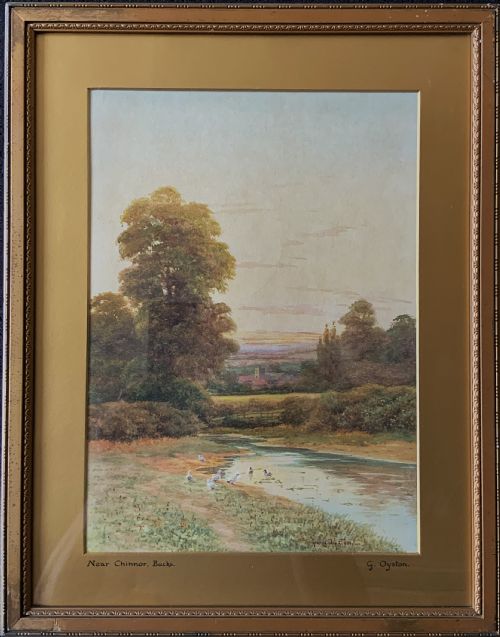
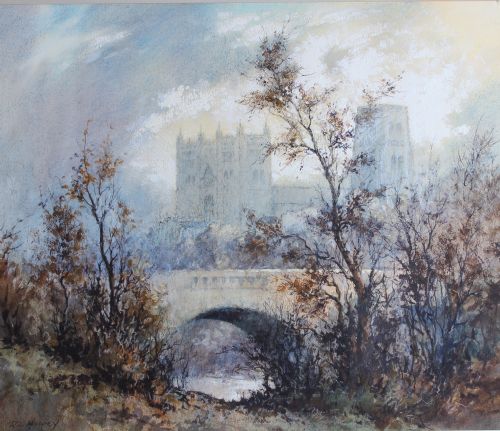
A river landscape watercolour captures flowing water, rural riverbanks, and historic bridges across Britain and Europe. Collectors seek these works for their atmospheric depiction of light on water and traditional countryside views.
Most pieces encountered on this page date from the nineteenth century into the early twentieth century. These historic paintings frequently portray notable rivers such as the Thames, the Severn, and various Welsh and Scottish waterways.
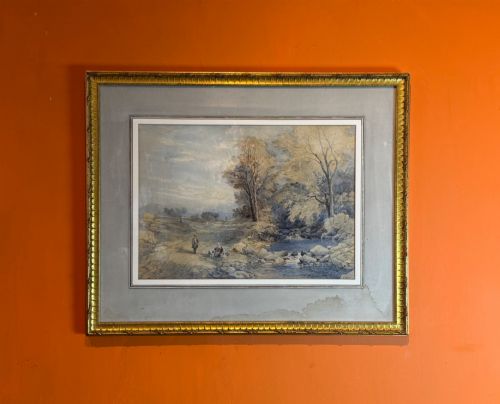
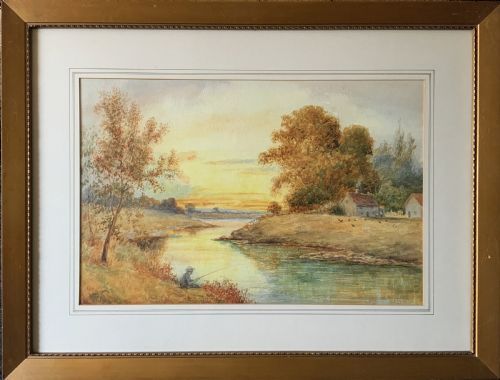
Compositions often incorporate figures, cattle, or historic architecture alongside the riverbanks. Creators range from Royal Academy exhibitors to accomplished regional artists working within British landscape traditions.
How They Were Made
Artists painted primarily with water-based pigments upon heavy paper supports. Pigments were applied in washes to achieve translucent effects for skies and water, complemented by finer brushwork for architectural and botanical details.
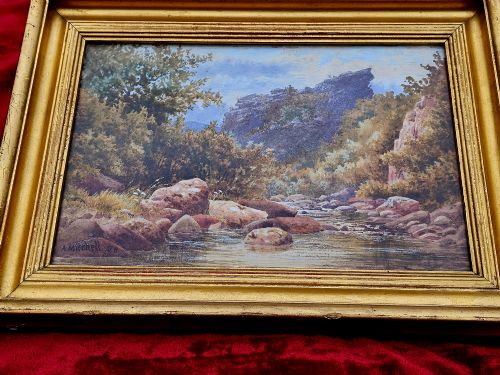
Surviving works are preserved behind glass within timber frames, frequently featuring gilt wood mouldings. This traditional framing protects the delicate paper surface from atmospheric moisture and handling damage.
Nineteenth-century artists occasionally added wandering livestock to quiet riverbanks simply to give moody Welsh rivers someone to talk to.
What Varies in Quality
The distinction between superior works and simpler studies rests upon the confidence of the brushwork and the handling of natural light. Master hands achieve luminous depth through controlled washes and precise tonal gradations.
Compositional balance and the accurate rendering of atmospheric conditions elevate individual paintings. Pieces by established exhibitors demonstrate superior draughtsmanship in capturing both topographical detail and transient weather.
H. Medlycott·Alfred Young Nutt·William Joseph Boyes·Robert Thorne Waite·George Oyston·Robert Leslie Howey·Frederick Hines·William Frederick Settle·Alfred George Morgan·Cornelius Pearson·Edwin Lord Weeks·Arthur Reginald Smith·Henry John Kinnaird·Stuart Lloyd·Thomas Bush Hardy·Thomas Hunn·David Cox Jnr·J Laporte·Colin H Greenwood·John Syer·Robert Winchester Fraser·Alfred Grey·George Arthur Fripp·Harold Lawes·Frederick G. Coulridge
The River Landscape Watercolour Glossary
- Watercolour pigment
- Finely ground colour particles bound with water-soluble media, traditionally gum arabic. These pigments permit delicate washes and transparent layering upon paper.
- Gilt wood
- Timber framing coated with a thin layer of gold leaf or metallic gilt paint. This traditional finish provides a decorative border designed to complement the tones of the painting within.
- Wash
- A thin, fluid layer of diluted watercolour pigment spread across the paper. Artists utilise this technique to establish expansive skies and reflective water surfaces.
- British School
- A classification denoting artists trained or working within British aesthetic traditions. This designation links stylistic approaches across regional landscapes and historical periods.
River Landscape Watercolour: Frequently Asked Questions
How do I date a watercolour?
Dating relies upon artist signatures, exhibition labels, and stylistic conventions visible within the composition. Paper watermarks and framing materials additionally offer clues regarding the decade of creation.
Comparison with documented works by the same hand provides further chronological certainty. Specialists examine pigment application and paper types to verify the era.
Where should I hang these paintings?
These works require placement away from direct sunlight to prevent the fading of delicate pigments on paper. Stable indoor humidity protects both the paper support and the timber frame.
Displaying them at eye level in rooms with controlled lighting highlights the fine brushwork and atmospheric depth. Acid-free backing during framing ensures long-term preservation.
Who were the notable painters?
Numerous nineteenth and early twentieth century artists specialised in recording British and European waterways. Painters associated with institutions like the Royal Academy produced highly detailed topographical scenes.
Regional practitioners documented local rivers in Wales, Yorkshire, and along the Thames. Their signed works provide a reliable record of historical topography and rural life.
What subjects are most common?
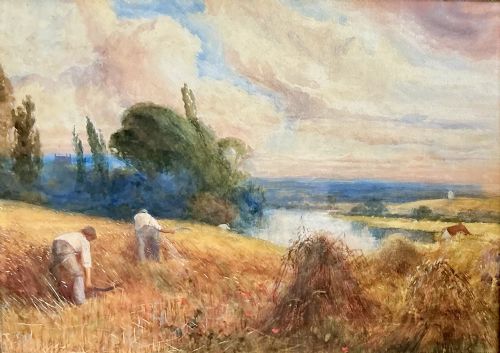
River valleys, bridges, mills, and shipping dominate the surviving compositions. Artists frequently depicted daily activities such as fishing, cattle watering, and harvesting beside the water.
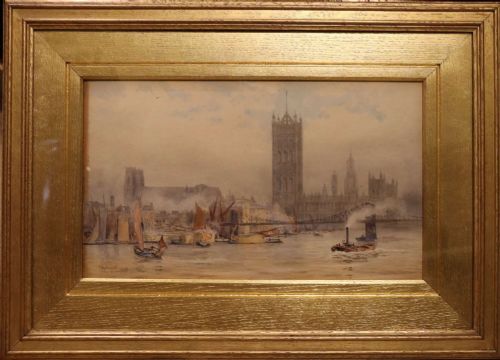
Views range from quiet rural tributaries to bustling urban waterways like the Thames near Parliament. Coastal river estuaries and ruined castles appear frequently in nineteenth-century works.