







Late Victorian River Artwork
Late victorian river artwork brings the gentle movement of nineteenth-century waterways directly into domestic rooms through evocative oil and watercolour scenes.
Late Victorian River Artwork
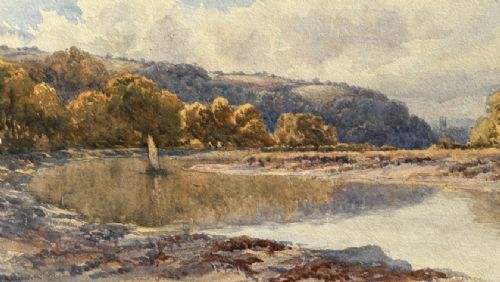
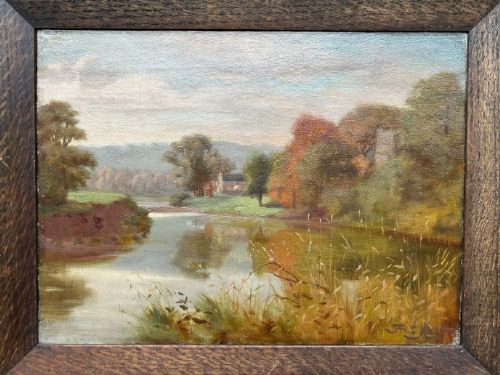
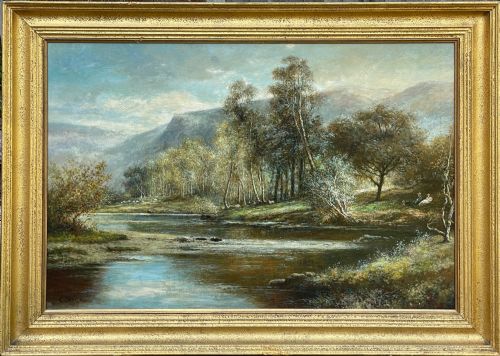
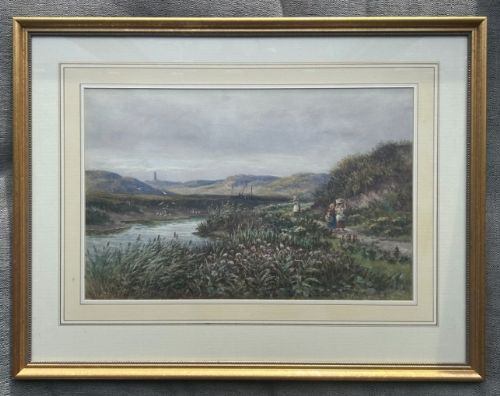
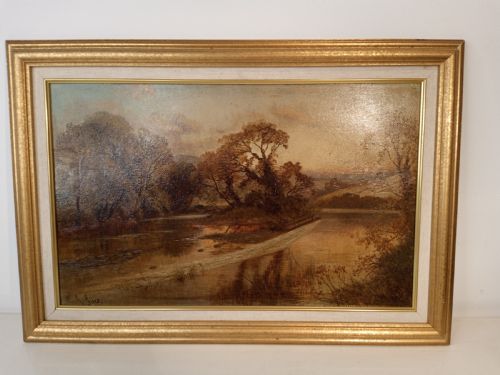
Late victorian river artwork comprises framed paintings and watercolours depicting British waterways, rural rivers, and Thames scenes produced during the latter decades of the nineteenth century. These pieces capture quiet landscapes, fishing spots, and pastoral settings often populated by figures or historic architecture along the water. Buyers encounter works executed on canvas, wood panel, and paper, reflecting the diverse output of artists working in the Victorian naturalism and realism traditions.
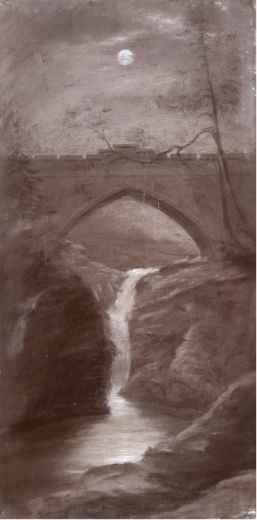
Watercolours and oil paintings dominate this selection, ranging from detailed English valley views to dramatic Scottish river landscapes. Artists of the period frequently recorded specific locales such as the Thames, Scottish glens, and Yorkshire dales, grounding their compositions in recognizable geography. The visual language spans atmospheric nocturnes and bright autumn woodland scenes, offering a broad spectrum of nineteenth-century landscape painting.
How these pieces were made
Makers produced these works using traditional nineteenth-century painting methods, applying oil pigments onto stretched canvas or prepared wood panels. Painters also utilised watercolour pigment on paper to achieve lighter, more transparent atmospheric effects. Gilt frames frequently complemented the finished canvases, enhancing the visual weight and presentation of the artwork.
Artists layered paint to capture the reflective qualities of water and the changing light of autumn woodlands or misty riverbanks. Careful brushwork defined foliage, figures, and architectural landmarks such as Windsor Castle or chapel spires. The physical support - whether heavy canvas or delicate paper - dictated the handling of the medium and the preservation of each scene.
Anglers appear patiently waiting for a bite across multiple centuries, proving that the urge to stare at water hasn't changed an inch.
What varies in quality
The sophistication of brushwork and the handling of natural light distinguish the finer examples from simpler decorative studies. Superior pieces demonstrate a confident command over water reflection and atmospheric depth, capturing the specific mood of a Scottish glen or a Thames backwater. Lesser works rely on formulaic compositions and heavier application without the same nuance in tone.
The precision in recording topographical detail and human figures also elevates certain paintings above routine landscapes. Artists who successfully balanced the textures of foliage, stone, and moving water created more enduring works. Preservation of the original canvas, paper, and pigment condition further separates pristine examples from those compromised by heavy wear.
David Law·Alfred Young Nutt·Frederick Marriott·William George Tennick·Arthur Herbert Rigg·Colin H Greenwood·William Manners·Thomas Pyne·John Syer junior·Carleton Grant
The Late Victorian River Artwork Glossary
- Watercolour pigment
- A colourant ground with a water-soluble binder, applied to paper to create translucent washes of tone. This medium allowed artists to sketch rapid atmospheric effects outdoors.
- Wood panel
- A rigid support surface used by painters before stretching canvas became universal or as a deliberate choice for smaller works. It provides a stable, firm ground for detailed oil application.
- Victorian naturalism
- An artistic approach focusing on the accurate observation of the natural world without idealized embellishment. It guided painters to record rural riverbanks and foliage with careful fidelity.
- Gilt frame
- A decorative border coated with gold leaf or metallic paint to enclose and protect a painting. These frames added substantial presence to nineteenth-century wall art.
Late Victorian River Artwork: Frequently Asked Questions
How do I date late victorian river artwork?
Dating relies on stylistic markers, artist signatures, and framing conventions typical of the late nineteenth century. Many works carry explicit dates or reflect the naturalist and realist trends popular between eighteen-eighty and nineteen-hundred.
Contextual clues within the subject matter, such as specific architectural landmarks or costume details of figures by the water, help narrow the timeframe. Examining the reverse of the canvas or panel often reveals period inscriptions or dealer stamps.
Where were these river scenes usually painted?
Artists painted scenes across various British waterways, with frequent depictions of the Thames Valley, Scottish river systems, and northern dales. Popular locations included Windsor, the Linn of Dee, and rural Yorkshire.
Plein-air sketching formed the basis for many finished compositions, allowing painters to capture authentic light and topography. These regional specificities anchor the artworks in tangible nineteenth-century geography.
What is the difference between oil and watercolour versions?
Oil paintings utilise pigments bound in drying oils on canvas or wood panel, offering rich textures and deep colour saturation. Watercolours employ water-soluble pigments on paper, yielding lighter, more luminous effects.
Oils generally present a heavier physical presence suited to dramatic lighting and rich autumn palettes. Watercolours excel at capturing misty morning air and transient weather over river landscapes.
How should I hang and light these paintings?
Protect the artwork from direct sunlight to prevent fading in watercolour pigments and discolouration in oil varnishes. Stable indoor humidity levels ensure canvas and wood panels do not warp or crack over time.
Use gentle, indirect picture lighting to highlight the brushwork without generating excess heat. Ensure the hanging wall is structurally sound to support both the canvas and its heavy gilt frame.