




Signed Scottish Watercolour
Signed scottish watercolour works capture highland landscapes and coastal views directly from the hand of named artists.
Signed Scottish Watercolour
When you search for signed scottish watercolour, you find original paintings on paper depicting lochs, mountains, castles, and town views. These works span from the mid nineteenth century through the edwardian era and into mid century modernism, capturing the distinct light and topography of Scotland.
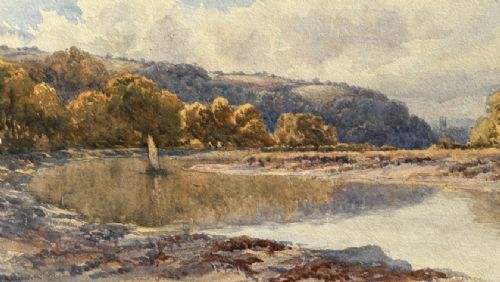
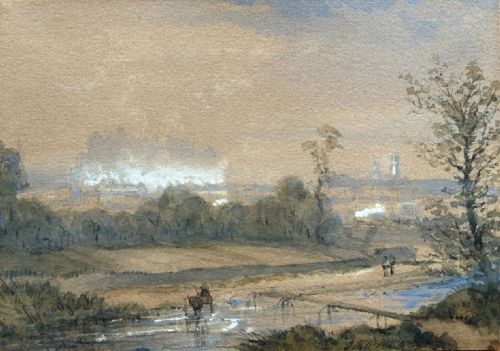
The most common pieces on this page are nineteenth century and edwardian landscapes housed behind glass in period gilt wood frames. Artists utilised watercolour pigment and paint to record highland cattle, fishing boats, and misty views over Edinburgh or the Firth of Forth.
Materials and technique
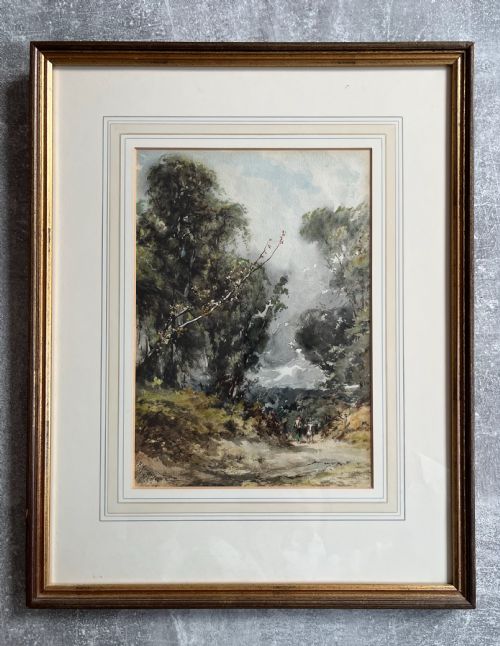
Artists painted primarily on paper supports using watercolour pigment, sometimes supplemented with bodycolour or gouache for opacity in highlights. Works from the nineteenth century onward were frequently mounted behind glass and housed in carved gilt wood frames finished with gold leaf.
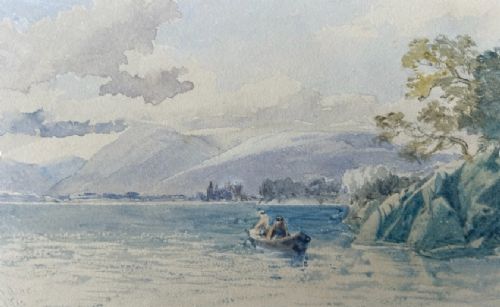
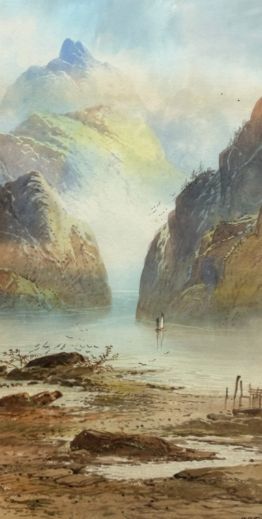
Makers applied washes of colour to build up atmospheric distance in mountain and loch scenes, relying on the white of the paper to illuminate skies and water. Signatures and dates appear in pencil or ink, often placed firmly in a lower corner alongside monograms.
Highland cattle stare from multiple nineteenth century loch views, silently judging every passerby.
Quality variations
Quality rests upon the artist's handling of light, atmospheric depth, and topographical accuracy within the scottish landscape. Stronger examples display confident brushwork and secure control of washes, whereas weaker ones rely on stiff drafting and muddy colour mixing.
The integrity of the original period frame and the preservation of the paper under glass also influence the standing of a piece. Fading from prolonged light exposure diminishes the vibrancy of the pigments, while clean paper preserves the original tonal contrast intended by the painter.
David Law·George Fotherly Hargitt·Thomas Miles Richardson Jnr·William Henry Earp·John R Prentice·Robert Buchan Nisbet·Margaret Laing·James Kerr McArthur·Donald Watson·Stephen Enoch Hogley·Robert Houston·Tom Campbell·H M Krause·T E Churnside·Bernard Foster·Herbert Moxon Cook·Kenneth Holmes·J Cameron Vair·F Walters·John Carlisle·Sidney Wright·Waller Hugh Paton·John MacLauchlan Milne·LM Dixon·James Orrock
The Signed Scottish Watercolour Glossary
- Watercolour
- A painting method in which the paints are made of pigments suspended in a water-based solution. The paper support shows through transparent washes of colour.
- Gilt Wood
- Wood carved and coated with gold leaf or metallic paint to form a decorative picture frame. Period frames protect the painting beneath glass.
- Gouache
- An opaque watercolour paint containing pigment mixed with a binding agent and white filler. It provides solid highlights in landscape details.
- Monogram
- A motif made by overlapping or combining two or more letters to form a recognizable cipher. Artists often used these initials instead of a full signature.
- Scottish School
- A loose grouping of artists working in Scotland who shared regional subjects and stylistic approaches. Their output forms a distinct regional tradition in british art.
Signed Scottish Watercolour: Frequently Asked Questions
How do I date a signed scottish watercolour?
Examine the signature, paper stock, and framing style alongside any visible dates written by the artist. Nineteenth century works often display detailed figurative elements, while mid twentieth century examples lean towards modern british abstraction.
Period gilt frames and handwritten notes verso provide further clues to the decade of creation. Comparing the artist's active lifespan helps confirm the exact era.
Where were these watercolours displayed?
Original watercolours hung in domestic parlours, libraries, and drawing rooms across Britain, framed securely behind glass to protect the paper. Wealthy patrons and collectors placed them to showcase scenic views of highland lochs and coastal towns.
Today, they suit similar interior settings where direct sunlight can be controlled to prevent fading. Proper placement preserves both the paper and the original gilt wood frame.
What subjects appear most frequently?
Highland landscapes featuring mountains, lochs, and cattle dominate the selection, alongside coastal views of harbours and fishing boats. Urban subjects focused on Edinburgh streets and specific landmarks also recur across the archive.
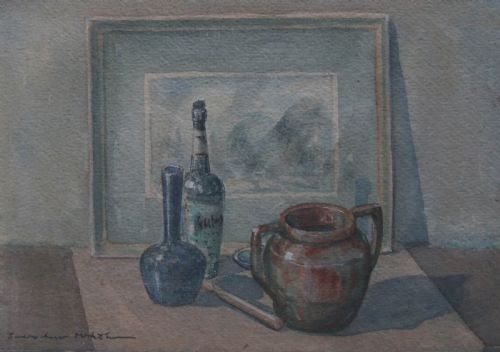
Artists travelled extensively through the Trossachs and the Isle of Skye to record these specific topographical scenes. Bird studies and still life compositions appear occasionally among the landscape paintings.
Are these paintings glazed?
Most antique watercolours remain behind their original glass to protect the delicate pigment from airborne dust and moisture. Glazing is essential because watercolour paper lacks the protective varnish layer found on oil paintings.
When handling or hanging these pieces, ensure the glass is secure within its period frame. This barrier stops physical damage to the paper surface.