





Blue Green Watercolour Landscape
A blue green watercolour landscape captures rivers, coasts and countryside across the Victorian and Edwardian eras using pigment on paper.
Blue Green Watercolour Landscape
A blue green watercolour landscape presents topographical views, coastal scenes and rural pastures created on paper support during the nineteenth and twentieth centuries. These paintings record specific locations from the Thames Valley to Yorkshire using liquid pigment applied in washes.
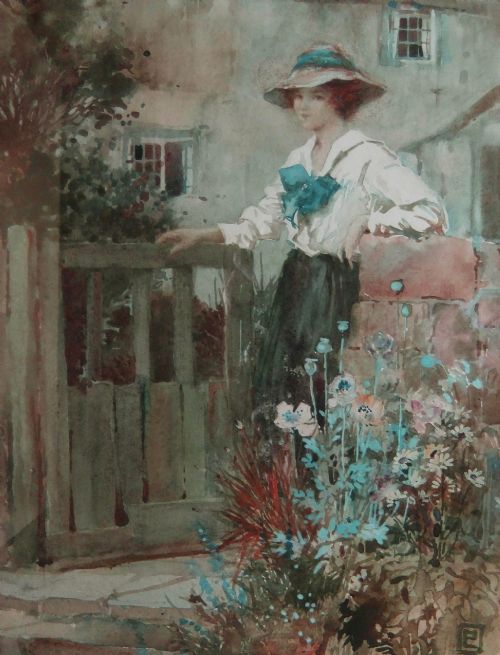
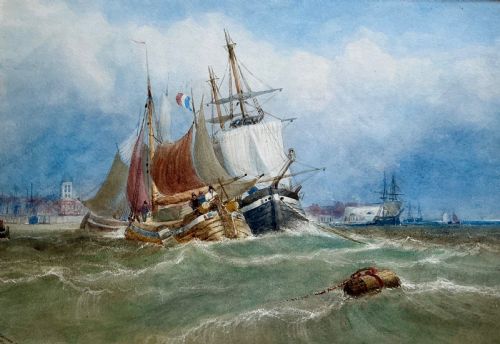
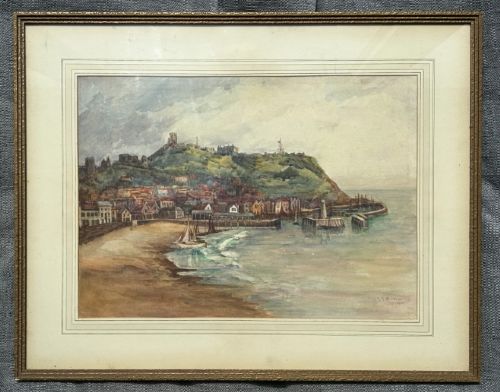
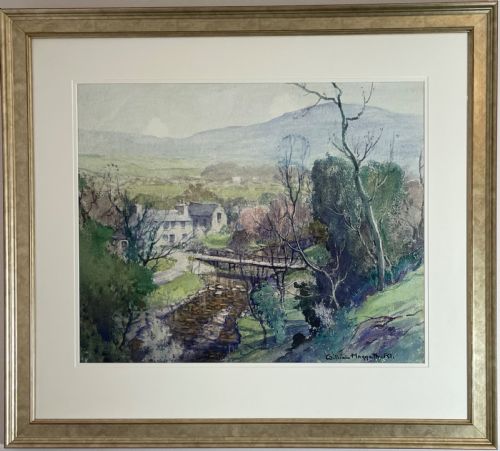
The version most frequently met on this page is the framed British landscape executed during the Victorian or Edwardian periods, often signed by the artist. Such works combine botanical greens with atmospheric blues to depict countryside cottages, riversides and coastal harbours.
The makers operating within this tradition ranged from professional Royal Society members to regional painters working directly from nature. Their output forms a coherent record of British topography and rural life through varied twentieth-century movements.
How they were made
These works utilise watercolour paint and pigment dissolved in water, applied directly onto prepared paper sheets. Artists built the image through transparent washes for skies and water, alongside more opaque touches for foliage and architectural details.
Framed behind glass within wooden mouldings, the paper survives protected from atmospheric dust and direct moisture. The support itself typically consists of heavyweight rag or wove paper common to nineteenth and early twentieth-century British studios.
One unexpected cottage scene even includes a resident pet rabbit watching the landscape unfold.
What varies in quality
Quality rests upon the artist's handling of pigment transparency and the sureness of the underlying drawing. Stronger examples demonstrate confident brushwork that defines light and atmosphere without overworking the paper surface.
The choice of subject and compositional balance also distinguish the range. Finer works capture specific topographical atmosphere effectively, whereas lesser examples rely on formulaic arrangements of trees and cottages.
Henry Barlow Carter·William Hoggatt·Bernard Walter Evans·Wilfred Knox·Claude Muncaster
The Blue Green Watercolour Landscape Glossary
- Watercolour pigment
- Finely ground colour particles mixed with a water-soluble binder. This medium allows artists to layer transparent washes for atmospheric effects.
- Wove paper
- Paper manufactured on a fine wire mesh that leaves an even texture without vertical chain lines. It provides a smooth surface favoured for detailed landscape painting.
- Topographical landscape
- A painting depicting a recognisable geographical location accurately rather than an imaginary scene. These works document historic views of towns, rivers and coasts.
- Warranted frame
- A traditional wooden moulding enclosing the painting behind glass to protect the paper from environmental damage. Original framing adds contextual value to antique watercolours.
- Impressionism
- An art movement focusing on light, fleeting moments and loose brushwork. British practitioners applied these principles to rural and coastal scenery.
Blue Green Watercolour Landscape: Frequently Asked Questions
How should I hang a watercolour painting?
Keep watercolour paintings away from direct sunlight to prevent the pigments from fading over time. Position them on interior walls where temperature and humidity remain stable.
Ensure the frame hangs securely from appropriate fixings to protect both the wooden moulding and the glass covering the paper.
Are these watercolours original works?
The pieces listed are original hand-painted watercolours created directly by artists rather than modern mechanical reproductions. Each painting displays individual brushwork and pigment texture unique to its creation.
Signatures, inscriptions and studio labels frequently accompany these historic sheets to confirm their authorship and provenance.
What periods do these landscapes represent?
The works span from the nineteenth century through the Edwardian period and into the mid-twentieth century. Victorian and Edwardian examples predominate across the selection.
Stylistic shifts reflect changing artistic approaches, moving from detailed topographical recording toward impressionistic interpretations of light and weather.
How do I identify the location in a painting?
Artists often inscribed the title, place name or date directly onto the lower margin of the paper or on the reverse of the frame. Regional landmarks such as specific bays, rivers and abbeys provide clear clues to the setting.
Topographical reference books and local history archives help match nineteenth-century place names with modern geography.