


1920s Landscape Artwork
These 1920s landscape artwork pieces capture pastoral scenes, coastal views and urban settings through the brush of early twentieth-century painters.
1920s Landscape Artwork
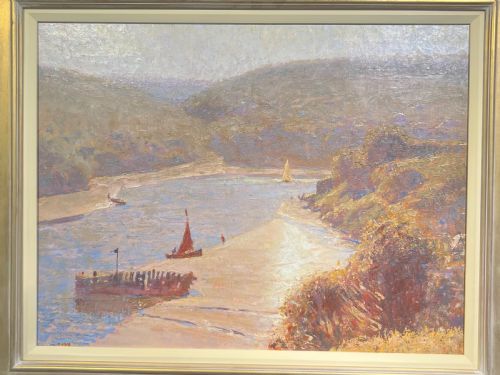
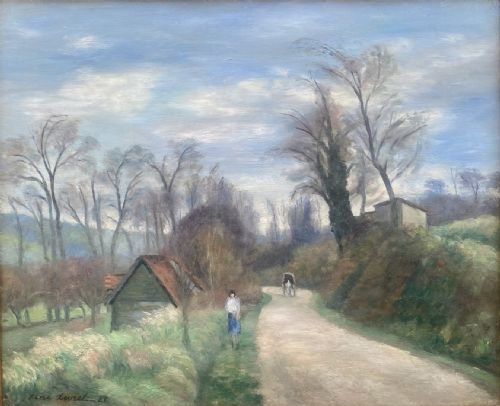
When you search for 1920s landscape artwork, you encounter framed oil paintings, watercolours on paper and oil panels depicting rural life, coastal vistas and townscapes. The selection spans British and French subjects, capturing scenes from Scottish hills to Mediterranean harbours and French chateaus.
You meet works created across the early decades of the twentieth century, particularly the nineteen-twenties alongside occasional pieces from adjacent periods. These range from intimate watercolours of Corfu and Lincoln to large canvases representing French coastal scenes and Irish rural life.
The objects take the form of wall art and fine art paintings, presented in wood frames and protected with glass where watercolours or drawings are concerned. Painters render these subjects through Post-Impressionism, Impressionist methods and traditional realism.
Materials and technique
Artists painted primarily with oil paint on canvas or wooden panel, and watercolour on paper, utilising pigments applied with brushwork or rendered in plein air. Works on paper typically require wood frames and glass protection to preserve the delicate medium.
Substrates include stretched canvas, wooden boards and paper sheets, while frames are constructed from wood and frequently finished with gilt details. Drawings utilise pencil alongside watercolour washes to delineate townscapes and architectural landmarks.
Listings feature works created using oil paint, watercolour, pencil and gilt wood frames across canvas, paper and panel supports.
Distinctions in quality
Quality rests upon the handling of light and brushwork, distinguishing skilled plein air observation from routine studio production. Stronger pieces display confident handling of the medium, whether capturing the bustling atmosphere of a French cathedral scene or the luminosity of a summer landscape.
The presence of a recorded artist signature, period frame integrity and the condition of the canvas or paper support influence the standing of an individual work. Greater tonal depth and assured composition separate accomplished paintings from simpler decorative watercolours.
Cecil Allan Mould RI·Rene Levrel·Raymond Moritz·Louis Suire·Owen Bowen·Edward Horace Thompson·Edith E Caswall·Fred Lawson·Edmond Defonte·Jane Utley·Maurice Asselin·J Tim Macdonald·George Graham·Pierre Peltier·Walter J Hall
The 1920s Landscape Artwork Glossary
- Post-Impressionism
- An artistic movement following Impressionism that extends its parameters while rejecting its limitations, often employing vivid colours and distinct brushstrokes.
- Plein air
- Painting executed out of doors to capture direct observations of natural light and atmosphere.
- Watercolour
- A painting method in which the paints are made of pigments suspended in a water-based solution, typically applied to paper.
- Gilt
- Covered thinly with gold leaf or gold paint, frequently seen on period picture frames.
- Impressionism
- A style of painting that focuses on the visual impression of a moment, especially regarding the shifting effect of light and colour.
1920s Landscape Artwork: Frequently Asked Questions
What subjects appear in these artworks?
The works depict rural scenes, hay wagons, coastal cliffs, harbours and townscapes across Britain and France. Subjects range from cottages and gardens to maritime views and architectural landmarks.
Artists recorded daily life, figures in landscapes, and specific locations including Monet country, the Lake District and Venice.
Which materials did artists utilise?
Painters employed oil paint on canvas or wooden panel, alongside watercolour and pencil on paper. Canvases and panels frequently reside within wooden frames.
Watercolours and drawings are commonly framed and glazed behind glass to protect the paper surface from environmental damage.
How do I identify the artistic style?
Styles include Post-Impressionism, French Impressionism, British Impressionism and traditional realism. Works often reflect early twentieth-century approaches to light and brushwork.
Brush application varies from luminous impressionist landscapes to detailed townscape watercolours and plein air panel paintings.
Where were these landscape scenes painted?
Locations span British sites such as the Lake District, Lincoln, Rye and London alongside French coastal and river settings. Mediterranean views from Corfu and the Cote d'Azur also feature.
Artists travelled to record specific regional characteristics, from Scottish hydro buildings to the Gulf of Morbihan.