



Traditional Agricultural Landscape
A traditional agricultural landscape captures the rural working life of past centuries through oil and watercolour depictions of harvest, ploughing, and livestock.
Traditional Agricultural Landscape
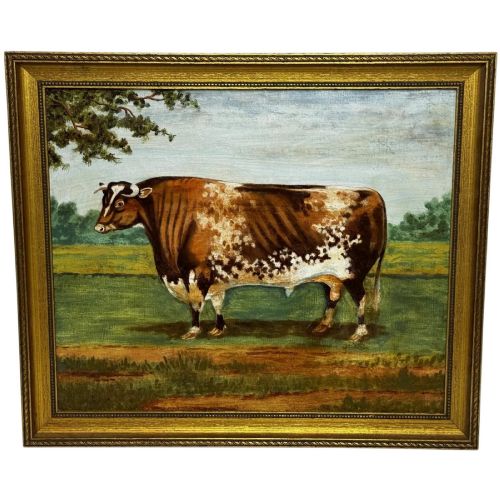
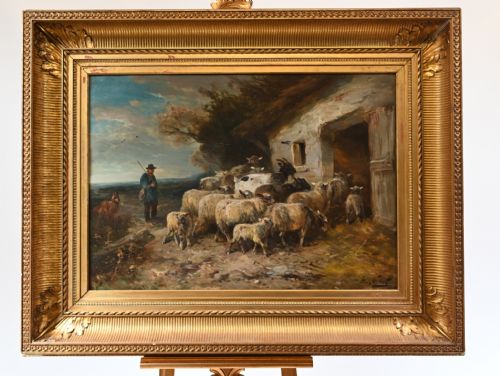
A traditional agricultural landscape depicts rural scenes involving farming labour, livestock, and rural horse work. Buyers encounter depictions of haymaking, ploughing teams, and farmyard animals across this page.
The works span from the nineteenth century through the mid-twentieth century, capturing changing rural practices. Common subjects include shire horses, cattle, and farmworkers engaged in seasonal harvests.
Most pieces originate from British artists working in traditional realism, Victorian realism, and British impressionism. Watercolour paintings and oil on canvas formats predominate.
Materials and technique
Artists painted primarily with oil paint on canvas or applied watercolour to paper. Gesso frequently appears on the frames enclosing these works.
Wood serves as the primary material for the frames, often incorporating burr finishes to complement the rural subject matter.
The technique relies on representational brushwork to render the textures of fields, animal coats, and agricultural machinery with observational accuracy.
The selection spans the nineteenth century, Victorian, Edwardian, and mid-twentieth-century periods.
Assessing the range
Quality rests upon the artist's command of anatomy and movement when rendering heavy horses and livestock. Stronger works convey the weight and posture of working animals convincingly.
The handling of natural light and atmosphere across rural fields distinguishes finer paintings from simpler depictions. Compositional depth within the landscape elevates the visual interest of the scene.
Henry Schouten·Arthur Charles Dodd·George Cole·William Sidney Cooper·Ernest Higgins Rigg
The Traditional Agricultural Landscape Glossary
- Oil on Canvas
- A painting medium where pigment suspended in drying oil is applied to stretched woven fabric. This combination provides a durable surface favoured for large landscape works.
- Watercolour
- A painting method where water-soluble pigments are applied to paper. It yields translucent washes well suited to lighter atmospheric effects.
- British Impressionism
- An artistic style influenced by continental movements but grounded in local light and landscape. It emphasises looser brushwork while retaining recognizable subject matter.
- Gesso
- A plaster-like mixture applied to wooden frames as a base before gilding or finishing. It provides a smooth surface for decorative mouldings.
- Genre Painting
- The pictorial representation of scenes from everyday life. In these works, it involves agricultural labourers and farmyard routines.
Traditional Agricultural Landscape: Frequently Asked Questions
What periods do these paintings cover?
The works span from the nineteenth century through the mid-twentieth century, encompassing Victorian, Edwardian, and later periods.
Artists during these decades recorded traditional farming methods before mechanisation transformed rural life.
How were these agricultural scenes used?
These paintings served as domestic wall art for homes, celebrating the rural economy and agrarian wealth.
Landowners and urban buyers alike commissioned or purchased depictions of prized livestock and productive estates.
How do I live with an oil painting?
Oil paintings on canvas require stable indoor humidity and protection from direct sunlight to preserve the pigments.
Displaying them on interior walls away from direct heat sources ensures the canvas and wooden frames remain stable.
How do I distinguish watercolours from oils?
Watercolours are painted on paper and typically displayed behind glass to protect the delicate medium from moisture.
Oils are painted on canvas or wood panels with a textured surface that remains unglazed.