


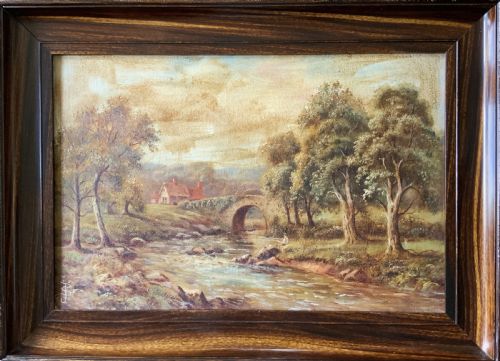


Brown River Landscape
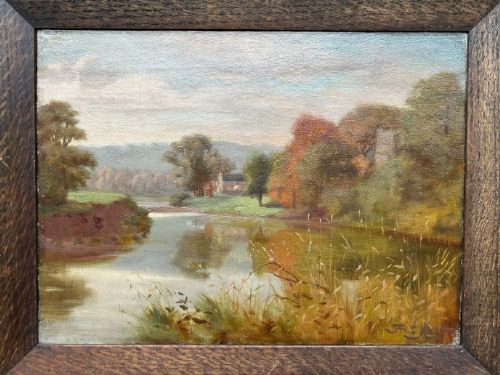
Brown river landscape paintings capture winding waterways and pastoral banks across centuries of British and European art.
Brown River Landscape
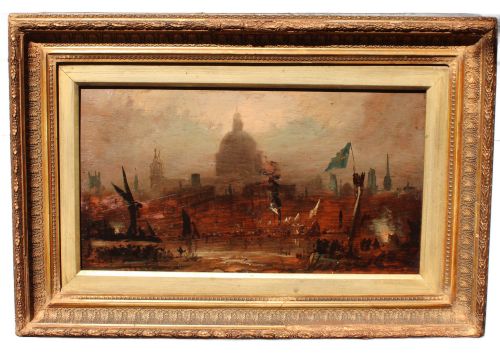
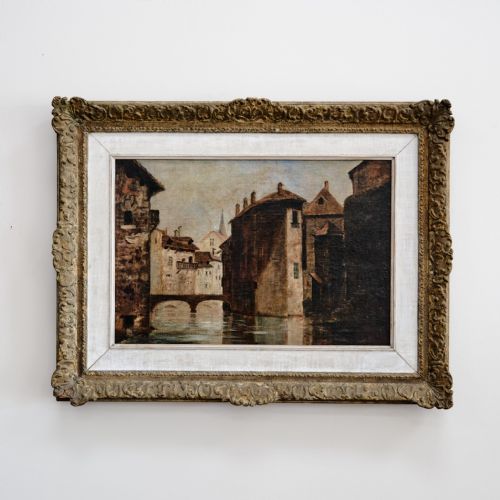
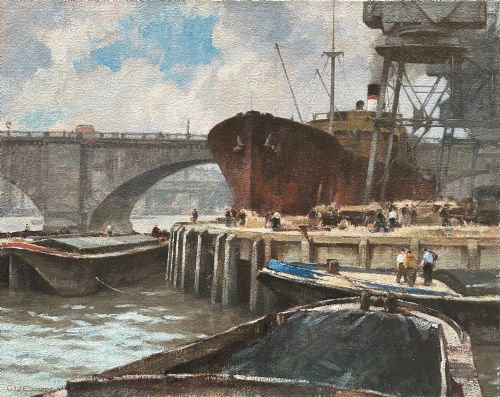
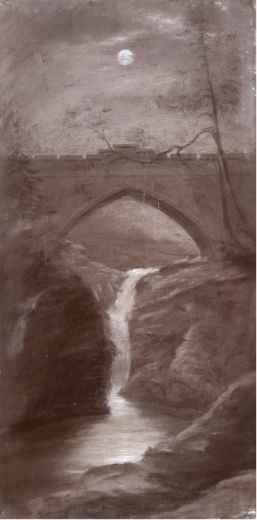
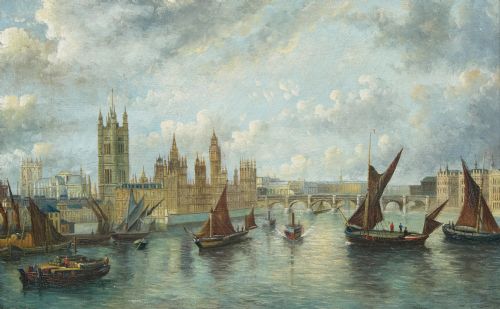
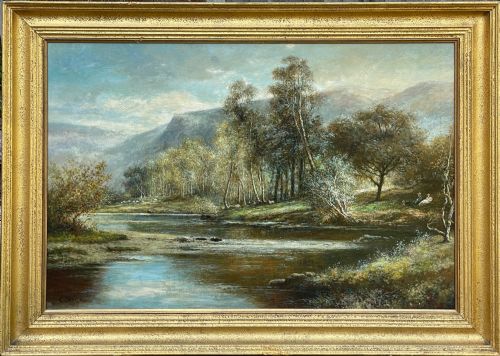
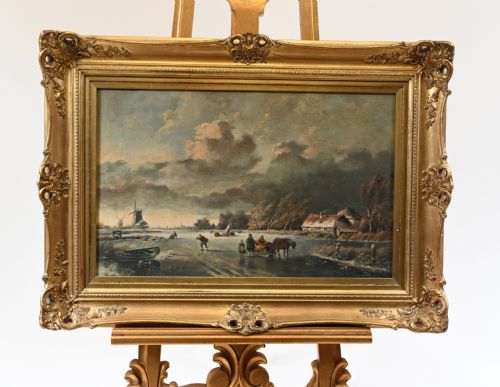
A brown river landscape presents a painted view of a waterway, often featuring bridges, barges, or figures along the banks. These works range from peaceful rural streams to bustling urban rivers like the Thames or the Maas.
The selections available lean heavily into nineteenth-century and early twentieth-century traditions. Oil on canvas and watercolour paintings dominate the formats, alongside occasional charcoal works and framed prints.
Creators worked in various modes, from Victorian naturalism and British impressionism to Dutch school influences. Collectors find both intimate watercolours and large-scale oil paintings depicting scenes in Britain, Ireland, and continental Europe.
How they were made
Artists relied primarily on oil paint applied to canvas, wood panels, or boards, often building rich textures with brush and palette knife. Watercolour on paper served masters seeking translucent washes and delicate tonal shifts for atmospheric river views.
Supports varied as works aged, with some canvases later laid onto board for stability. Frames of wood and glass preserved these paintings and watercolours through successive generations of ownership.
Materials recorded across these pieces include canvas, paper, wood, glass, and oil paint.
What varies in quality
The strength of a brown river landscape rests on the artist's command of light, depth, and atmospheric perspective. Superior examples demonstrate confident brushwork and a balanced composition that draws the eye naturally along the winding course of the water.
Lesser pieces can feel formulaic or heavy-handed in pigment application, lacking the luminosity and movement found in works by accomplished painters. The clarity of provenance and the preservation of the original surface further distinguish finer examples.
Frederick Marriott·John Ferneley Senior·Thomas Bush Hardy·William Mellor·George Arthur Fripp
The Brown River Landscape Glossary
- Oil on canvas
- A painting technique using pigments bound in a drying oil, applied to a stretched woven fabric support. This method allowed artists to achieve deep, rich tones and blend colours smoothly.
- Watercolour
- A painting method where fine pigment is suspended in a water-soluble binder on paper. It creates luminous, transparent washes ideal for capturing light on water.
- Board
- A rigid flat material used as a painting support instead of stretched canvas. Artists frequently utilised wooden panels or millboard for smaller plein air studies.
- British Impressionism
- A late nineteenth and early twentieth-century painting movement focusing on light, brushwork, and everyday scenes. Practitioners moved away from rigid academic styles to capture transient atmospheric effects.
- Provenance
- The documented history of ownership of an artwork from its creation to the present day. Clear records help verify authenticity and past exhibitions.
Brown River Landscape: Frequently Asked Questions
What periods do these paintings cover?
The works span from the eighteenth century through to the mid twentieth century. Victorian and Edwardian periods are particularly well represented among the surviving canvases and watercolours.
Later pieces stretch into the nineteen-forties and sixties, showing how artists maintained an interest in river views across different generations.
Where were these river scenes painted?
Artists recorded waterways across Britain, including the Thames, the Tees, the Wharfe, and Scottish highland streams. Continental locations such as Dutch waterways and the Seine in Paris also appear frequently.
Many paintings focus on identifiable regional landmarks like bridges, mills, and historic harbours.
How should I care for an oil painting?
Keep paintings away from direct sunlight, high humidity, and rapid temperature fluctuations. Gentle dusting with a soft, dry brush is generally sufficient for surface maintenance.
Avoid using water or chemical cleaners on the paint surface or the canvas reverse.
How do I distinguish oil from watercolour?
Oil paintings feature a thicker, textured surface with visible brush marks or a glossy varnish layer, usually supported on canvas or wood. Watercolours are executed on paper under glass, presenting a flat, matte finish with transparent washes.
Examining the piece closely under natural light will reveal the distinct medium structure.