



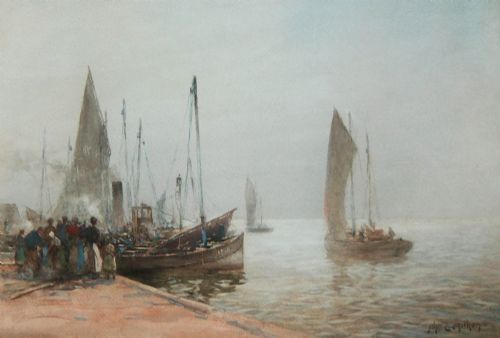
Original Watercolour Landscapes
Original watercolour landscapes capture views on paper in pigment, offering a direct window into British countryside, coastal and river scenes from past centuries.
What original watercolour landscapes are
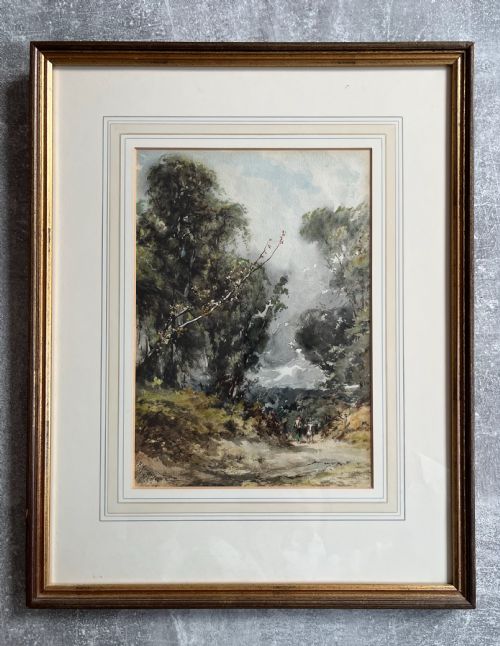
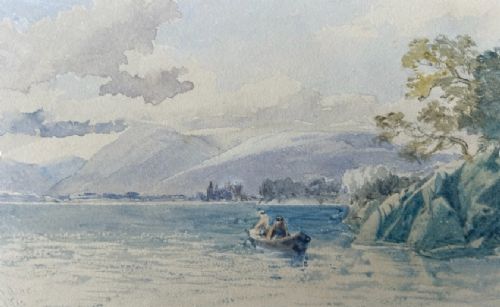
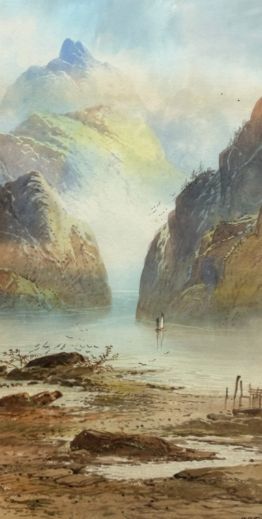
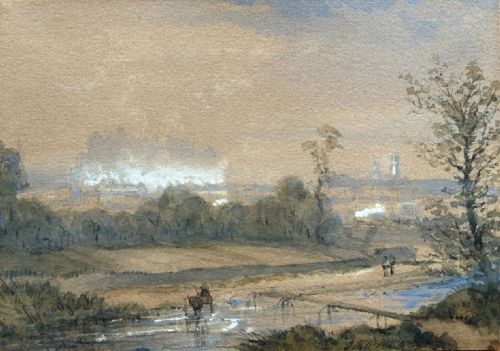
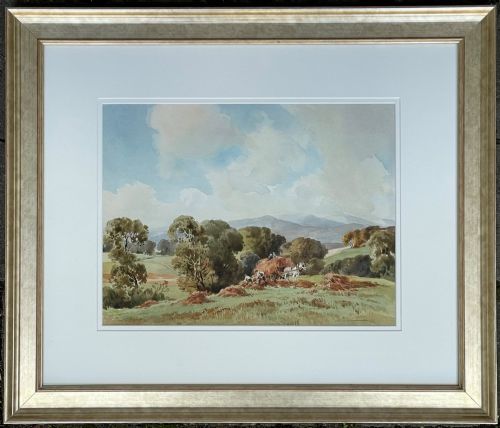
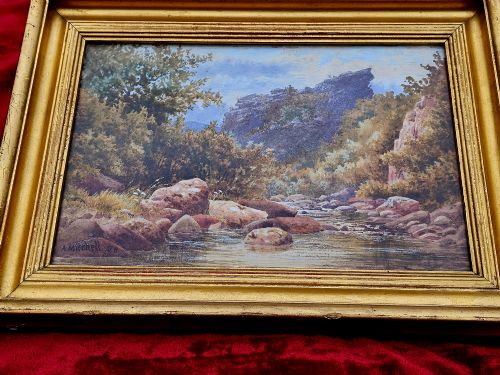
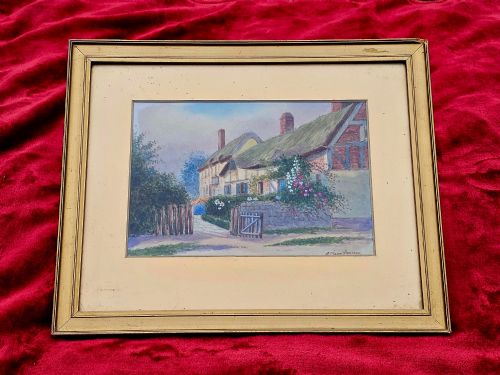
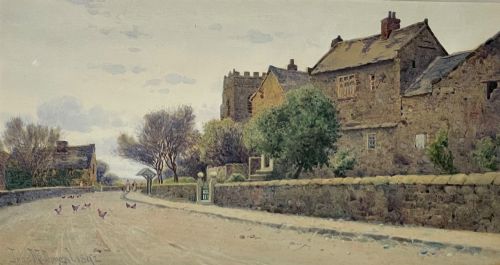
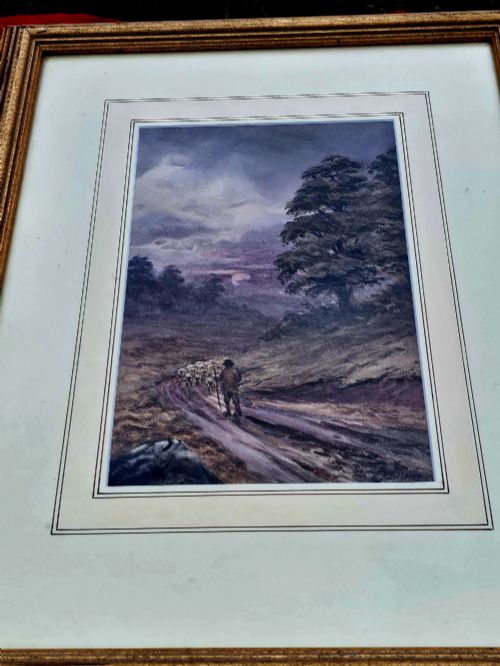
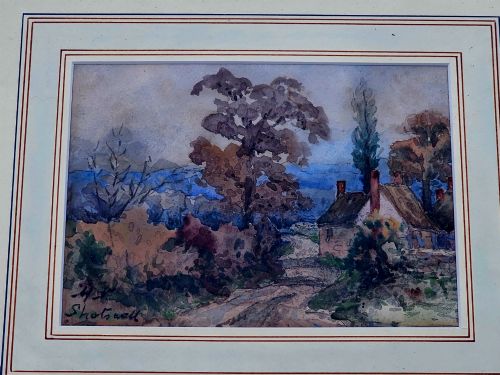
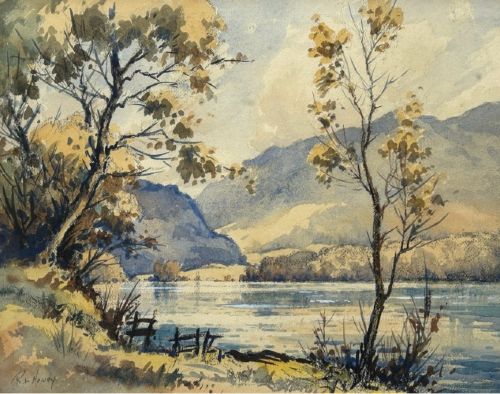
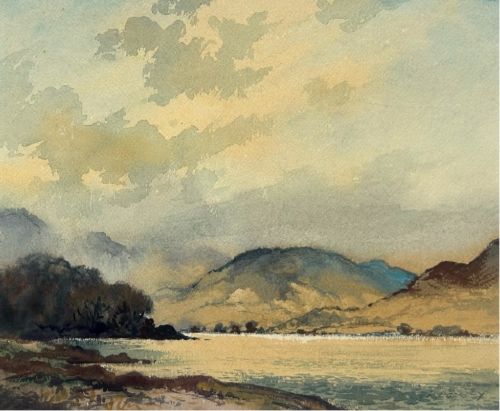
Original watercolour landscapes present painted scenes on paper, encompassing rural views, country watercolours, moorland and snowy landscapes, alongside coastal and river views. These works capture British topography ranging from Norfolk and Hampstead to Yorkshire, Ireland and the Thames.
Most pieces encountered here arrive in pairs, spanning the Victorian and Edwardian eras through to the 1930s. Buyers find depictions of cottages, mountain ranges, haymaking and village life executed by named artists of the nineteenth and twentieth centuries.
How they were made
Artists apply watercolour pigment and watercolour paint directly onto paper supports, often finishing compositions with signed details. The works utilise card mounts to separate the painting from the surrounding glazing.
Framing typically involves wood structures, sometimes incorporating gold leaf accents or contemporary frames that protect the delicate paper surfaces from environmental damage.
Retail Price Guide 2026
Typical UK retail prices for original watercolour landscapes, calculated from the Sellingantiques database of over a million retail prices indexed since 2003. This retail price guide relies exclusively on Sellingantiques data; no external sources or auction records are used, so the figures do not describe the wider market.
Studio sale stamps discovered on the reverse provide a quiet nod to the artist's final clearance before history claimed the studio.
What varies in quality
Quality rests in the precision of the brushwork and the artist's command of light across landscapes, distinguishing casual sketching from accomplished fine art. Works bearing clear signatures and documented attributions carry greater artistic presence.
The condition of the paper support and the vibrancy of the pigments dictate visual success. Superior examples retain their original framing context and card mounts without intrusive discolouration.
Robert A Nottingham·F J Snell·Ernest Uden·Sidney James Beer·Gordon Meadows·Col H P Ditmas·Orlando Greenwood·Charles Frederick Allbon
The Original Watercolour Landscapes Glossary
- Watercolour pigment
- The finely ground colour substance mixed with a binder to create watercolour paint. This material dissolves in water and is applied in washes to paper.
- Card mount
- A protective border of heavy paper or card placed around a painting. It creates a physical gap between the watercolour surface and the glass.
- Verso
- The back of a painting or its support. This area occasionally holds studio sale stamps, signatures or historical annotations.
- Fine art
- Works created primarily for aesthetic expression rather than technical illustration. This designation covers original paintings produced across the Victorian and twentieth-century periods.
Frequently Asked Questions
Are these paintings genuine originals?
Yes, the works listed are original watercolour paintings executed by hand on paper rather than modern mechanical reproductions. Each piece represents a unique application of pigment by the artist.
Signatures, studio stamps and period framing methods further support their authenticity as genuine historical artworks.
How should I frame and hang them?
Original watercolours require protection behind glass and acid-free card mounts to prevent fading from light exposure and damage from humidity. Keeping them away from direct sunlight preserves the delicate pigments.
Displaying them in stable indoor environments ensures the paper supports and wooden frames remain well-preserved over time.
Why do many come in pairs?
Many nineteenth and twentieth-century watercolours were created, sold and framed as companion pieces to balance decorative arrangements in domestic interiors. Artists frequently painted two matching views of related subjects at the same time.
Keeping pairs together maintains their historical pairing and visual symmetry on the wall.
How can I tell the period?
Dating relies on stylistic clues, artist biographies, framing materials and inscribed dates found on the paintings or card mounts. Victorian and Edwardian works often feature specific palette choices and paper types characteristic of those decades.
Studio sale stamps and signatures also help anchor the pieces to active working periods of the artists.