




Traditional Nesting Side Tables
Traditional nesting side tables offer a practical tiered design in sets of three or four, sliding neatly together when floor space matters.
Traditional Nesting Side Tables
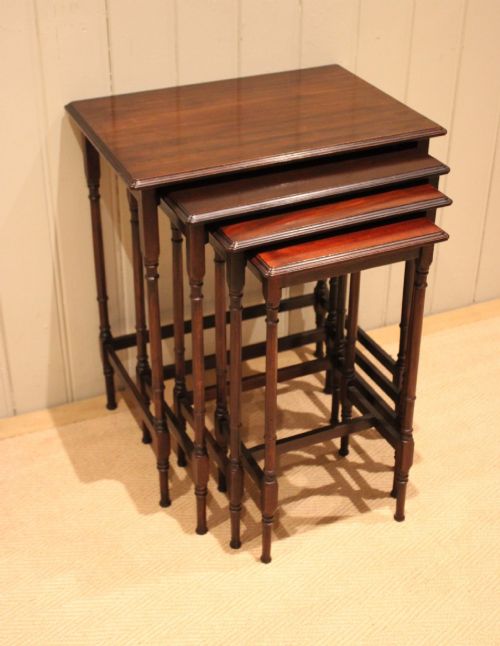
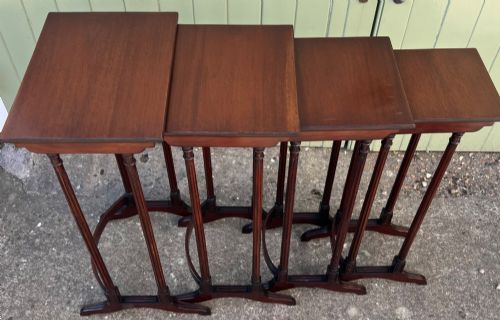
Traditional nesting side tables comprise sets of graduating tables that slide one beneath another to save space when not in use. You will most frequently encounter sets of three or four tables constructed during the Victorian, Edwardian, and early twentieth-century periods.
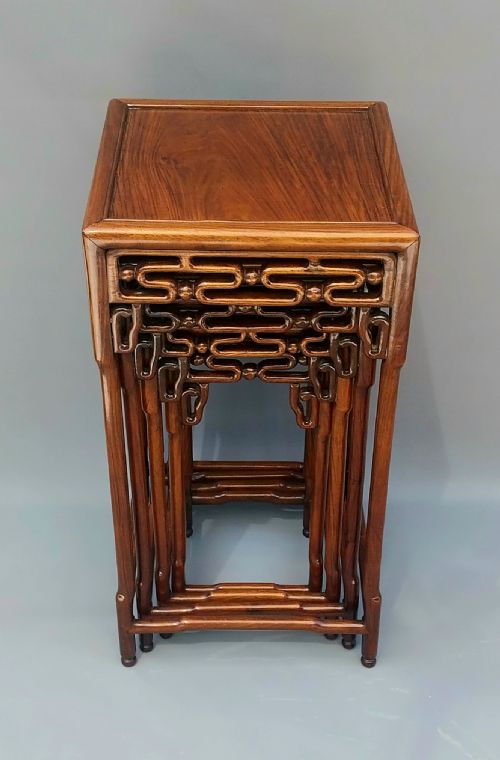
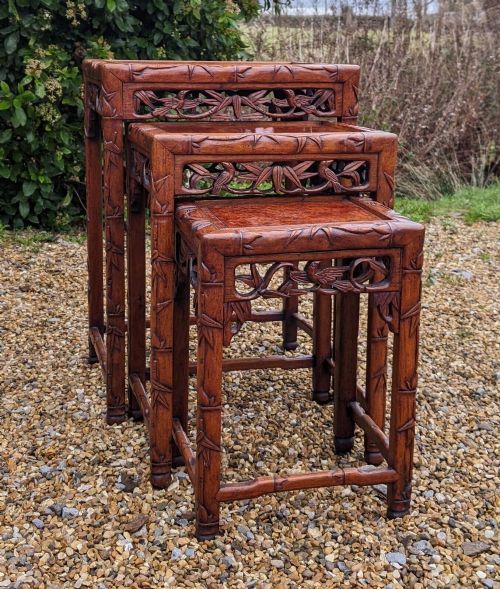
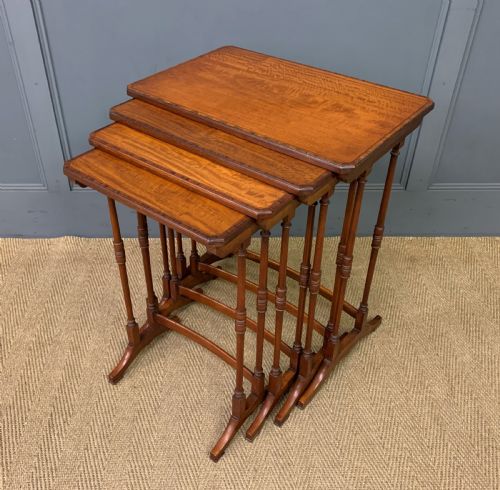
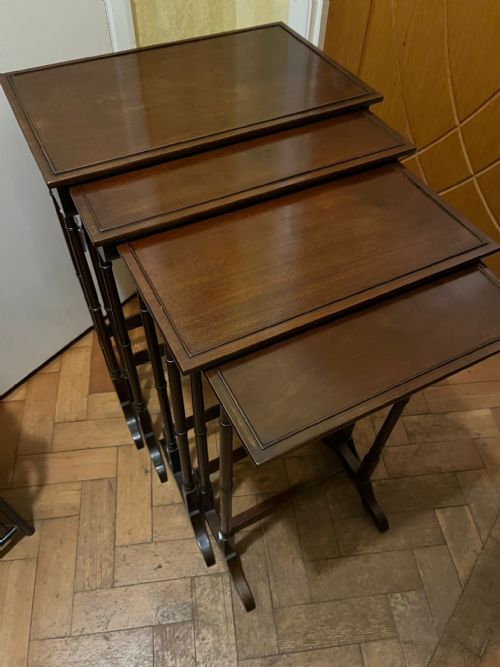
The form appears in various historical styles, ranging from plain English country oak and Georgian revival mahogany to Chinese export rosewood and hardwood. Individual pieces within a set share matching timber, legs, and top shapes, scaling down uniformly so the smaller tables disappear under the largest one.
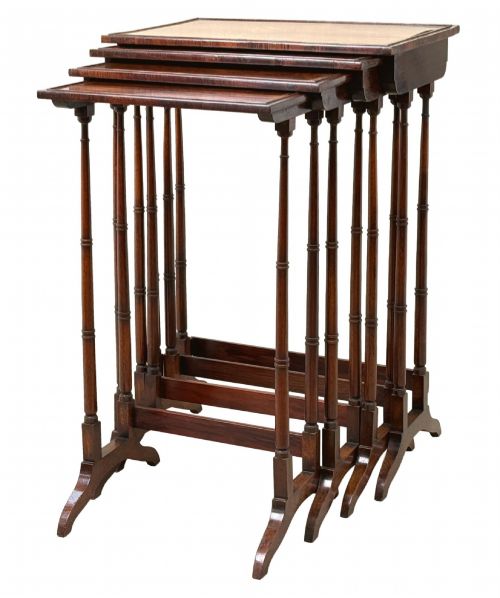
While many serve as occasional coffee tables or side tables, others follow the older quartetto format designed for tea or writing. Their utility lies in this flexible arrangement, providing surface space instantly and storing away as a single compact unit.
Materials and construction methods
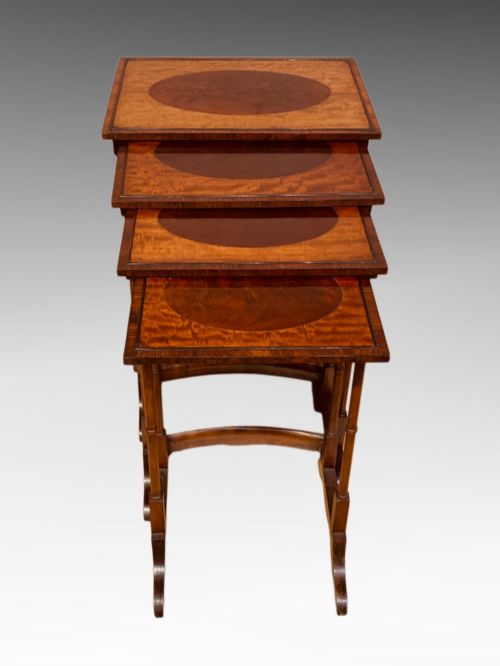
Cabinetmakers built these sets primarily using timbers such as mahogany, oak, walnut, and rosewood, often applying fine veneer or contrasting satinwood inlay to the top surfaces. Chinese export examples utilise dense Asian hardwoods like huanghuali and hongmu, prized for their rich grain and natural colour.
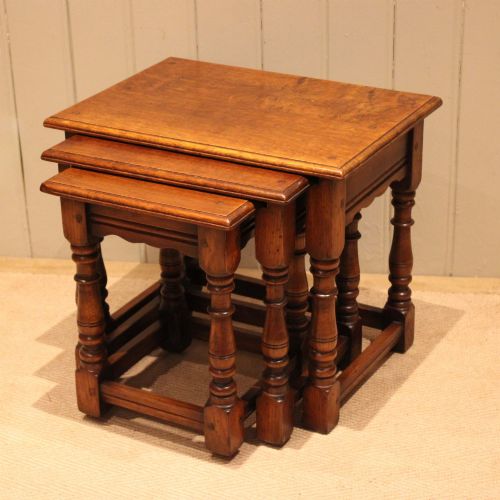
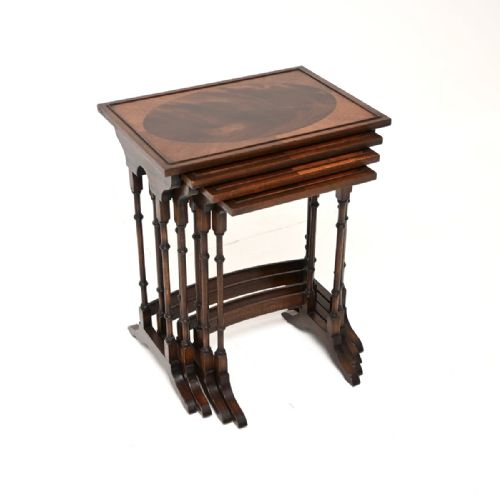
Construction relies on sturdy frame joints and turned or square legs, sometimes featuring barley twist turnings on oak iterations or delicate shaped tops. Inlaid pieces incorporate precise marquetry and stringing, requiring skilled handiwork to align the decorative patterns across the graduating surfaces.
Listings feature sets spanning the nineteenth century through the 1930s, utilising mahogany, oak, walnut, rosewood, and hardwood.
Factors distinguishing quality
Quality reveals itself in the choice of timber and the precision of the graduating frame fit. Better examples feature figured mahogany, burr walnut, or high-grade rosewood with strong natural grain patterns that match coherently across all tables in the nest.
The integrity of the joints and the crispness of any inlay or carved detail separate standard production from superior craftsmanship. Finer sets maintain stability and smooth sliding action without excessive wear on the internal runners or leg frames.
The Traditional Nesting Side Tables Glossary
- Quartetto
- A set of four graduating tables designed to nest together. This traditional term frequently appears in nineteenth-century descriptions of occasional tables.
- Chinoiserie
- European decorative style imitating Chinese artistic motifs. These pieces often feature painted or lacquered oriental scenes on hardwood or pine frames.
- Veneer
- A thin layer of superior timber applied to a secondary wood base. This technique allowed makers to display striking grain patterns on table tops.
- Inlay
- Decorative ornamentation created by embedding contrasting materials into the wood surface. Satinwood and darker stringing lines commonly form geometric patterns on table borders.
- Barley twist
- A spiral turning resembling a twisted rope found on table legs and supports. This decorative woodworking style appears frequently on early twentieth-century oak furniture.
Traditional Nesting Side Tables: Frequently Asked Questions
How do I choose between three and four tables?
Sets of three generally offer larger individual surface areas per table, making them useful as independent coffee tables around a room.
Sets of four, often called quartetto tables, provide greater tiered flexibility but feature smaller footprints on the lowest tables.
What woods were commonly used for these tables?
Mahogany, oak, walnut, and rosewood dominate the British and European examples, ranging from dark Victorian timber to lighter Edwardian finishes.
Chinese export sets utilise dense oriental hardwoods such as huanghuali and hongmu, known for their distinct grain and weight.
Are these tables sturdy enough for daily use?
Solidly built hardwood and mahogany nests withstand regular placement of cups and books without structural strain.
Lighter inlaid satinwood or decorative oriental tables require more gentle treatment to preserve their polished surfaces and delicate joints.
How can I tell the period of a nest?
Victorian and nineteenth-century examples often feature dense figured mahogany or rosewood with heavy construction, while Edwardian and 1920s pieces lean towards lighter inlaid satinwood, oak, or walnut.
Stylistic cues like barley twist supports, Queen Anne style cabriole legs, or Chinese export carving also point directly to the era of manufacture.