


French Nesting Tables
French nesting tables offer a clever space-saving design in walnut, mahogany, and rosewood, perfect for flexible modern living.
French Nesting Tables
When you search for french nesting tables, you encounter sets of graduating occasional tables designed to slide neatly beneath one another. These portable pieces serve multiple household uses while occupying the floor space of just a single small table.
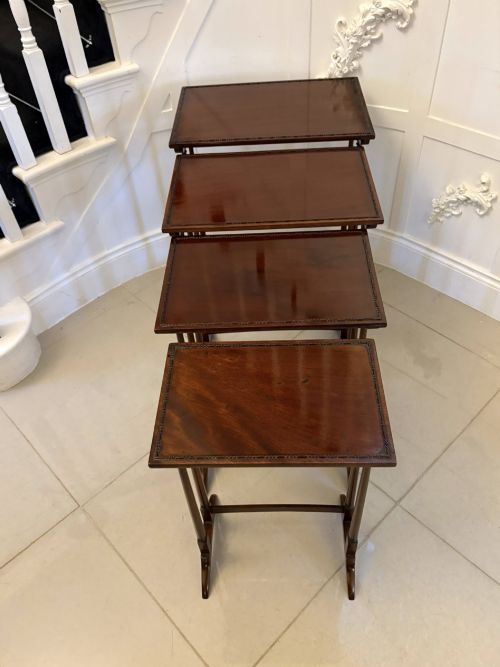
The versions most frequently found span the Edwardian era, the nineteenth century, and the early decades of the twentieth century. They appear in configurations of three or four graduated tables, often referred to as quartetto sets.
Makers utilised various stylistic influences ranging from classical Louis XVI revival and French provincial to Art Nouveau and Art Deco. These designs accommodate diverse interior schemes while retaining a distinct continental character.
How they were made
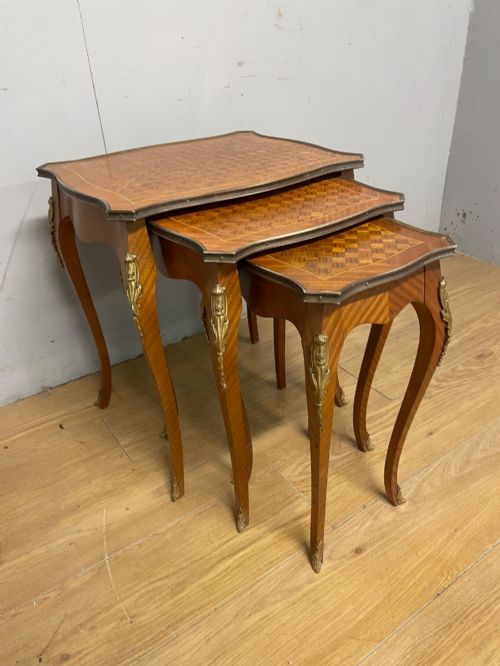
Cabinetmakers constructed these sets using substantial hardwoods such as mahogany, walnut, and rosewood, frequently applying decorative veneers and parquetry to the upper surfaces. Intricate floral inlay and boxwood stringing often accent the tops.
Specialised workshops incorporated diverse materials including brass mounts, glass inserts, and hand-painted floral decoration directly onto timber or gilt-painted surfaces. Selected examples integrate specialised metalwork frames or trolley elements.
Current listings demonstrate a notable concentration of Edwardian and early twentieth-century pieces executed in walnut and mahogany.
What varies in quality
The distinction between standard production and exceptional work lies in the precision of the timber matching and the execution of the parquetry or inlay. Superior sets demonstrate seamless graduation where each table stows flush without friction.
Signed pieces by notable makers or workshops command particular attention for their refined joinery and distinctive artistic ornamentation. The integrity of the original polish and the crispness of applied brass or painted details further elevate the standing of individual sets.
Émile Gallé·Maison Baguès·E. Daligny
The French Nesting Tables Glossary
- Quartetto
- A set of four graduating tables designed to nest together. This traditional term frequently appears in descriptions of nineteenth-century and Edwardian nests.
- Parquetry
- Geometric mosaic woodwork formed by small veneer pieces laid in patterned arrangements. It creates durable and decorative tabletops.
- Art Nouveau
- A decorative style characterised by flowing, organic lines and natural plant motifs. Pieces from this movement often feature marquetry depictions of floral subjects.
- Art Deco
- A twentieth-century design movement favouring sleek geometric forms and streamlined styling. Tables from this period abandon ornate carving in favour of clean architectural silhouettes.
French Nesting Tables: Frequently Asked Questions
How were they used historically?
These tables served primarily as flexible furniture for entertaining guests, providing convenient surfaces for drinks, sewing, or writing equipment as needed. Servants or hosts could easily pull them out from beneath the main table and place them beside seating.
When not in use, stacking them returned the floor space to the room, making them especially popular in drawing rooms and parlours where space was at a premium.
How do I live with them?
Living with these tables involves placing them where their graduating sizes can be both appreciated and utilised. They work effectively beside sofas or armchairs, ready to be separated when visitors arrive.
Care should be taken to protect polished wooden surfaces from excessive moisture and direct sunlight, preserving the delicate veneers and painted finishes found on many period examples.
How do I tell periods apart?
Distinguishing between periods relies on observing the decorative motifs and structural forms. Nineteenth-century examples often feature elaborate floral paintwork or heavy revival styling, while Edwardian pieces frequently showcase refined mahogany or walnut parquetry.
Later pieces from the twentieth century shift towards clean Art Nouveau curves or geometric Art Deco lines, reflecting the aesthetic preferences of their respective decades.