


Floral Inlaid End Tables
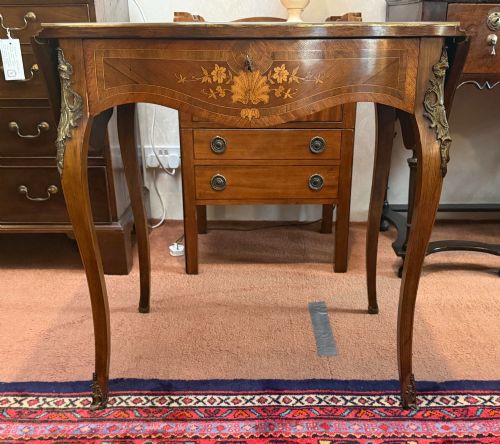
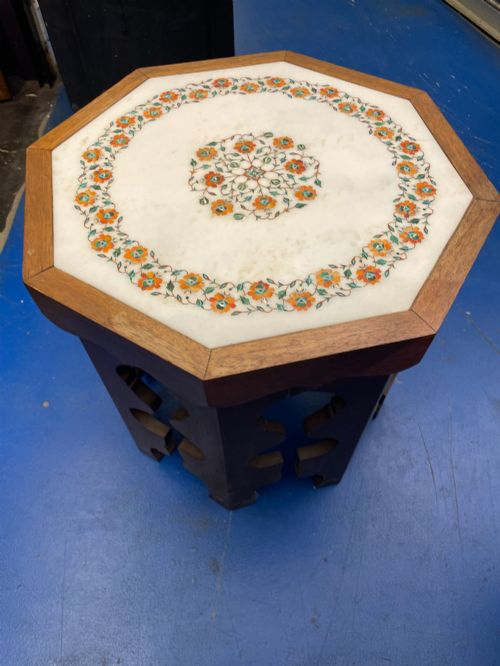
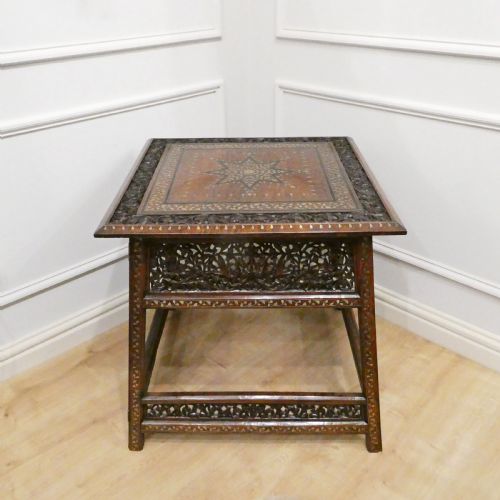
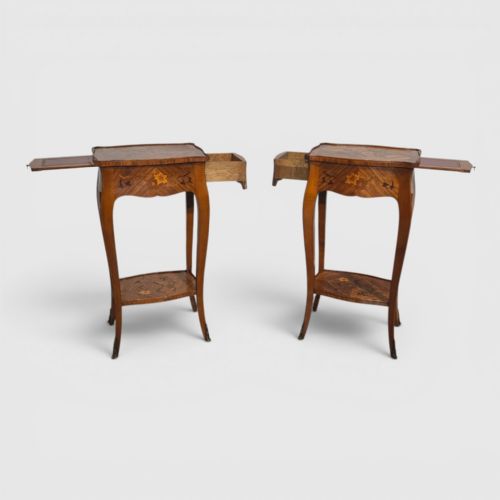
Floral inlaid end tables bring warmth and botanical detail into a room, offering surface space built with centuries of decorative marquetry.
Floral Inlaid End Tables
When you search for floral inlaid end tables, you encounter compact occasional furniture designed to sit beside a sofa or chair. These pieces serve practical daily uses while displaying intricate wood and brass decoration.
The selections span the Victorian, Edwardian, and late nineteenth century periods, incorporating French styles alongside Anglo-Indian craftsmanship. You meet side tables, lamp tables, nests of tables, and bedside cabinets within the range.
Walnut, rosewood, mahogany, and fruitwood form the primary bodies of these tables. The surfaces frequently display marquetry flowers rendered in lighter contrasting timbers such as satinwood and boxwood.
How they were made
Cabinetmakers constructed these tables using dense hardwoods like mahogany, walnut, and rosewood for the structural frames and tabletops. Secondary timbers provided internal support for drawers and nesting sets.
The floral decoration relies on marquetry and parquetry techniques, where thin veneers of satinwood, boxwood, and fruitwood are precisely cut and fitted together. Brass inlay and ormolu mounts occasionally accent the wooden surfaces.
Painted details and marble tops appear on specific French and Edwardian examples, combining carved or turned legs with finely balanced proportions.
Materials seen include brass, mahogany, walnut, rosewood, satinwood, ormolu, fruitwood, and boxwood.
What varies in quality
The standard of marquetry cuts defines the visual appeal of each table, distinguishing crisp botanical outlines from simpler geometric work. Dense grain patterns in the surrounding walnut or rosewood elevate the overall presentation.
Structural refinement shows in the turnings of the legs, the tight joints of nests, and the careful integration of brass or ormolu mounts. Finer pieces demonstrate sustained attention to both the visible tabletops and the hidden framing.
The Floral Inlaid End Tables Glossary
- Marquetry
- The art of applying decorative pieces of veneer to a structural structure to form floral and pictorial designs. It transforms a plain tabletop into a detailed composition.
- Parquetry
- Geometric mosaic woodwork used for floors and tabletops, created using precise angular wooden tiles. It often accompanies floral marquetry panels on late nineteenth century tables.
- Occasional table
- A small, movable table designed for specific, intermittent uses around a living space. These pieces function easily as lamp tables or bedside stands.
- Ormolu
- Gilded bronze or brass mounts applied to furniture for decorative effect. It frames corners and legs on French nineteenth century pieces.
- Satinwood
- A durable, lustrous timber with a yellow sheen used extensively for contrasting floral inlay. It provides bright highlights against darker rosewood and walnut backgrounds.
Floral Inlaid End Tables: Frequently Asked Questions
Where do I put an end table?
These compact tables fit easily beside armchairs, sofas, or bedsides where surface space is needed for lamps and small objects.
Their varied forms, including nests and kidney shapes, allow them to tuck into corners or pull out when guests arrive.
How do I clean inlaid wood?
Dust surfaces regularly with a soft, dry cloth to prevent dirt from settling into the fine marquetry joints. Avoid harsh chemical cleaners and excessive moisture that might lift the delicate veneers.
Apply a traditional beeswax polish occasionally to nourish the timber and maintain a soft, protective sheen.
Are nest tables sturdy?
Well-constructed nesting tables rely on precise joinery and well-balanced frames to support everyday items securely. Each smaller table fits snugly beneath its predecessor to save floor space when not in use.
Checking the tightness of the leg joints ensures stability across all sections of the nest.
What is the difference between Edwardian and Victorian pieces?
Victorian tables often feature heavier timbers, deep tones, and elaborate Rococo Revival or French-influenced carvings. They tend toward dense ornamentation and substantial proportions.
Edwardian examples frequently present lighter colour palettes, satinwood highlights, and more restrained painted or inlaid decoration.