


1900s Side Tables
When you search for 1900s side tables, you encounter an eclectic mix of occasional, console, and games tables shaped by Edwardian, Victorian, and Arts and Crafts tastes.
1900s Side Tables
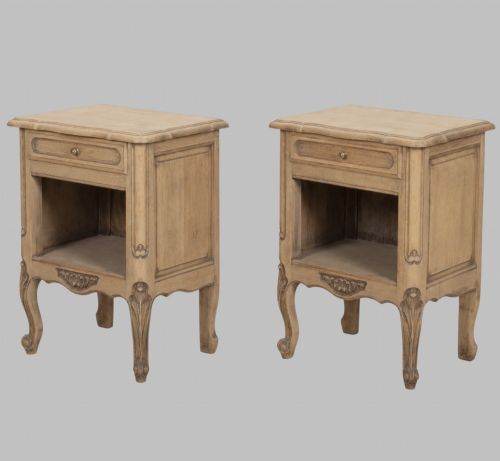
1900s side tables encompass a broad array of occasional, console, and bedside forms that served functional roles in homes around the turn of the twentieth century. When exploring this selection, buyers frequently encounter versatile pieces designed for specific domestic corners, such as compact bedside cabinets or hall consoles.
The objects span multiple stylistic revivals and design movements, reflecting the transition from Victorian ornamentation to the simpler lines of the Edwardian era. Alongside British oak and mahogany iterations, the category extends to exotic imports including Levantine and Syrian inlaid tables.
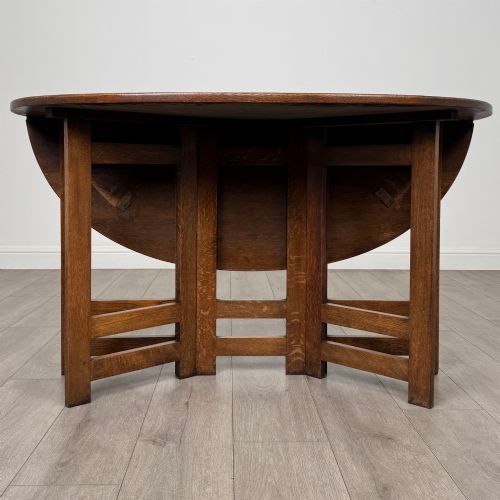
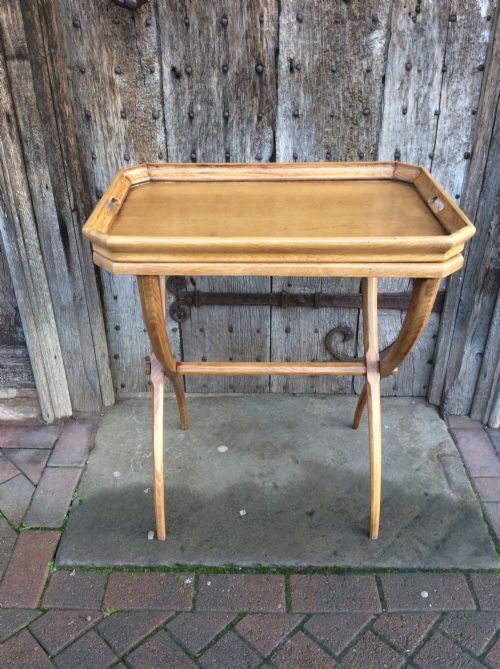
Makers and manufacturers of the period utilised various formats, from folding gateleg designs and butler's trays on stands to multi-functional card and games tables. These diverse forms demonstrate how domestic furniture adapted to changing social habits during the early 1900s.
Materials and construction methods
Construction relies heavily on traditional timber working, utilising solid and veneered woods such as oak, mahogany, walnut, and satinwood. Cabinet makers applied ebonised finishes and wood inlay to enhance visual appeal, while specialised examples incorporated metal components like brass and gilded metal.
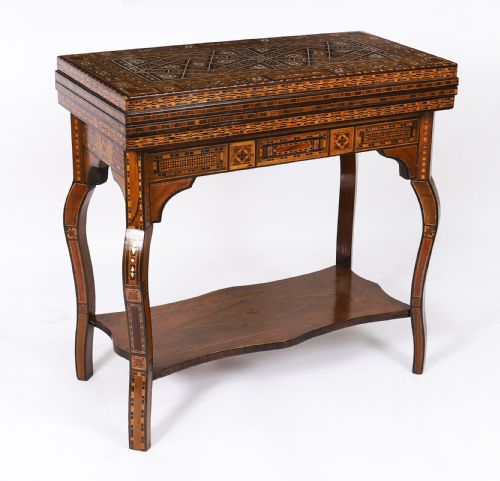
Surface decoration distinguishes many pieces from this era, notably through intricate mother-of-pearl inlay seen in Syrian and Levantine works. Other variants employ textile elements, verdigris copper tops, or specialised bleaching techniques to achieve distinct finishes.
Some tables served multiple functions by transforming effortlessly from tea stands into backgammon boards for evening entertainment.
Distinctions in quality
Quality in these tables is determined by the precision of joinery, the integrity of the timber, and the execution of decorative details like wood inlay or mother-of-pearl placement. Pieces displaying meticulous hand-carving and thoughtful proportion stand apart from simpler utilitarian items.
The distinction between standard production items and works by notable designers lies in the originality of the conception and the refinement of the materials. Superior examples retain their structural stability and original surface treatments with minimal later alteration.
Emile Galle·Carlo Bugatti
The 1900s Side Tables Glossary
- Gateleg table
- A table with hinged leaves supported by legs that swing out like gates. This clever mechanism allows the surface area to expand or contract easily.
- Console table
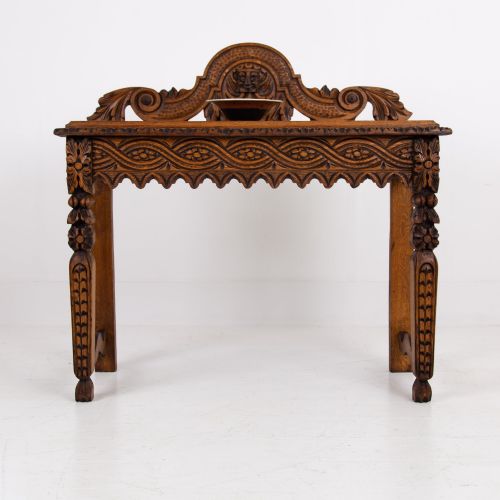
- A table designed to stand against a wall, frequently fixed or supported by brackets. These pieces often served decorative or display functions in hallways and reception rooms.
- Occasional table
- A small, versatile table intended for intermittent use around a room. They appear in numerous shapes, including octagonal, hexagonal, and rectangular formats.
- Inlay
- A decorative technique where contrasting materials are inserted into recessed cavities on a wood surface. Common materials include various lighter woods, brass, and mother-of-pearl.
- Ebonised wood
- Timber treated with a dark stain or finish to imitate ebony. This technique gained popularity during the Victorian and Edwardian periods for dramatic contrast.
1900s Side Tables: Frequently Asked Questions
What defines a 1900s side table?
These pieces include occasional, console, and bedside tables produced around the turn of the twentieth century. They reflect diverse influences from Victorian revivalism to Arts and Crafts simplicity.
Materials range from local oak and mahogany to exotic inlaid walnut and brass. Their forms adapted to specific domestic tasks like card games, bedside storage, or hallway display.
How do I identify Edwardian styles?
Edwardian tables generally favour lighter timbers, simpler lines, and restrained ornamentation compared to heavy Victorian predecessors. Satinwood and inlaid mahogany appear frequently in this period.
Parks of the Arts and Crafts movement also emerge, prioritising visible construction and honest materials like solid oak over excessive surface decoration.
Where were inlaid Syrian tables used?
Intricately decorated Syrian and Levantine tables served as exotic statement pieces in fashionable turn-of-the-century drawing rooms. Their detailed mother-of-pearl and wood mosaic work showcased global trade connections.
Owners typically placed them in prominent reception spaces where guests could admire the complex geometric patterns and craftsmanship.
How should I care for wood inlay?
Maintain inlaid surfaces by keeping them away from direct sunlight and fluctuating humidity, which can cause wood to warp and inlay to lift. Gentle dusting with a dry, soft cloth preserves the finish.
Avoid harsh chemical polishes that might seep into microscopic gaps around mother-of-pearl or contrasting wood sections.