
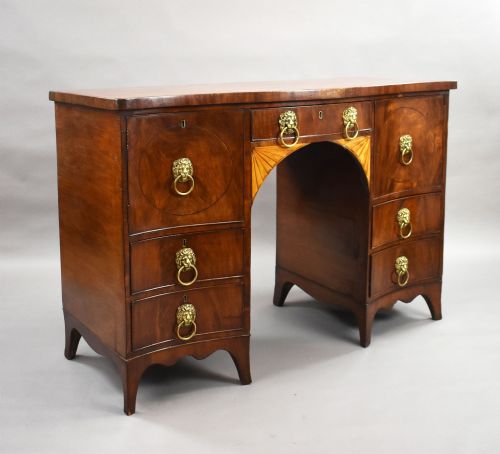


Traditional Mahogany Buffet Cabinet
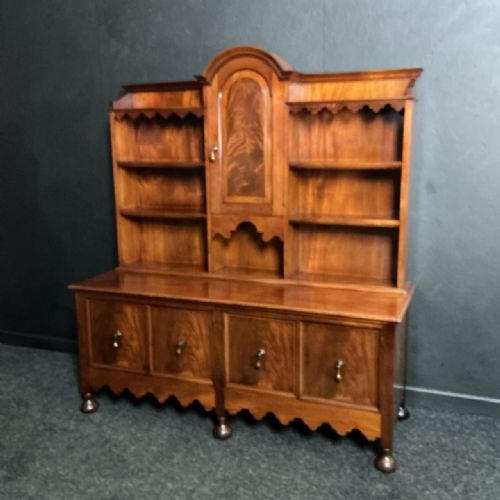
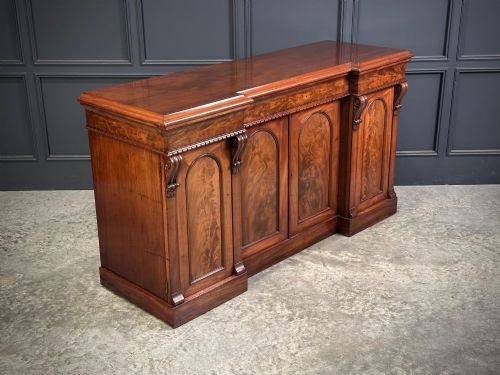
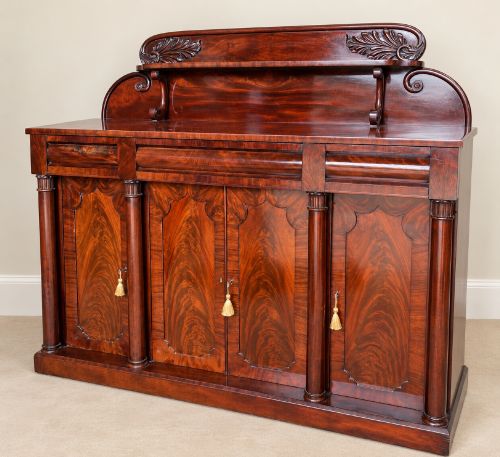
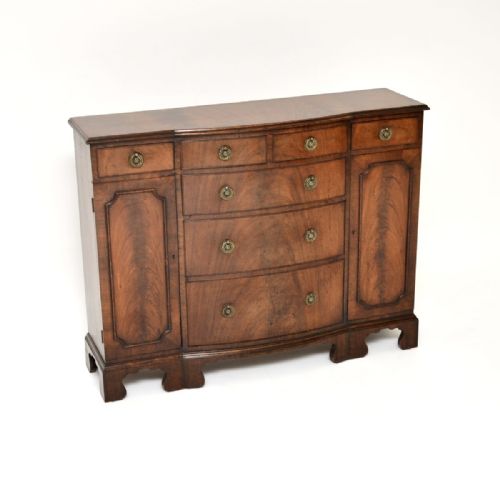
A traditional mahogany buffet cabinet grounds a dining room with generous storage and rich timber grain.
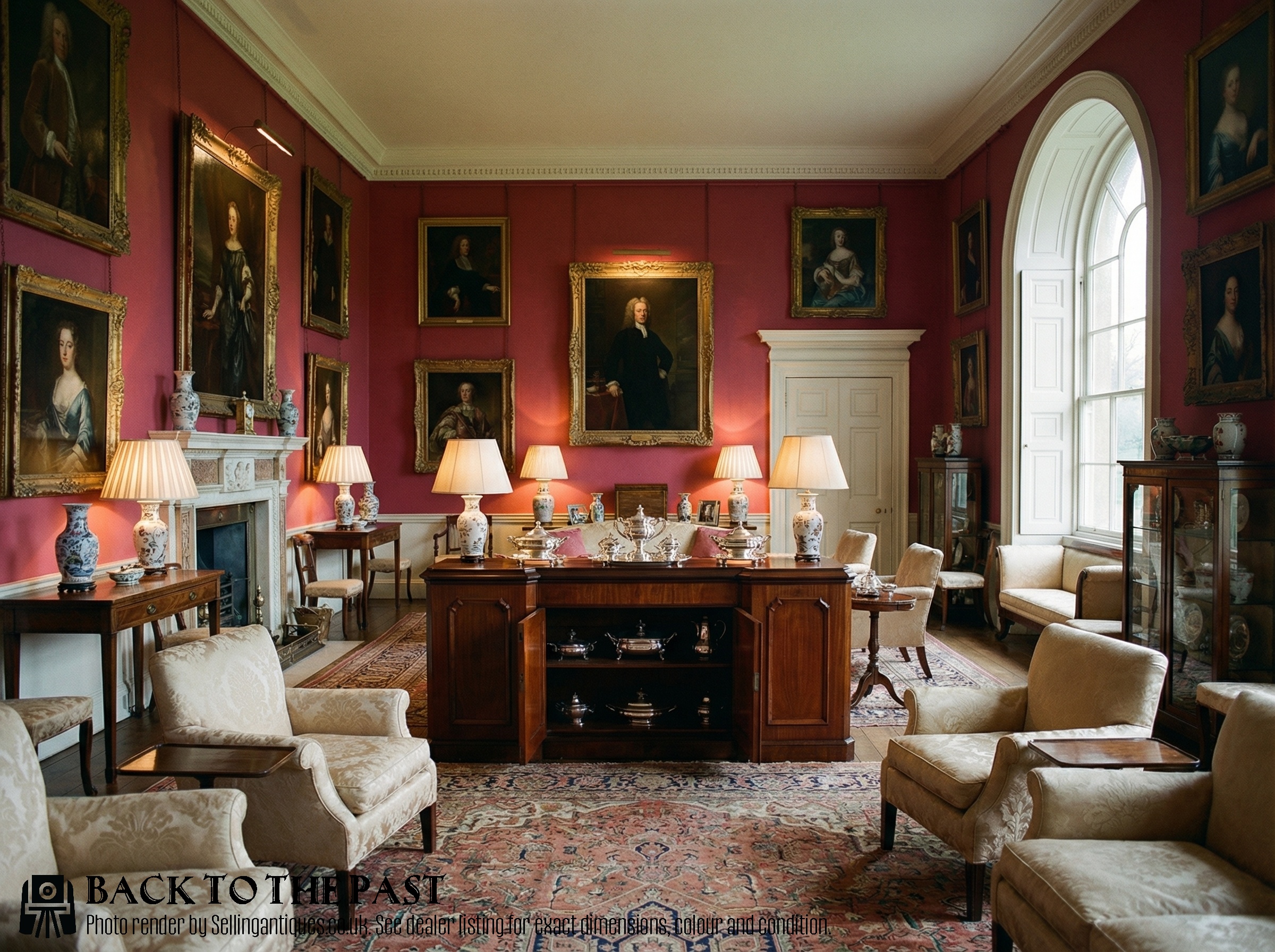
Traditional Mahogany Buffet Cabinet
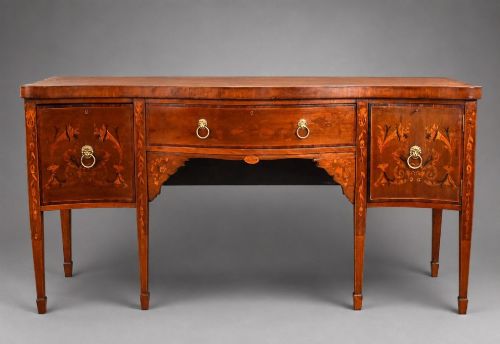
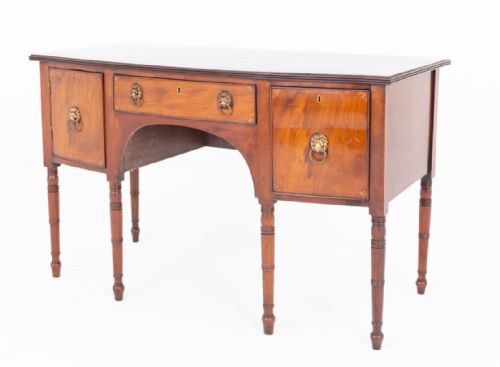
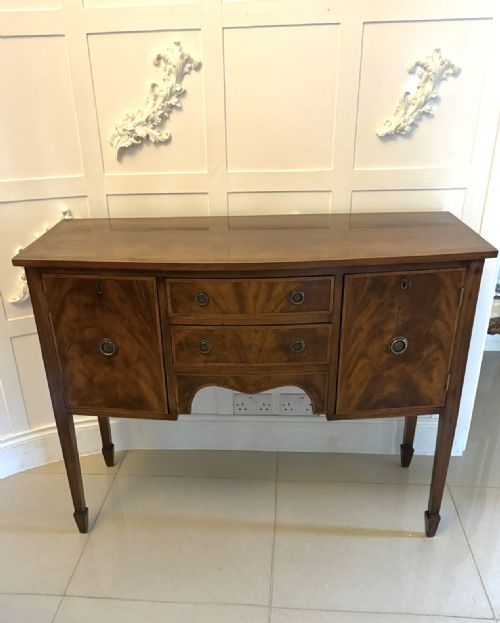
When you search for a traditional mahogany buffet cabinet, you encounter substantial dining furniture designed for serving food and storing silver or linen. The pieces found here span the eighteenth, nineteenth, and early twentieth centuries, encompassing Georgian, Victorian, and Edwardian periods.
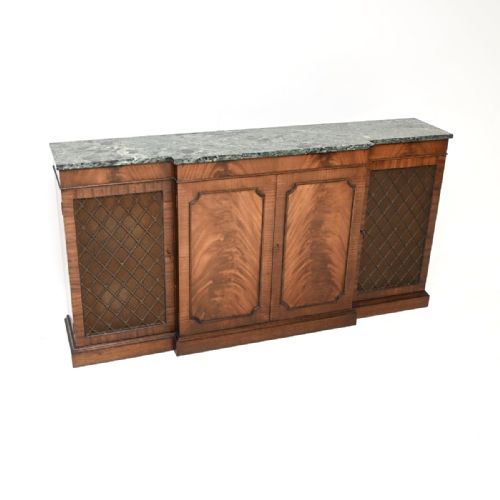
The form appears most frequently as a sideboard with multiple doors, pedestals, or drawers, alongside related variations like chiffoniers, servers, and breakfront cabinets. Makers constructed these items to anchor large dining rooms, utilising the deep reddish-brown tones of mahogany to project formal elegance.
The selection ranges from severe geometric pedestals of the William IV era to inlaid Edwardian pieces and revival styles like Regency and Chippendale. Buyers find both simple cupboards and elaborate mirror-backed servers equipped with marble tops or glass grills.
How they were made
Cabinet makers built these carcasses using solid mahogany and flame mahogany veneers over secondary timbers, often accentuating drawer fronts and doors with striking figuring. They introduced decorative contrast through marquetry inlay and brass fittings such as handles, lion-mask ring pulls, and gallery rails.
Interiors incorporated sturdy oak or pine for drawer linings and shelving, demonstrating functional longevity alongside exterior display. Surviving examples frequently integrate mirror glass into high backboards or employ marble slabs across the serving surface for durability.
Some Victorian kitchen dressers served domestic staff long before entering formal dining rooms as antique display cabinets.
What varies in quality
Quality rests upon the selection of the timber and the depth of the grain figure, particularly where cabinet makers deployed matched flame veneer across broad door panels. Superior examples exhibit crisp, hand-carved mouldings and finely detailed marquetry rather than cast or stencilled substitutes.
Structural integrity and original hardware dictate the standing of a piece within the range, distinguishing utilitarian kitchen servers from principal dining room pieces. The precision of the joinery in breakfront shapes and pedestal mounts separates standard production from workshop craftsmanship.
Maple & Co
The Traditional Mahogany Buffet Cabinet Glossary
- Breakfront
- A cabinet design where the central section projects forward from the flanking outer sections. This architectural arrangement creates depth and shadow across the frontal elevation.
- Chiffonier
- A low sideboard or cabinet equipped with enclosed shelving below and often a raised mirror or tier above. Victorians utilised these in smaller reception rooms for serving and display.
- Flame mahogany
- Timber cut from the fork of the mahogany tree to produce a swirling, fire-like pattern in the grain. Cabinet makers reserved this highly decorative veneer for principal door and drawer surfaces.
- Pedestal sideboard
- A heavy form featuring two distinct columnar cupboards flanking a central serving well or drawers. This configuration dominated formal dining rooms during the Regency and William IV periods.
- Marquetry inlay
- Decorative patterns formed by fitting contrasting pieces of wood veneer into a prepared ground. Craftsmen employed this technique on Edwardian and Georgian revival surfaces.
Traditional Mahogany Buffet Cabinet: Frequently Asked Questions
What is the difference between a buffet and a sideboard?
Sideboards generally offer longer, lower storage with a combination of deep drawers and cupboards designed primarily for heavy dining room service. Buffets often emphasise display shelves, mirror backs, and serving tops suited for lighter domestic use.
Historical usage overlapped considerably, leading makers to describe similar forms interchangeably across Victorian and Edwardian catalogues.
How do I date a mahogany cabinet?
Dating relies on architectural styling, construction methods, and timber choice, moving from eighteenth-century Georgian proportions to heavier Victorian pedestals and lighter Edwardian inlaid frames. Hardware fixings and secondary woods inside drawers provide further chronological markers.
Revival periods complicate simple dating, as Edwardian workshops frequently recreated Georgian and Regency forms with great technical accuracy.
Where should I place a large buffet cabinet?
These substantial pieces require a dedicated wall in a dining room or spacious hallway where their depth and length can be appreciated without blocking circulation. They function best away from direct heat sources and strong sunlight to protect the mahogany polish.
Mirror-backed variations also help bounce light around darker reception rooms when positioned opposite windows.
How do I clean and care for antique mahogany?
Maintenance requires regular dusting with a soft, dry cloth and occasional application of traditional beeswax to nourish the timber and preserve the polish. Avoid modern silicone sprays, which penetrate the grain and damage historical finishes.
Marble tops and glass panels demand gentle cleaning with neutral solutions to prevent moisture seeping into adjacent wood joints.