

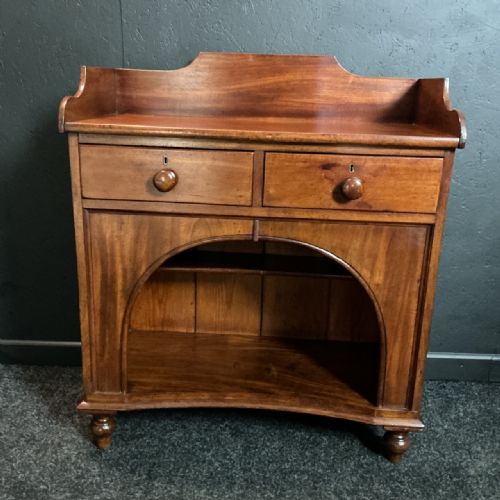
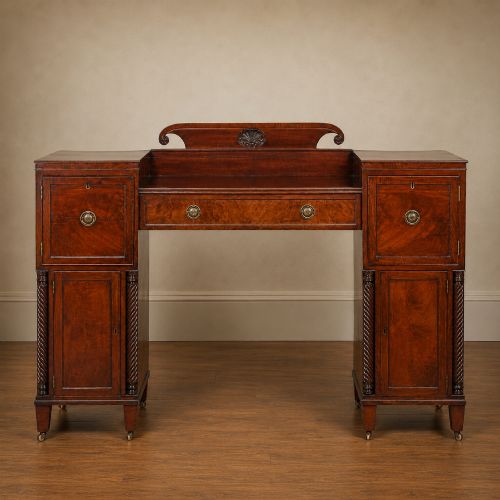
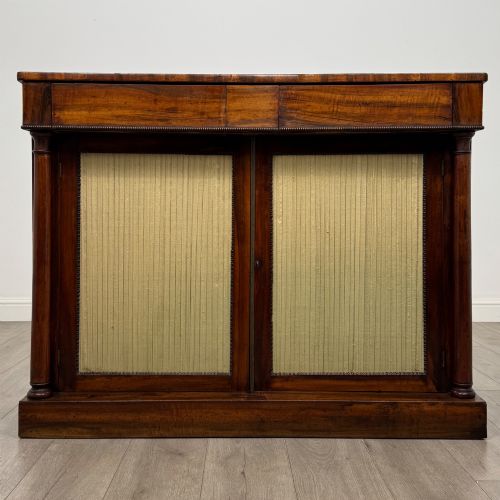
19th Century Mahogany Server
A 19th century mahogany server brings formal dining utility and deep timber figuring into a room.
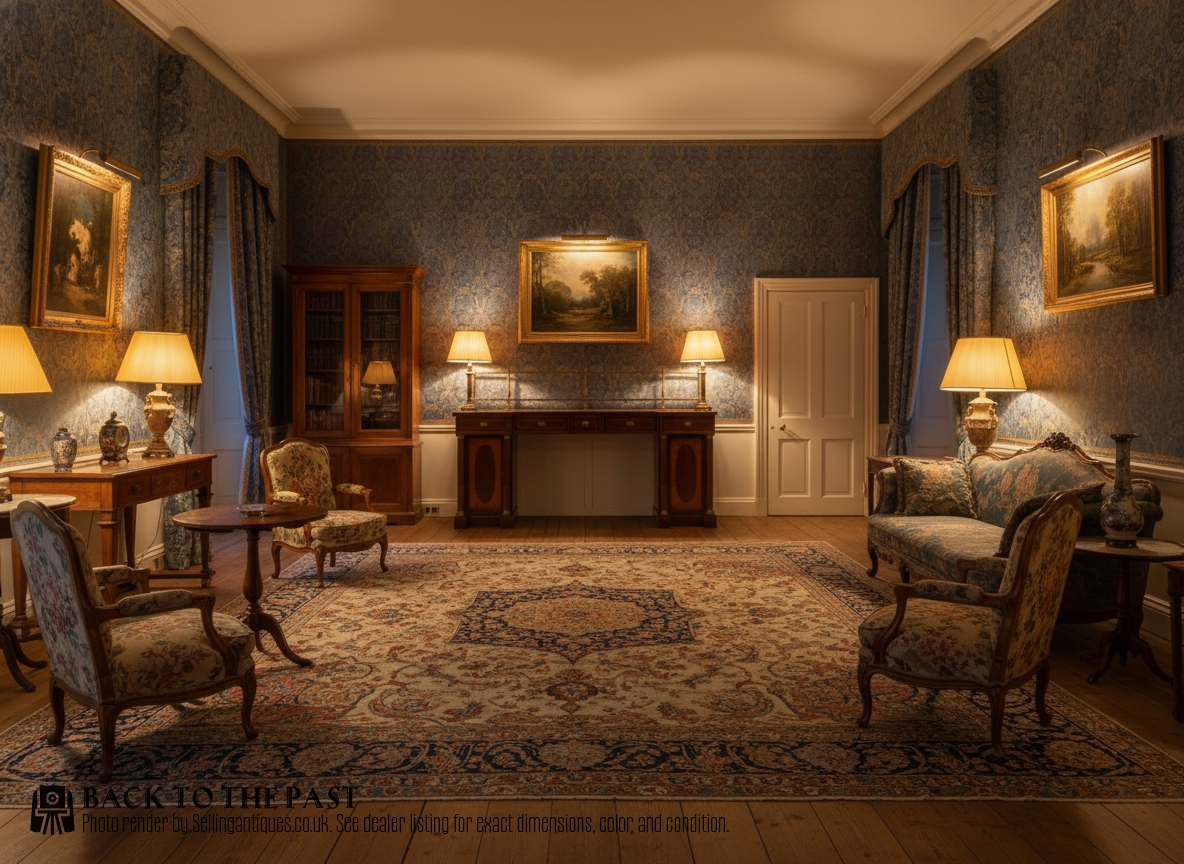
19th Century Mahogany Server
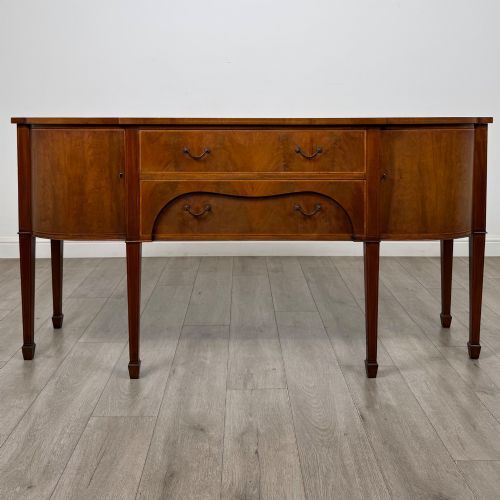
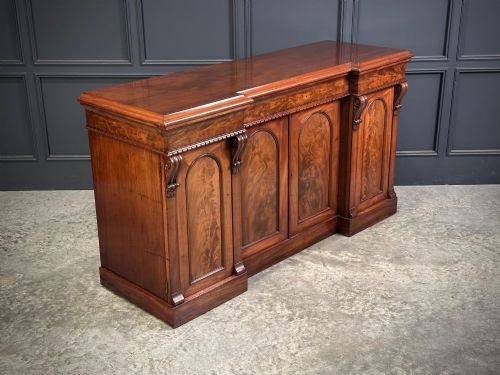
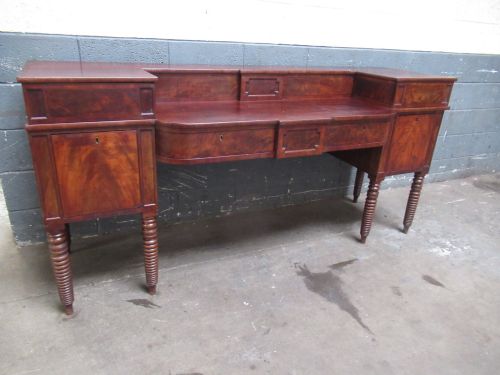
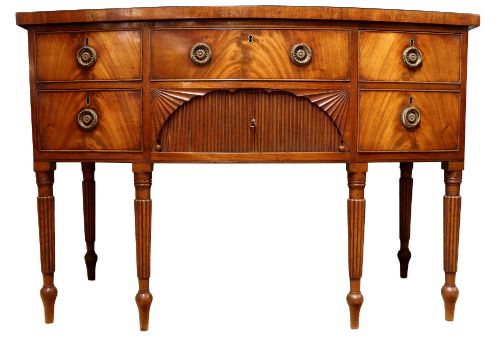
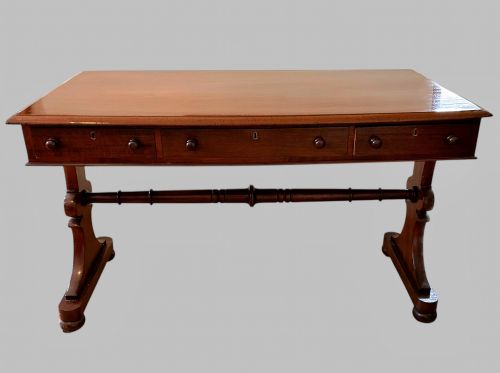
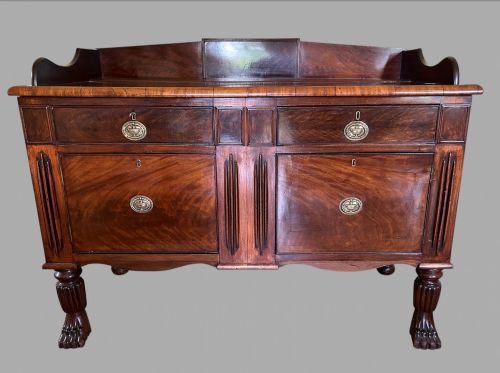
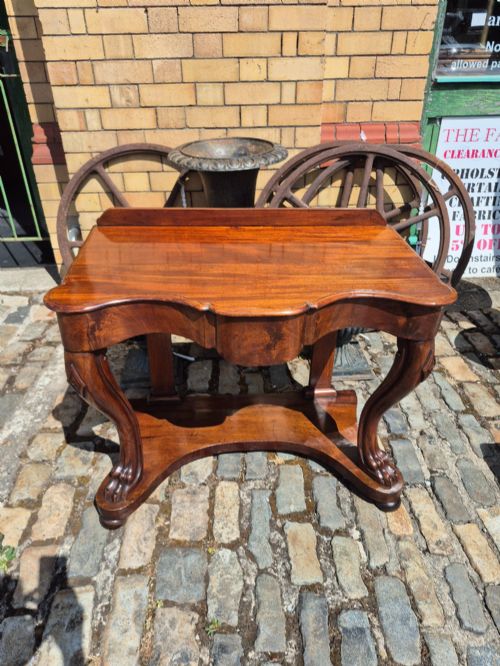
A 19th century mahogany server encompasses sideboards, serving tables, buffets, and chiffoniers designed for the dining room or parlour. These forms span Georgian, Regency, William IV, and Victorian periods, reflecting shifting tastes in formal entertaining.
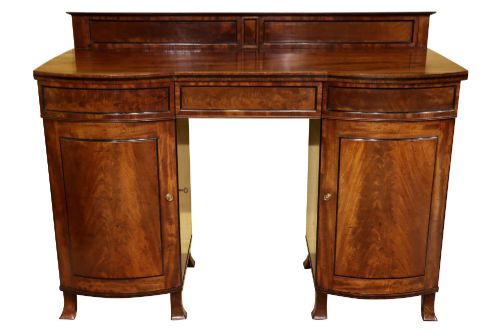
Bow front and pedestal profiles appear frequently alongside flat-fronted multi-door cupboards and library serving tables. Makers built these pieces to hold tableware, linen, and food, resulting in capacious storage behind panelled doors and drawers.
How they were made
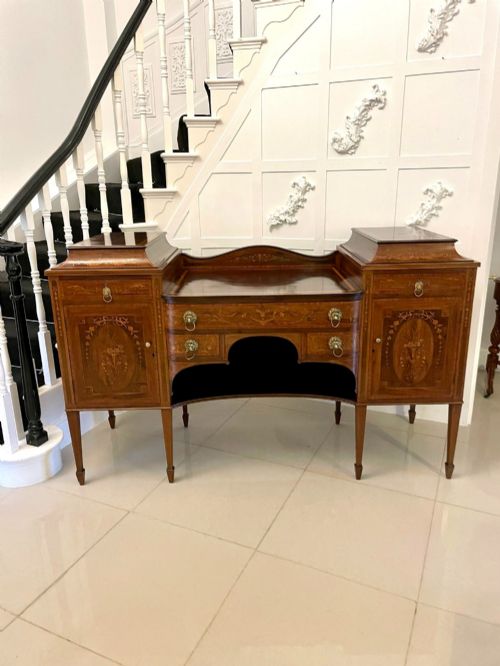
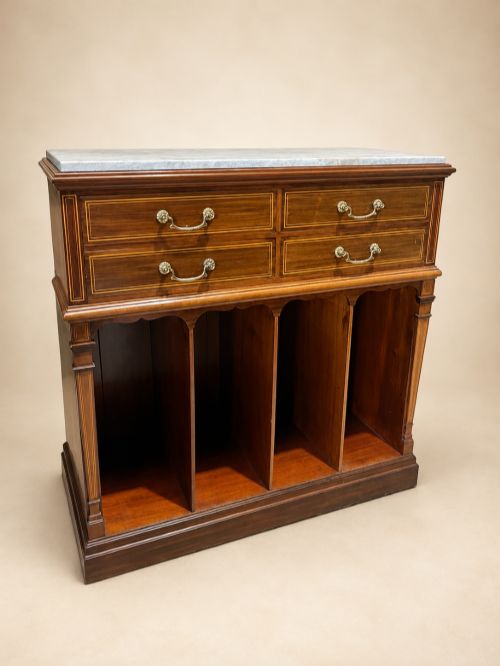
Cabinet makers utilised solid mahogany and flame mahogany veneer applied to secondary timbers, building deep surface movement into large expanses of timber. Brass handles, inlay, marquetry, and marble tops accent these foundational materials across various regional workshops.
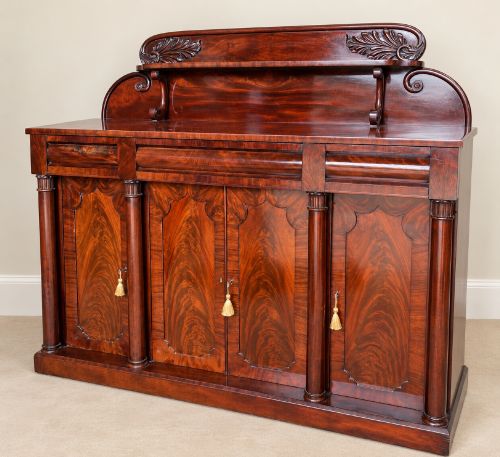
Carved details such as scrolls, pedestals, and columns emerge directly from the solid wood sections of the frame. Construction relies on traditional joinery techniques to stabilise heavy timber carcasses through decades of use.
Listings demonstrate forms ranging from compact chiffoniers to large breakfront sideboards in flame mahogany, marble, and brass.
What varies in quality
The intensity of the flame mahogany veneer and the precision of inlaid marquetry distinguish standard storage furniture from exceptional works. Figured timber selection dictates the visual impact of the primary facade.
Structural scale and carving execution separate simpler regional items from pieces bearing defined architectural proportions and bold design. Cabinetmaking finesse shows in the alignment of drawer linings and door panels.
Hewetsons London
The 19th Century Mahogany Server Glossary
- Flame mahogany
- A wood veneer cut to reveal a flammiform grain pattern that creates vivid visual movement across the surface. This timber figure is prized for its decorative drama.
- Chiffonier
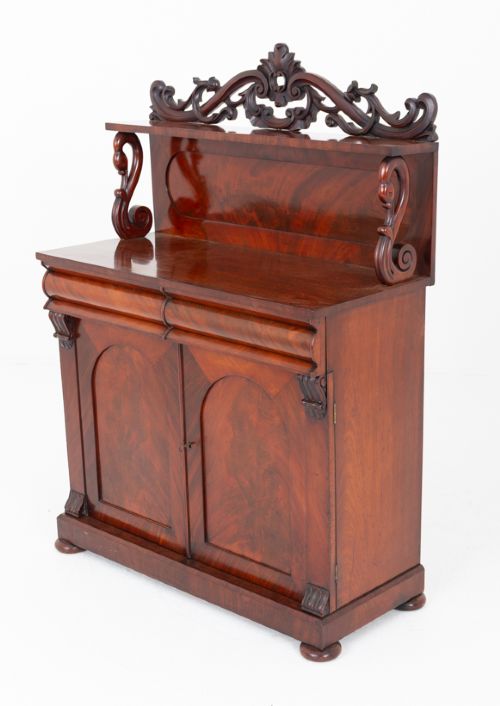
- A low cabinet equipped with drawers and shelves, often topped with a mirror or back panel. It serves as a smaller cousin to the full sideboard.
- Pedestal sideboard
- A form featuring distinct side pedestals flanking a central section, popular during the Regency period. These designs emphasise classical architectural proportion.
- Marquetry
- The art of applying small pieces of veneer to a structure to form decorative patterns or pictures. It often highlights the borders and doors of late pieces.
19th Century Mahogany Server: Frequently Asked Questions
What is a 19th century mahogany server used for?
These pieces served dining rooms as surfaces for food service and storage enclosures for heavy china, silver, and linens. Their robust timber construction allowed them to bear the weight of heavy platters during grand meals.
Today, they adapt easily to modern living rooms or hallways as media consoles or display surfaces, offering deep internal storage for household items.
How do I tell Regency from Victorian pieces?
Regency pieces often display cleaner classical lines, brass inlay, and pedestal cupboard formats influenced by ancient Greek and Roman design. Their proportions remain restrained and geometric.
Victorian pieces tend to be heavier, with darker finishes, mirror backs, and carved architectural flourishes like scrolling brackets and heavy mouldings.
Where were these servers made?
Production occurred across English, Scottish, and Irish workshops, with major cabinetmaking hubs in London driving stylistic shifts. Regional variations appear in timbers like Scottish mahogany and specific carving depths.
Some pieces also reflect continental influences, such as French Louis Philippe styling adapted by local makers.
How do I care for flame mahogany veneer?
Keep mahogany furniture away from direct sunlight and heat sources to prevent the veneer from drying and lifting over time. Gentle dusting with a dry cloth maintains the finish without stripping the historical wax.
Apply a traditional beeswax polish occasionally to nourish the timber and preserve the depth of the flame grain.