

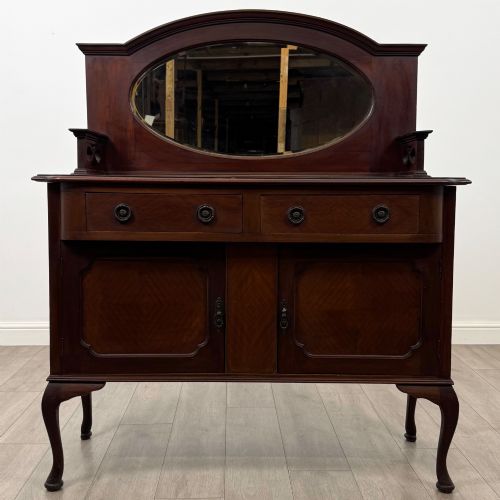
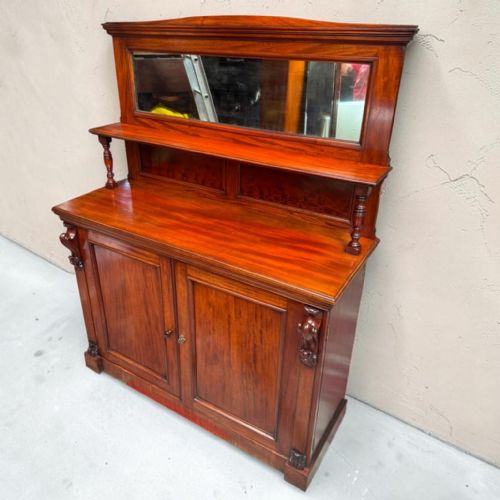
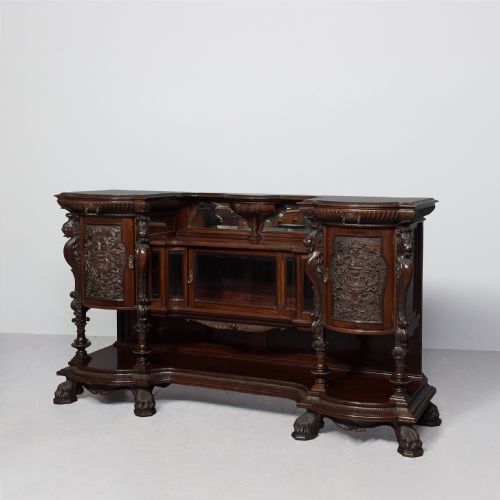
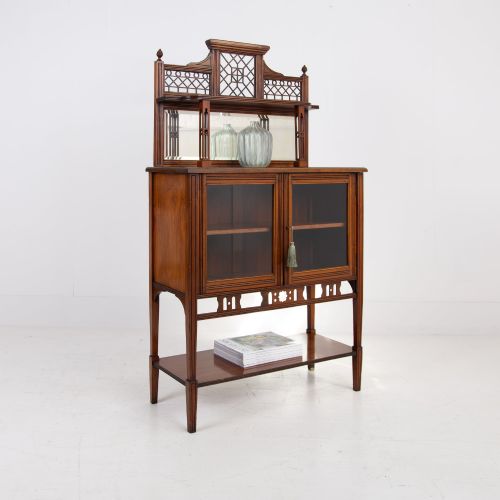
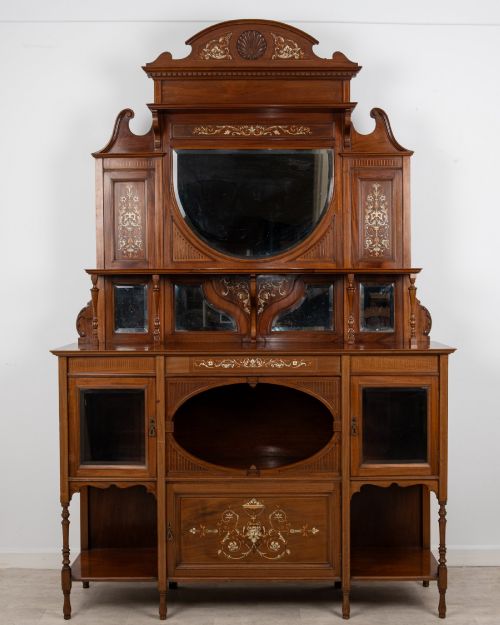
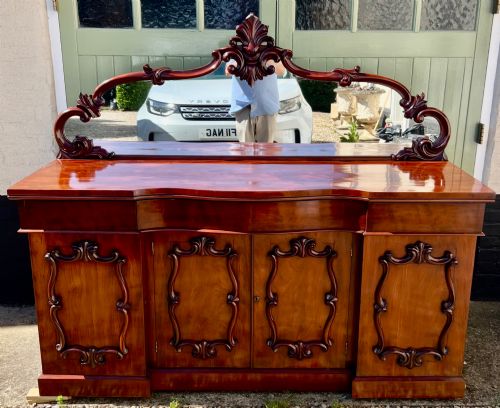


Mahogany Mirror Back Sideboard
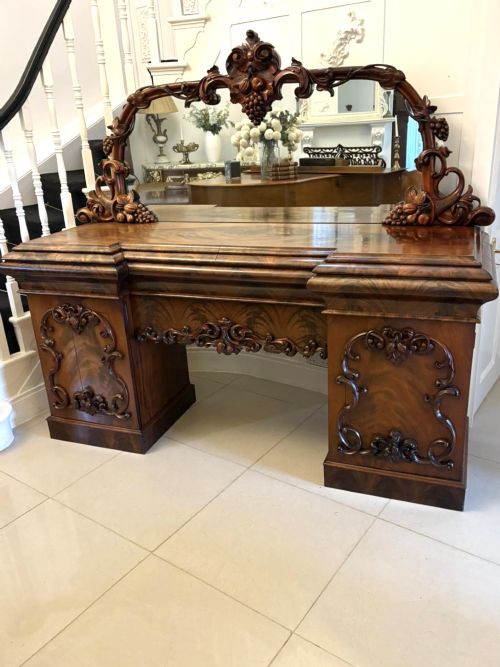
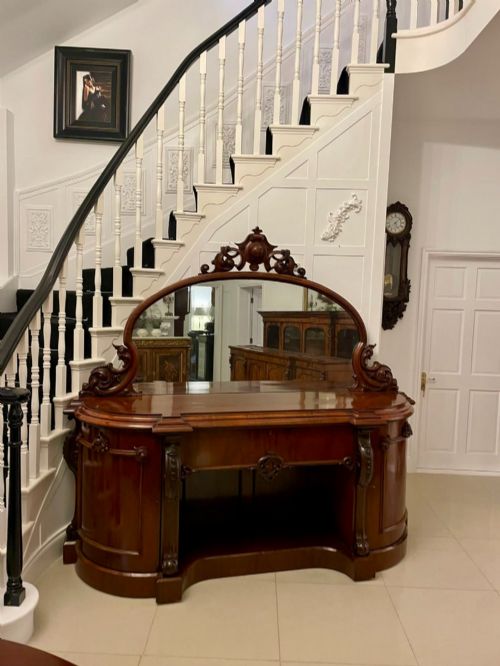
A mahogany mirror back sideboard is a grand dining room staple offering display space and storage, prized for deep timber tones.
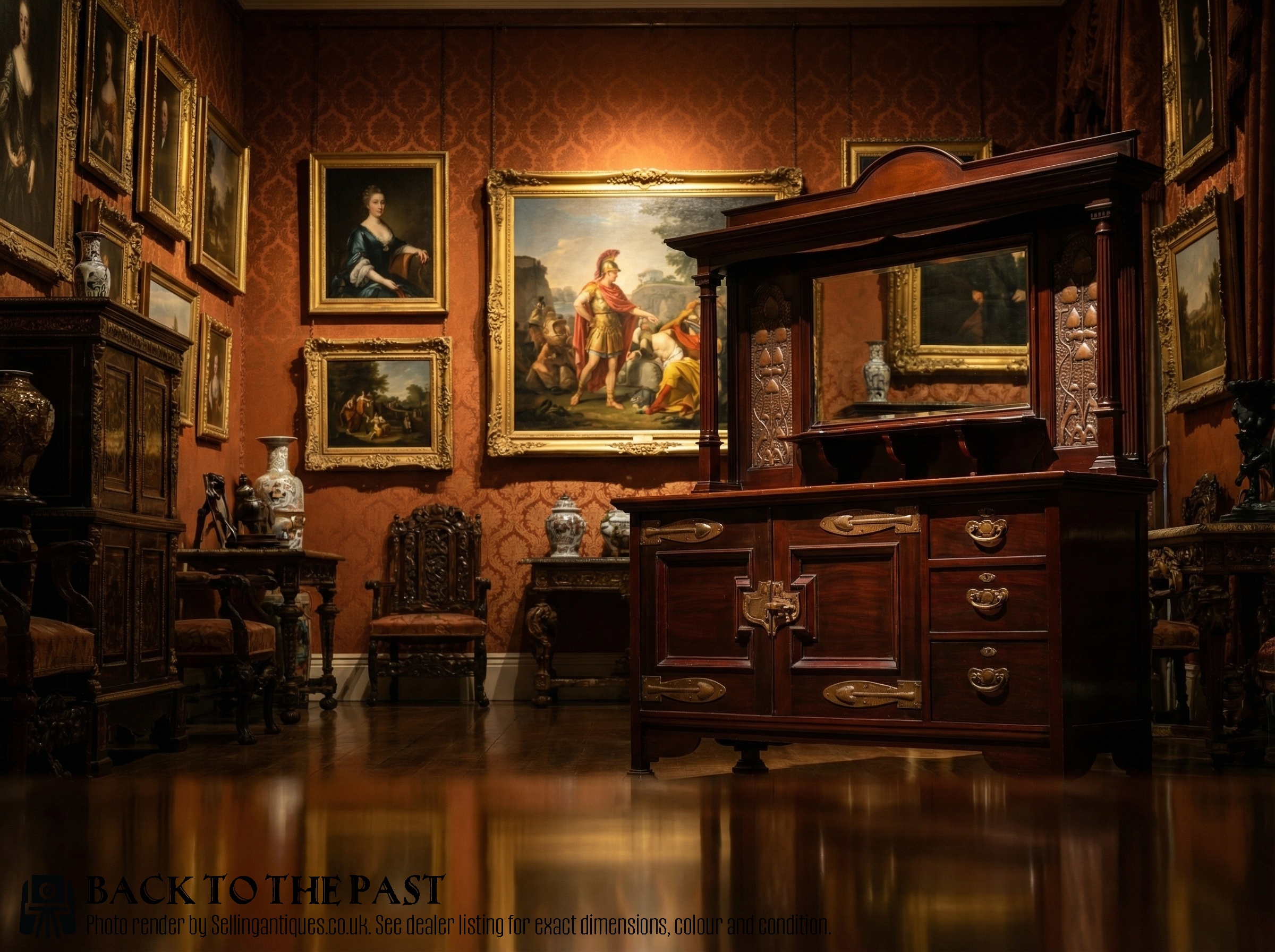
Mahogany Mirror Back Sideboard
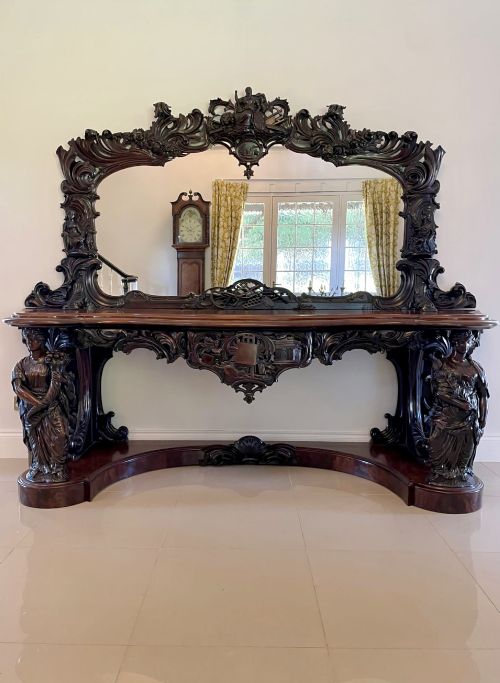
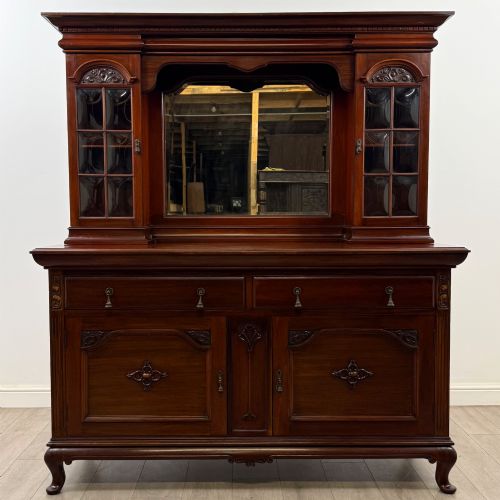
A mahogany mirror back sideboard serves as a principal dining room piece combining a substantial lower cabinet with an integrated upper mirror.
The evidence shows these pieces span the Victorian, Edwardian, and William IV periods, alongside specific styles such as Arts and Crafts.
Most examples you encounter feature heavy timber construction, carved detailing, and glass upstands designed to reflect light in formal rooms.

How They Were Made
Cabinetmakers utilised solid mahogany and flame mahogany veneer applied over secondary timbers to build the robust carcases and panelled doors.
Glass mirror inserts form the distinctive upstands, often secured with wooden moulding, while metal, brass, and copper provide hardware for handles and fittings.
Mahogany Mirror Back Sideboard Retail Price Guide 2026
Typical asking prices for mahogany mirror back sideboard among the pieces listed under this phrase on Sellingantiques today, from the lower quarter to the upper quarter. They describe what is for sale here now, not the wider market.
Victorian diners used the mirror back to secretly monitor the butler clearing the table without turning their heads.
What Varies in Quality
The hierarchy rests on timber selection, shifting from plain stock to highly figured flame mahogany veneer that displays rich natural grain patterns across the front.
Carving execution separates standard production from superior workshop output, particularly in ornate crests, applied mouldings, and breakfront profiles.
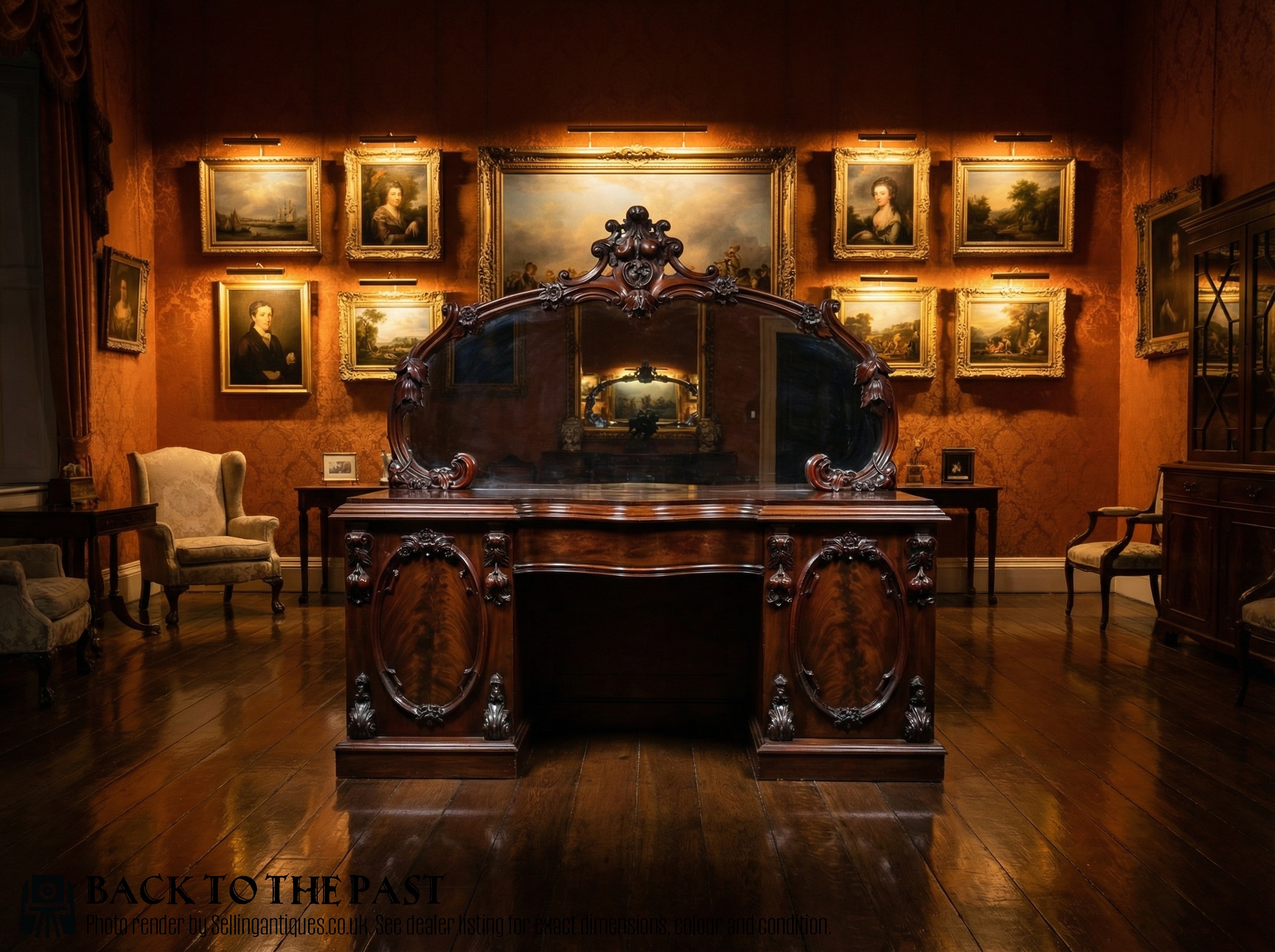
Shapland and Petter
The Mahogany Mirror Back Sideboard Glossary
- Mirror Back
- An upright wooden frame holding a glass mirror attached to the rear of the sideboard. This component lifts the visual weight and reflects interior light.
- Flame Mahogany Veneer
- A thin slice of mahogany timber cut from the fork of the tree where branches meet. It creates a distinctive, swirling flame-like grain pattern.
- Breakfront
- A cabinet design where the central section projects forward from the flanking outer sections. This architectural arrangement adds depth and shadow to the facade.
- Chiffonier
- A compact sideboard or low cabinet equipped with shelves or a mirror superstructure. It gained popularity during the Victorian era for smaller reception rooms.
Mahogany Mirror Back Sideboard: Frequently Asked Questions
What is a mahogany mirror back sideboard used for?
These large furniture items served primarily in formal dining rooms for storing silver, linen, and glassware. The flat surface functioned as a server during meals.
The upper mirror reflected candlelight and made smaller Victorian and Edwardian dining spaces appear brighter and more expansive.
How do I date a mirror back sideboard?
Dating relies on stylistic clues and timber characteristics across the Victorian, Edwardian, and William IV periods. Heavy carvings and breakfront proportions often indicate mid-nineteenth-century work.
Lighter inlay work, simpler outlines, and Arts and Crafts influences point towards the twentieth century or the Edwardian era.
Are these sideboards difficult to move?
The sheer scale and solid mahogany construction make these pieces extremely heavy and robust. Many examples feature a detachable mirror back secured to the lower sideboard base.
Separating the upper mirror section from the pedestal sideboard is essential for safe transport and positioning within a room.