



Edwardian Mirror Back Dresser
An edwardian mirror back dresser brings together deep wood tones and reflective glass to anchor a room.
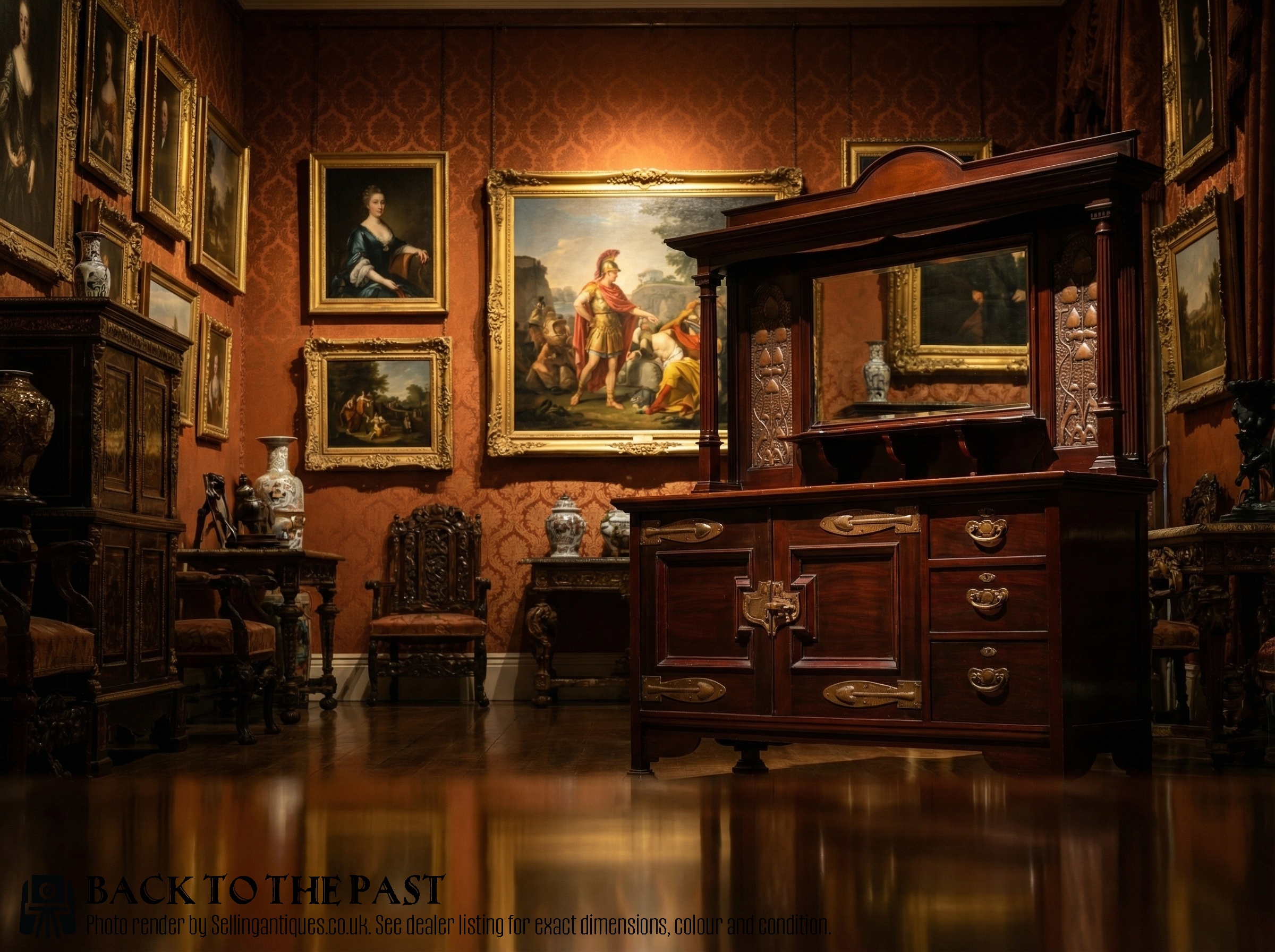
Edwardian Mirror Back Dresser
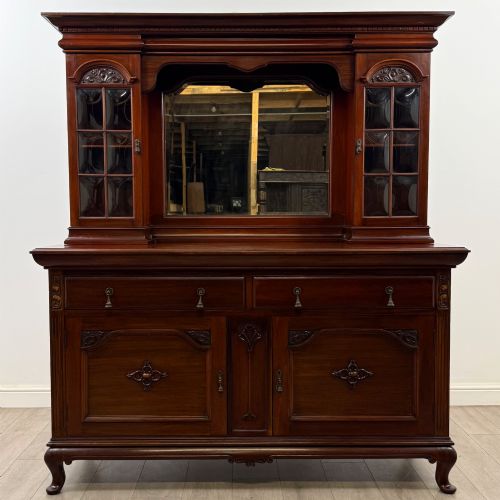
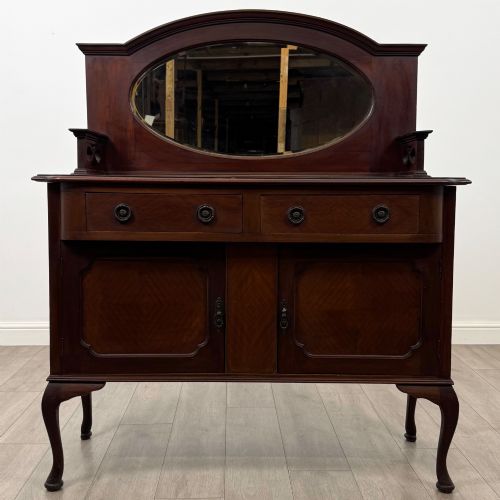
An edwardian mirror back dresser combines a low sideboard base with an upright mirror superstructure, serving both storage and display functions in the home. These pieces emerge predominantly from the Edwardian era and the broader nineteenth and early twentieth centuries, drawing on Victorian and Arts and Crafts traditions.
The form appears under various names in the evidence, including sideboards, side cabinets, and display cabinets. Oak and mahogany form the structural backbone of these designs, often finished with brass fittings and glass panels.
Makers and workshops of the period construct these items to function as focal points in dining rooms and living spaces. The integration of glass mirrors brightens interiors by reflecting ambient light across the room.
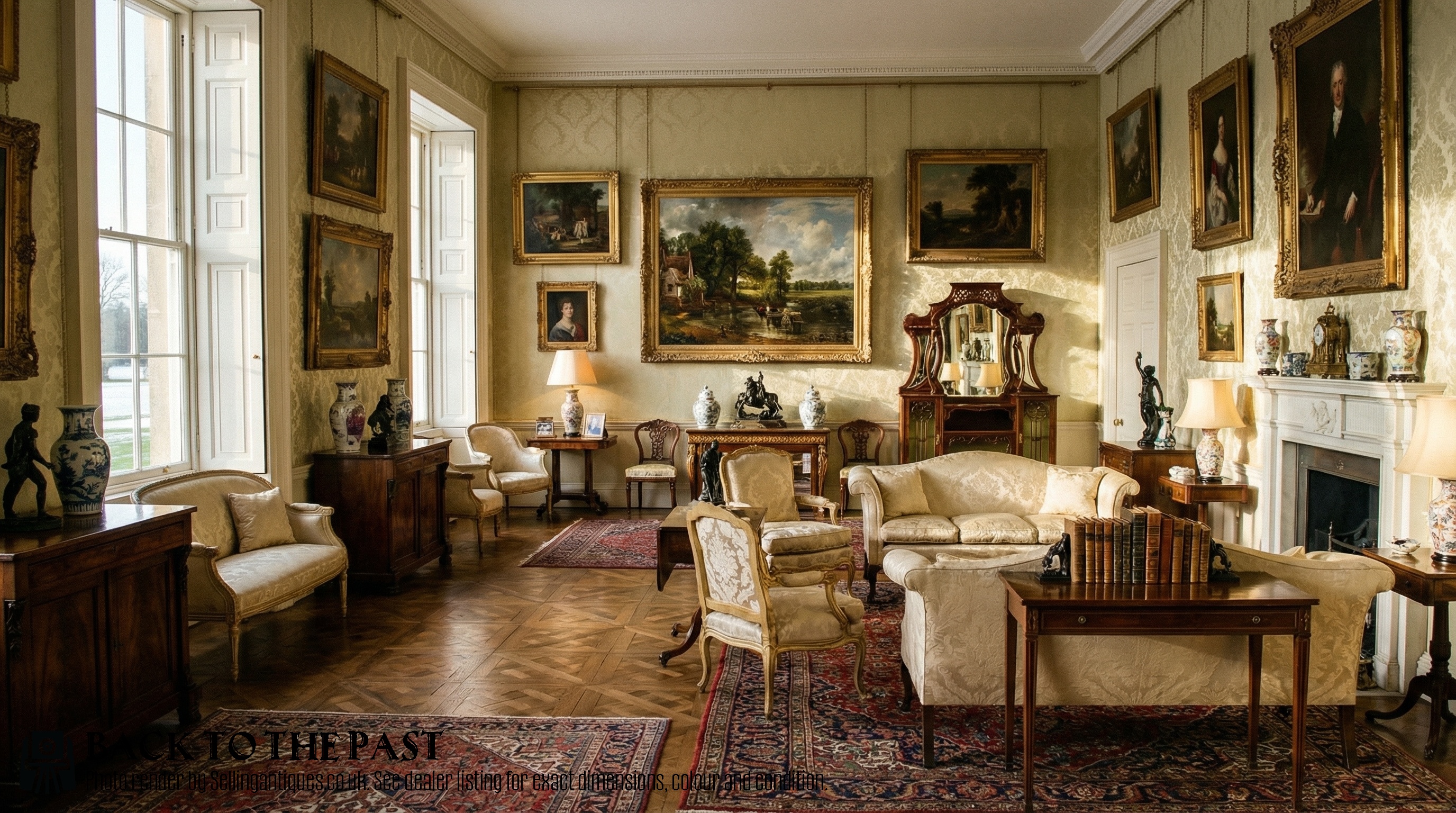
Materials and Construction
Makers utilise solid and veneered timbers such as oak, mahogany, walnut, and rosewood to build the bodies of these pieces. Boxwood inlay and brass hardware frequently accent the woodwork, adding subtle contrast to the primary surfaces.
Mirror glass sits securely within carved or panelled wooden frames above the main cabinet surface. Iron and copper elements occasionally appear in hardware and decorative panels, particularly on Arts and Crafts examples.
Edwardian Mirror Back Dresser Retail Price Guide 2026
Typical asking prices for edwardian mirror back dresser among the pieces listed under this phrase on Sellingantiques today, from the lower quarter to the upper quarter. They describe what is for sale here now, not the wider market.
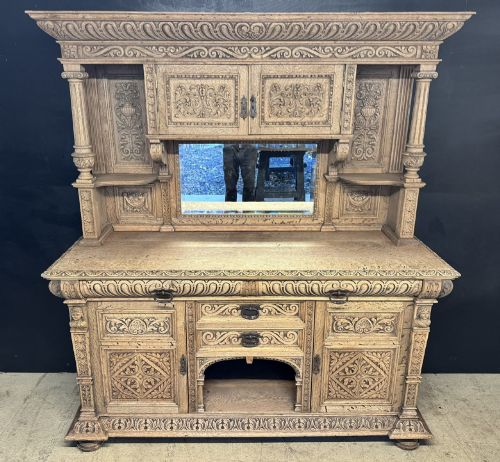
A green man carving peers out from the oak.
Distinctions in Quality
The refinement of the carving and the selection of the timber dictate the standing of an individual piece. Highly figured pollard oak or rich rosewood veneers elevate the visual weight of the item.
Attribution to documented firms such as Shapland & Petter, T Simpson and Son, or Maple & Co marks out superior execution. The integration of specialised details like Majolica panels or meticulous boxwood inlay distinguishes finer examples from standard production.
T Simpson and Son·Shapland & Petter·Maple & Co
The Edwardian Mirror Back Dresser Glossary
- Mirror back
- A wooden sideboard or dresser featuring an attached upright frame containing a mirror glass panel. This upper section reflects light and displays small decorative objects.
- Arts and Crafts
- A design movement prioritising traditional craftsmanship, visible construction, and simple forms. Pieces in this style often display honest use of oak and copper.
- Inlay
- A technique where contrasting materials like boxwood are set into the surface of the primary wood. This method creates geometric patterns or floral motifs.
- Pollard oak
- Timber taken from trees that have been pollarded, producing a heavily knotted and textured grain pattern. Furniture makers prize this wood for its decorative surface movement.
Edwardian Mirror Back Dresser: Frequently Asked Questions
How do I date an edwardian mirror back dresser?
Dating relies on observing the timber choices, stylistic markers, and construction techniques visible in the piece. Edwardian examples often feature lighter oak or mahogany finishes alongside simplified classical or Arts and Crafts motifs.
Pieces originating in the Victorian period tend to display heavier carved decoration and darker rosewood or pollard oak surfaces. Maker stamps or labels, where present, offer definitive production dates.
Where should I place a mirror back sideboard?
These pieces suit dining rooms, hallways, or spacious living areas where their height and reflective glass can be fully appreciated. Positioning them opposite a window maximises the light-reflecting qualities of the mirror.
Ensure the floor space can accommodate the depth of the sideboard base and the height of the upright mirror frame. Leave adequate clearance above and around the piece to showcase its proportions.
What styles influence these dressers?
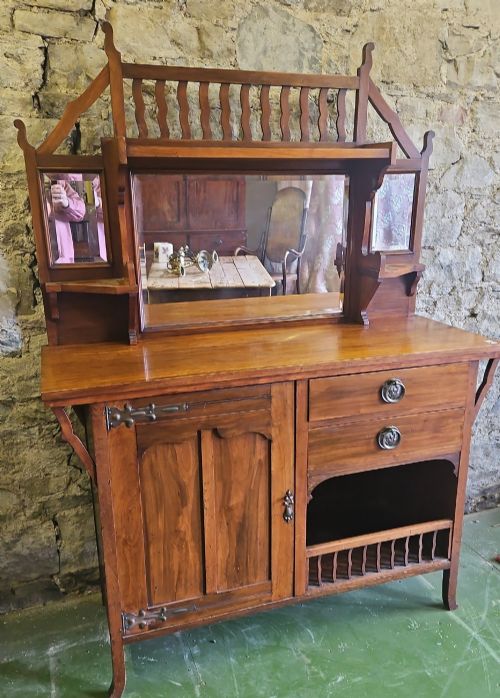
The design vocabulary draws heavily from Arts and Crafts principles, Art Nouveau curves, and Victorian revival aesthetics. Arts and Crafts variants emphasise plain wooden grains and honest construction.
Art Nouveau examples incorporate flowing floral lines and copper or brass accents. Victorian influences appear through heavier carvings and rich rosewood or walnut veneers.