



Edwardian Mahogany Chiffonier
An Edwardian mahogany chiffonier brings together deep timber and practical storage, offering a grounded elegance for contemporary rooms.
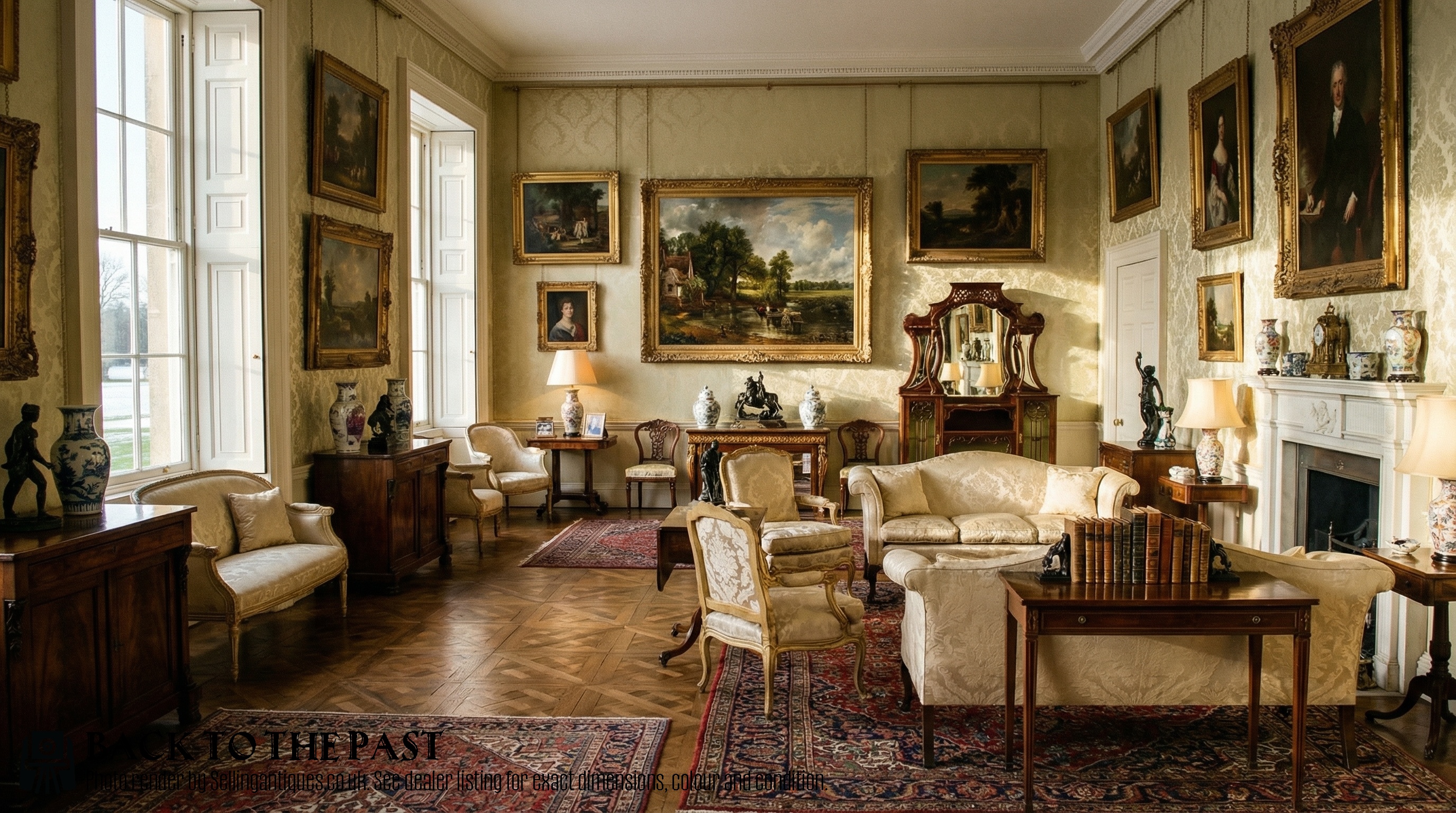
Edwardian Mahogany Chiffonier
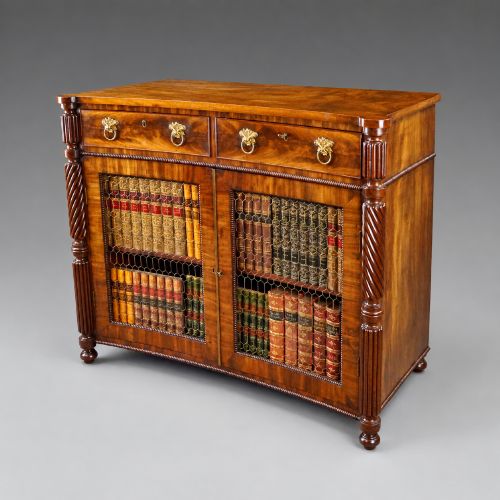
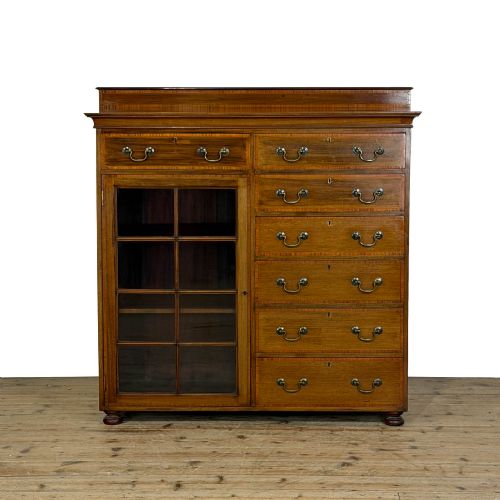
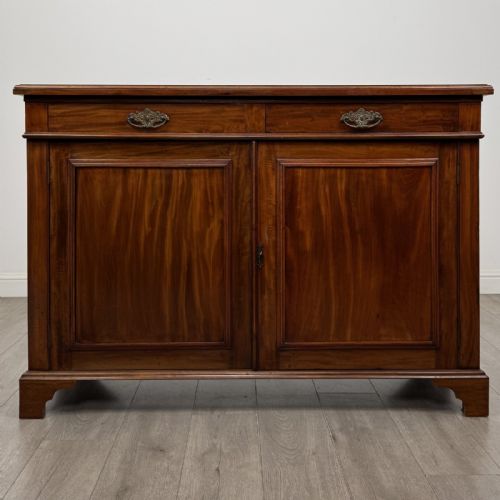
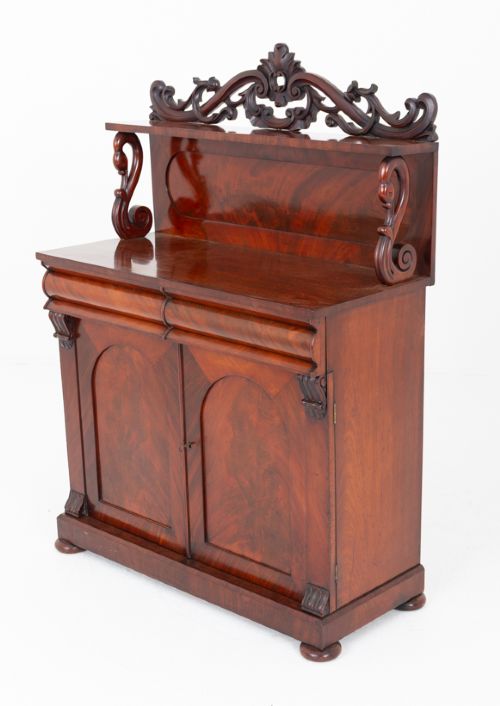
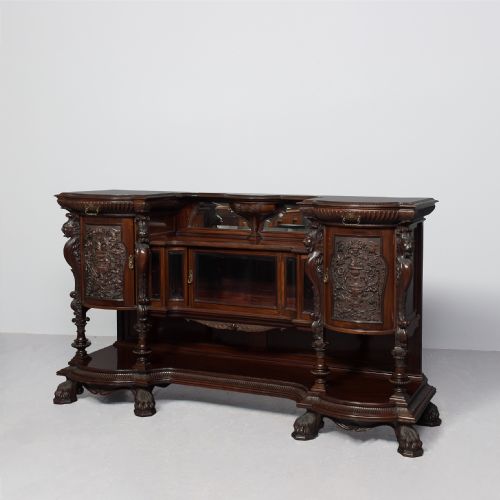
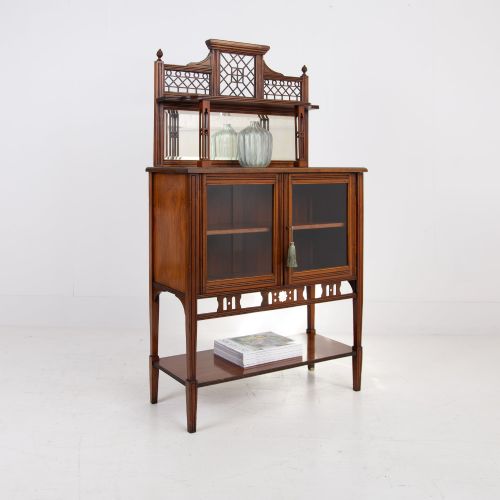
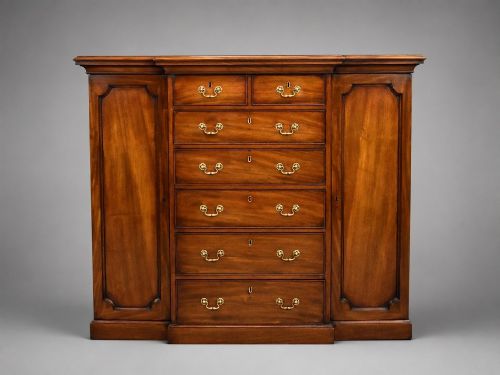
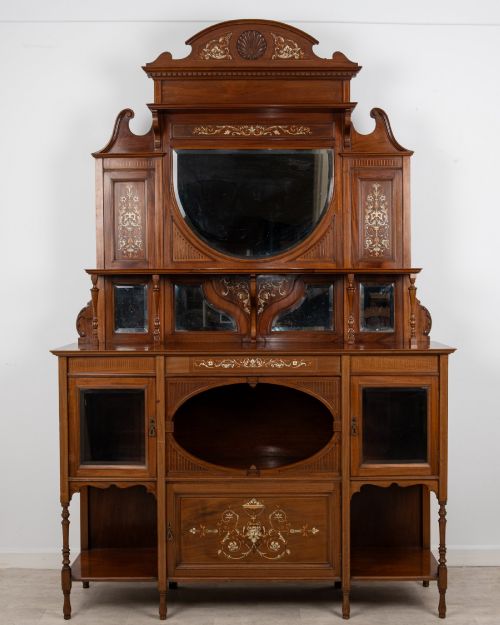
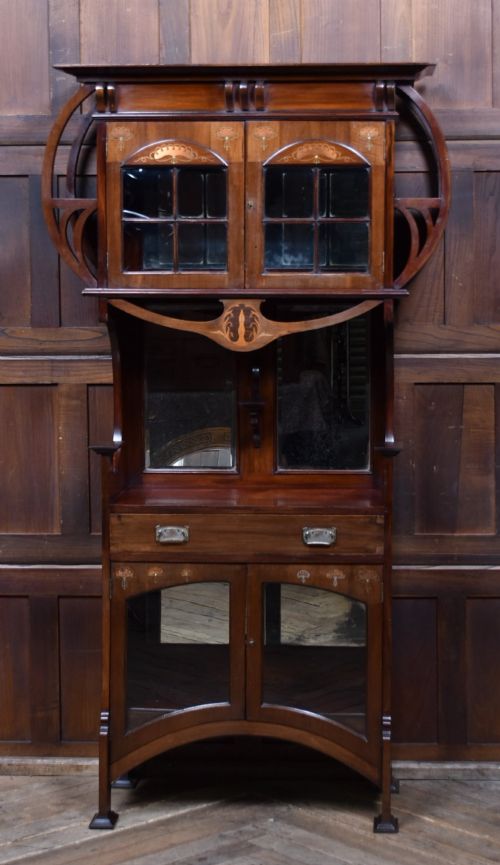
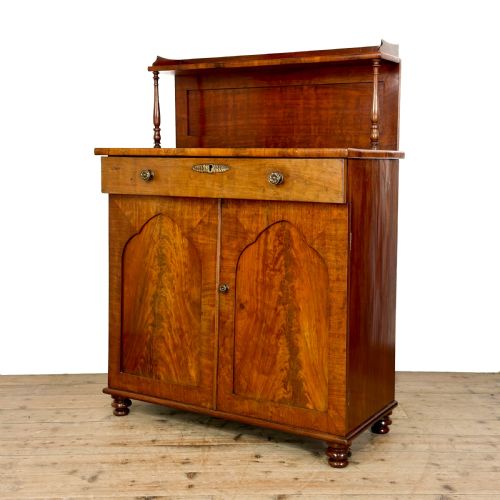
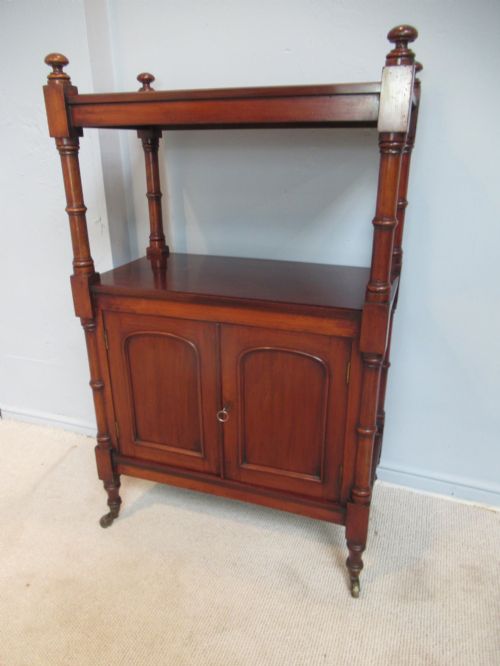
An edwardian mahogany chiffonier combines enclosed lower cupboards with display or surface space above, often integrating mirror-backs or shelving. The pieces seen here span Edwardian workshops alongside earlier Victorian and Regency examples, reflecting a continuous tradition of timber storage furniture.
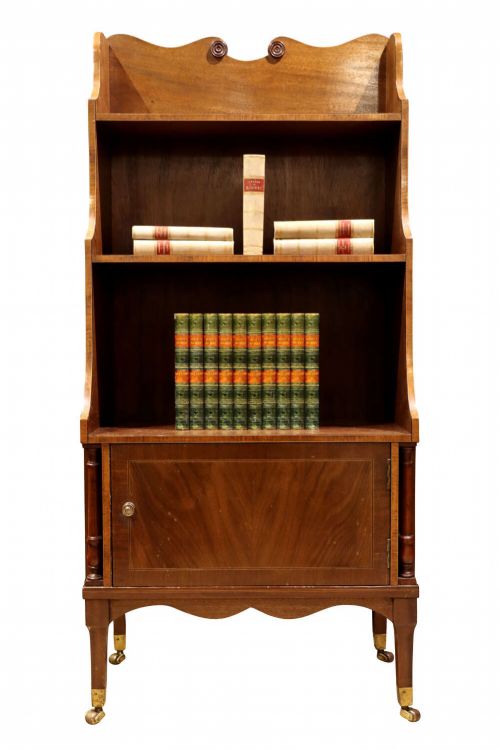
Buyers seeking this phrase encounter sideboards, display cabinets, and waterfall bookcases alongside dedicated chiffoniers. The Edwardian versions specifically tend toward lighter proportions, frequently accented with subtle inlay work rather than heavy carving.
How they were made
Constructed primarily from solid mahogany and flame mahogany veneer, these cabinets rely on dense timbers chosen for grain movement and durability. Workshops integrated satinwood inlay, brass hardware, and glass panels to create contrast and textural depth across the facade.
Joinery techniques prioritize stability, using frame-and-panel construction for doors and dovetail joints for drawer boxes. Backboards and interior shelving typically utilise secondary timbers, whilst mirror-backs are secured into carved or moulded wooden frames.
Edwardian Mahogany Chiffonier Retail Price Guide 2026
Typical asking prices for edwardian mahogany chiffonier among the pieces listed under this phrase on Sellingantiques today, from the lower quarter to the upper quarter. They describe what is for sale here now, not the wider market.
Some chiffoniers include small concealed drawers tucked just beneath the top surface, presumably intended for hiding secret love letters or stray house keys.
What varies in quality
The distinction between standard and superior pieces rests on the selection of timber and the precision of the cabinetmaker's hand. Flame mahogany veneer matched symmetrically across drawer fronts or doors signals a higher tier of production.
Detailing determines distinction, observed in the crispness of wood inlay, the weight of cast brass fittings, and the depth of hand-carved ornamentation. Finer examples maintain structural integrity through thick secondary woods and well-fitted internal shelving.
Edwards and Roberts·Gillows·Maple and Co
The Edwardian Mahogany Chiffonier Glossary
- Chiffonier
- A low sideboard or cabinet featuring cupboards below, sometimes topped with a shelf or mirror-back. It evolved during the nineteenth century to serve dining and drawing rooms.
- Flame mahogany
- A veneer cut from the fork of the mahogany tree where the branch meets the trunk. This method yields a distinctive feather-like pattern with intense chatoyancy.
- Inlay
- A technique where pieces of contrasting timber, such as satinwood, are inserted into recessed cavities in the primary wood surface. It creates flat decorative motifs and geometric borders.
- Mirror-back
- An upright wooden superstructure holding a mirrored glass panel positioned above the main sideboard surface. It reflects light and displays decorative objects placed on the ledge below.
- Waterfall bookcase
- A piece of furniture featuring open shelves that recede in depth from bottom to top, creating a stepped profile. The form gained popularity through the Victorian and Edwardian periods.
Edwardian Mahogany Chiffonier: Frequently Asked Questions
What is an edwardian mahogany chiffonier?
An edwardian mahogany chiffonier is a low storage cabinet made from mahogany timber, typically featuring enclosed lower cupboards and frequently a mirrored superstructure or upper display shelf.
These pieces were originally designed for dining rooms and parlours to hold tableware, linens, or books while providing a decorative surface for ornaments.
How do I date these cabinets?
Dating relies on observing structural characteristics, timber selection, and decorative styles. Edwardian examples often display lighter proportions and delicate satinwood inlay compared to heavier Victorian predecessors.
Construction methods such as drawer dovetailing, backboard thickness, and the style of applied brass hardware also offer clues to the specific decade of manufacture.
Where were these pieces used?
They were primarily placed in dining rooms, drawing rooms, or entrance halls of substantial homes. Their dual function provided both concealed storage and a surface to display silver, ceramics, or lamps.
In modern interiors, they serve similar purposes in living spaces, hallways, or dining areas as focal storage units.
How should I care for mahogany?
Mahogany furniture requires stable environmental conditions away from direct heat sources and strong sunlight to prevent timber splitting and veneer lifting. Regular dusting with a soft, dry cloth maintains the polished surface without the buildup of heavy waxes.
Occasional application of appropriate furniture wax nourishes the grain and protects the timber finish over time.