
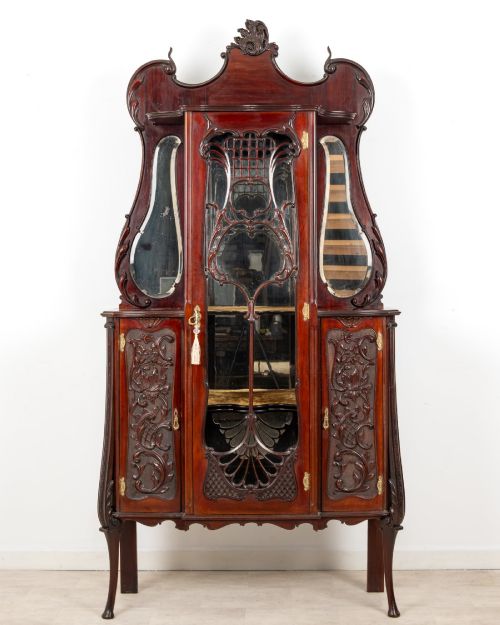
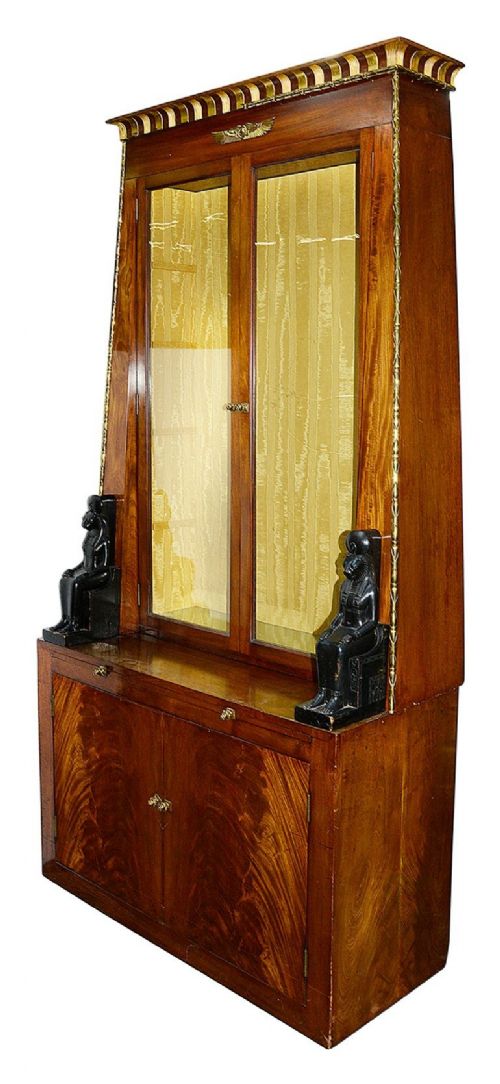
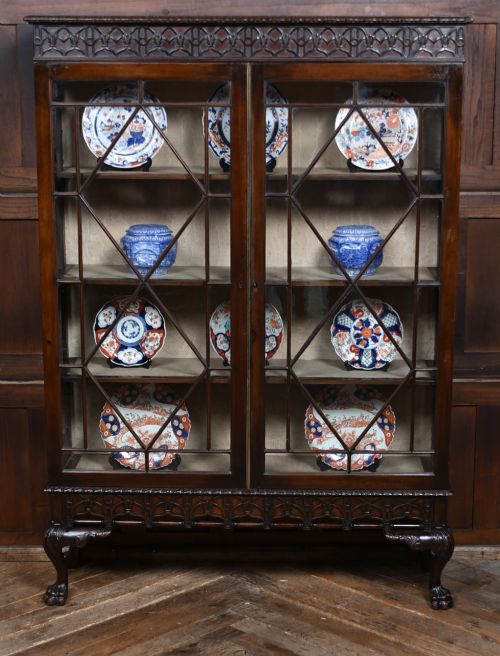

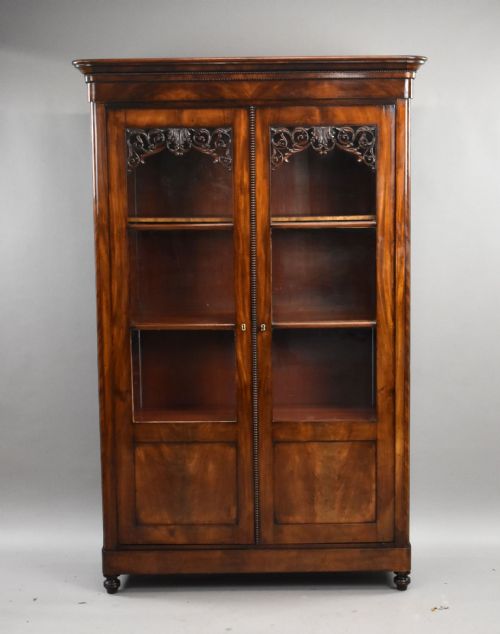


Carved Mahogany Vitrine
A carved mahogany vitrine brings architectural presence and visible storage to a room, framing collections behind glazed doors.

Carved Mahogany Vitrine
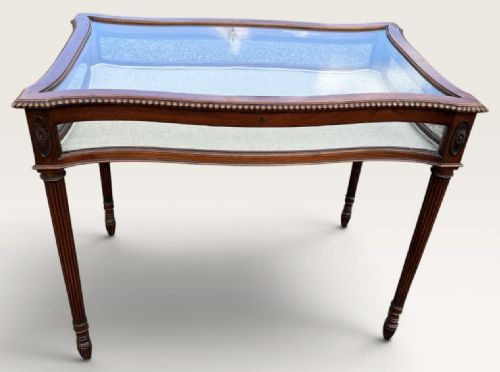
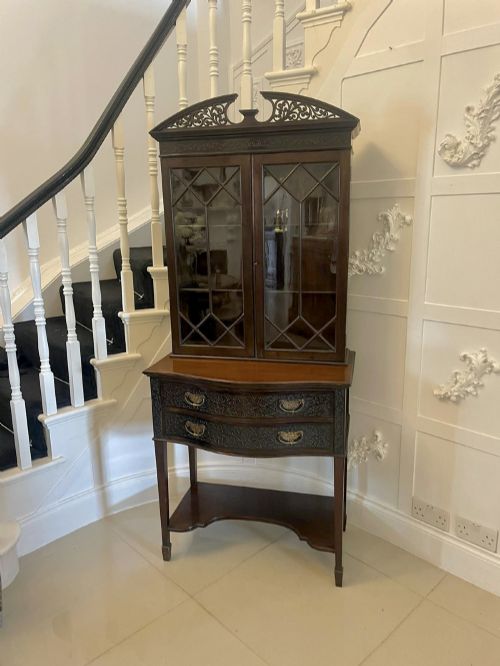
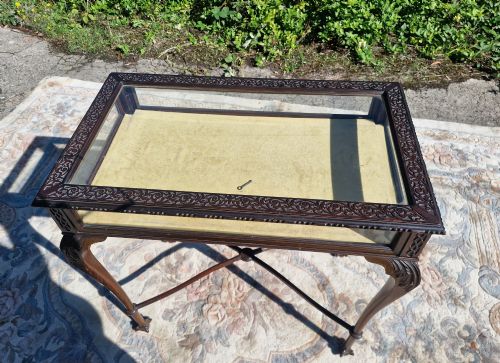
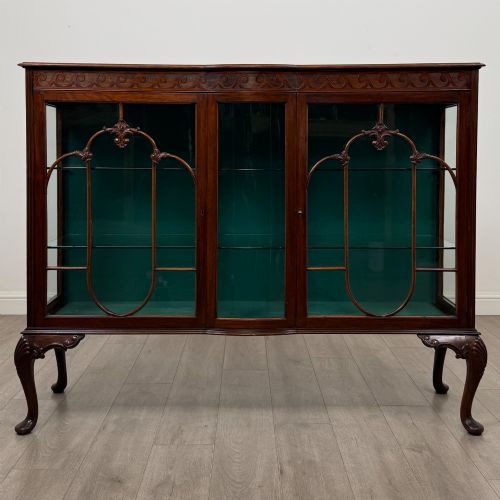
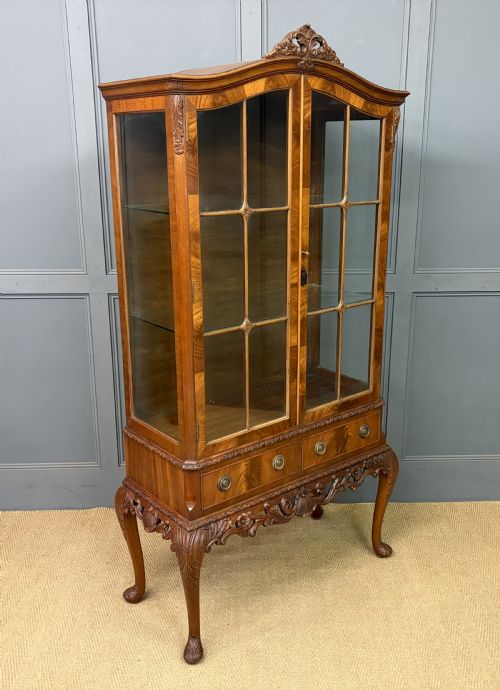
A carved mahogany vitrine functions primarily as a display cabinet, bookcase, or bijouterie table designed to exhibit prized objects. When searching for a carved mahogany vitrine, buyers encounter pieces spanning the Victorian and Edwardian eras, alongside revival and early twentieth-century examples.
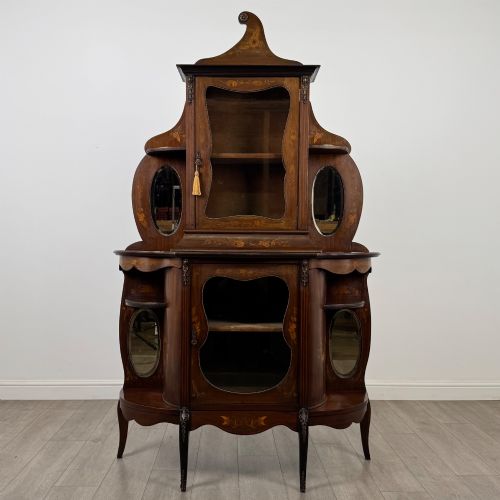
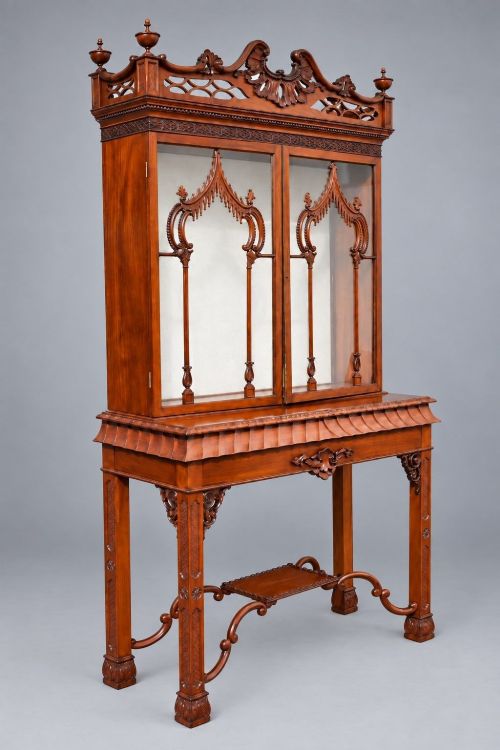
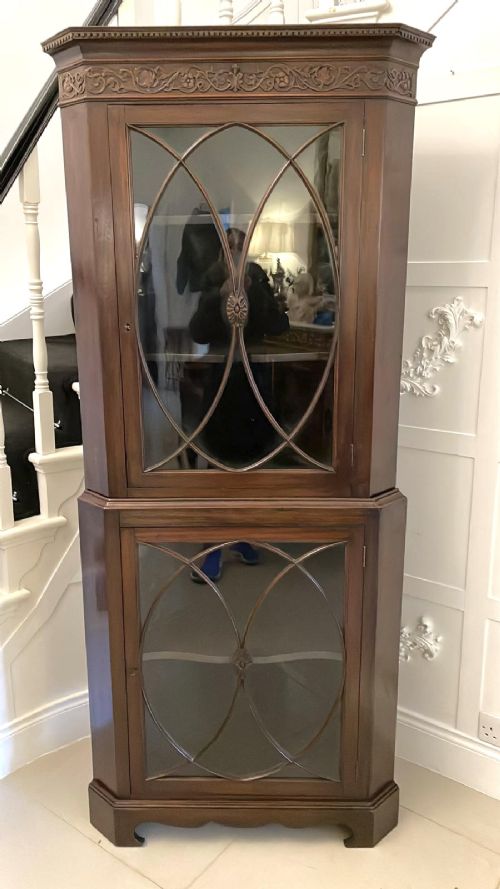
The form appears in several distinct shapes across the inventory, ranging from serpentine and bow front display cabinets to corner cabinets and glass-topped bijouterie tables. Revival aesthetics dominate these variations, particularly Chippendale Style, Queen Anne, Neoclassical, and Art Nouveau designs.
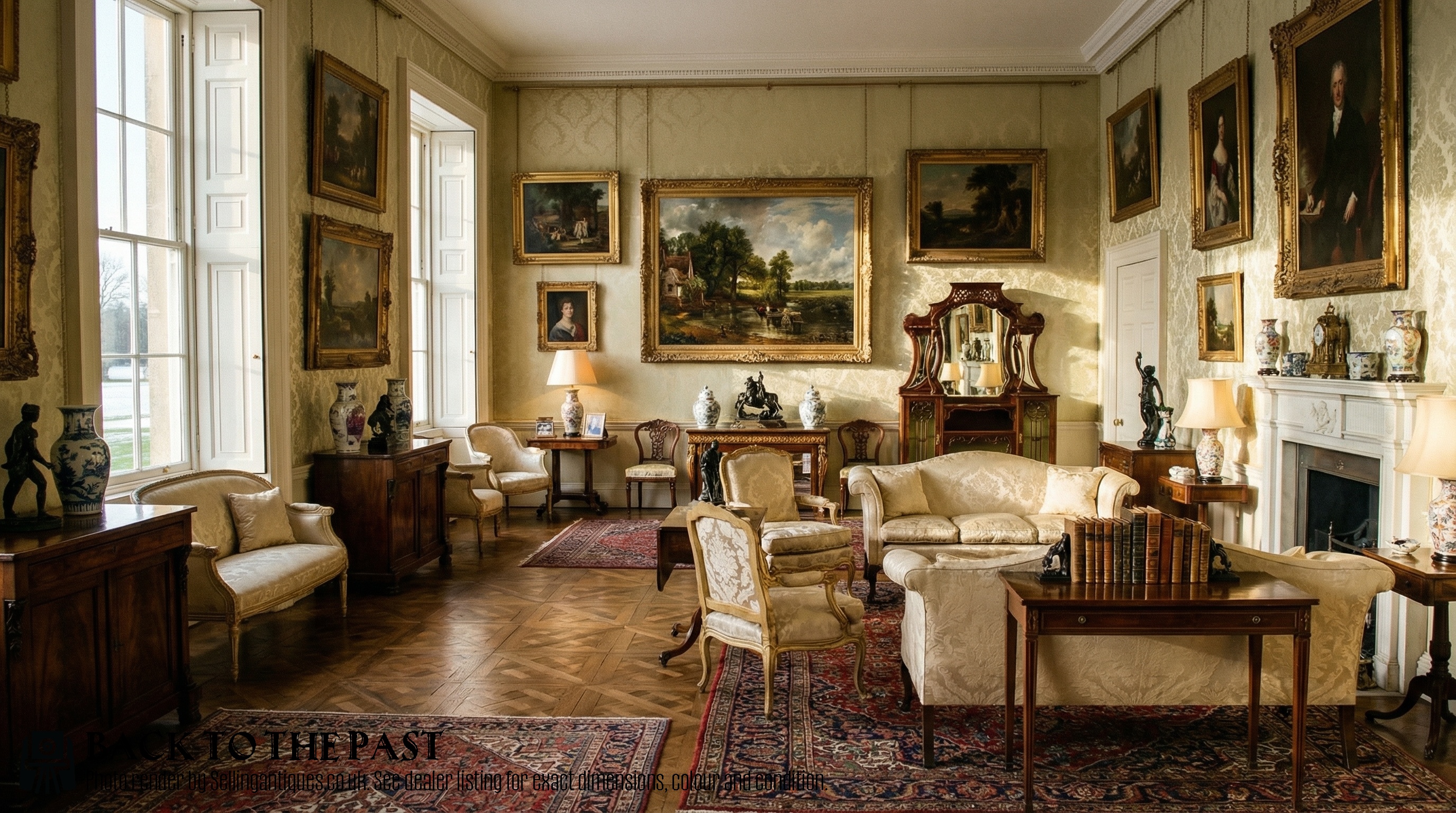
Origins stretch from British workshops to French ateliers, showing regional preferences for glazed panels, carved crests, and inlaid timber details. These cabinets serve domestic interiors by keeping dust from fragile collections while offering clear visibility from multiple angles.
Materials and construction methods
Makers constructed these cabinets using solid and veneered mahogany timber, often supported by secondary woods for internal framework and shelving. Glazing remains central to the form, utilising large glass panes held within astragal bars or door frames.
Carving and inlay define the decorative surface, employing contrasting timbers such as satinwood, alongside brass hardware for locks and hinges. Interior surfaces frequently incorporate mirror glass backs or lined fabric and velvet to reflect light onto displayed items.
Carved Mahogany Vitrine Retail Price Guide 2026
Typical asking prices for carved mahogany vitrine among the pieces listed under this phrase on Sellingantiques today, from the lower quarter to the upper quarter. They describe what is for sale here now, not the wider market.
The listings feature mahogany cabinets spanning from the Victorian and Edwardian eras, with specialised forms including corner units, bijouterie tables, and tall display bookcases.
Distinctions in construction and design
Quality reveals itself in the crispness of the timber carving and the precision of the joinery around curved glass and serpentine fronts. Superior cabinets employ well-figured mahogany and intricate marquetry inlay rather than relying solely on applied surface ornaments.
The weight and clarity of the glass, the integrity of the internal mirror plates, and the robustness of the brass fittings separate standard production from master workshop output. Maker attribution, through stamps or documented provenance, further distinguishes the top tier of pieces.

Maple & Co.·Edwards & Roberts·Waring & Gillow·C Hindley & Sons·Epstein
The Carved Mahogany Vitrine Glossary
- Vitrine
- A glass-fronted cabinet or display case designed for showing porcelain, books, or curiosities. The term originates from the French word for glass.
- Astragal glazed
- A method of dividing a glass window or door into smaller panes using narrow wooden mouldings called astragals. This technique provides structural support while adding geometric detail to cabinet doors.
- Bijouterie table
- A low display table with a glazed top and sides, created specifically for housing small valuable items, jewellery, or medals. These tables often stand on slender legs with lower display shelves.
- Serpentine shaped
- A furniture profile characterised by a gentle curving line that bends outward at the centre and inwards at the sides. This contour requires skilled woodworking to achieve fluid movement across timber doors or drawer fronts.
- Chippendale Revival
- A furniture style popular from the late nineteenth century that reinterprets eighteenth-century designs associated with Thomas Chippendale. Pieces in this style typically feature elaborate carved scrolling, blind fretwork, and cabriole legs.
Carved Mahogany Vitrine: Frequently Asked Questions
What is the difference between a vitrine and a bookcase?
A vitrine prioritises display through extensive glass panels on the doors and frequently the sides, allowing light to illuminate the interior from multiple angles.
Bookcases tend to feature solid wooden shelving with simpler wooden doors, focusing on book storage rather than the exhibition of decorative objects.
How do I care for a mahogany display cabinet?
Keep the cabinet away from direct sunlight and heat sources to prevent the mahogany timber from drying out, fading, or splitting at the joints.
Dust the carved surfaces with a dry cloth and clean the glass panels with a mild solution, avoiding harsh chemical polishes on antique finishes.
Where were these cabinets typically placed in period homes?
These cabinets occupied principal reception rooms, drawing rooms, and libraries where hosts displayed fine porcelain, silver, and curiosities to visiting guests.
Corner cabinets made efficient use of difficult architectural spaces, while bijouterie tables sat near seating areas for close inspection of small collections.
How can I tell a Victorian vitrine from an Edwardian one?
Victorian cabinets generally display heavier proportions, darker mahogany tones, and dense, deep-relief carving influenced by historic revival styles.
Edwardian examples often appear lighter in scale, occasionally incorporating satinwood inlay and Sheraton revival motifs that reflect a preference for brighter, airier interiors.