




Antique Pedestal Buffet
An antique pedestal buffet represents a substantial dining room storage piece, bringing distinct architectural presence and timber warmth to an interior.
Antique Pedestal Buffet
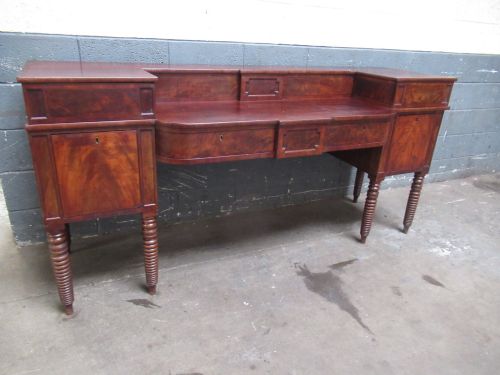
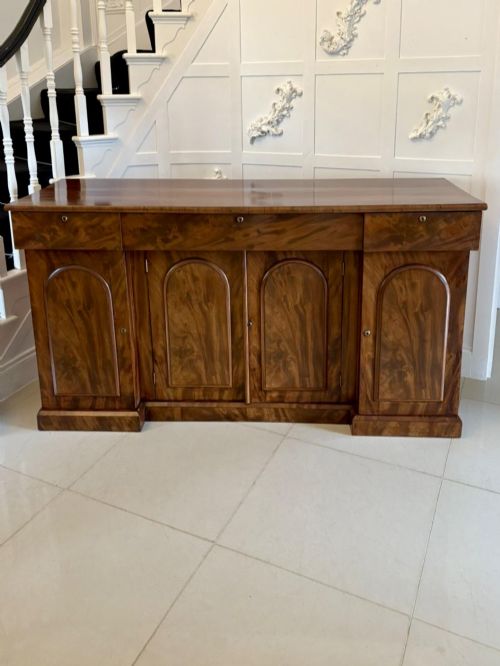
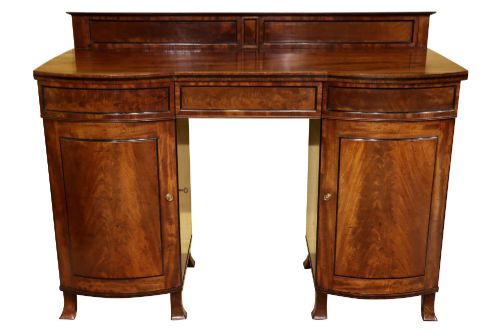
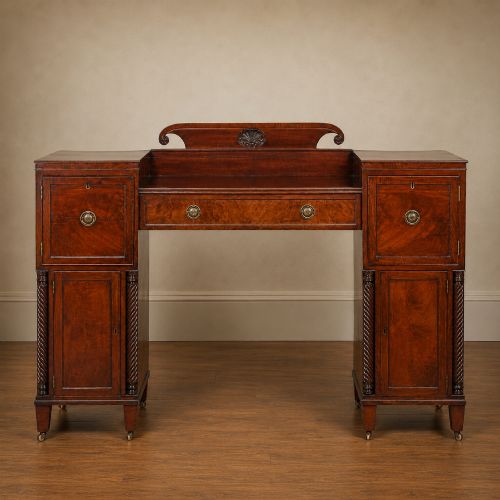
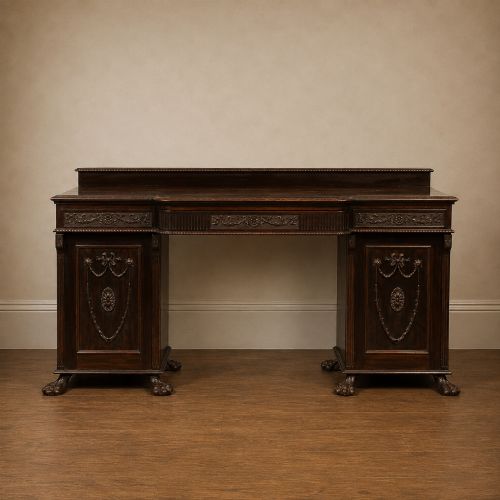
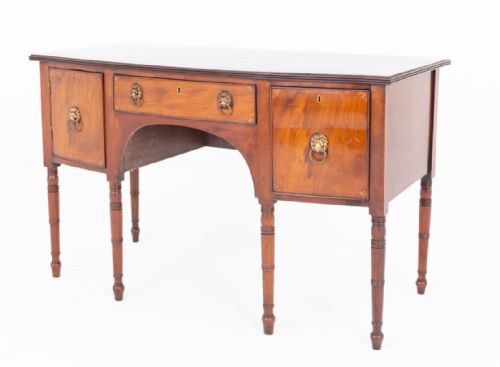
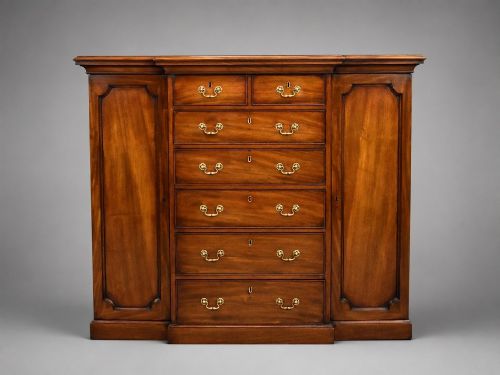
An antique pedestal buffet functions primarily as a dining room serving and storage unit, designed with flanking cabinets or pedestals united by a central section. When searching for an antique pedestal buffet, buyers encounter substantial timber forms primarily originating from the Georgian, Regency, and Victorian periods.
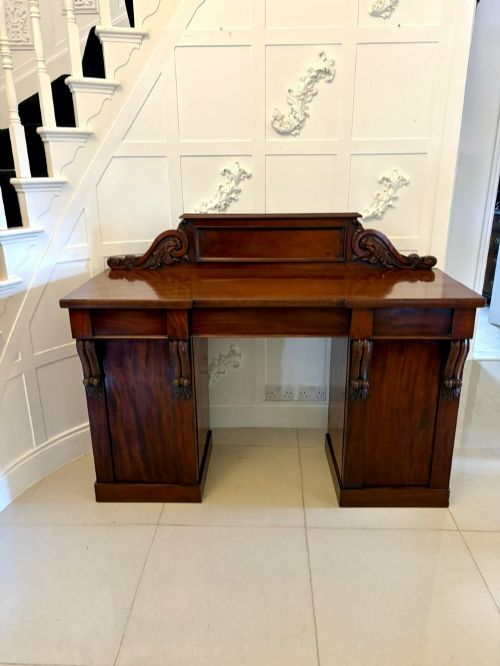
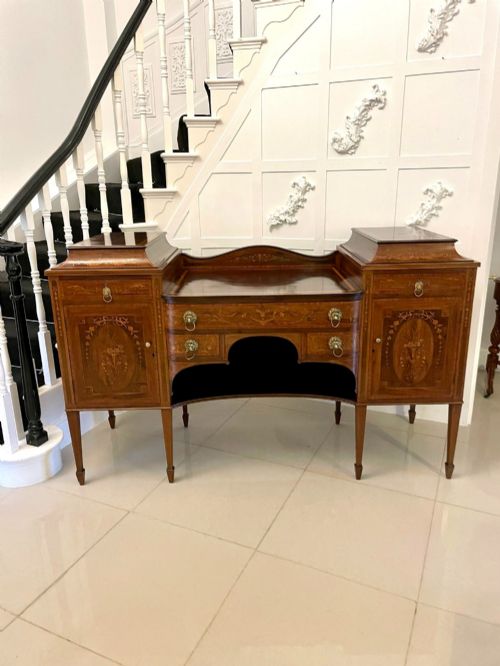
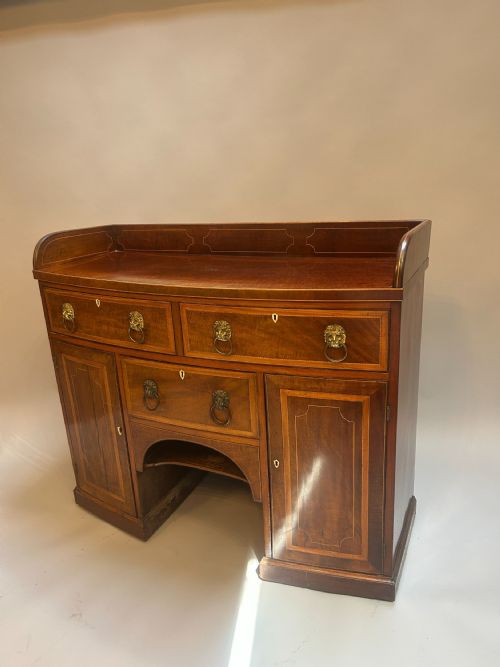
The versions most commonly met on this page include mahogany constructions featuring pedestals, bow fronts, or inlaid satinwood details. Pieces span multiple styles from George III and William IV through to Victorian interpretations, often incorporating architectural carved elements or brass galleries.
Makers and workshops from London and regional centres produced these large dining pieces in various configurations, including pedestal sideboards and related side cabinets. The proportions range from compact domestic examples to monumental multi-door formats intended for large country houses.
Materials and construction methods
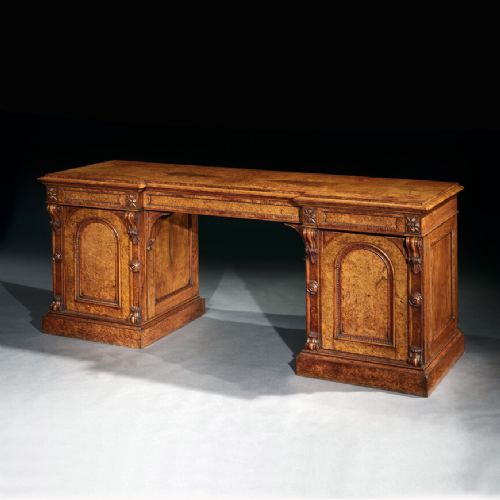
Cabinet makers relied heavily on solid mahogany and flame mahogany veneer, often enhanced with contrasting boxwood or satinwood inlay and marquetry details. Oak frequently appears in the internal secondary framing of drawers and carcases, whilst pollard oak and padouk occur in specific nineteenth-century iterations.
Metal components played a structural and decorative role, with brass fittings, handles, and gallery rails adorning the timber surfaces. Silver plating is also observed on associated metalware items listed alongside the main timber furniture.
Listings feature nineteen-century periods including Regency, Georgian, and Victorian eras, alongside twentieth-century Art Deco pieces.
Judging the standard of execution
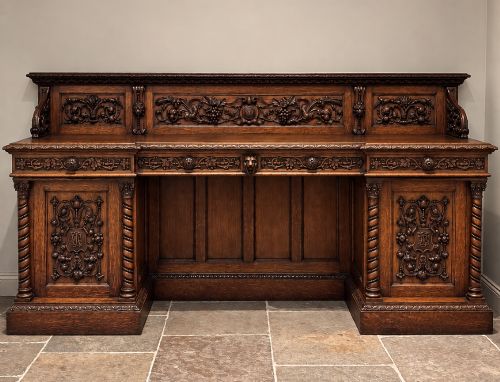
Quality rests upon the selection of timber figures, where richly marked flame mahogany veneer or well-matched figured timber elevates a piece significantly above plain counterparts. The crispness of hand-carved details, such as console brackets, paw feet, and applied mouldings, distinguishes superior workshops from standard production.
Construction integrity is demonstrated by the depth of timber used in secondary woods, the precision of dovetail joints within drawers, and the integration of original brass hardware or galleries. Well-balanced proportions, whether in small-scale domestic sideboards or monumental pedestal formats, reveal the careful eye of the original maker.
Hewetsons London·Gillows
The Antique Pedestal Buffet Glossary
- Pedestal sideboard
- A large dining room furnishing comprising two distinct cabinet pedestals joined by a central section or serving board. These units provided enclosed storage and surface space for formal dining arrangements.
- Flame mahogany veneer
- A thin slice of mahogany timber cut from the fork of the tree to create a distinctive flickering flame pattern. Cabinet makers applied this decorative veneer to the primary visible surfaces of high-status furniture.
- Brass gallery
- A low metal rail mounted on the rear upper surface of a sideboard to prevent serving dishes from sliding off. These fixtures were frequently pierced or cast in brass during the Georgian and Regency eras.
- Marquetry
- Elaborate decorative inlay work composed of various tinted woods fitted together to form pictorial or geometric designs. This technique embellished the drawer fronts and surfaces of fine nineteenth-century pieces.
- Bow front
- A convexly curved furniture front that projects outward in a smooth arc. This shaping softened the rigid linear geometry common in formal dining room interiors.
Antique Pedestal Buffet: Frequently Asked Questions
What is an antique pedestal buffet used for?
An antique pedestal buffet served as a central fixture in the formal dining room for storing silver, linen, and china. The top surface and central board provided a convenient station for serving food and displaying decanters during meals.
Today, these pieces function effectively in modern dining spaces or large living areas as statement storage cabinets. They offer deep cupboards within the pedestals alongside drawer space for tableware.
How do I date an antique pedestal buffet?
Dating relies on examining the prevailing architectural style, timber choice, and construction techniques visible in the carcase and drawers. Georgian and Regency examples typically exhibit clean classical lines, flame mahogany veneers, and sometimes brass gallery rails.
Victorian pieces often introduce heavier carved decoration, mirror backs, or pollard oak finishes. Secondary timbers inside the drawers also shift from oak in earlier periods to softer woods in later Victorian production.
Where should I place a pedestal buffet?
These substantial pieces require a dedicated wall with sufficient floor space to allow the central section and pedestal doors to open fully. Dining rooms remain the most natural setting, echoing their original nineteenth-century domestic context.
Because many examples feature finished timber backs or decorative pedestals, they can anchor a large open-plan room or hallway. Ensure the chosen wall avoids direct, prolonged sunlight to protect vulnerable mahogany veneers.
How do I care for antique mahogany furniture?
Maintain the timber by dusting regularly with a soft, dry cloth and applying natural beeswax sparingly to nourish the polish. Avoid modern silicone sprays or liquid polishes that can build up a cloudy residue over time.
Keep the piece away from direct heat sources, radiators, and fireplaces to prevent the solid mahogany and applied veneers from drying out and splitting. Stable room humidity preserves both the timber movement and the integrity of the joints.