


Carved Gallery Sideboard
A carved gallery sideboard brings generous storage and a display tier to the dining room, forged in rich timbers with deep historic character.
Carved Gallery Sideboard
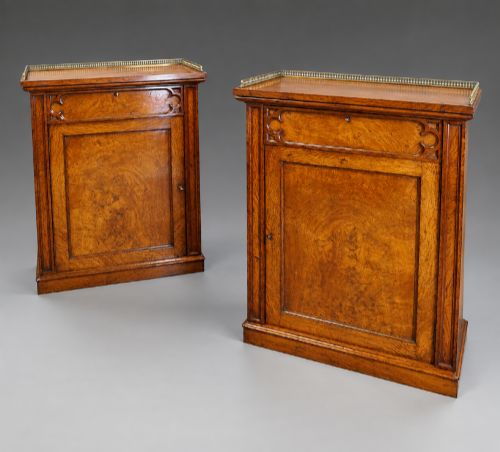
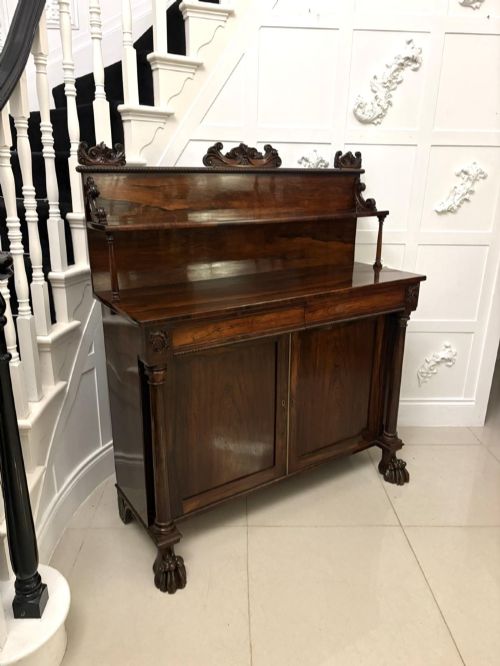
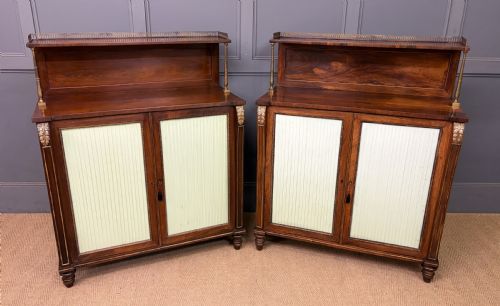
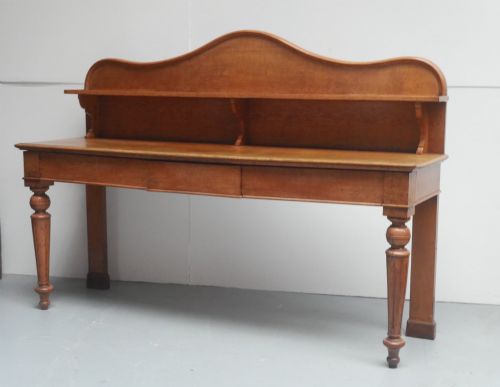
A carved gallery sideboard represents a robust family of dining room storage furniture, appearing frequently across this selection as sideboards, chiffoniers, serving tables and side cabinets. These pieces emerge from the nineteenth century, encompassing Regency, Victorian and William IV periods alongside regional expressions like Anglo-Indian, Gothic Revival and Breton Folk Art.
The core function centres on surface serving space paired with enclosed storage cupboards or drawers below, often surmounted by a raised carved gallery tier at the back. Makers fashioned these utilitarian dining room fixtures to anchor large formal spaces, utilising dense hardwoods to project substance and authority.
How they were made
Cabinet makers constructed these pieces primarily from solid and veneered mahogany, rosewood, oak and padauk, often highlighting flame mahogany veneer or burr walnut for visual depth. Structural integrity relied on heavy timber framing combined with hand-cut joinery to support marble tops, glass inserts and brass gallery rails.
Carving formed the primary decorative language, applied directly into the solid timber or onto applied mouldings, scrolls and barley twist columns. Workshops finished these surfaces with hand-applied polish that accentuated the natural grain patterns of the dense hardwoods.
Listings feature nineteen-century periods including Regency, Victorian, William IV, Gothic Revival, and Anglo-Indian designs.
What varies in quality
Quality separates along the ambition of the timber selection and the crispness of the carved detail. Pieces featuring high-figured flame mahogany veneer, burr walnut, amboyna or dense padauk sit above standard plain-grained examples.
The depth and hand-carved definition of the gallery and structural mounts distinguish superior workshops from volume production. Integrated details such as original marble tops, brass fittings and balanced proportions elevate certain regional and period specimens.
Mack Williams And Gibton
The Carved Gallery Sideboard Glossary
- Gallery
- A raised ornamental shelf or railing mounted on top of the sideboard backboard. It traditionally held plates or decorative ceramics safely in place.
- Chiffonier
- A compact low sideboard or cabinet, typically featuring enclosed cupboards below and a shelf structure above. This form became popular during the Regency and Victorian eras.
- Pedestal sideboard
- A large formal dining room form featuring central storage flanked by substantial pedestal cupboards. These heavy pieces dominated nineteenth-century dining rooms.
- Padauk
- A heavy, durable tropical hardwood with a reddish hue, utilised in Anglo-Indian and specialised nineteenth-century cabinet making. It accepts intricate hand carving exceptionally well.
- Serving table
- A long console or sideboard designed specifically for plating food during meals. They often omit lower cupboards in favour of an open frieze with drawers.
Carved Gallery Sideboard: Frequently Asked Questions
What is a carved gallery sideboard?
A carved gallery sideboard is a nineteenth-century dining room storage piece featuring a raised decorative superstructure above a surface and cupboards.
These forms include chiffoniers and serving tables designed to store dining linen and display tableware.
How do I style a sideboard?
Place the piece against a dining room or hallway wall to anchor the room's proportions.
Utilise the surface for serving food or displaying ceramics, while the raised gallery frames smaller decorative objects.
How do I date a sideboard?
Examine the primary wood species, timber preparation marks and stylistic indicators such as Regency reeding or Victorian carving.
Periods span from early nineteenth-century Regency and William IV to mid and late Victorian examples.
What woods were used?
Cabinet makers relied heavily on dense tropical and European hardwoods including mahogany, rosewood, oak and padauk.
Many surfaces incorporate decorative veneers such as flame mahogany, burr walnut and amboyna.