
19th Century Dining Sideboard
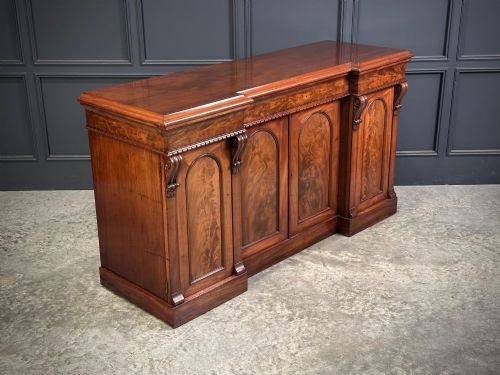
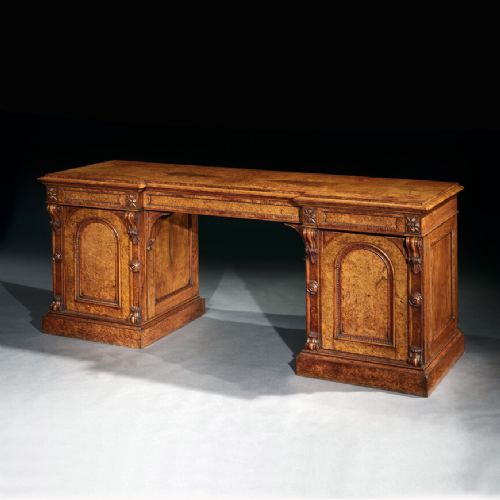
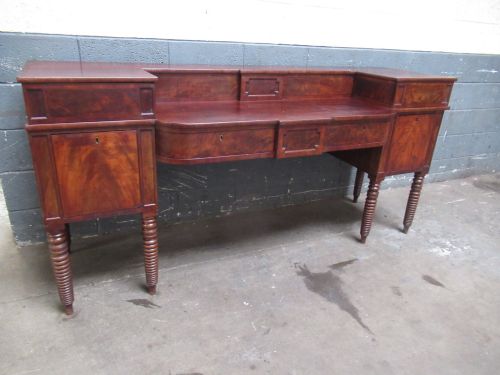
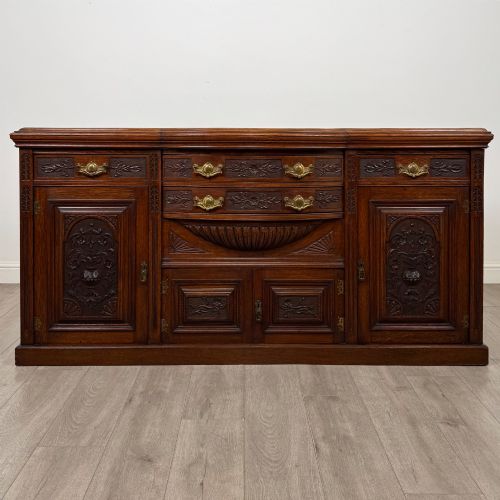
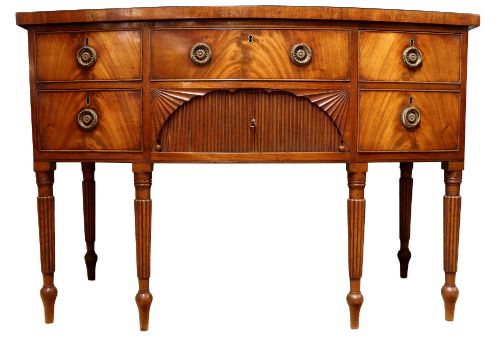
A 19th century dining sideboard anchors a room with substantial timber and practical proportions, built to hold glassware and serve food during large gatherings.
19th Century Dining Sideboard
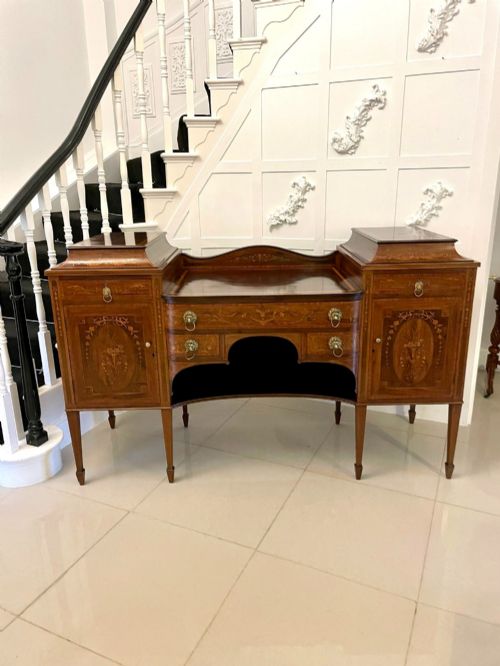
A 19th century dining sideboard encompasses robust serving tables, pedestal sideboards and chiffoniers designed for the dining room. The examples found here span the Victorian, Regency, William IV and Georgian periods, showing the evolution of dining furniture across the hundred years.
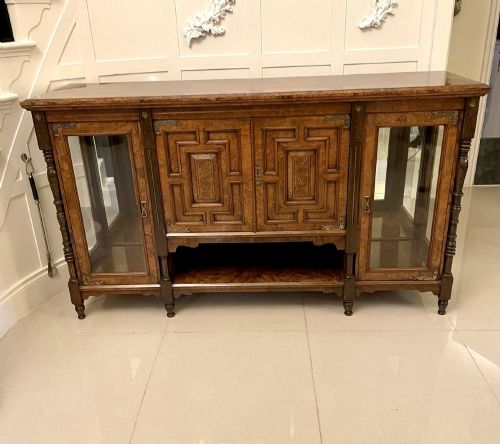
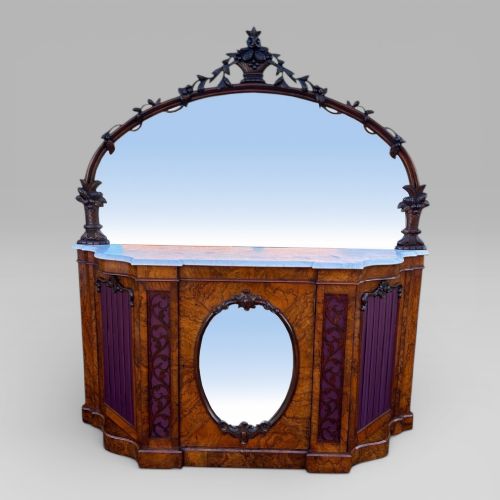
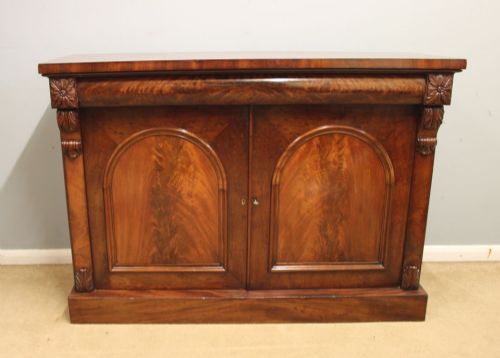
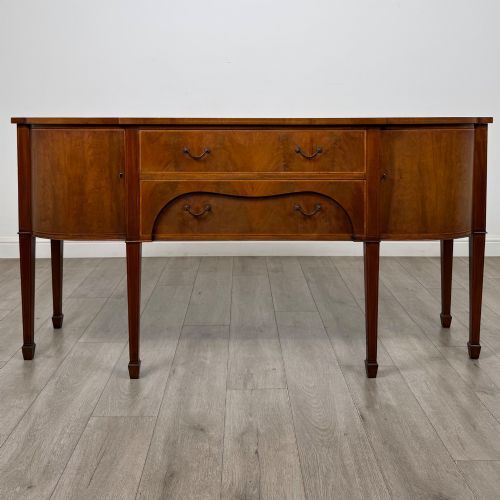
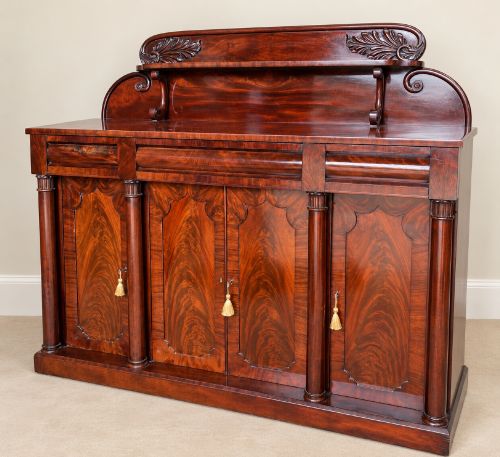
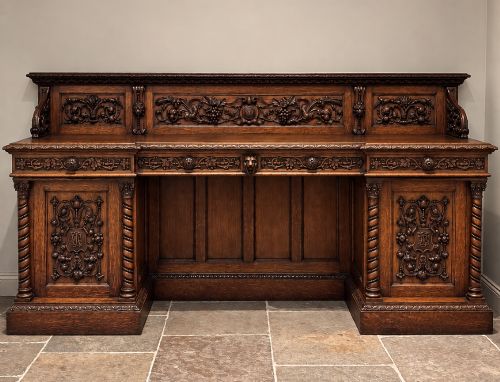
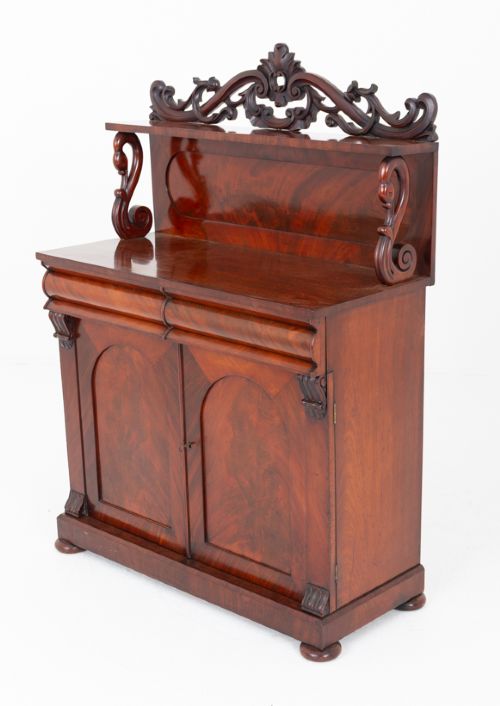
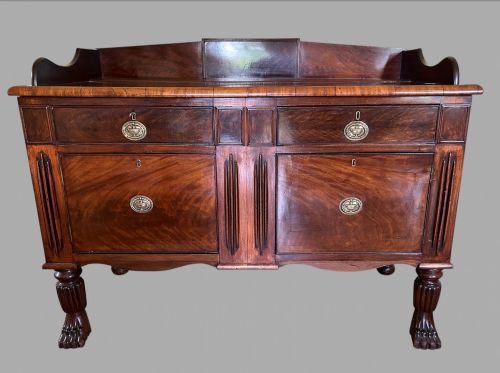
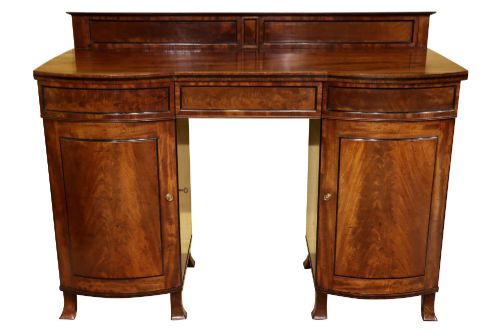
The Victorian pieces frequently arrive in mahogany, burr walnut or carved oak, often featuring mirror backs, cupboards and four-door configurations. Earlier Regency and Georgian iterations lean towards bow fronts, figured mahogany and pedestal designs built around symmetry and clean lines.
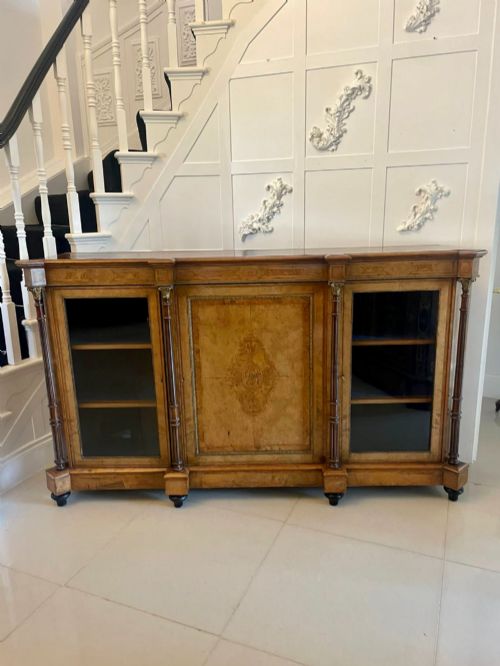
Chiffoniers and credenzas also appear alongside traditional sideboards, offering compact storage with glass doors or open shelves. Buyers selecting a 19th century dining sideboard will encounter these varied forms, each reflecting the domestic habits and interior tastes of its decade.
How they were made
Cabinet makers utilised dense native and imported timbers, pairing solid mahogany, oak and rosewood with figured veneers like flame mahogany and pollard oak. These woods were chosen for their durability and striking grain patterns, which were then polished to a deep lustre.
Decoration relied on brass fittings, marquetry inlay, ebony stringing and intricate hand carving rather than applied plastics or modern laminates. Marble tops also appear on certain credenzas and sideboard variations, providing a durable and cool surface for serving dishes.
Construction techniques involved sturdy joinery designed to support heavy tableware and frequent use. Large breakfront and pedestal sideboards required complex framing to maintain structural integrity across wide spans and multiple doors.
Several sideboards include heavy carved oak and mirror backs designed to reflect dining room candlelight.
What varies in quality
The distinction between standard utility pieces and superior examples lies in the selection of timber veneers and the crispness of the hand carving. Finer pieces display matched flame mahogany or burr walnut across drawer fronts and doors, creating symmetrical patterns that require considerable skill to apply.
Design sophistication also dictates the tier of the piece, separating simple provincial cupboards from grand metropolitan commissions with marquetry inlay or architectural mouldings. The presence of original brass hardware and well-executed internal shelving further separates workshop standards.
Hewetsons London
The 19th Century Dining Sideboard Glossary
- Chiffonier
- A low cabinet or sideboard, typically fitted with drawers and doors, popular for dining and living spaces during the Regency and Victorian periods.
- Credenza
- A sideboard or display cabinet, often featuring glass doors or marble tops, originating from Italian furniture design and adapted in Victorian rooms.
- Marquetry
- Decorative inlay work using various woods to create pictorial or geometric patterns on the surface of the furniture.
- Pedestal sideboard
- A form featuring two distinct pedestals flanking a central serving area, characteristic of Regency dining room design.
- Flame mahogany
- A veneer cut from the fork of the mahogany tree, producing a distinctive flickering flame-like pattern highly prized by cabinet makers.
19th Century Dining Sideboard: Frequently Asked Questions
What is a 19th century dining sideboard used for?
These pieces served as functional dining room furniture for storing cutlery, linen and serving dishes while providing a surface for food presentation.
Today, they function similarly in modern homes while acting as focal storage units in dining rooms or living spaces.
How do I tell Regency from Victorian sideboards?
Regency sideboards generally exhibit cleaner architectural lines, brass gallery rails, bow fronts and pedestal bases dating from the early part of the century.
Victorian versions tend to be heavier, featuring darker woods, elaborate carving, mirror backs and more complex door arrangements.
What woods are common on these sideboards?
Mahogany is the predominant timber, appearing both as solid wood and as decorative veneers like flame mahogany.
Oak, rosewood, burr walnut and pollard oak also feature prominently across specific Victorian and Georgian examples.
How do I care for a antique sideboard?
Keep the timber away from direct heat sources and strong sunlight to prevent the wood and veneer from drying out or cracking.
Apply natural beeswax occasionally to nourish the polish and maintain the natural lustre of the wood grain.