

Art Deco Server
An art deco server brings striking geometric form and rich timber to the dining room, offering both practical surface space and refined storage.
Art Deco Server
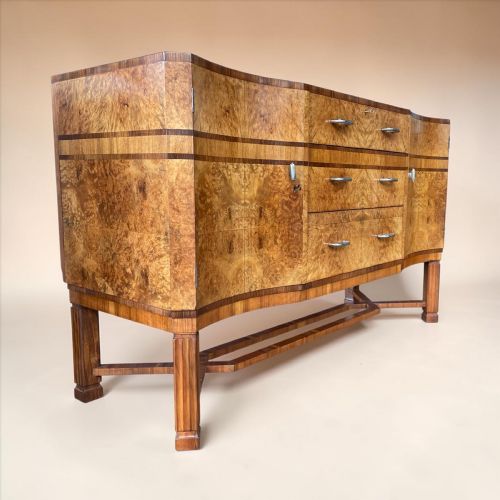
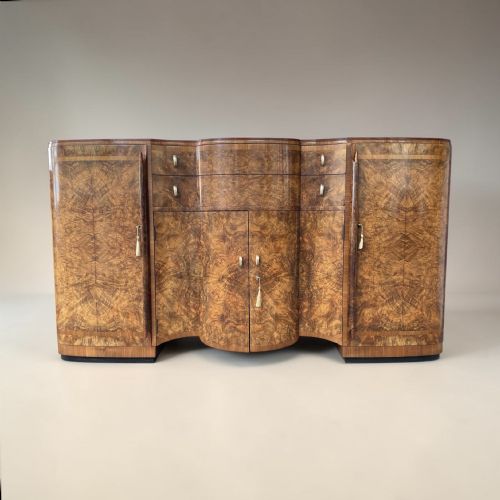
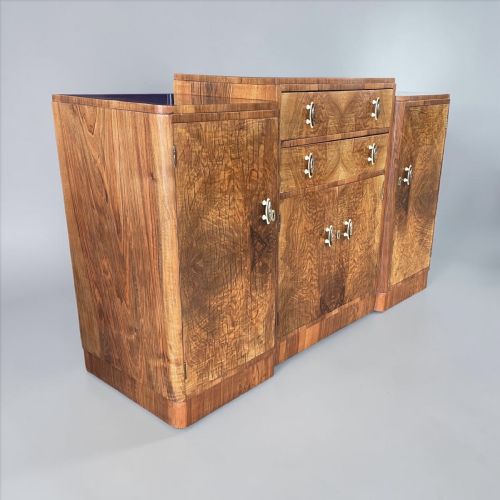
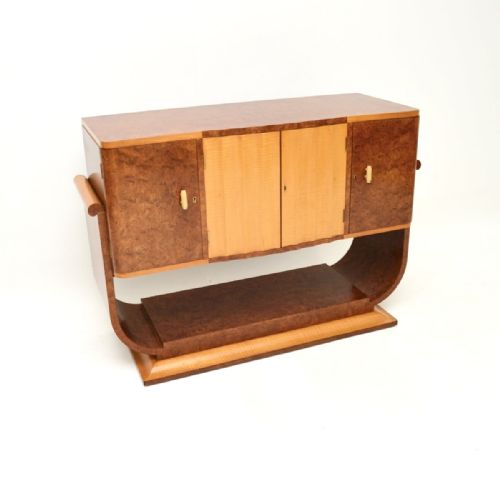
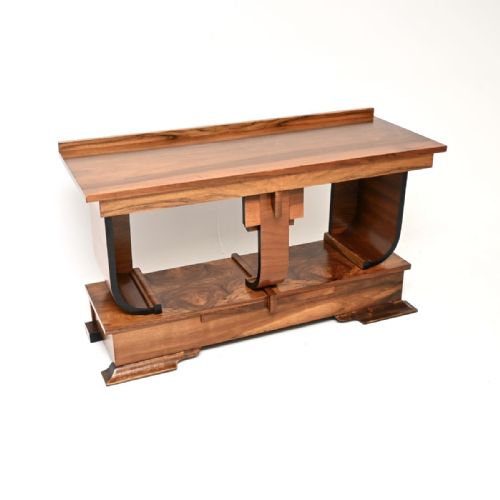
An art deco server encompasses substantial sideboards, console tables, and dedicated serving items originating primarily from the 1920s and 1930s. These pieces function as the centrepiece of a dining space, designed to hold tableware, cutlery, and beverages while displaying distinctive modernist lines.
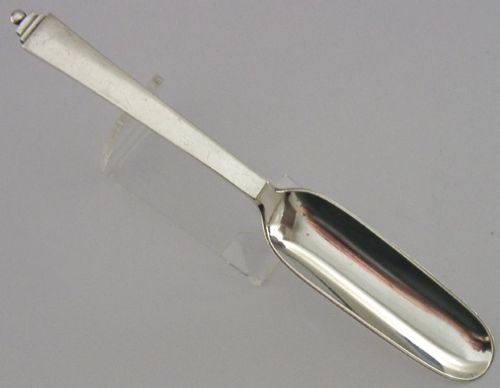
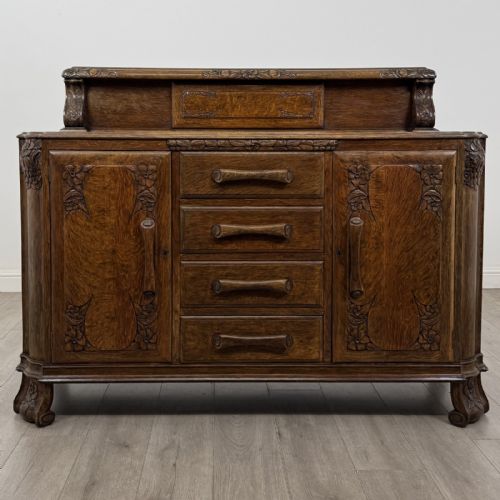
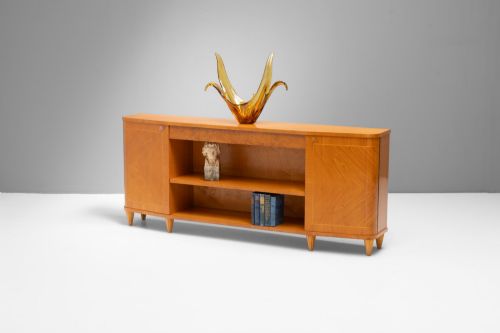
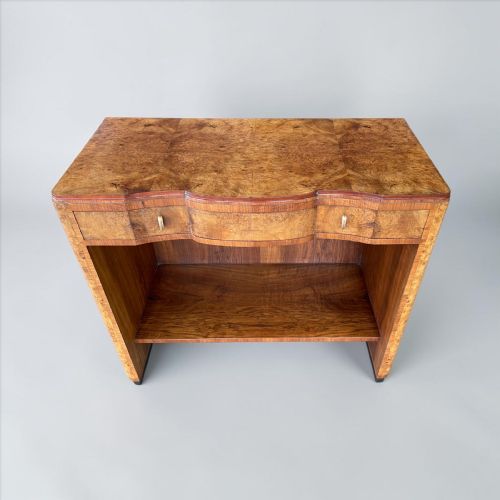
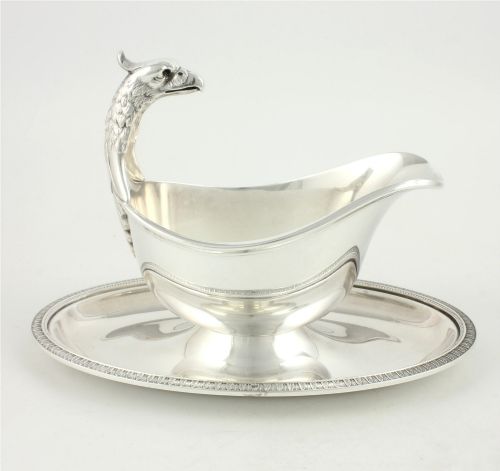
Sideboards and console tables form the core of what appears in this selection, often taking the shape of bow fronts or streamlined cabinets. Alongside these large furniture items, the category includes smaller serving accessories like sauce boats, cake servers, and toast racks.
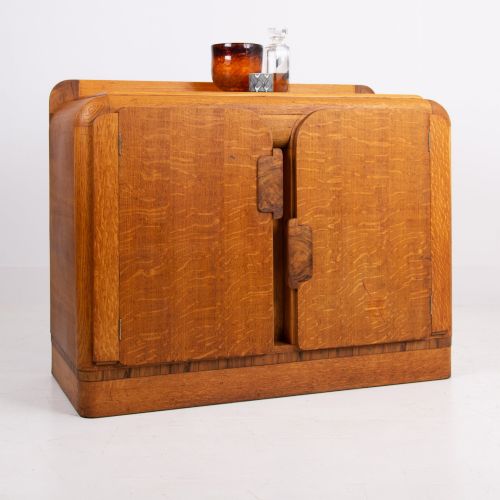
Examples span English workshops as well as French, Italian, and Scandinavian makers, reflecting international design movements such as Swedish Grace alongside classic Art Deco. Walnut, oak, and silver plate dominate the construction, linking heavy cabinetry with polished metal tableware.
Materials and construction
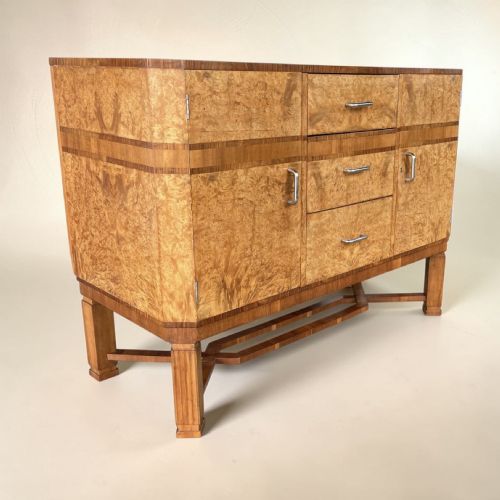
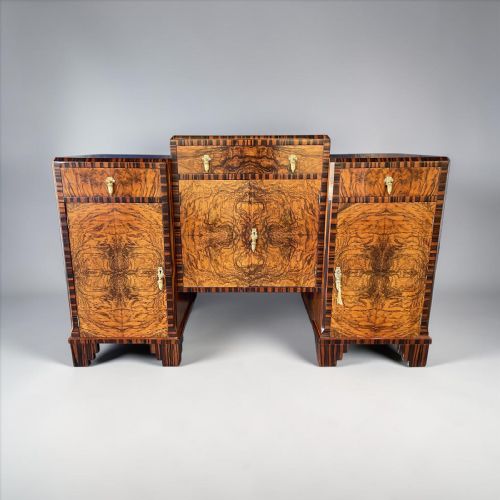
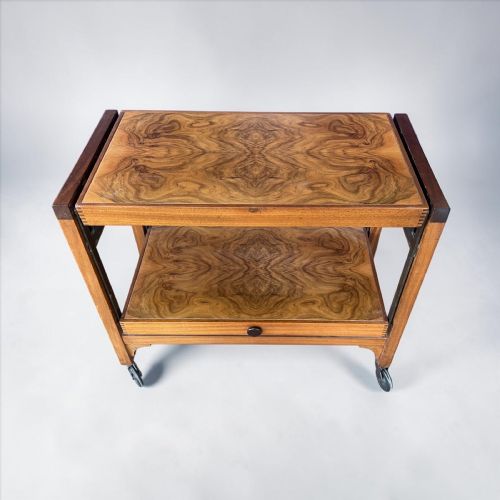
Cabinet makers utilised choice timbers such as burr walnut, figured walnut, and limed oak, frequently applying veneers to create dramatic grain patterns across wide drawer fronts and cabinet doors. Secondary woods provide a sturdy structural skeleton behind these decorative surfaces.
Metal and glass elements integrate directly into the design, appearing as brass handles, starburst glass trays, and silver-plated mounts. Silversmiths shaped sterling silver and plated metals for smaller serving pieces, employing piercing and casting techniques to achieve crisp decorative detail.
A metamorphic serving trolley allows a host to unfold hidden tiers for cocktails, turning tea time into a theatrical display of engineering.
Judging quality in design and finish
The choice of veneer defines the visual impact of a cabinet, with symmetrical grain matching and unblemished burr walnut marking out superior execution. Lesser pieces rely on plain timber or suffer from fading and lifting across large flat expanses.
Maker attribution elevates certain furniture pieces significantly, particularly items bearing signatures or provenance from prominent London and Parisian workshops. Master craftsmanship shows in the smooth action of drawers, the seamless fit of curved doors, and the weight of cast metal mounts.
Maurice Adams·Gomme·Hille·Fortnum and Mason·Heals of London·Epstein·Harry and Lou Epstein·Hamptons of Pall Mall London·Waring and Gillows·Walker and Hall·Christofle Gallia
The Art Deco Server Glossary
- Burr walnut
- A prized timber harvested from the tree's growth warts, producing a swirling, knotted grain pattern. Cabinet makers used veneers of this wood to create symmetrical patterns on doors and tabletops.
- Console table
- A wall-mounted or freestanding table with a narrow profile designed for placement in hallways or dining rooms. These often serve as compact serving surfaces.
- Cocktail cabinet
- A specialised storage unit featuring fitted interior compartments for bottles, glassware, and mixing accessories. They became popular during the interwar period for home entertaining.
- Swedish Grace
- A refined neoclassical style popular in Sweden during the 1920s, combining classical restraint with modern simplification. It bridges traditional craftsmanship and early modernist design.
- Sauce boat
- A boat-shaped container with a lip and handle used for serving gravies and sauces. Examples often rest on an attached underplate and feature silver-plated or sterling construction.
Art Deco Server: Frequently Asked Questions
What is an art deco server?
An art deco server refers to furniture and tableware designed to assist with dining and entertaining during the interwar period. This groups large storage sideboards and console tables together with smaller silver service items.
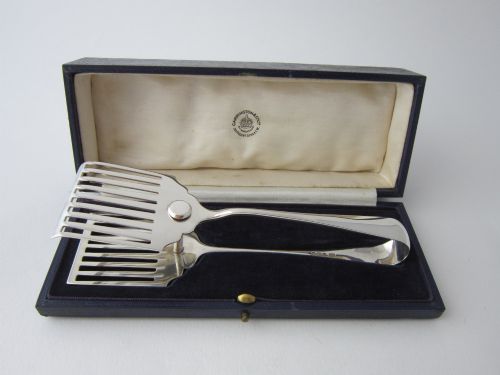
Buyers encounter various forms, ranging from massive burr walnut cocktail cabinets to delicate silver-plated cake servers and asparagus tongs.
Where were these pieces made?
The pieces originate from British, French, Italian, and Scandinavian workshops and retail houses active during the early twentieth century. London department stores and cabinet makers produced many of the larger sideboards.
Continental designers contributed distinct regional aesthetics, such as Parisian macassar veneer work and Scandinavian limed oak furniture.
How do I care for burr walnut?
Burr walnut furniture requires protection from direct sunlight and excessive heat fluctuations to prevent the delicate veneer from drying or cracking. Regular dusting with a soft, dry cloth maintains the polished finish.
Avoid using silicone-based polishes or harsh chemical cleaners, as these damage the historic lacquer and timber surface over time.
How do I distinguish 1920s from 1950s items?
Pieces from the 1920s and 1930s typically display bold geometric lines, exotic veneers, and traditional cabinet-making joints rooted in the Art Deco movement. Mid-century items from the 1950s often adopt lighter structures and more pared-back forms.
Hallmarks on silver elements and maker stamps inside cabinet drawers provide precise dating evidence for many items.