
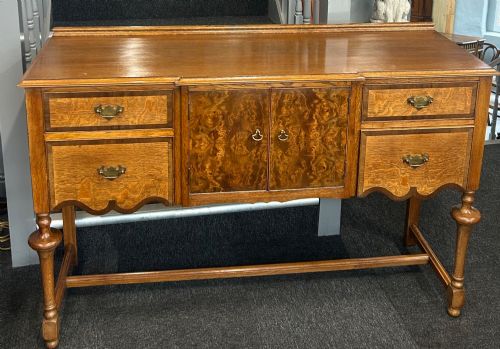


Golden Oak Server
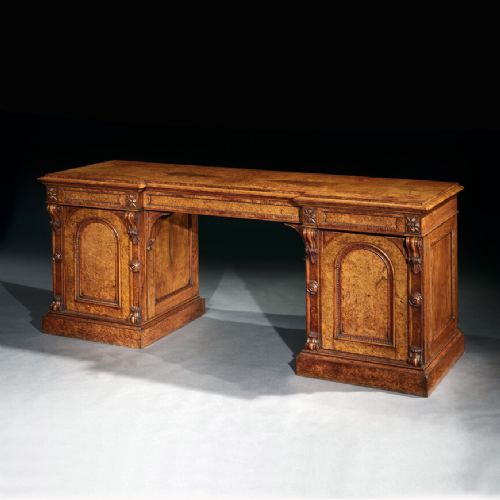
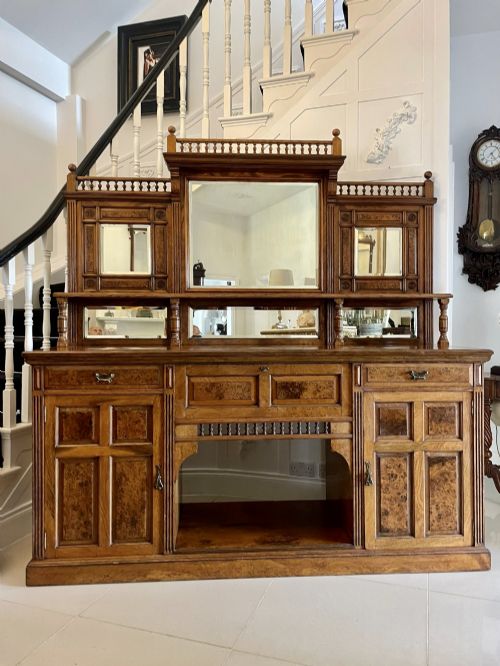
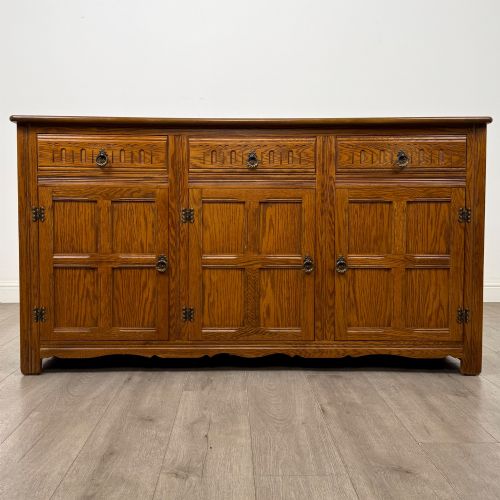
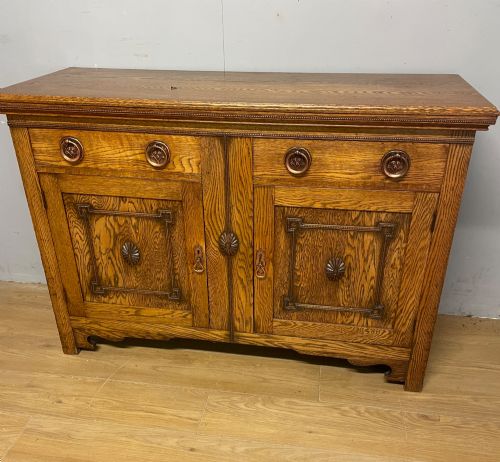
A golden oak server brings warmth and generous storage to a room, appearing in forms from compact hall tables to substantial mirror-backed sideboards.
Golden Oak Server
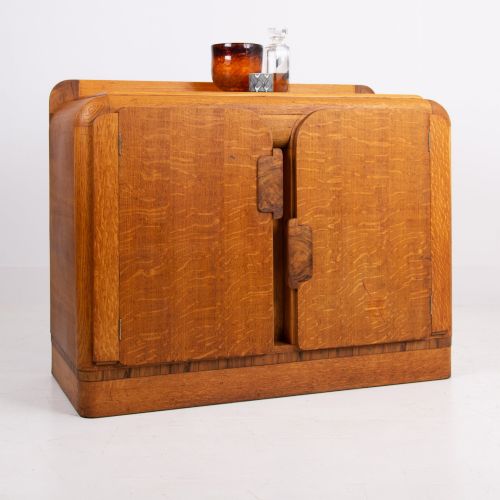
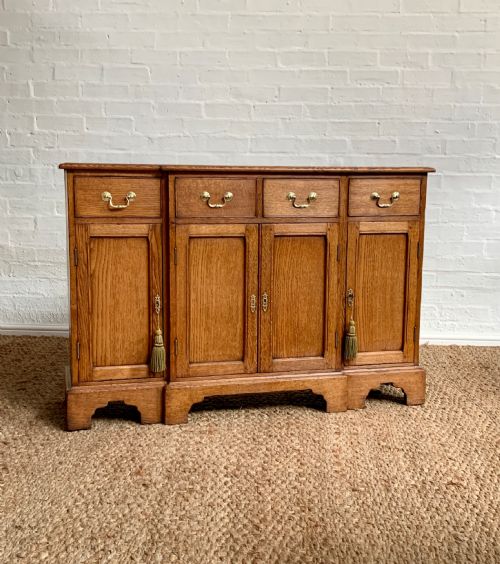
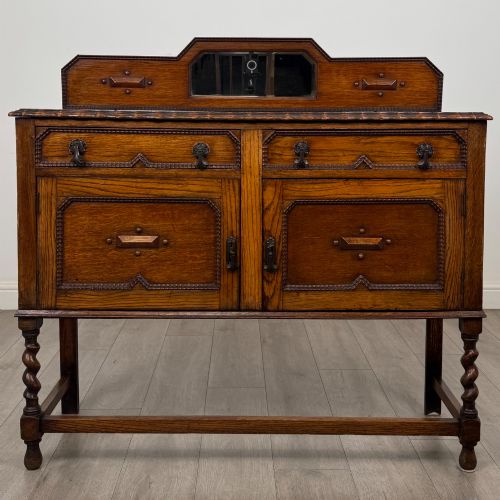
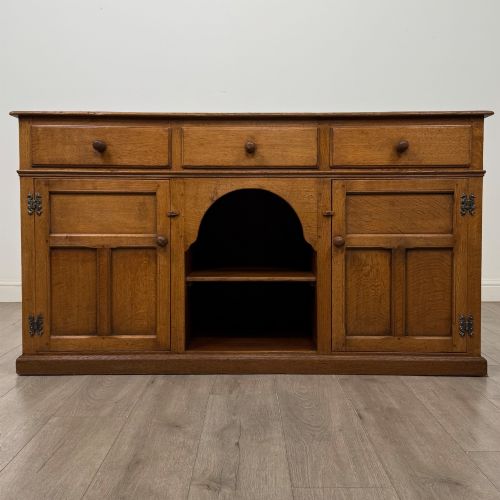
A golden oak server comprises sideboards, buffet servers, dresser bases and hall tables finished in light or warm oak tones. Pieces span the Victorian, Edwardian, and Arts and Crafts periods, alongside 17th Century styles and 19th Century craftsmanship.
The most frequent versions on this page are Edwardian and Victorian sideboards, alongside Arts and Crafts designs. Makers utilised pollard oak, burr walnut, and standard oak to achieve varied golden patinas.
Forms range from simple two-door cabinets and serving tables to huge credenzas and mirror-backed sideboards. Regional and stylistic influences include Jacobean Revival, Art Deco, and the Cotswold School.
Materials and Construction
Carpenters constructed these pieces primarily from solid oak and pollard oak, sometimes incorporating burr walnut for contrasting grain patterns. Timber selection dictated the foundational strength and natural golden tone of each server.
Makers integrated brass, copper, and iron hardware, such as hinges, handles, and lock escutcheon plates. Glass panels and mirror plates appeared on late Victorian and Edwardian mirror-backed sideboards.
Carving techniques defined specific stylistic movements, from the figurative details of Green Man carvings to the linear geometry typical of Arts and Crafts and Art Deco pieces.
Listings feature oak, pollard oak, and burr walnut across Edwardian, Victorian, and Arts and Crafts styles.
Assessing Quality and Execution
The grading of a golden oak server depends on the selection of timber veneers, such as pollard oak or burr walnut, and the crispness of hand-carved details. Superior examples display thoughtful grain matching and deliberate proportion.
Construction methods distinguish standard production from exceptional workshops, visible in the joinery of drawers and the integration of mirror backs. Original hardware and secondary timbers complete a cohesive piece.
Stylistic integrity separates individual school designs, such as Cotswold School or Heals-influenced work, from mass-produced commercial variants of the same eras.
Gomme
The Golden Oak Server Glossary
- Pollard oak
- Timber taken from trees that were pollarded, creating highly figured, clustered grain patterns. This wood was favoured by Victorian cabinetmakers for decorative front panels.
- Dresser base
- A lower storage unit featuring cupboards and drawers, historically used for serving food. These pieces form a significant category within antique oak furniture.
- Credenza
- A large sideboard or buffet cabinet, often built with substantial proportions and mirror backs. They provided grand display and storage in formal dining rooms.
- Arts and Crafts
- A design movement valuing handcraftsmanship, simple construction, and natural materials over mass production. Pieces from this style often emphasise honest joinery and vernacular oak finishes.
- Dumb waiter
- A tiered serving table designed to hold dishes without requiring servants in the room. Early examples appear in polished hardwoods and figured oaks.
Golden Oak Server: Frequently Asked Questions
What periods do these servers come from?
The listings span from the 17th century through the Victorian and Edwardian eras up to the 1930s. You will find pieces reflecting Arts and Crafts, Art Deco, and Jacobean Revival movements alongside 19th-century works.
Each period imparts distinct characteristics, from heavy carved oak to streamlined golden tones.
How were these servers originally used?
Historically, servers, sideboards, and dumb waiters held food, tableware, and linens during dining. Hall tables served as functional drop points in entranceways.
Over time, their roles evolved into display furniture that anchored dining rooms and living spaces with ample storage.
How do I care for golden oak furniture?
Maintain the wood by keeping it away from direct sunlight and dramatic humidity changes. Regular dusting with a dry cloth preserves the finish.
Avoid silicone-based polishes, opting instead for traditional wax feeds that protect the natural grain and golden patina.
How do I distinguish Arts and Crafts pieces?
Arts and Crafts pieces emphasise visible construction methods, simpler lines, and honest materials. They often feature minimal ornamentation and focus on the natural grain of the oak.
Hardware in copper or iron further distinguishes this movement from heavily carved Victorian equivalents.