
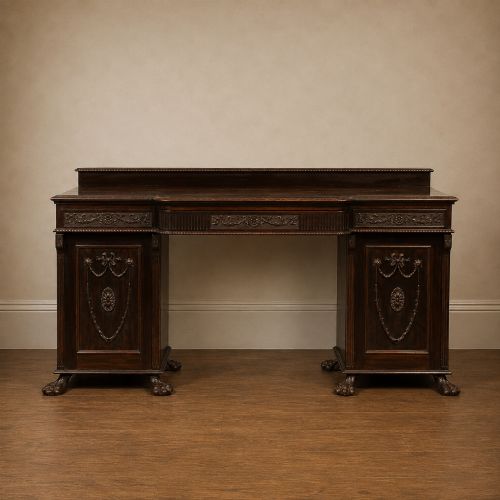
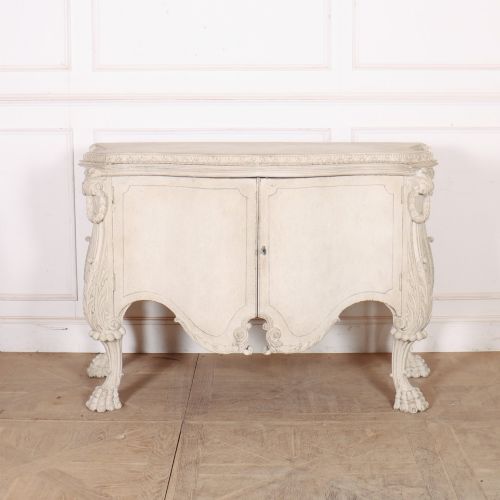
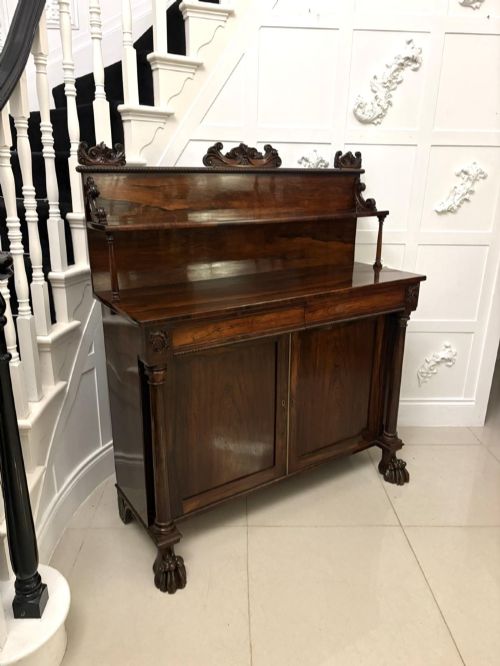
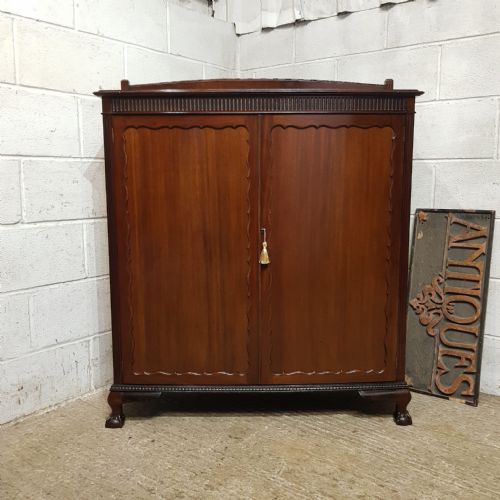



Claw Foot Sideboard
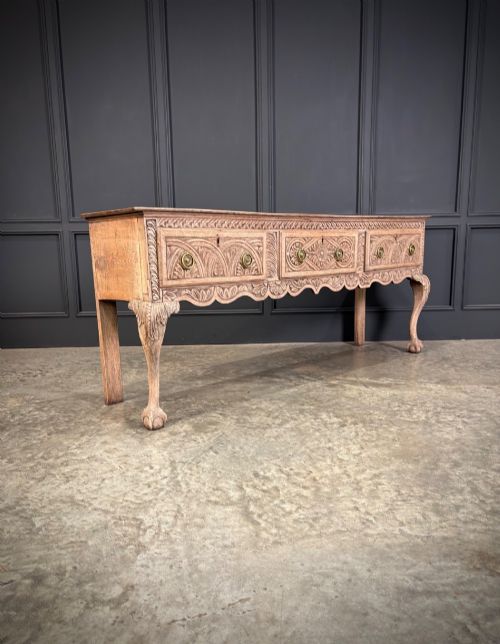
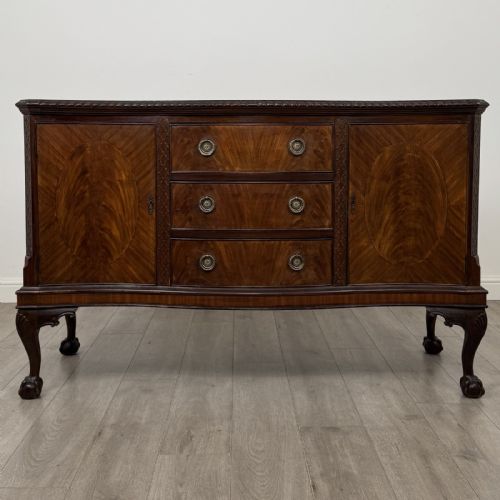
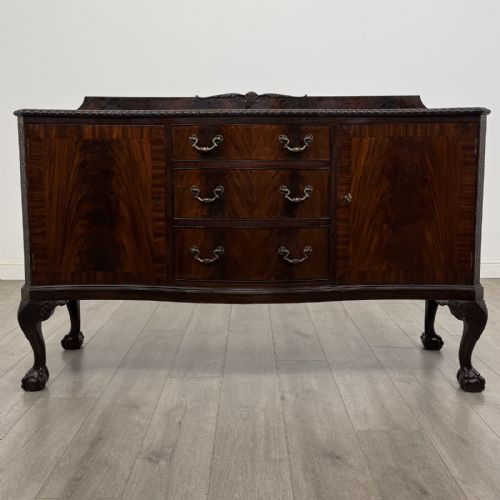
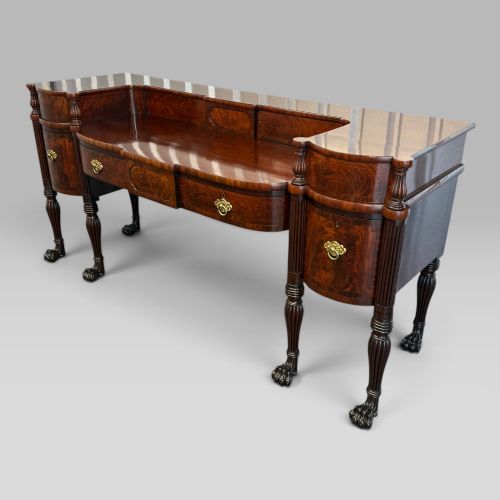
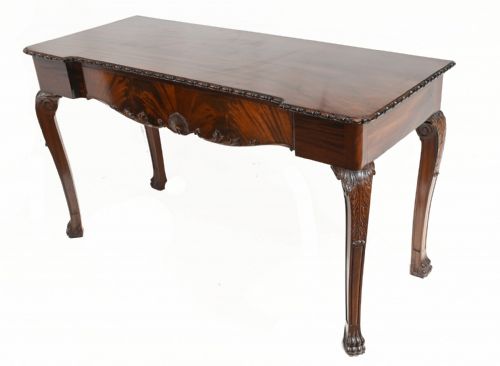
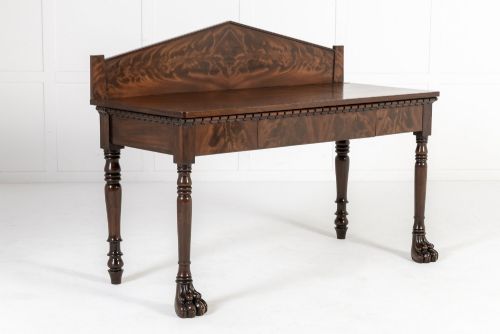
A claw foot sideboard anchors a dining room with serious presence, pairing substantial timber with bold animal paw supports.
Claw Foot Sideboard
A claw foot sideboard serves as a commanding dining room focal point, designed for storage and serving during large meals. When you browse this selection, you encounter substantial furniture pieces originating predominantly from the nineteenth century and the Edwardian era.
Makers often utilised rich timbers to create these grand proportions, integrating prominent carved paw supports directly into the base structure. The surviving pieces demonstrate the enduring appeal of heavy mahogany and classical Revival styling in domestic interiors.
Materials and construction
Makers built these cabinets predominantly from solid mahogany and flame mahogany veneer, occasionally incorporating rosewood or maple for specific decorative effects. Timber selection dictated the visual weight of the furniture, with figured grains chosen specifically for prominent door and drawer surfaces.
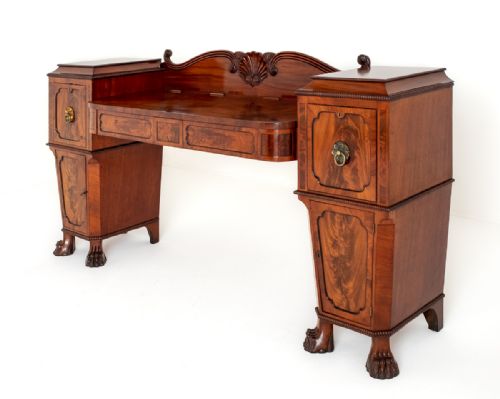
Carving formed an essential part of the construction process, particularly for the distinct lion paw or claw feet that anchor each corner. Workshops employed skilled carvers to shape these heavy wooden supports, sometimes combining the timber frame with brass mounts or marble tops.
Assessing quality and craftsmanship
Quality reveals itself in the crispness of the wood carving on the paw feet and the depth of figure in the mahogany veneer. Superior examples display careful timber matching across drawer fronts and doors, ensuring the grain patterns flow naturally across the piece.
Structural integrity also separates standard workshop output from exceptional commissions, particularly in the joinery of large breakfront bodies and heavy serving surfaces. Finer items exhibit precise drawer linings and solid secondary woods that maintain stability over centuries of use.
Gillows·Robert Strahan and Co
The Claw Foot Sideboard Glossary
- Claw foot
- A furniture support carved to resemble an animal paw grasping a ball. This classical motif appears frequently on nineteenth-century dining furniture.
- Chiffonier
- A low sideboard or cabinet featuring shelves or a raised back. These compact pieces offer practical storage for dining rooms with limited wall space.
- Breakfront
- A large cabinet design where the central section projects forward from the flanking wings. This architectural arrangement creates depth and visual interest in formal rooms.
- Flame mahogany
- Timber sliced to reveal a distinctive flickering flame pattern in the grain. Cabinetmakers prized this veneer for principal display surfaces.
- Regency
- A British design period spanning the early nineteenth century characterised by classical influences and bold proportions. Pieces from this era often feature heavy mounts and dark timbers.
Claw Foot Sideboard: Frequently Asked Questions
Where should I place a claw foot sideboard?
These substantial pieces demand a prominent wall in a dining room or a large living space where their proportions can be fully appreciated. Ensure you measure the floor space carefully, as the projecting paw feet add to the overall footprint.
Position the cabinet away from direct heat sources to protect the polished mahogany surfaces and veneered panels from drying out over time.
How do I care for the mahogany finish?
Maintain the timber by dusting regularly with a soft, dry cloth and applying a quality beeswax periodically to nourish the grain. Avoid using modern silicone sprays, which build up and dull the historic polish.
Keep the piece out of direct sunlight to prevent the rich flame mahogany tones from fading unevenly across the front panels.
What is the difference between a sideboard and a chiffonier?
A sideboard is typically a long, low serving piece designed specifically for dining rooms to hold crockery and food during meals. A chiffonier is generally smaller and often includes a raised superstructure with shelves.
Both forms utilise similar cabinetmaking techniques and frequently feature the same distinctive carved paw supports.
How do I identify a Regency period piece?
Regency furniture relies on classical architectural motifs, bold use of dark timbers like mahogany and rosewood, and clean structural lines. Look for balanced proportions and restrained decorative carving rather than heavy ornamentation.
The presence of original brass hardware and traditional secondary timbers inside the drawers also helps confirm the period of manufacture.