
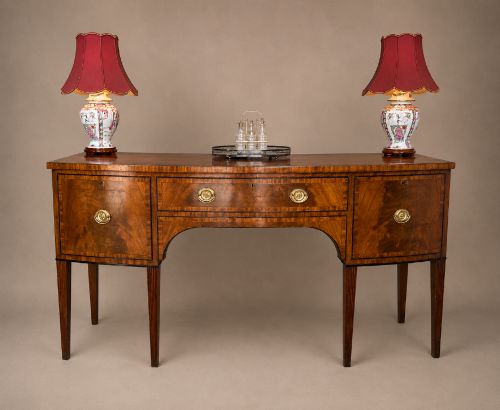
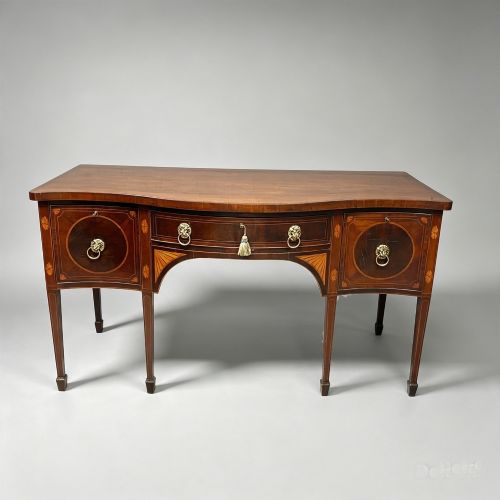
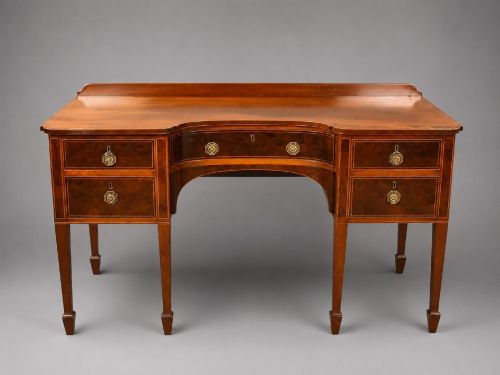
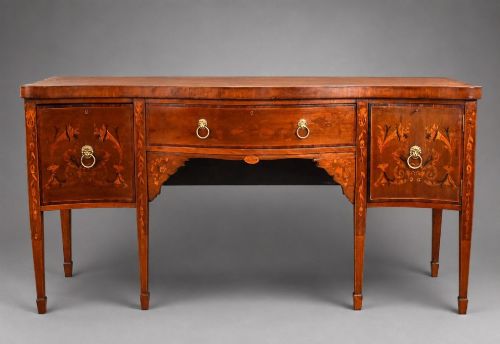
Sheraton Inlaid Sideboard
A sheraton inlaid sideboard brings classical symmetry and disciplined string-work into a room, offering both refined display and deep storage.

Sheraton Inlaid Sideboard
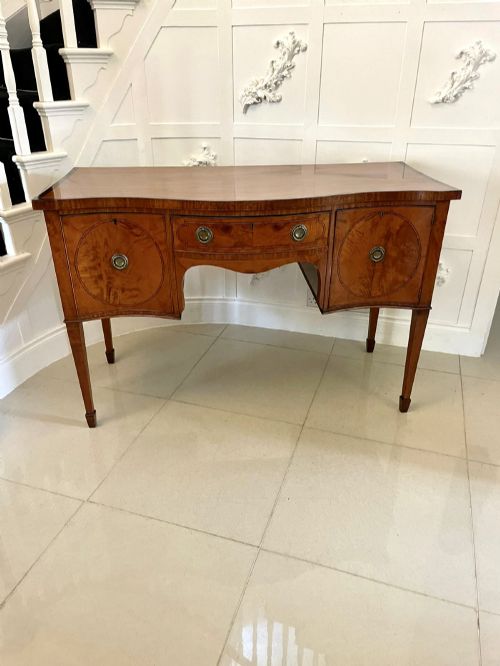
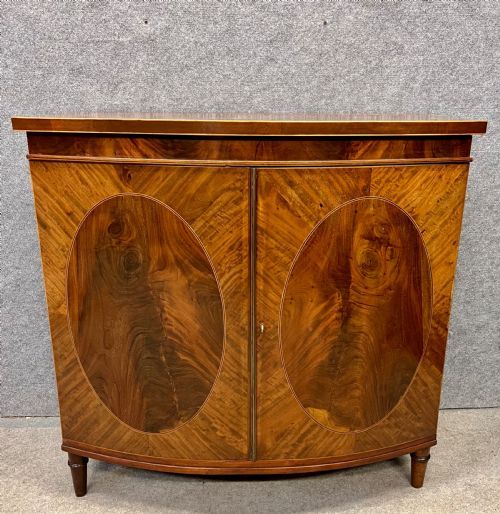
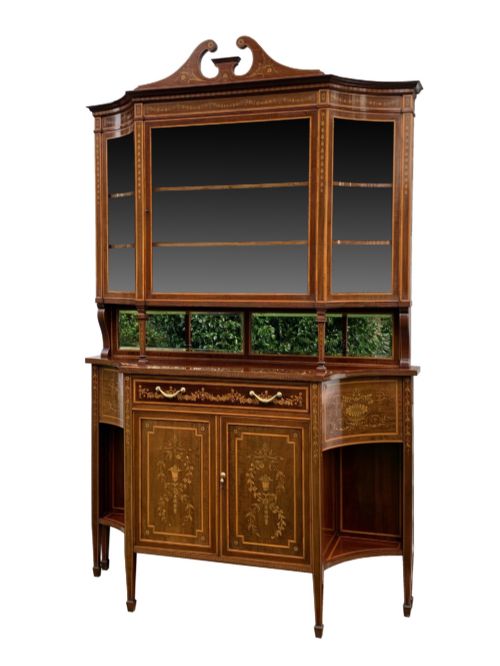
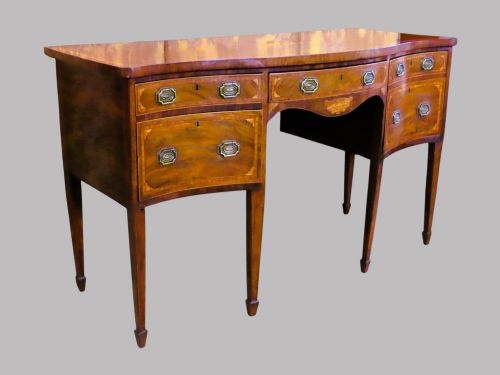
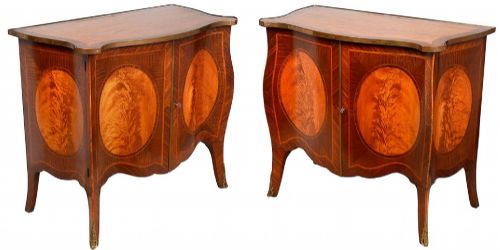
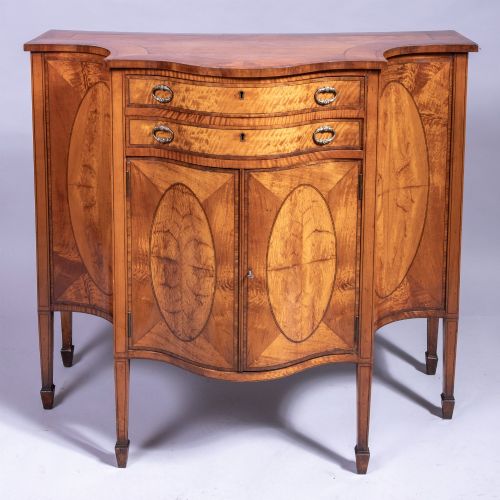
A sheraton inlaid sideboard is a low dining room storage piece defined by straight or curved lines and contrasting wood veneers. These items stem from late eighteenth-century George III designs as well as later Edwardian and Victorian revivals.
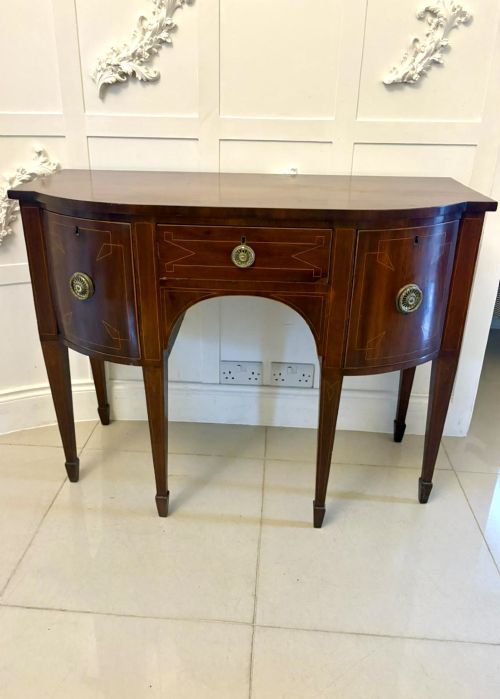
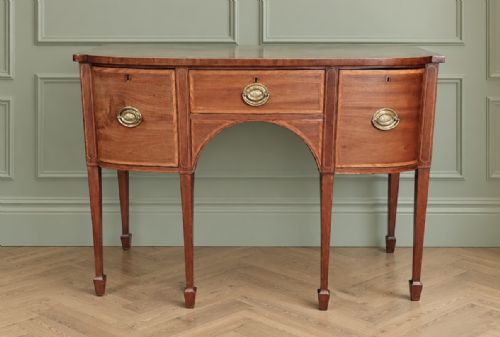
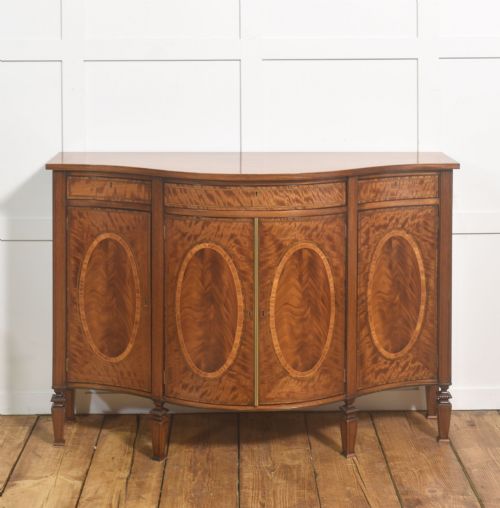
Buyers encounter both genuine period Georgian examples and later Sheraton Revival interpretations from the nineteenth and early twentieth centuries. Forms range from bow-front and serpentine shapes to flat-fronted servers and cabinets.
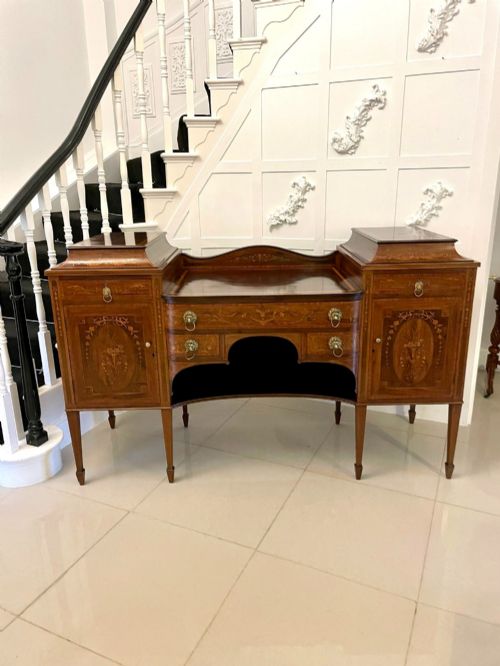
The aesthetic relies on proportion, balanced pedestals or legs, and precise geometric stringing rather than heavy carved ornament. Pieces often incorporate side cabinets, drawers, or associated cutlery urns to complete the dining suite.
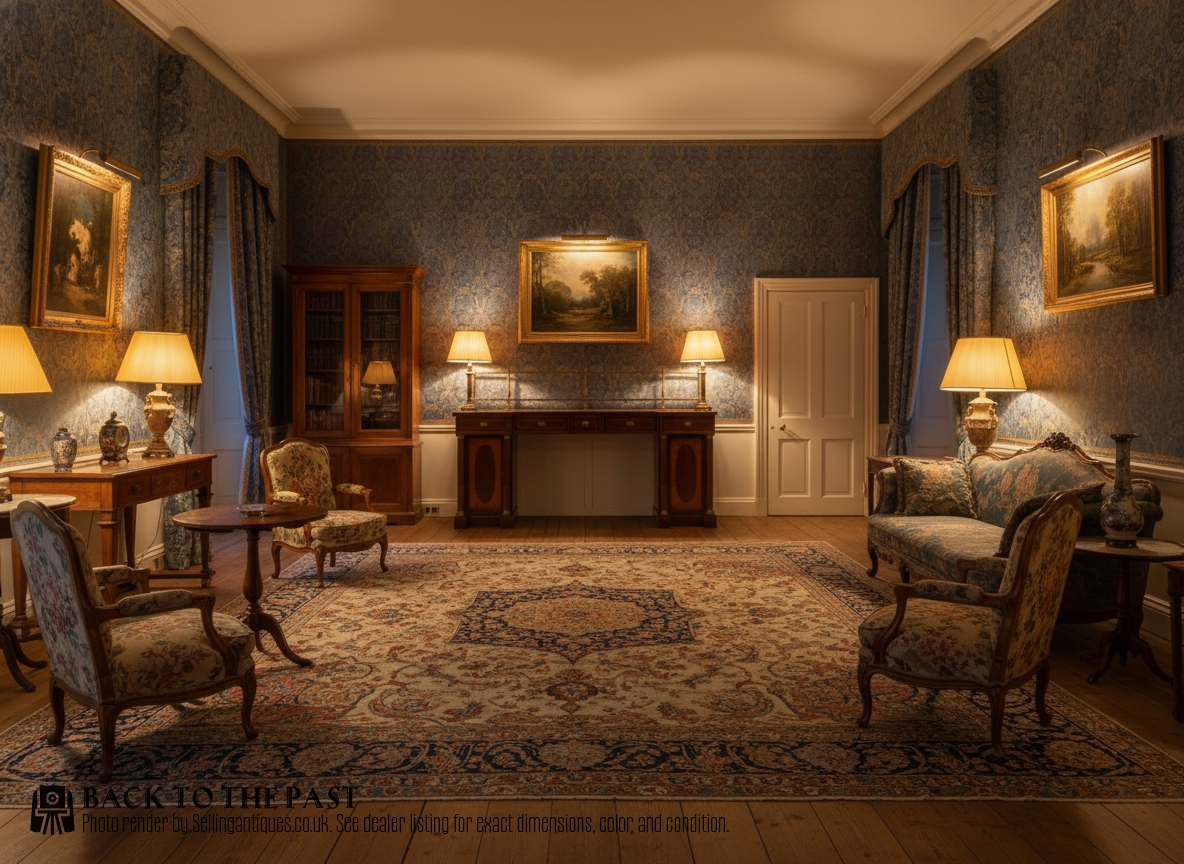
How they were made
Cabinetmakers built the carcass using solid timbers such as mahogany or rosewood, then applied thin veneers of figured mahogany, flame mahogany, or pale satinwood across the facade. Surfaces frequently display linear stringing and contrasting borders in boxwood.
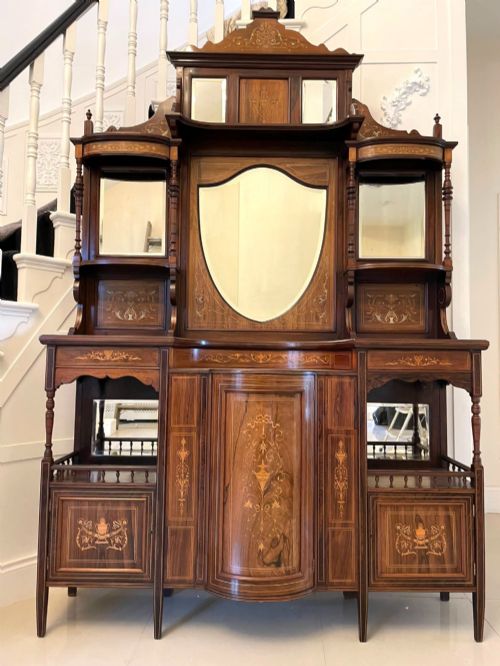
Marquetry panels utilise various tinted woods to create floral or neoclassical motifs, set flush into the primary timber. Drawer fronts and curved doors required skilled bending of wood over heated forms to maintain smooth structural integrity.
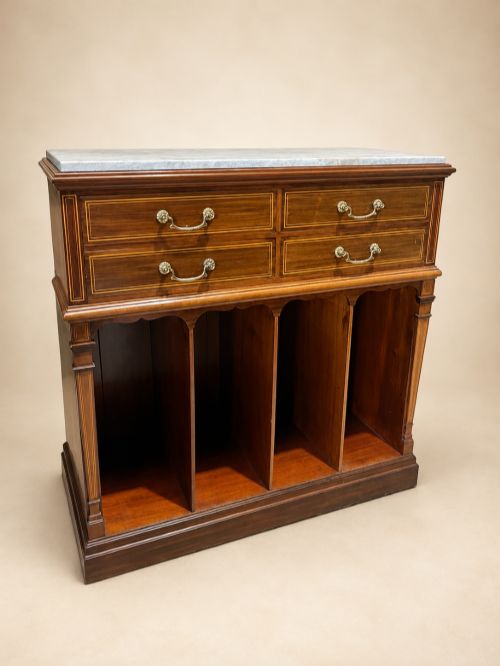
Brass hardware, including ring handles and backplates, secures the drawer fronts, while glass panels appear in associated side and display cabinets. Fine crossbanding frames the edges of tops and drawers to protect vulnerable end-grain.
Cutlery urns stand tall on pedestals, guarding silver spoons with silent wooden dignity.
What varies in quality
The standard of execution rests on the choice of wood figure and the precision of the inlay work. Finer examples show tight, symmetrical flame mahogany grains and meticulous boxwood stringing without gaps or filler.
Construction details differentiate standard production from superior workshops, visible in the dovetail joints of drawers and the thickness of secondary timbers. Smooth operation of curved serpentine doors and original brass furniture elevate a piece.
Revival iterations from later centuries vary from mass-produced commercial items to high-end cabinet work by named makers that matched eighteenth-century standards. The crispness of the marquetry and the balance of the proportions dictate the visual success.
Hewetsons London·Edwards and Roberts·James Hicks·Warings
The Sheraton Inlaid Sideboard Glossary
- Stringing
- A thin line of contrasting wood inlaid into a channel on the surface to form geometric borders. This technique defines the linear geometry characteristic of neoclassical furniture.
- Serpentine
- A front shape curving inward centrally and outward at the ends, forming an undulating contour. This profile demands advanced woodworking skill to fit drawers and doors accurately.
- Crossbanding
- A border of veneer laid with the grain running perpendicular to the surrounding surface. It frames the central panel and protects the underlying wood edges.
- Marquetry
- Pictorial or decorative patterns assembled from various tinted wood veneers and applied to a surface. Master craftspeople used this to render classical urns, swags, and floral motifs.
- Bow-front
- A convex, outwardly curved front profile popular in late Georgian and revival pieces. It softens the room's angles while maximising internal cabinet depth.
Sheraton Inlaid Sideboard: Frequently Asked Questions
How do I date a sheraton inlaid sideboard?
Dating relies on timber selection, secondary woods like oak or pine inside drawers, and the style of the hardware. Georgian originals tend to show hand-cut dovetails and simpler structural framing compared to later revival pieces.
Revival items from the Edwardian period or late nineteenth century often utilise machine assistance and standardised brasses. Comparing the secondary veneers and construction methods against known period examples clarifies the age.
What is the difference between original Georgian and revival pieces?
Genuine Georgian pieces date from the late eighteenth to early nineteenth century and show period-specific hand-tooling and patination. Revival items emerged later, particularly during the Edwardian era and the late nineteenth century, copying those earlier neoclassical styles.
Both categories offer high craftsmanship, but revival pieces frequently employ brighter satinwood finishes and different internal construction standards. Understanding these material shifts helps distinguish the production era.
How should I care for satinwood and mahogany surfaces?
Keep the wood away from direct sunlight and heat sources to prevent the veneers from drying, cracking, or lifting. Regular dusting with a soft, dry cloth maintains the finish without stripping the wax.
Apply a traditional beeswax polish sparingly when the wood appears dry, buffing gently to preserve the natural sheen. Avoid silicone sprays or heavy liquid cleaners that damage historic polishes.
Where should I place a sideboard in a modern room?
A sideboard functions effectively in a dining room, living area, or wide hallway where its shallow depth preserves floor space. Flat-fronted or bow-front versions sit flush against a wall, while serpentine and demi-lune shapes anchor a focal point.
Ensure adequate clearance around the piece for opening cabinet doors and drawers fully. Pairing the surface with a mirror or display items complements its traditional proportions.