



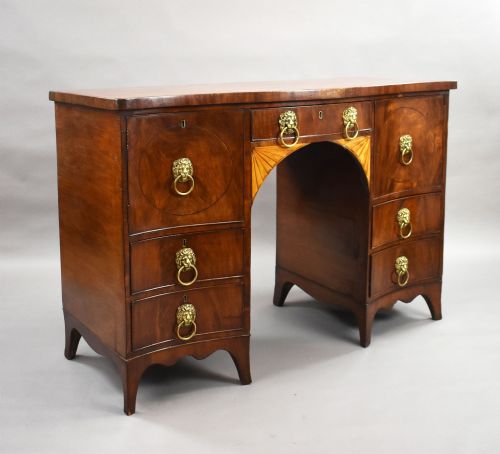
Georgian Inlaid Server Table
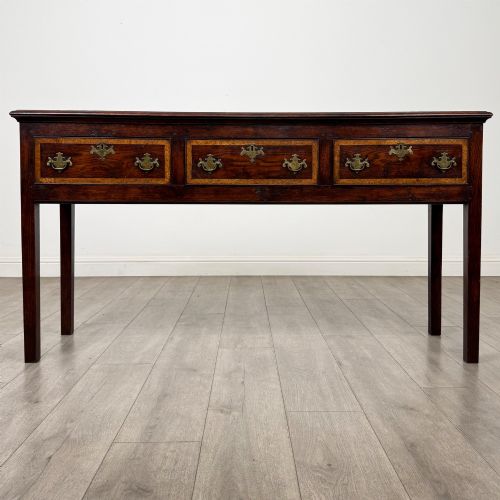
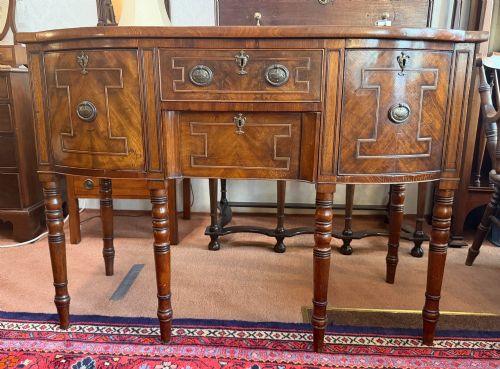
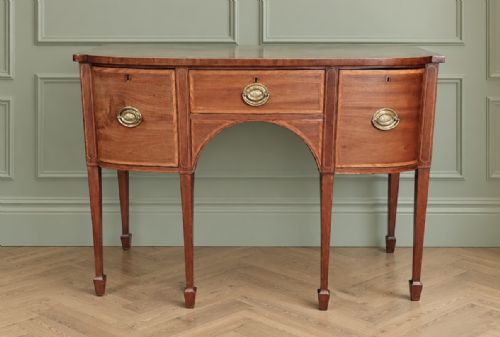
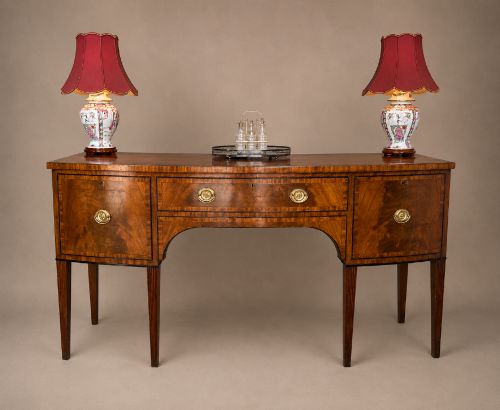
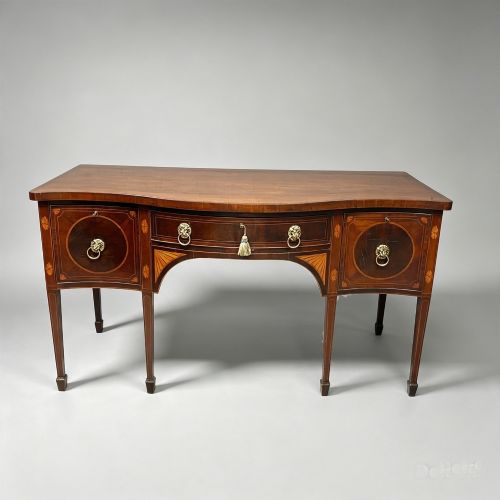
A georgian inlaid server table stands as a commanding dining room focal point, bringing rich mahogany and precise boxwood detail to formal hosting.
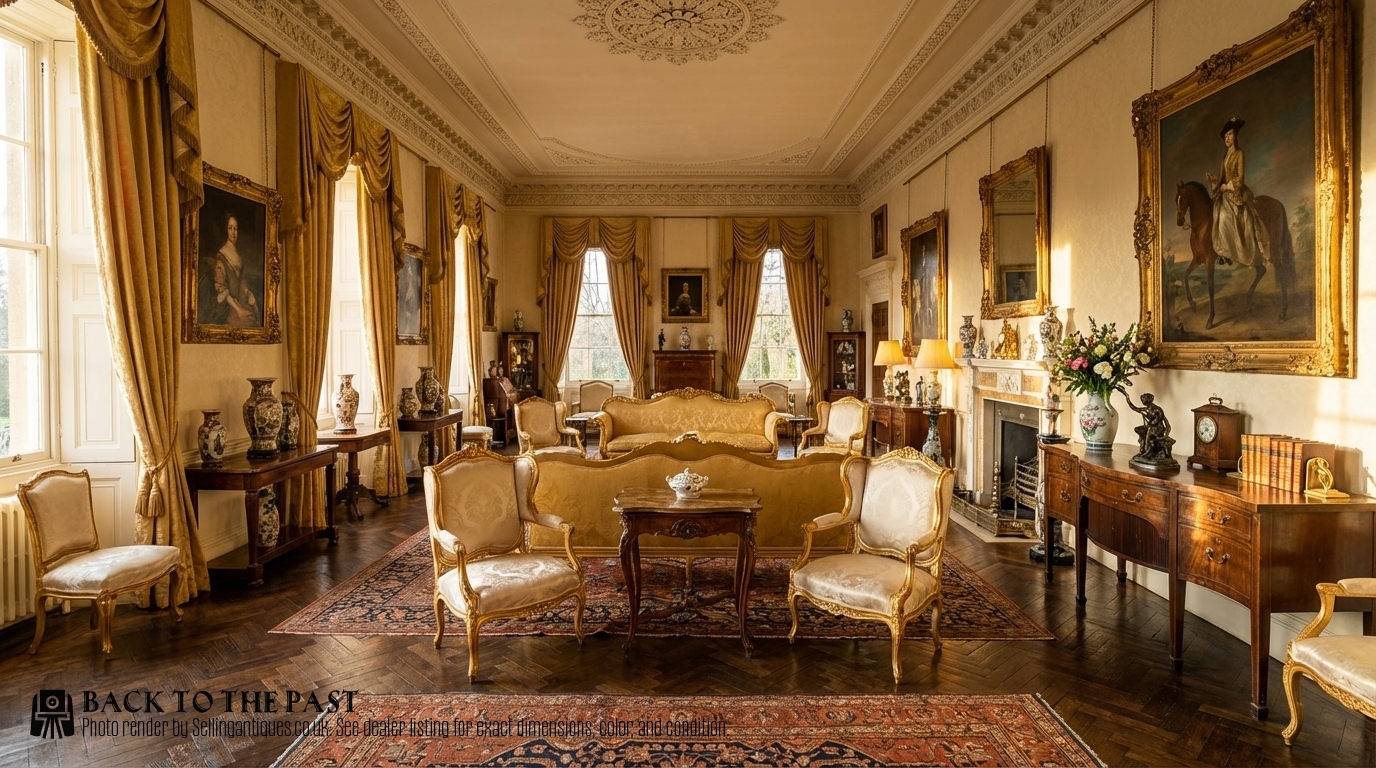
Georgian Inlaid Server Table
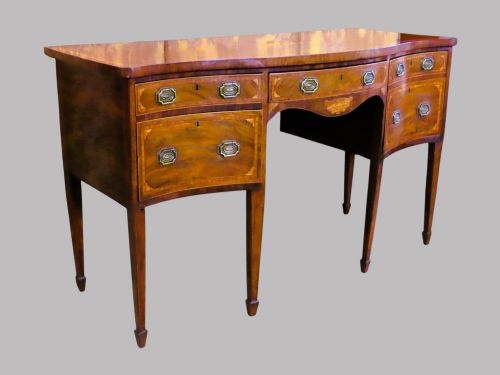
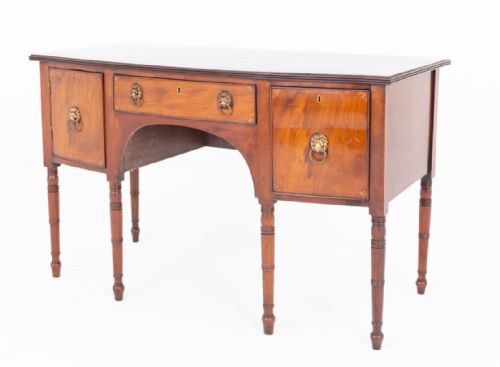
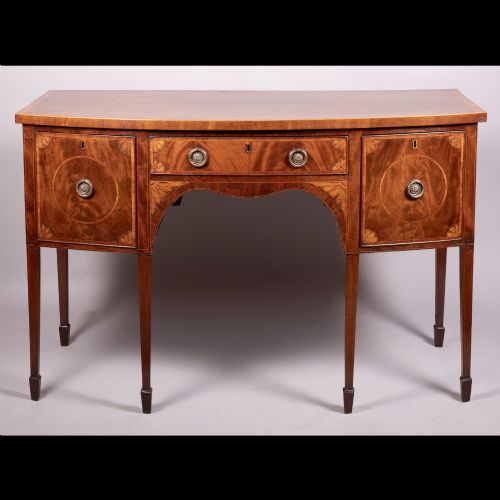
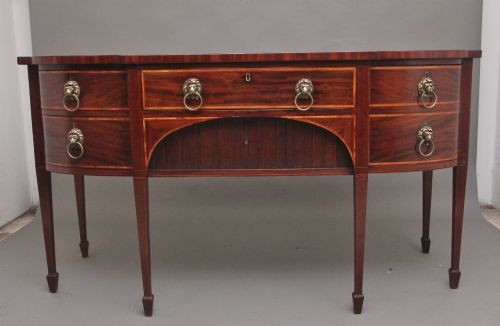
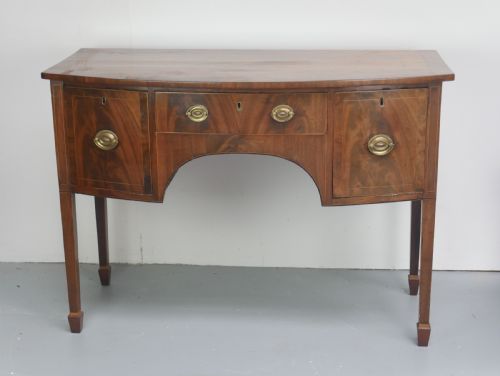
When buyers search for a georgian inlaid server table, they encounter formal dining furniture primarily originating from the 18th century, the Georgian era, and the Regency period. Sideboards, side tables, and dresser bases dominate the forms on offer, ranging from linear bow-front designs to sweeping serpentine shapes.
The pieces appearing most frequently bridge the late 18th century and the early 19th century, carrying the stylistic hallmarks of George III and Sheraton designs. Alongside these primary Georgian periods, later revivals from the Edwardian and Victorian eras emerge in mahogany and oak.
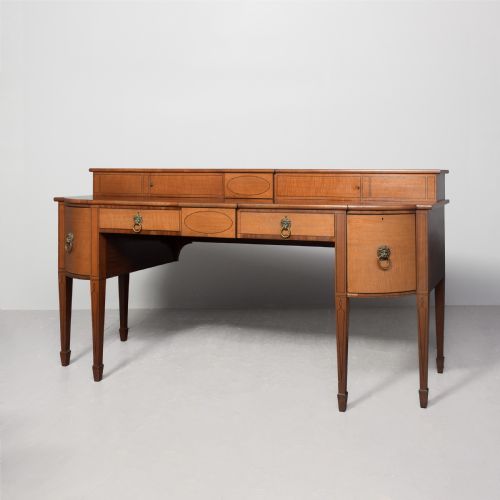
Regional variations also surface, including Scottish pieces featuring stage-backs or six-legged configurations. These server tables and sideboards served dining rooms by holding silver, linen, and serving dishes during large meals.

Materials and Construction
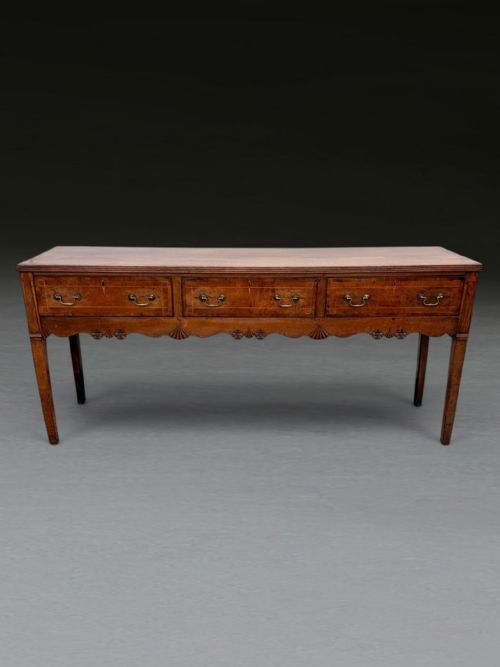
Solid mahogany and figured mahogany form the primary structural timbers across the majority of these pieces, providing deep reddish-brown tones and strong grain patterns. Oak appears frequently in structural framing and within regional dresser bases.
Decorative surfaces rely on contrasting woods for detail, utilising boxwood inlay and satinwood inlay to create sharp geometric borders, fan motifs, and stringing lines. Brass fittings, handles, and occasional brass inlay complete the hardware execution on Regency examples.
Some Scottish pieces arrive with six legs instead of four, giving them a remarkably sturdy stance for holding heavy silver.
Craftsmanship and Proportion
Superior examples demonstrate meticulous control over timber selection, pairing highly figured mahogany veneers with crisp, tightly fitted boxwood and satinwood inlay that remains flush to the surrounding wood. Lesser pieces rely on painted lines or simpler timber cuts without the same depth of contrast.
Proportion and line dictate the hierarchy of these server tables. Serpentine and bow-front shapes require exceptional skill from the cabinetmaker to curve timber cleanly, whereas simpler straight fronts offer a more restrained domestic presence.
The Georgian Inlaid Server Table Glossary
- Serpentine front
- A cabinet front that curves outward in the centre and curves inward toward the ends in an S-shape line. This shape demands advanced cabinetmaking skill.
- Bow-front
- A convex, outwardly curved front found on many sideboards and serving tables of the period. It softens the linear appearance of dining room furniture.
- Inlay
- A technique where pieces of contrasting wood, such as boxwood or satinwood, are set into recessed portions of the primary wood surface to form patterns.
- Lowboy
- A small low table with drawers, often featuring cabriole or straight legs, used as a side table or dressing table during the 18th century.
- Stage-back
- An elevated tier or superstructure rising at the rear of a sideboard surface, used for displaying silver or serving pieces.
Georgian Inlaid Server Table: Frequently Asked Questions
What is the difference between a sideboard and a server table?
Sideboards generally incorporate banks of drawers and cupboards designed for storage beneath a long serving surface. Server tables focus more on an open framework with fewer enclosures.
Both forms belong to the same dining room tradition, though server tables often present a lighter visual footprint.
How do I identify a George III sideboard?
George III pieces typically date from the second half of the 18th century into the early 19th century. They feature rich mahogany construction balanced by restrained classical inlay.
Look for proportions typical of the Sheraton style, including tapered legs and fine boxwood stringing along the drawer fronts.
Where were these server tables placed in a home?
These tables stood against dining room walls to hold heavy serving platters and tableware before courses were brought to the main table. Their surfaces also displayed silver and ceramics during grand meals.
In modern rooms, they function well in hallways, living rooms, or dining spaces as console surfaces.
What distinguishes Sheraton revival pieces from original Georgian furniture?
Sheraton revival pieces date from later periods, such as the late 19th or early 20th century, rather than the 18th century. They deliberately copied the lighter proportions and satinwood details of earlier Georgian designs.
Examining the secondary woods inside the drawers helps clarify the actual age of construction.