

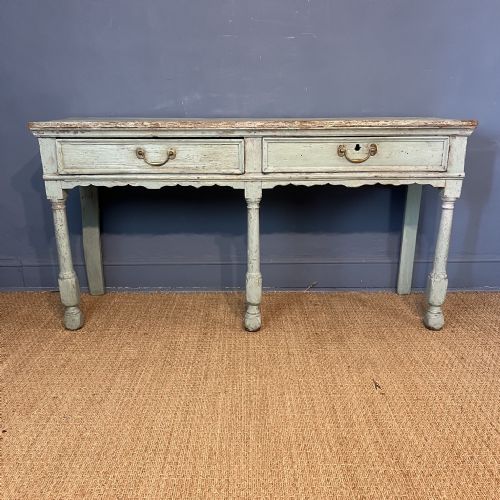
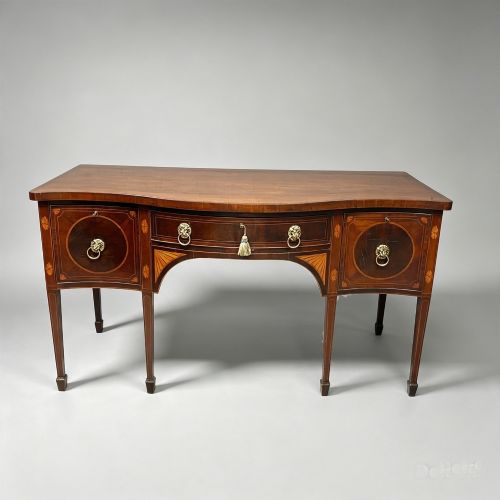
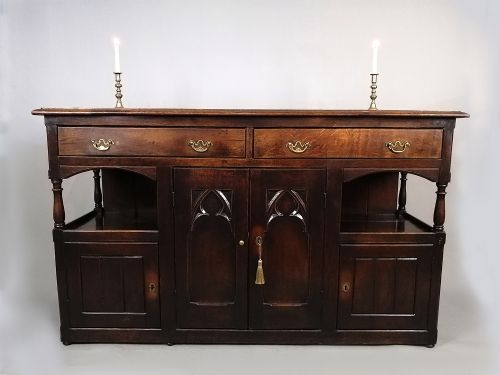
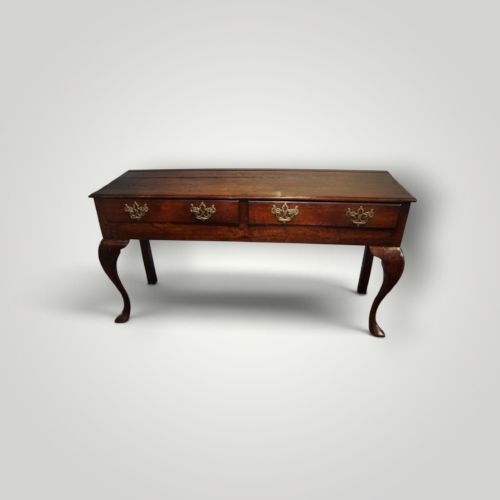
18th Century Sideboard Table
An 18th century sideboard table brings substantial timber and period proportion to a dining room or hall.
18th Century Sideboard Table
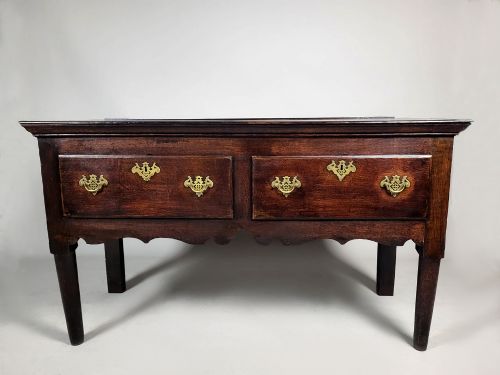
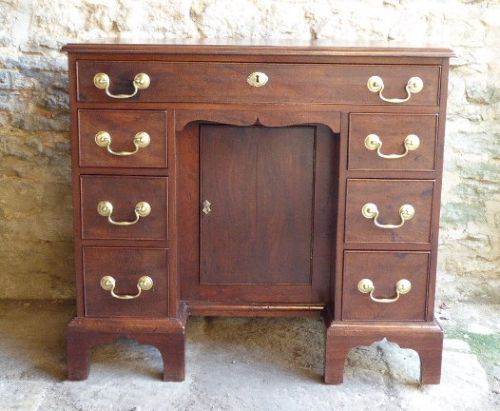
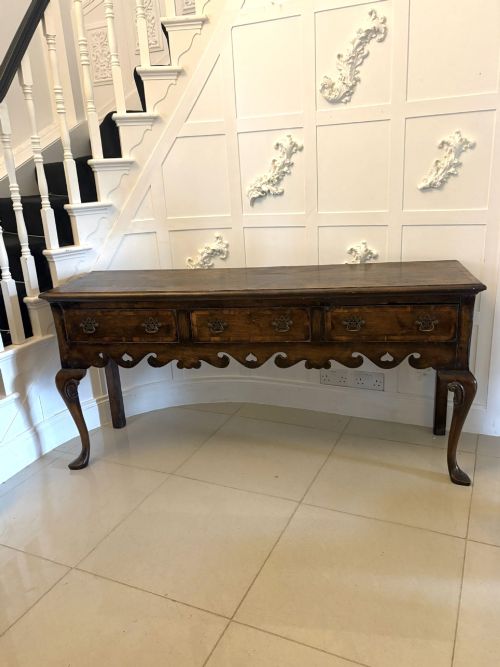
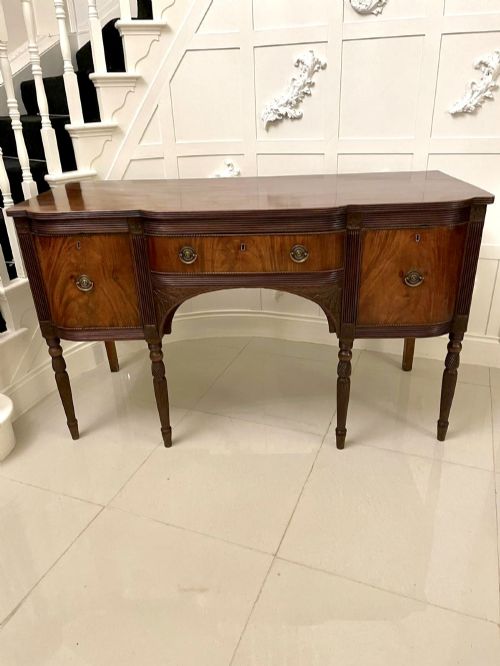
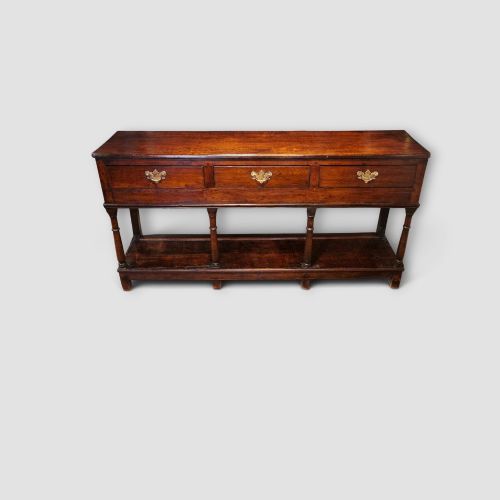
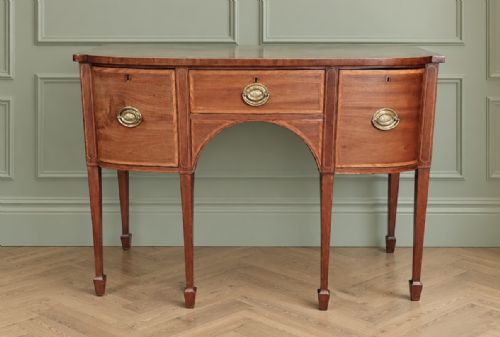
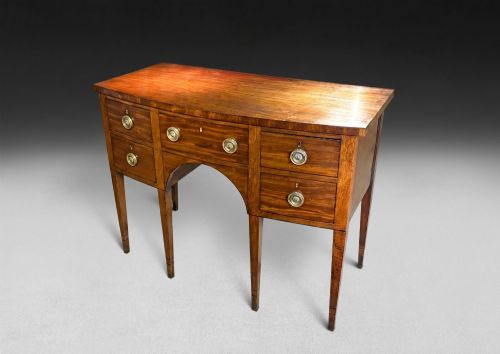
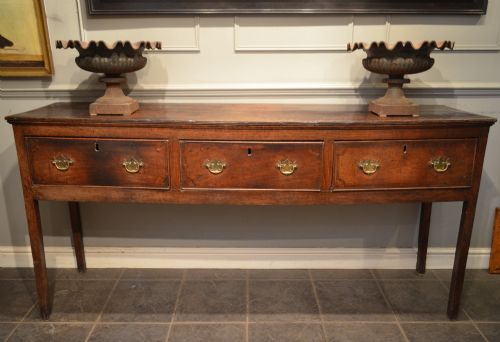
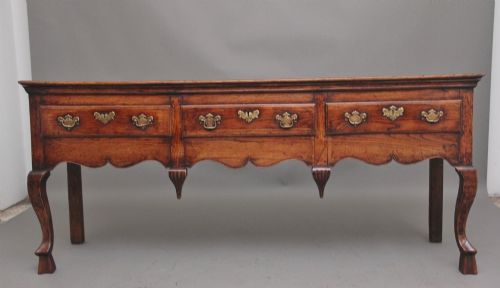
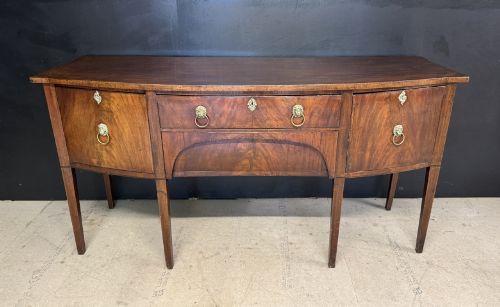
When you search for an 18th century sideboard table, you encounter diverse forms encompassing dresser bases, serving tables, and formal mahogany dining pieces. The selection includes vernacular oak pieces alongside refined George III and Sheraton designs.
Oak and mahogany dominate the examples available, spanning provincial vernacular workshops to metropolitan cabinet makers. Forms range from potboard bases to bow-front and serpentine servers.
Materials and construction methods
Cabinet makers utilised solid oak, elm, and pine for regional dresser bases, often incorporating boarded tops and sturdy drawer structures. Figured mahogany became the principal timber for formal Georgian dining pieces.
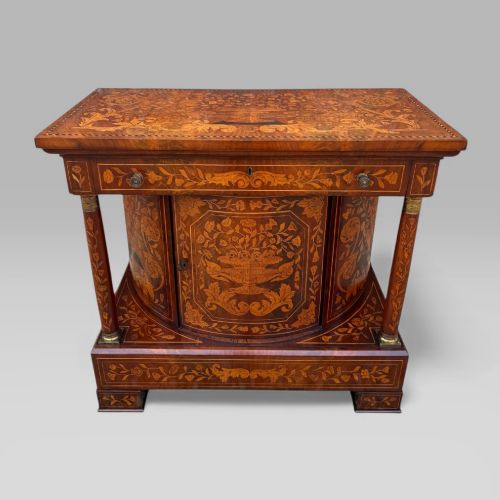
Satinwood inlay, boxwood stringing, and marquetry embellish late examples, while brass handles and escutcheons complete the hardware across periods.
Some provincial oak pieces still bear the subtle grease marks of centuries of historical farmhouse suppers.
Distinguishing quality in period tables
Quality rests in timber selection and structural integrity, visible in the grain of figured mahogany and the stability of oak framing. Superior pieces retain original brass hardware and untouched surface patination.
Refinement of proportion separates provincial vernacular work from sophisticated metropolitan pieces, particularly in curved serpentine and bow-front designs.
The 18th Century Sideboard Table Glossary
- Potboard
- A lower shelf fitted between the legs of a dresser base, traditionally used for storing pottery and heavy kitchenware.
- Serpentine front
- A furniture front curving inward centrally and outward at the ends, requiring advanced cabinet making skill.
- Bow front
- A convex curved front popular in late Georgian design that softens the linear profile of a serving table.
- Dresser base
- A low wooden sideboard fitted with drawers, originating in domestic kitchens and dining rooms before the formal sideboard evolved.
18th Century Sideboard Table: Frequently Asked Questions
How do I date a Georgian sideboard?
Dating relies on timber choices, leg styles, and inlay techniques characteristic of specific reigns and periods. Oak predominates in early examples, while mahogany and satinwood define later Georgian pieces.
Hardware placement and secondary timbers inside drawers also offer clues to the decade of manufacture.
Where were these tables used?
These tables served primarily in dining rooms for the presentation of food and storage of serving dishes. Smaller versions functioned as hall tables or serving consoles.
Provincial examples often originated in large farmhouse kitchens before entering formal reception rooms.
How do I care for antique timber?
Maintain antique timber by keeping it away from direct heat sources and sudden humidity changes. Regular dusting with a dry cloth preserves the aged wax finish.
Avoid modern silicon polishes that can penetrate the grain and damage the historic patination.