






Curved Server Table
These curved antique server table pieces bring sweeping lines and practical dining room storage to a room.
Curved Server Table
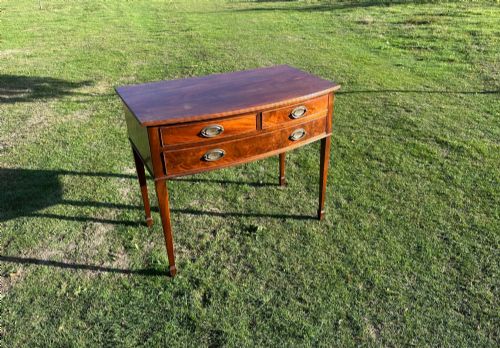
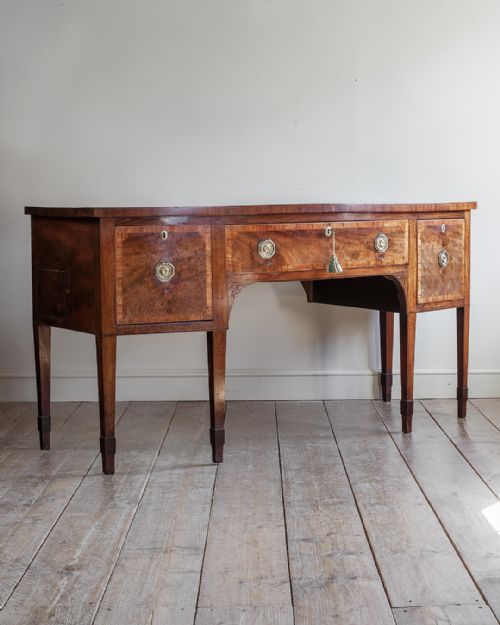
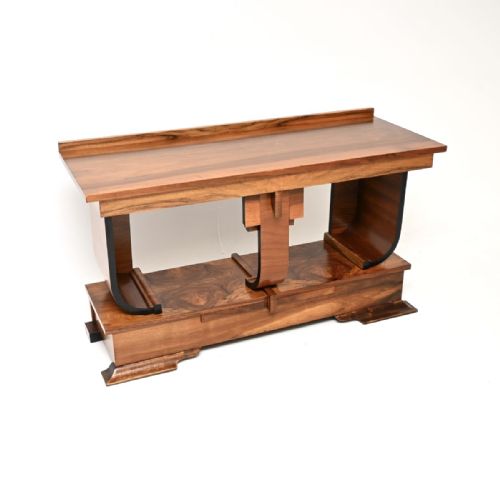
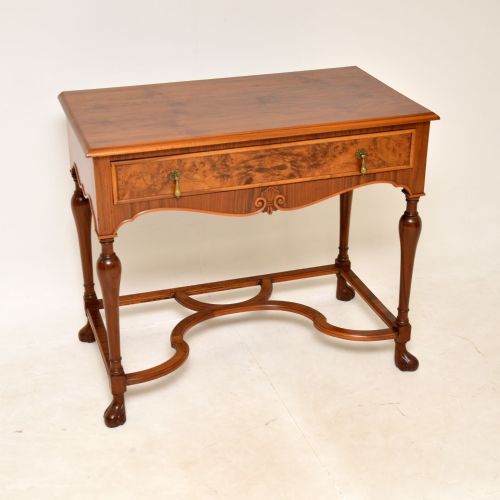
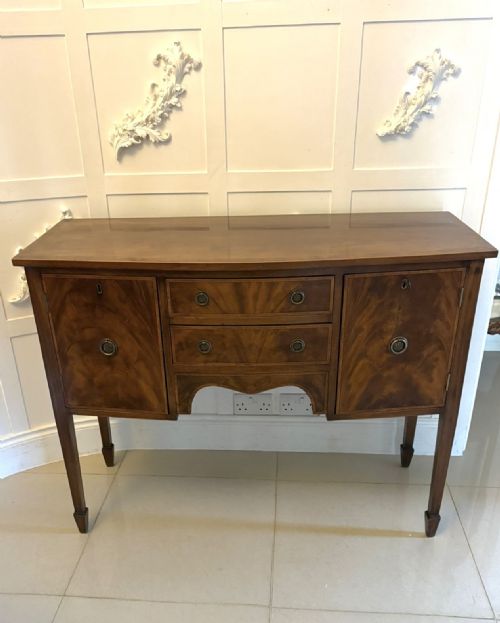
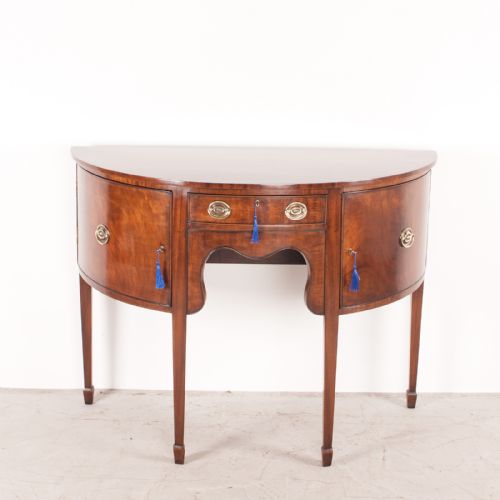
A curved antique server table encompasses formal sideboards, console tables, and serving pieces designed with bow front, demi-lune, or serpentine shapes. When searching for a curved antique server table, buyers frequently encounter Georgian and Regency mahogany examples alongside later Art Deco walnut designs.
The form developed to fit dining spaces cleanly while offering surface area for food and drink presentation, often incorporating drawers or cupboards beneath. Georgian and George III makers established the standard layout using mahogany, while later twentieth-century designers such as Hille and Harry And Lou Epstein reinterpreted the curved silhouette in burr walnut.
How they were made
Cabinet makers constructed these pieces using solid timbers like mahogany, walnut, and pine, applying figured veneers such as burr walnut and flame mahogany to visible curved surfaces. Boxwood and satinwood inlay frequently accented the drawer fronts and borders of Georgian and Regency pieces.
Shaping timber into a continuous bow front or serpentine curve required skilled steam bending or careful segmental construction. Brass fittings, including handles and sometimes gallery rails, completed the assembly of these serving tables.
Curved Server Table Retail Price Guide 2026
Typical asking prices for curved server table among the pieces listed under this phrase on Sellingantiques today, from the lower quarter to the upper quarter. They describe what is for sale here now, not the wider market.
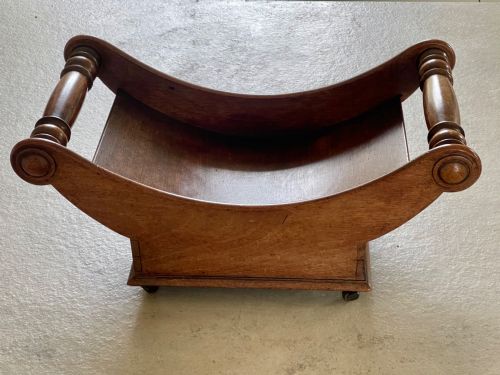
Some Georgian dining accessories include specialised cheese coasters designed to glide smoothly along the mahogany boards after the meal.
What varies in quality
Quality rests upon the selection of timber and the precision of the curved joinery. Finer pieces display matched veneer grains across sweeping drawer fronts and well-defined inlay work.
The proportion of the legs to the body and the integration of original brass hardware distinguish workshop standards. Sturdiness in the frame construction determines how well the table bears weight during service.
Hille·Harry And Lou Epstein
The Curved Server Table Glossary
- Bow front
- A convex curved cabinet front that swells outwards in the centre. This shape softens the rectangular geometry of traditional dining furniture.
- Serpentine
- A shaped front featuring a convex centre flanked by concave curves. It requires advanced carpentry to achieve fluid symmetry.
- Demi-lune
- Half-moon shaped furniture designed to sit flat against a wall. These tables often function as serving surfaces or console tables.
- Flame mahogany
- A veneer cut from the fork of a mahogany tree where branches meet the trunk. It creates a distinctive rippled flame pattern across the wood surface.
- Burr walnut
- Wood taken from a growth or burl on a walnut tree. It yields intricate, swirling grain patterns highly prized in cabinet making.
Curved Server Table: Frequently Asked Questions
Where did they place a curved antique server table?
These tables stood against dining room walls to hold dishes, glassware, and serving trays during meals.
They also served as console tables in grand hallways and reception rooms when not in use for dining.
How do I care for a burr walnut top?
Dust the surface regularly with a soft, dry cloth to protect the delicate veneer.
Avoid placing the table in direct sunlight or near heat sources to prevent the wood from drying out.
What is the difference between a sideboard and a server table?
Sideboards generally include more enclosed cupboard space and deep drawers for storing heavy dining silver and linens.
Server tables often feature lighter frames with open lower sections or shallower drawers intended strictly for food presentation.