

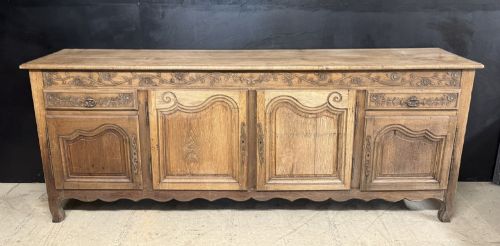
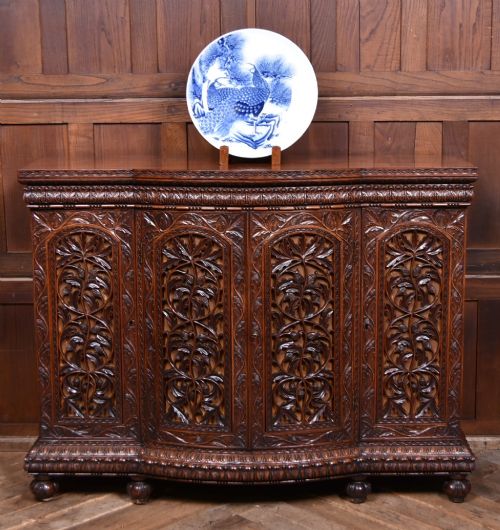
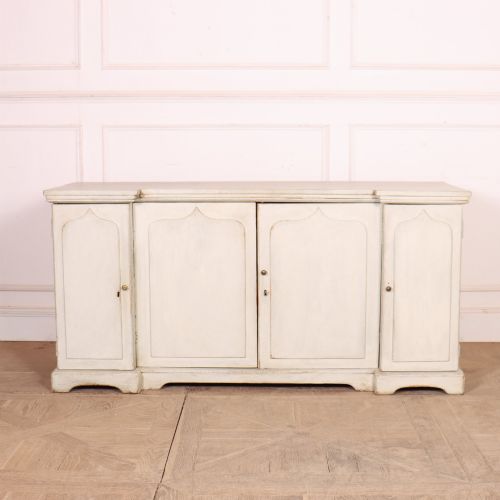

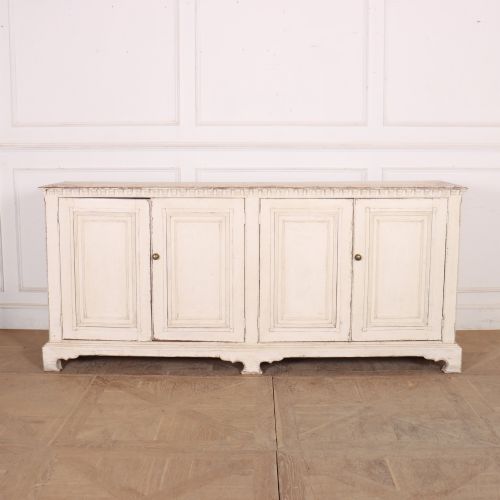
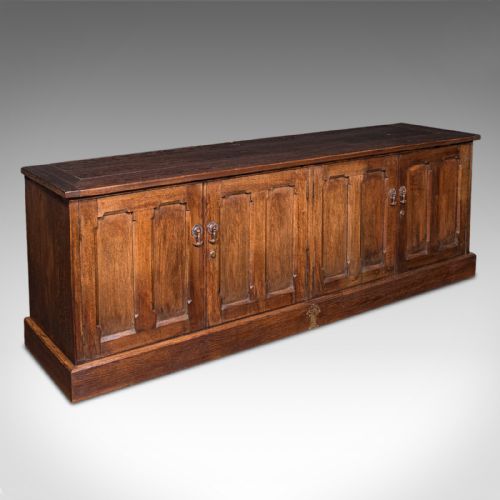


Antique Four Door Credenza
An antique four door credenza offers substantial storage and commanding presence, forming the anchor of a formal dining room or drawing room.
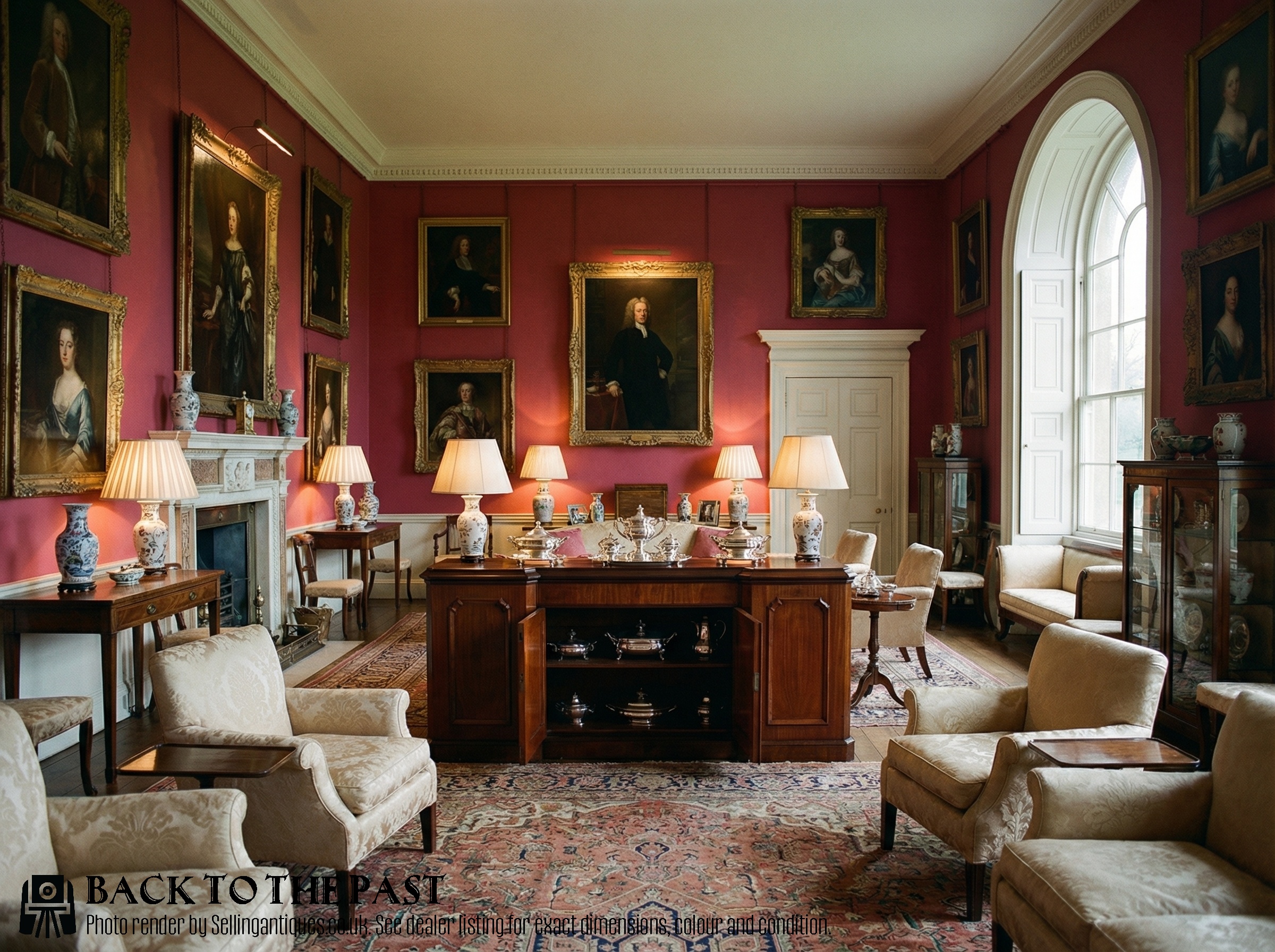
Antique Four Door Credenza
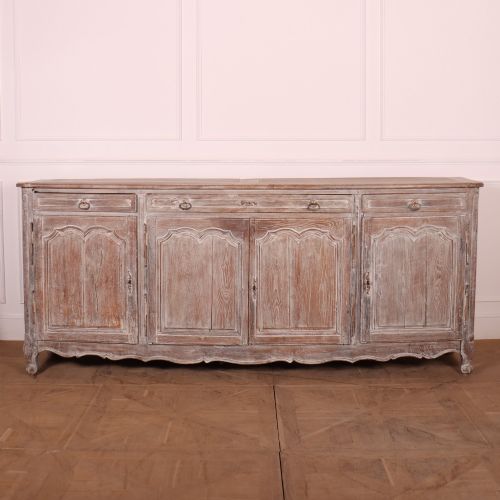
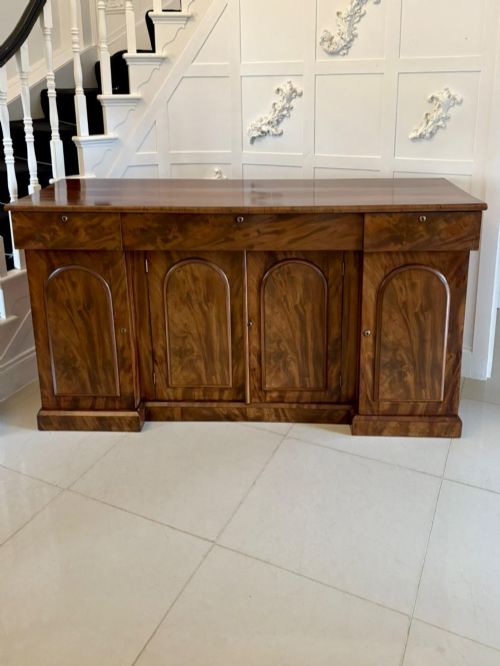
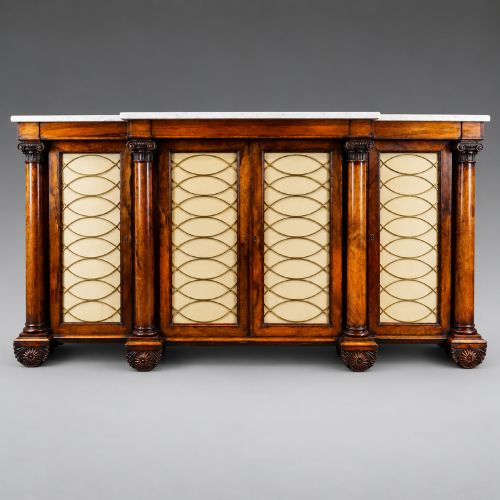
When searching for an antique four door credenza, buyers encounter substantial low-profile storage furniture designed for grand interiors. These pieces span periods from the Regency era through the Victorian period and into the early twentieth century, taking the form of credenzas, breakfront cabinets, sideboards, and enfilades. Most examples found here are executed in mahogany or burr walnut, alongside painted finishes and rosewood.
The four-door configuration typically presents a central pair of doors flanked by matching outer doors, creating a symmetrical facade. While the search phrase specifies a credenza, makers and makers of the period used various terms such as sideboards and side cabinets for similar four-door forms. Buyers are most likely to meet Victorian burr walnut credenzas and mahogany breakfront cabinets on this page.
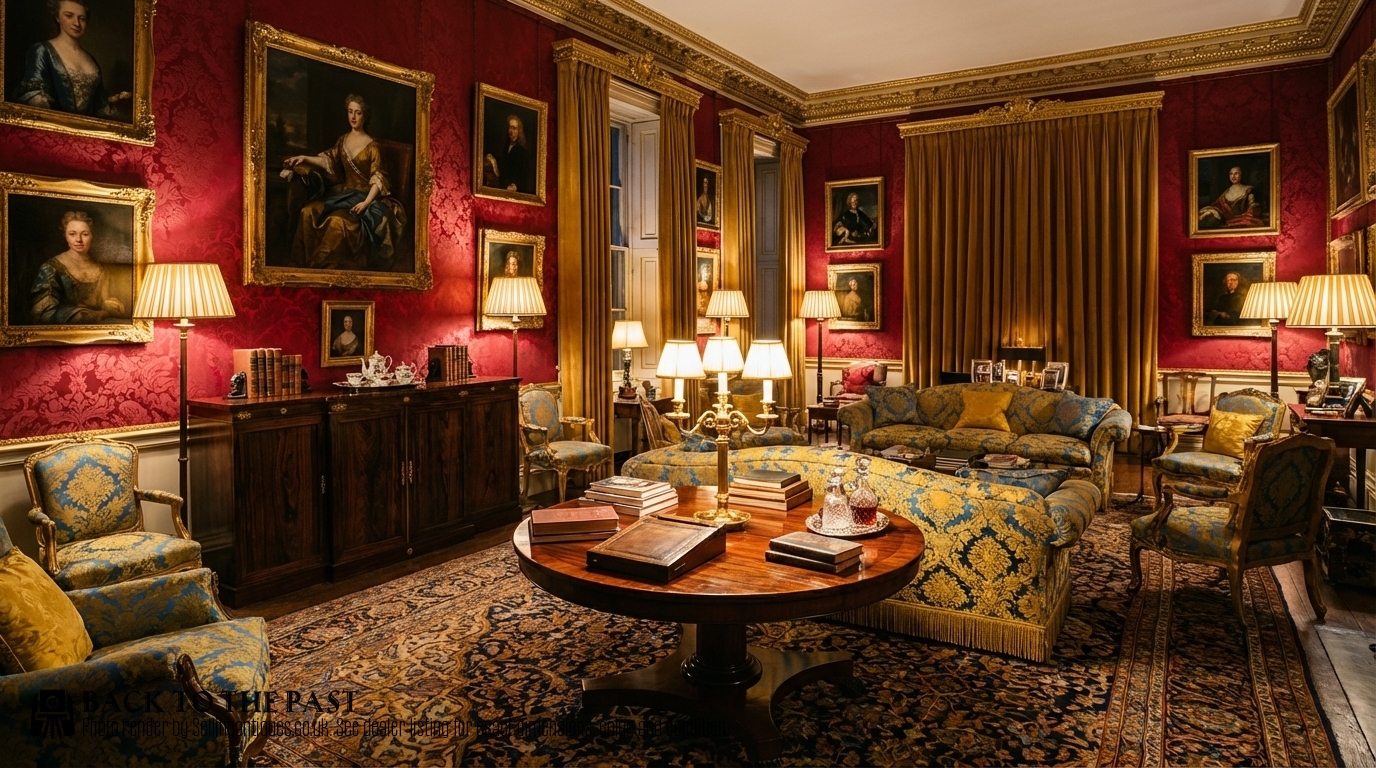
Determinants of quality
Quality rests upon the selection of timber veneers, where symmetrical burr walnut or figured mahogany displays exceptional depth and grain movement. Superior cabinetmaking shows in the precision of marquetry inlay, the integration of cast ormolu mounts, and the crisp execution of carved details rather than heavy, generic moulding.
Internal construction reveals the maker's hand through solid secondary woods, well-fitted door assemblies that close flush, and original brass or glass components. Pieces designated for exhibition or possessing distinct regional styling demonstrate higher levels of design ambition.
Antique Four Door Credenza Retail Price Guide 2026
Typical asking prices for four door credenza among the pieces listed under this phrase on Sellingantiques today, from the lower quarter to the upper quarter. They describe what is for sale here now, not the wider market.
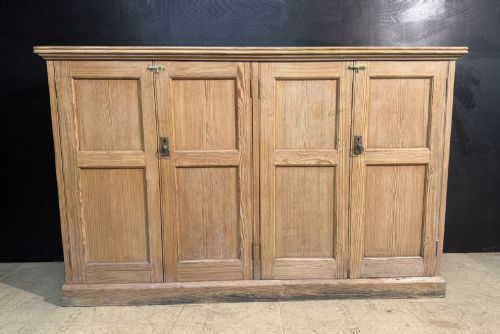
One versatile nineteenth-century oak piece doubles as a window seat, proving that Victorian cabinetmakers built furniture to solve unusual room layouts.
The Antique Four Door Credenza Glossary
- Breakfront
- A piece of furniture where the central section projects forward from the flanking wings. This architectural arrangement creates shadow and depth across a four-door facade.
- Credenza
- A low cabinet originating in Italy, traditionally used for displaying plate and serving food. In nineteenth-century British furniture, the term denotes an elegant low sideboard or cabinet, frequently glazed.
- Enfilade
- A suite of rooms or, in furniture terms, a long low sideboard or cabinet with a sequence of doors along the front. These pieces are particularly associated with French and Italian dining rooms.
- Ormolu
- Gilded bronze mounted onto furniture as decorative feet, escutcheons, or corner adornments. The technique involves applying a mercury and gold amalgam to bronze before firing.
- Marquetry
- The art of applying pieces of veneer to a structure to form decorative patterns and pictures. Craftsmen cut contrasting woods to create floral or geometric designs across cabinet doors.
Antique Four Door Credenza: Frequently Asked Questions
Where should I place a four door credenza?
These long cabinets demand a generous wall space, making them well suited to dining rooms, large hallways, or drawing rooms. Their low profile ensures they do not block sightlines through a room.
Ensure the floor is level so the four doors hang square and close evenly without binding against the frame.
How do I clean mahogany or walnut surfaces?
Dust the timber regularly with a soft, dry cloth to prevent grit accumulation. Apply a quality beeswax periodically to nourish the wood and maintain the lustre of the polish.
Avoid silicone sprays and keep the cabinet away from direct sunlight and heat sources to prevent the wood from drying out.
What is the difference between a sideboard and a credenza?
Traditional sideboards generally stood higher and were designed primarily for dining room service with drawers for cutlery. Credenzas typically sat lower to the floor and often featured glass doors for display.
Over time, makers blurred these distinctions, applying both terms to long four-door storage pieces.
How can I tell a Victorian credenza from a Regency one?
Regency pieces often display classical restraint with clean architectural lines, rosewood veneers, and restrained brass inlay. Victorian examples tend to be bolder, utilising burr walnut, serpentine shapes, and elaborate ormolu mounts.
Examining the internal construction and secondary woods helps confirm the period of manufacture.