



Mahogany Breakfront Buffet
A mahogany breakfront buffet offers generous storage and architectural presence, anchoring a dining room with rich timber grain and classic proportions.
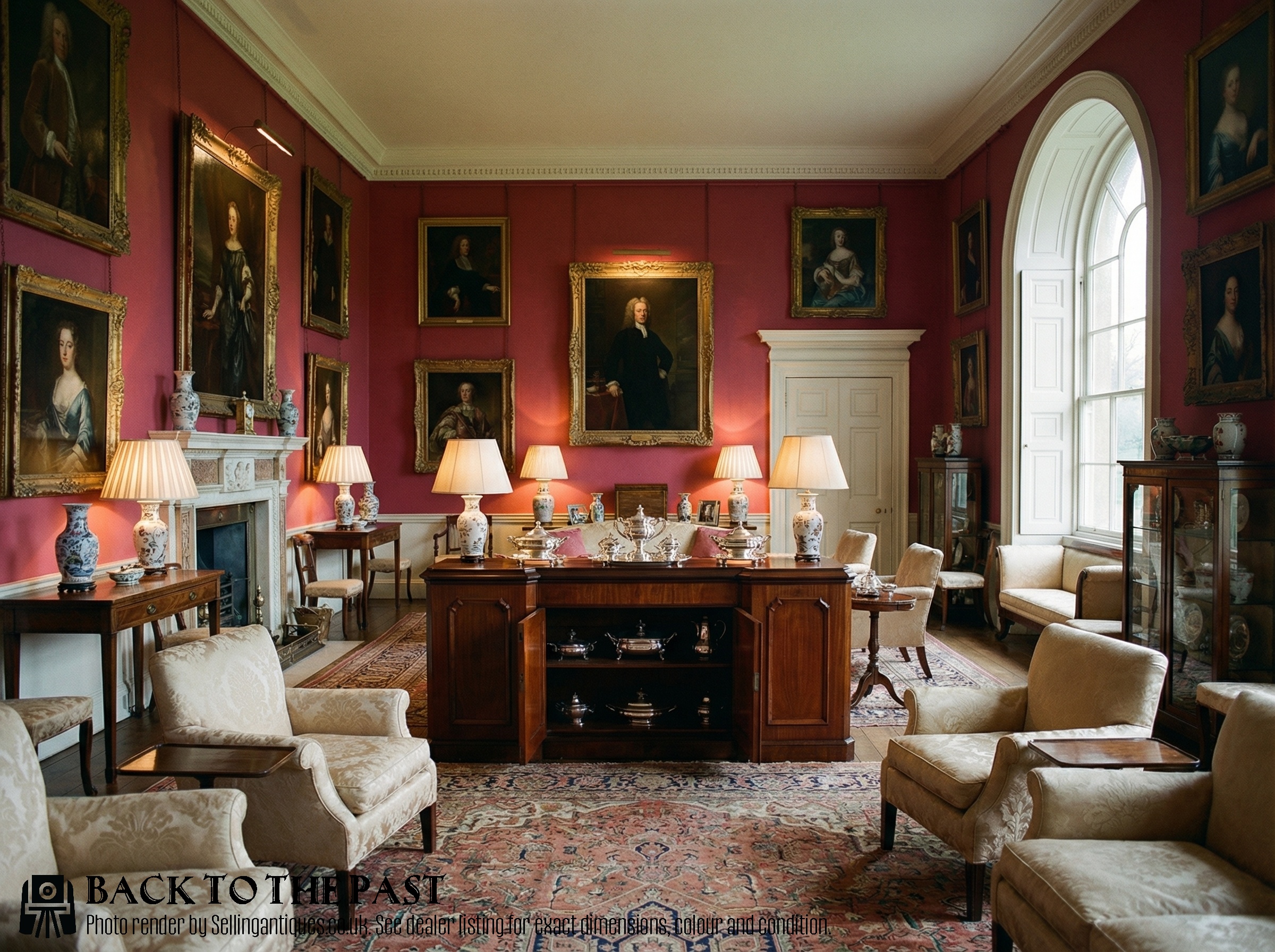
Mahogany Breakfront Buffet
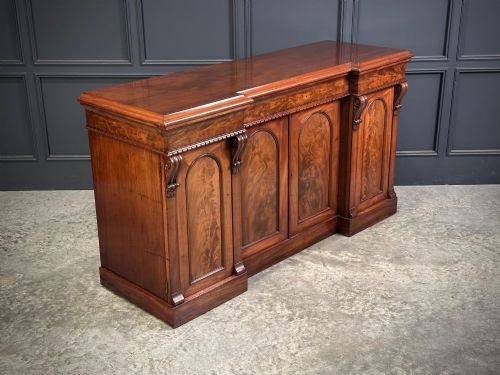
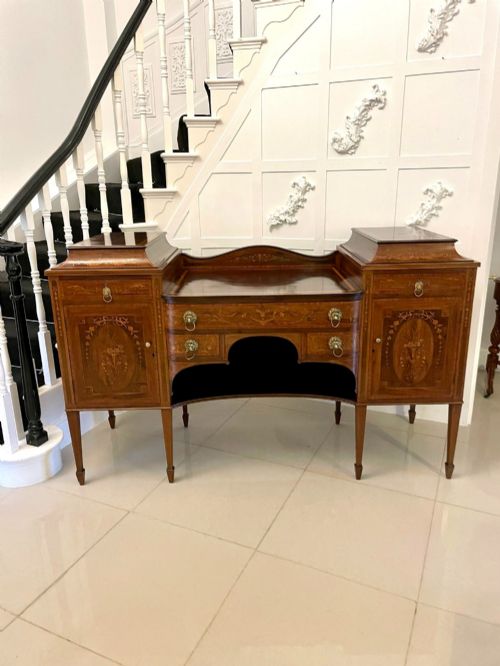
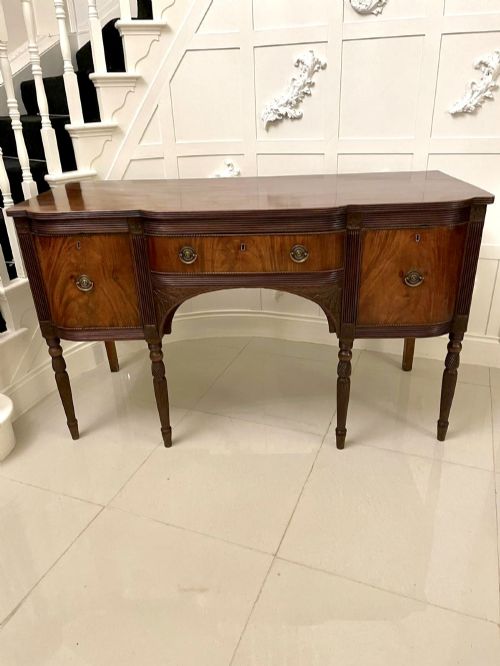
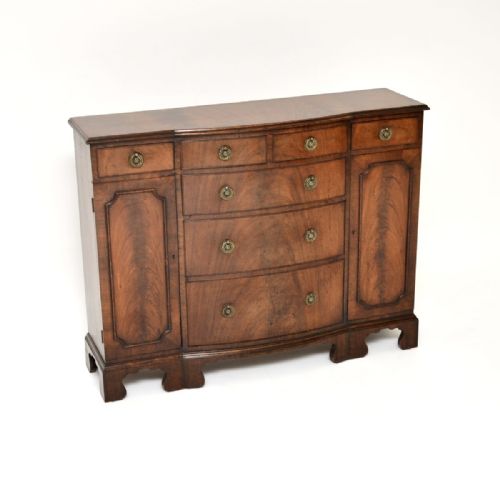
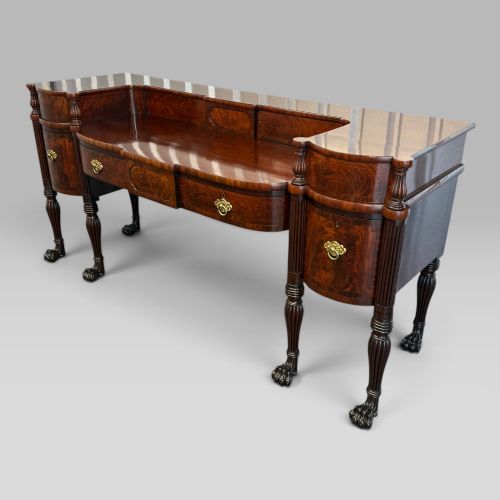
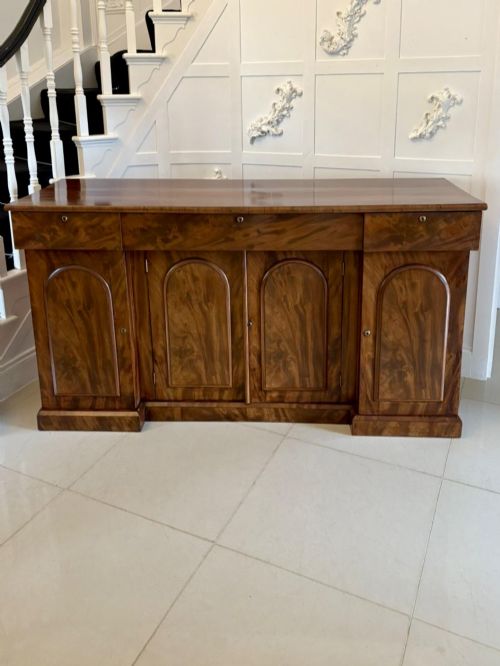
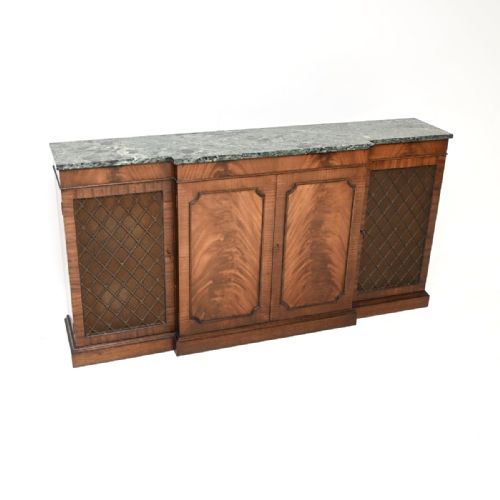
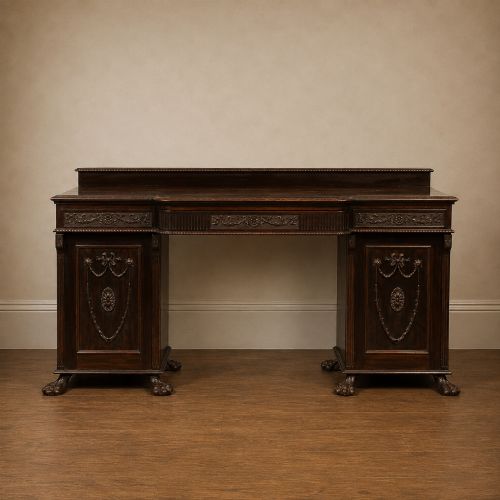
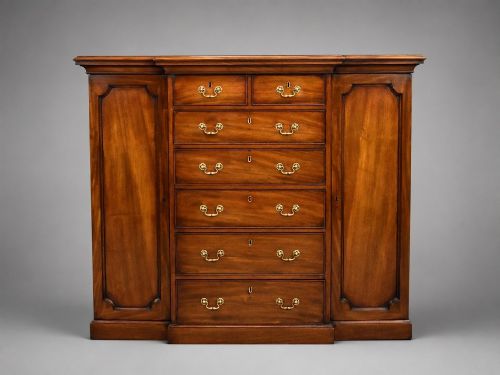
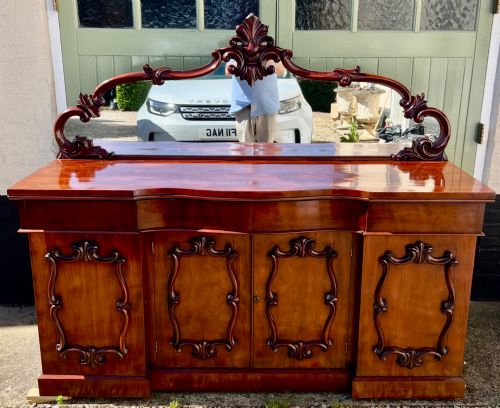
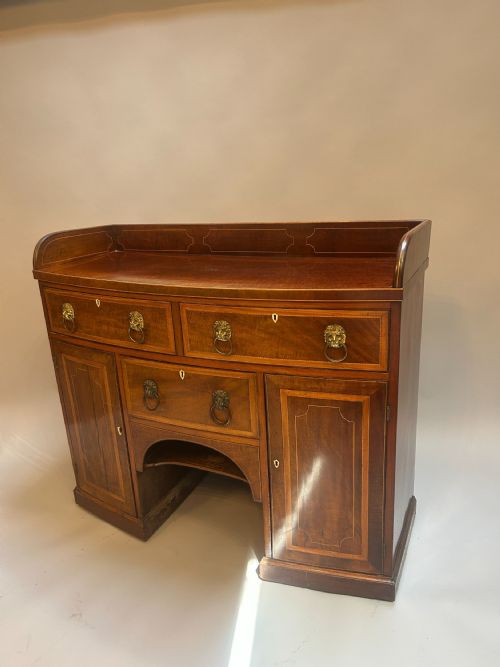
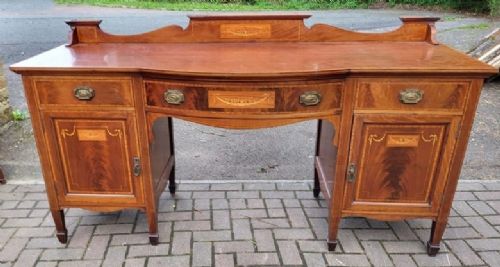
A mahogany breakfront buffet spans substantial dining room storage forms, appearing primarily as sideboards, side cabinets, and chiffoniers. These items serve to store dining silver and linen while providing a broad surface for display.
The pieces emerge across Georgian, Regency, Victorian, and Edwardian periods, displaying distinct stylistic shifts from geometric Georgian lines to elaborate Victorian carvings. The nineteenth-century examples dominate the selections, featuring multi-door configurations and architectural breakfront profiles.
Makers and workshops construct these large sideboard formats to command attention in principal rooms, utilising stepped central sections that project forward from flanking cupboards. Such layouts create shadow and depth across the timber facade.
How they were made
Cabinet makers construct the primary carcases using solid mahogany and apply figured flame mahogany veneers to door panels and drawer fronts to catch the light. Satinwood stringing and marquetry inlay frequently accent these surfaces, adding linear contrast to the deep reddish-brown timber.
Structural embellishments include hand-carved details, brass inlays, and cast brass paw feet that ground the heavier Victorian and Regency iterations. Marble tops and glazed grill doors appear on select refined examples, combining classical materials with traditional joinery.
Some Victorian sideboards stand on six fierce lion paw feet, ensuring your dining room storage prowls the floorboards with quiet authority.
What varies in quality
The selection of timber grain defines the visual calibre, with book-matched flame mahogany veneers marking superior execution over plain stock. Hand-cut marquetry and precise brass inlay demonstrate the artisan's skill and patience.
Structural joinery and hardware integrity separate standard production items from masterworks. Heavy carved lion paw feet, robust internal carcases, and original brass fitments indicate elevated workshop standards during construction.
Hewetsons London·Goodall of Manchester
The Mahogany Breakfront Buffet Glossary
- Breakfront
- A cabinet or sideboard design where the central section projects forward from the flanking outer sections. This architectural feature creates visual depth and breaks up a long linear facade.
- Flame mahogany
- A highly figured timber veneer prized for its distinctive flame-like pattern. Cabinet makers carefully slice the wood to create mirrored grain effects across large cupboard doors.
- Marquetry
- The art of applying decorative veneer pieces in wood, brass, or shell to form intricate patterns. Artisans inlay these materials flush into the primary timber surface.
- Chiffonier
- A low sideboard or cabinet featuring shelves or a mirror superstructure above the main surface. Victorian examples frequently combine this layout with enclosed pedestal cupboards.
- Satinwood
- A pale, durable exotic timber utilised for contrasting stringing and banding details. Craftsmen employ it to frame darker mahogany panels and drawer fronts.
Mahogany Breakfront Buffet: Frequently Asked Questions
How do I date a mahogany sideboard?
Dating relies on examining the construction methods, timber choice, and prevailing decorative style of the period. Georgian pieces tend to exhibit restrained classical lines, whereas Victorian examples favour heavier proportions and elaborate carved details.
Secondary woods inside drawers and the presence of hand-cut dovetails further help establish the era of manufacture. Hardware styles also shift from early brass drop handles to later cast pulls and lion paw feet.
How do I care for flame mahogany veneer?
Maintenance requires keeping the timber away from direct sunlight and maintaining stable room humidity to prevent veneer lifting. Regular dusting with a soft, dry cloth preserves the polished finish.
Application of traditional beeswax feeds the wood and enhances the depth of the grain without building up artificial residues.
Where were these sideboards used?
These pieces traditionally occupied dining rooms, serving as functional storage for porcelain, cutlery, and table linens. The top surface acted as a staging area during formal meals.
Today, they transition easily into large living spaces or hallways, providing substantial surface display areas and concealed storage.