
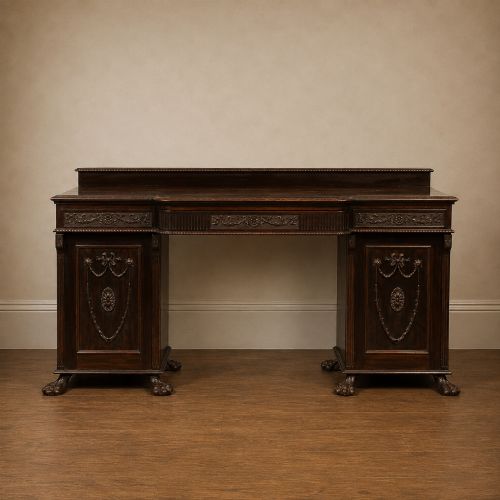
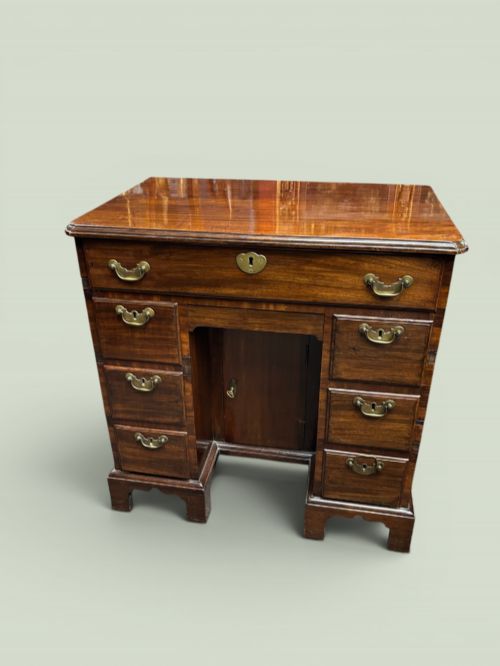

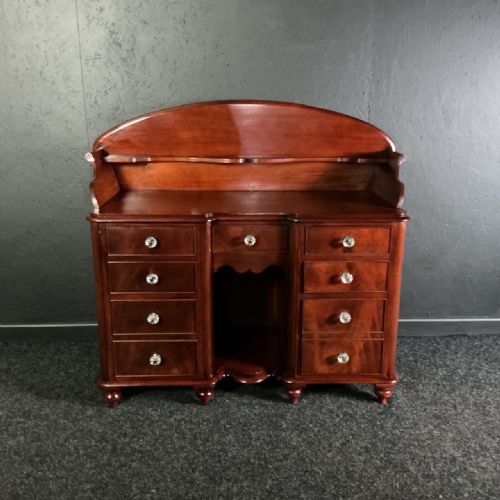


Carved Mahogany Pedestal Sideboard
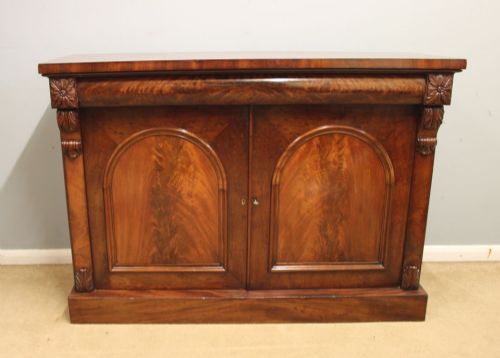
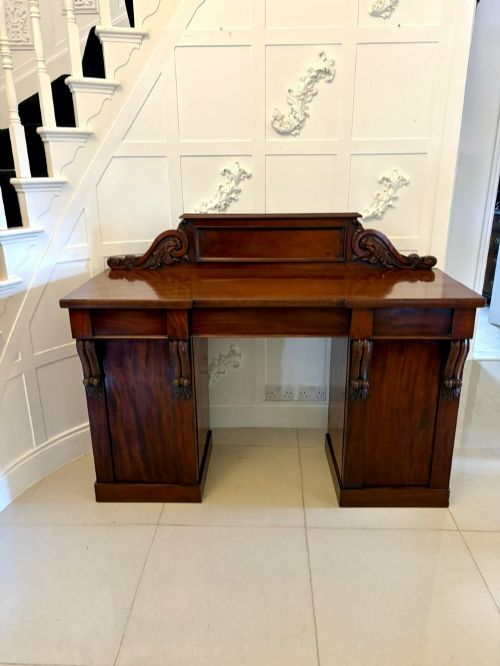
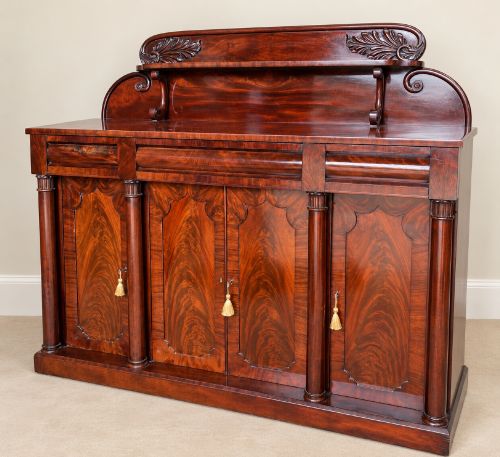
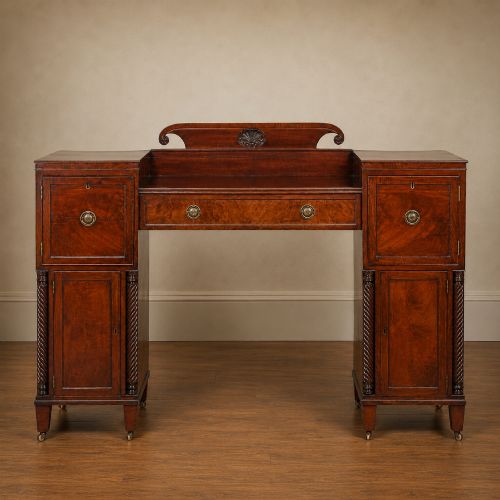
A carved mahogany pedestal sideboard anchors a dining room with architectural weight and storage.
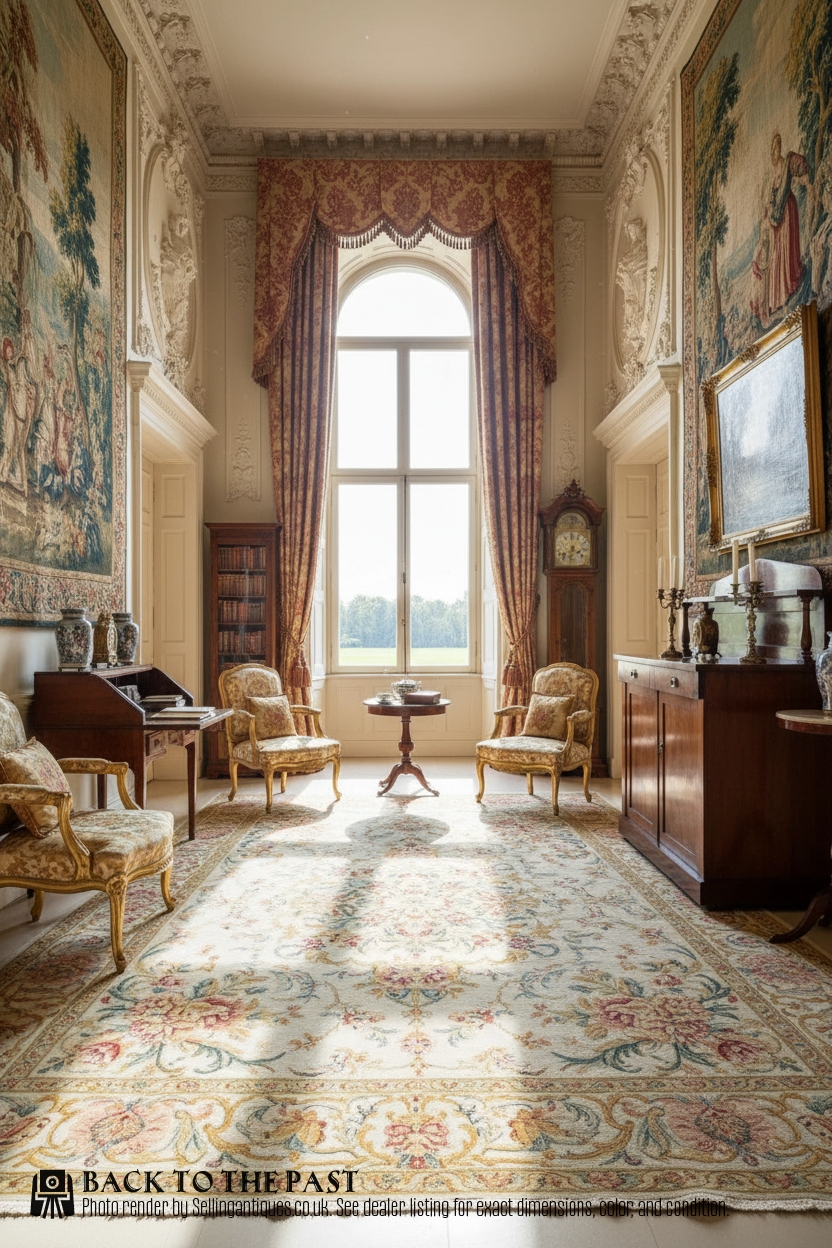
Carved Mahogany Pedestal Sideboard
A carved mahogany pedestal sideboard brings architectural scale and substantial storage to a dining room, combining central serving surfaces with flanking cupboard columns. When you search for carved mahogany pedestal sideboard, you find pieces dating from the Regency and William IV eras through to the Victorian period, alongside Georgian and Edwardian revivals.
Materials and construction
Cabinetmakers built these pieces using solid mahogany and figured flame mahogany veneers over secondary timbers, enriched with brass hardware and occasionally glass or fabric details. Wood inlay adds linear definition to flat expanses and drawer fronts.
Carving defines the ornamentation, appearing on scrollwork, paw feet, and structural supports. Surface finishing relies on French polishing to highlight the deep grain patterns inherent in the timber.
Listings feature solid mahogany, flame mahogany veneer, and brass, spanning Regency, William IV, and Victorian periods.
Judging the work
Quality rests on the selection of timber, where striking flame mahogany veneer or well-figured solid boards elevate a piece far above plain stock. The crispness of the hand carving on structural elements and scrollwork dictates the level of artisan skill involved in the construction.
Proportion and scale also separate standard items from grander commissions, particularly in breakfront designs and pedestal configurations where symmetry and balanced detailing matter most.
John Gregory London
The Carved Mahogany Pedestal Sideboard Glossary
- Pedestal sideboard
- A large dining room cabinet featuring two structural end pedestals connected by a central serving surface. These configurations often incorporate deep cellaret drawers or cupboards within the columns.
- Flame mahogany
- A veneer cut from the branch junction of the mahogany tree, producing a dramatic, flickering flame-like grain pattern. Cabinetmakers reserved this timber for prominent drawer fronts and door panels.
- Drop well
- A lowered central section in the top board of a sideboard, designed to accommodate serving dishes or prevent items from rolling off. This feature appears frequently on Regency examples.
- Breakfront
- A piece of furniture whose central section projects forward from the flanking wings. This architectural arrangement creates depth and shadow across the facade.
- Chiffonier
- A compact sideboard or cabinet used for serving and storing tableware, often fitted with a low mirror back or shelf superstructure.
Carved Mahogany Pedestal Sideboard: Frequently Asked Questions
What is a pedestal sideboard?
A pedestal sideboard is a substantial dining room piece consisting of two flanking cupboard columns connected by a central board or serving surface. It provides both display space and heavy storage.
These large formats were designed for grand nineteenth-century dining rooms to store linen, plate, and wine.
How do I date my sideboard?
Dating relies on stylistic markers such as Regency curved scrollwork, William IV bold carving, or Victorian mirror backs. Construction methods and timber choices also point toward specific decades.
Earlier pieces from the early nineteenth century tend to show cleaner architectural lines, while mid-Victorian examples often feature heavier carved ornamentation.
Where were these sideboards placed?
They stood against the main dining room wall, directly opposite or alongside the dining table. Their primary role was serving food and holding heavy tableware during meals.
Due to their monumental scale, they require large rooms with high ceilings to sit comfortably without dominating the space.
What is flame mahogany?
Flame mahogany is a highly figured wood veneer sliced from the point where branches join the main trunk. It creates a distinctive, rippling pattern that resembles flickering fire.
Cabinetmakers placed these veneers symmetrically on drawer fronts and doors to catch the light in formal dining spaces.