
Dark Mahogany Buffet Server
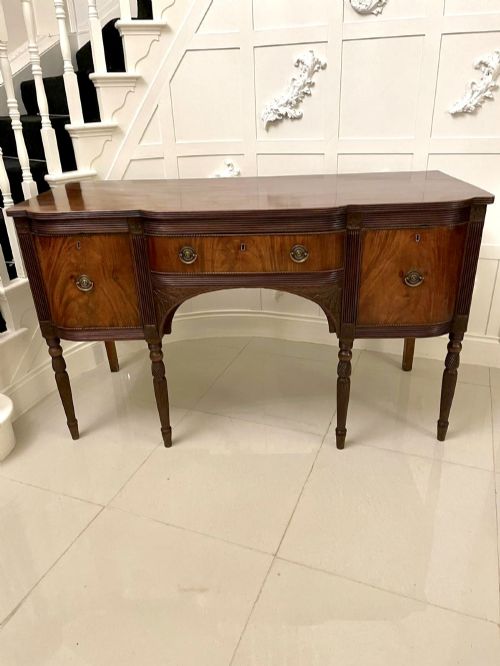
A dark mahogany buffet server brings deep timber tone and generous proportion to a dining room, uniting formal service with storage.
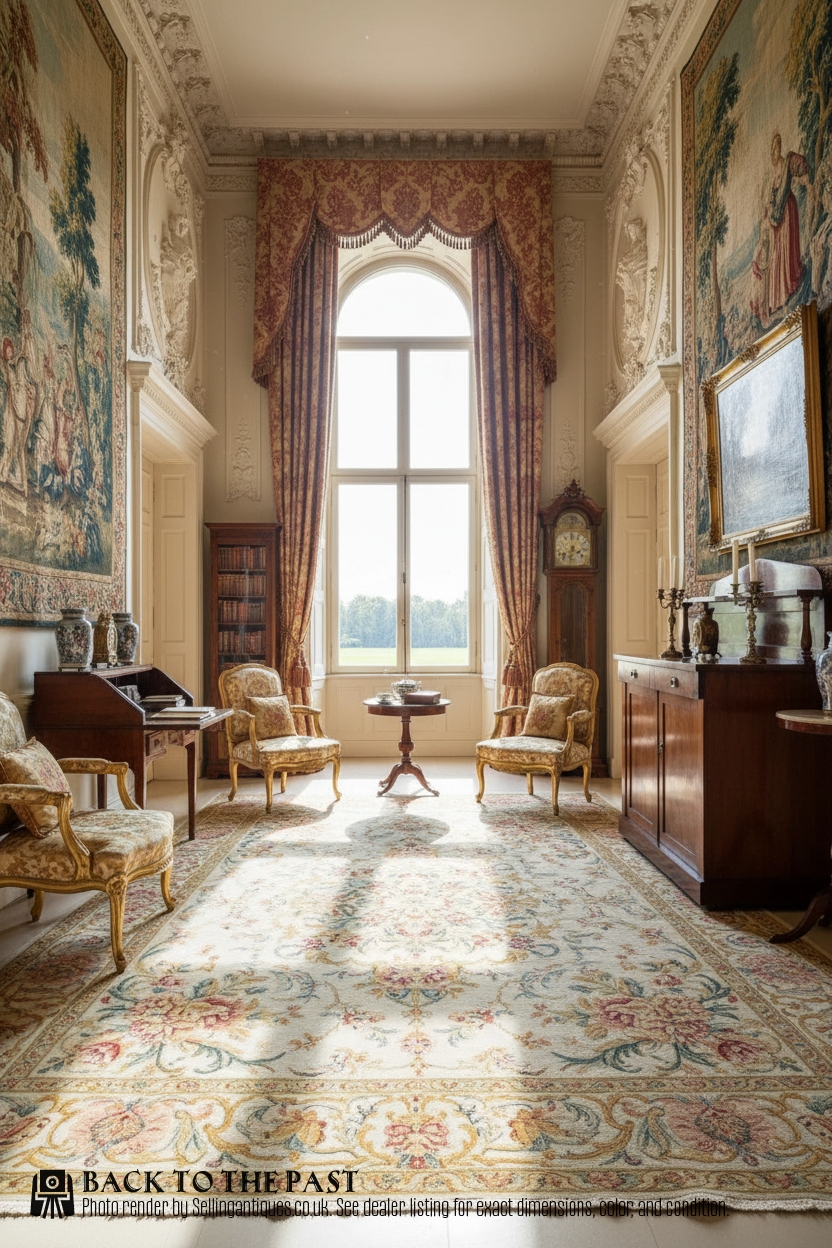
Dark Mahogany Buffet Server
A dark mahogany buffet server search phrase gathers heavy dining furniture designed for serving food and storing silver or linen. These pieces appear across Georgian, Regency, Victorian and Edwardian periods, stretching from the eighteenth century into the early twentieth.
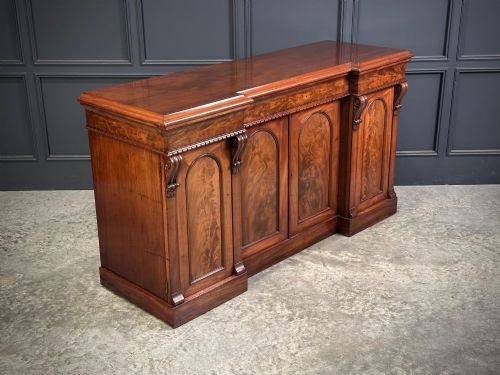
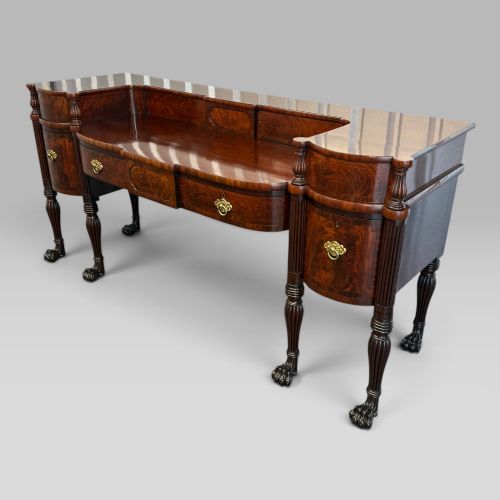
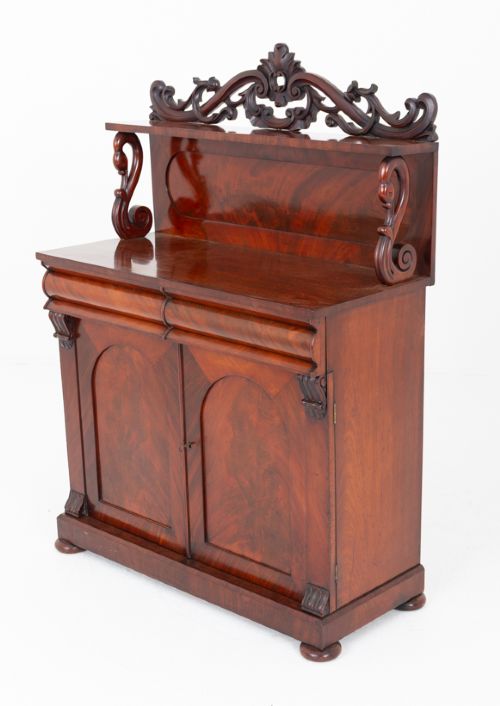
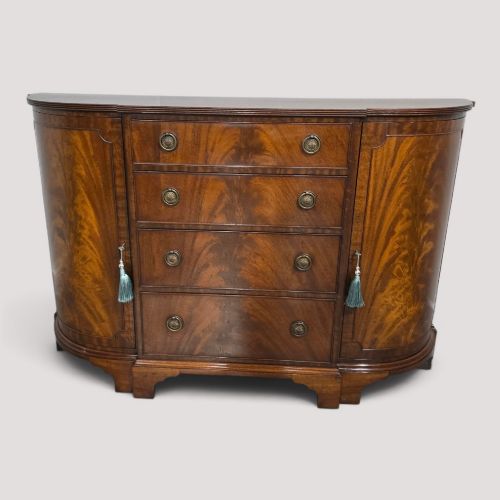
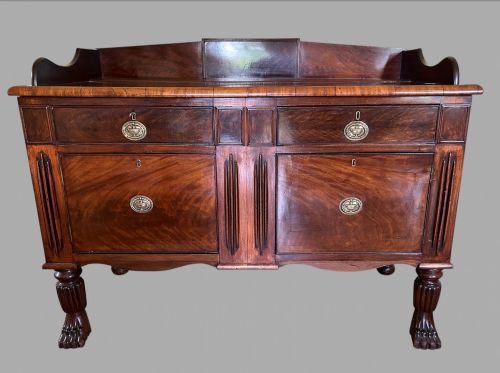
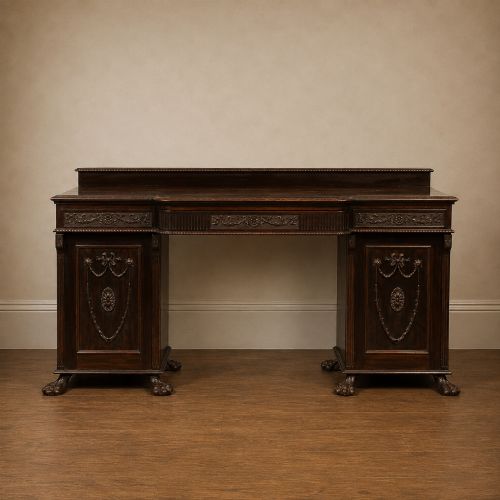
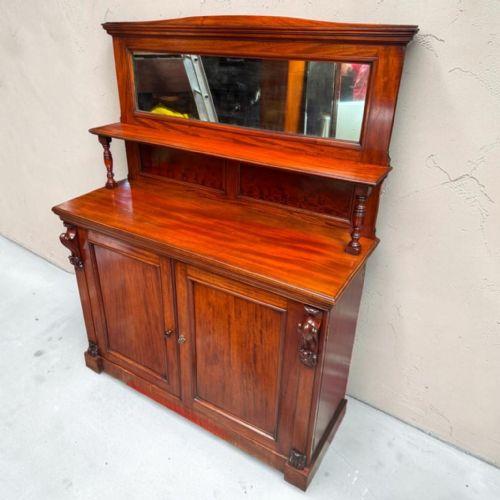
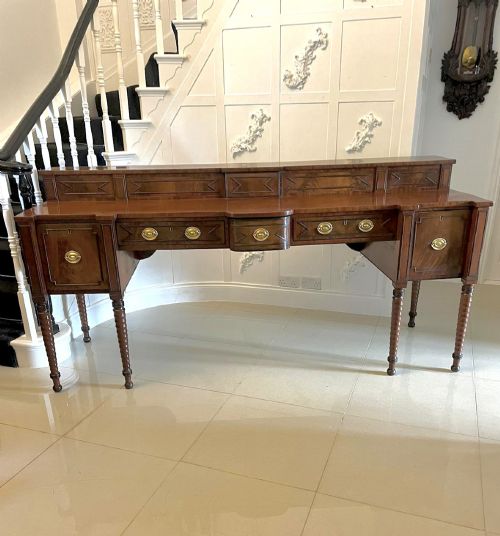
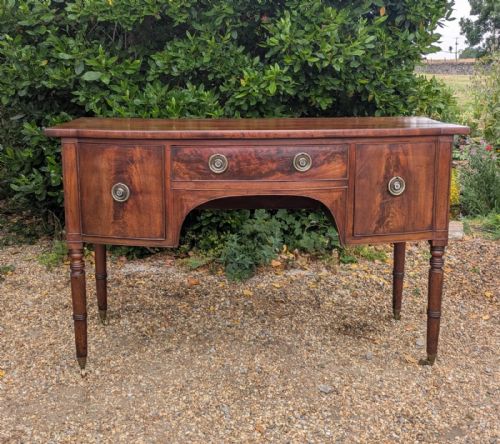
Buyers most frequently encounter large breakfront sideboards, pedestal designs and smaller chiffoniers built from deep brown timber. Forms range from straight-front cupboards to serpentine and bowfront shapes, often accompanied by matching serving tables or dumbwaiters.
Origins span the master workshops of the eighteenth century through to later revival movements, including Edwardian adaptations of Sheraton and Adam styles. Each piece reflects the formal dining habits of its era, built to anchor a substantial room.
Materials and Construction
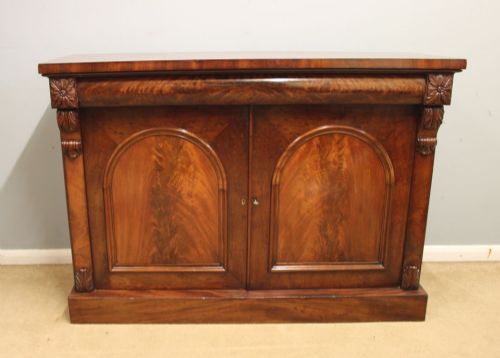
Makers built these servers primarily from solid mahogany and flame mahogany veneer, chosen for rich grain patterns and deep natural colour. Secondary timbers provided internal framing, whilst detailed surfaces received careful hand-finishing.
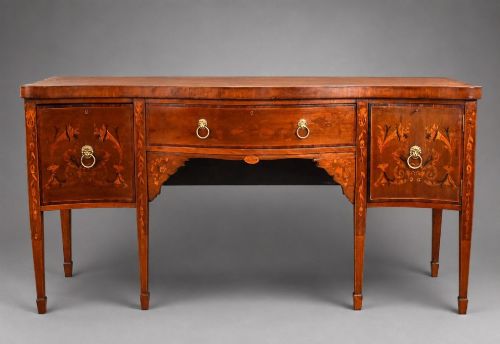
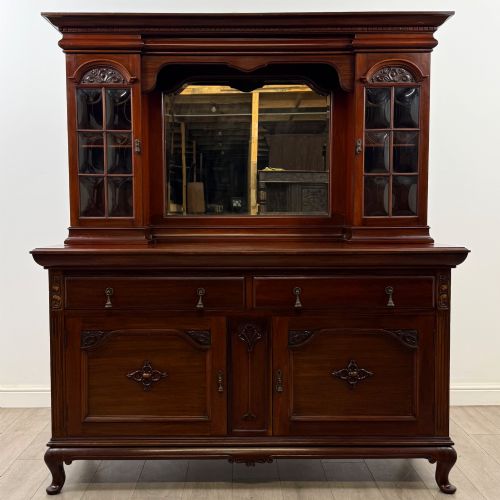
Craftsmen enriched the mahogany bodies using contrasting stringing and banding in boxwood and satinwood. Brass hardware, such as lion paw feet or ring handles, completed the construction, alongside occasional glass panels in cabinet doors.
Listings incorporate nineteenth-century periods alongside Georgian and Edwardian eras, uniting mahogany timber with brass and satinwood inlay.
Judging the Standard
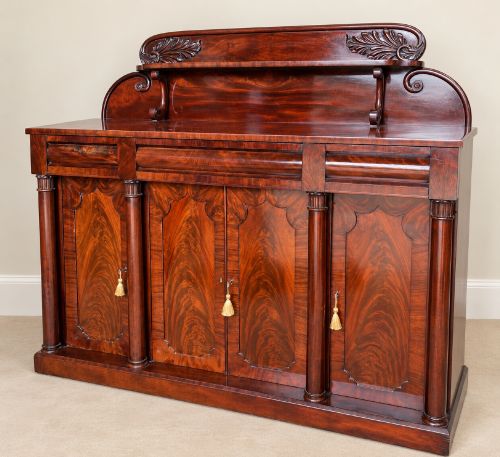
Quality rests upon the selection of the timber, particularly where figured flame mahogany or curl-mahogany veneer covers the primary surfaces. Superior examples display balanced grain matching across drawer fronts and doors, showing careful thought by the cabinetmaker.
Carving and inlay separate standard production from exceptional pieces. Crisp hand-carved details, precise boxwood and satinwood stringing, and heavy brass mounts indicate a higher tier of workmanship executed in established workshops.
Gillows·M. D. Miller & Sons
The Dark Mahogany Buffet Server Glossary
- Breakfront
- A cabinet design where the central section projects forward from the flanking outer sections. This architectural arrangement creates depth and shadow across the front of the server.
- Chiffonier
- A low sideboard or cabinet equipped with enclosed cupboards and occasionally a small shelf superstructure. It serves as a compact alternative to the larger dining room buffet.
- Serpentine
- A front profile that curves outward in the centre and inward toward the ends in a gentle S-shape. This contour requires immense skill from the woodworker to shape accurately.
- Dumbwaiter
- A piece of tiered freestanding furniture with circular revolving trays supported on a central pillar. These served dining rooms by holding dishes close to the table without needing extra servants.
Dark Mahogany Buffet Server: Frequently Asked Questions
What is a dark mahogany buffet server used for?
These pieces function as dining room furniture designed for holding serving dishes, glassware and silverware during meals. Deep cupboards and drawers provide concealed storage for household dining accessories.
Historically, they assisted hosts in presenting food efficiently within the dining space. Today, they continue this storage role while serving as a substantial display surface against a dining room wall.
How do I distinguish Georgian from Victorian pieces?
Georgian servers tend to exhibit restrained classical proportions, elegant tapered legs and subtle satinwood stringing. Their construction prioritises architectural balance and understated elegance.
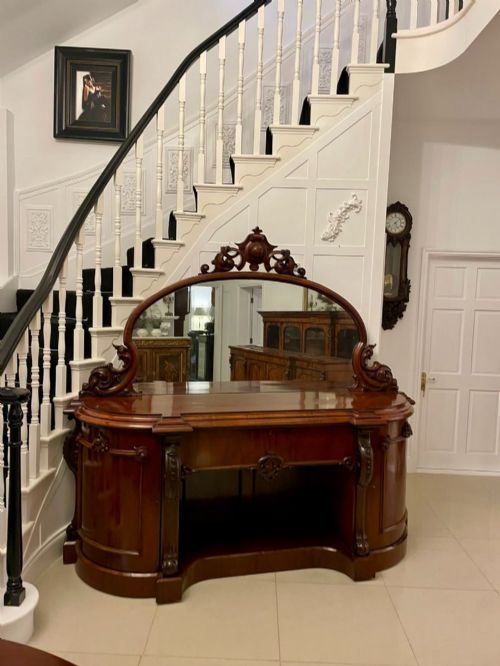
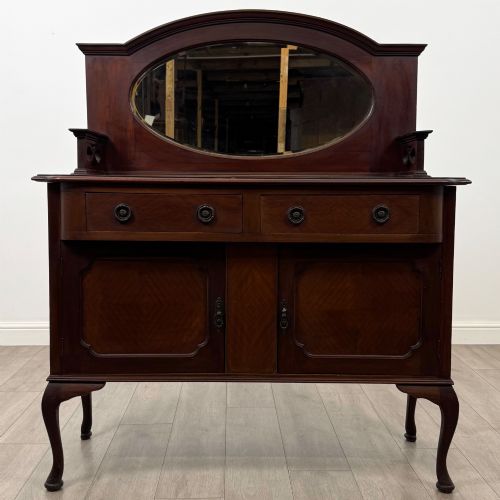
Victorian examples frequently introduce heavier proportions, mirror backs, carved ornamentation and grand pedestal bases. The timber choice also shifts toward deeply figured flame mahogany and darker finishes.
How should I care for a mahogany surface?
Maintain the timber by dusting regularly with a dry, soft cloth to prevent particulate accumulation. Avoid placing the furniture in direct sunlight or near heat sources to protect the polished finish.
Apply quality beeswax sparingly when the wood appears dry, buffing gently to maintain the natural sheen. Keep liquids away from the surface to prevent water marks on the antique polish.