


Figured Mahogany Server
A figured mahogany server brings deep timber grain and formal presence to a dining room, offering substantial surface space and interior storage.
Figured Mahogany Server
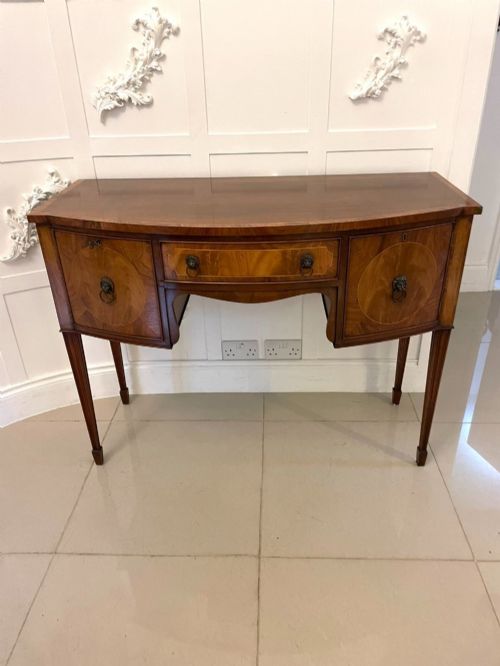
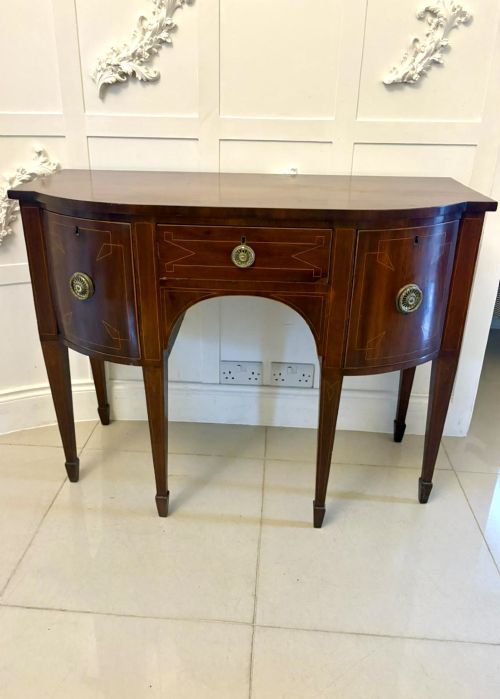
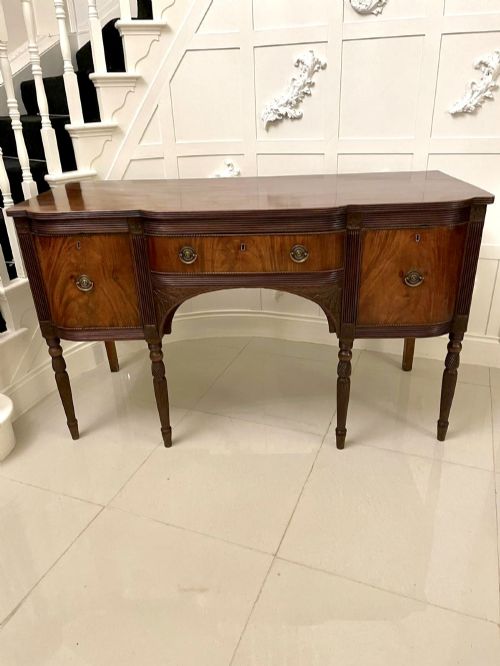
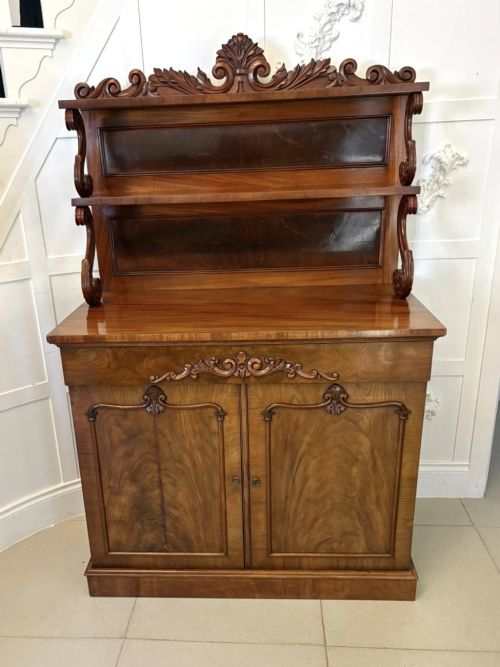
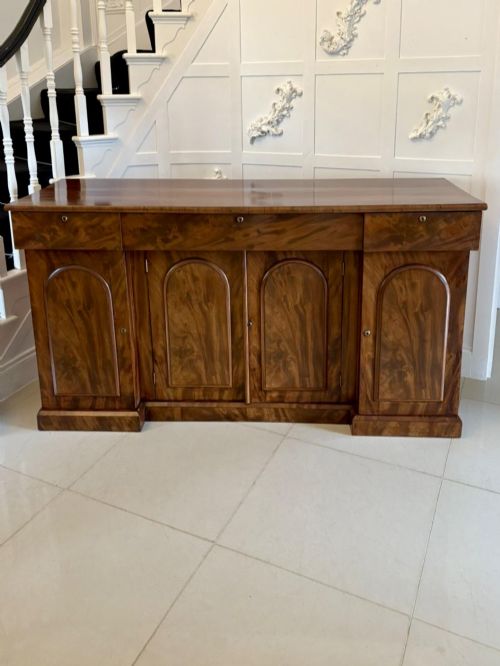
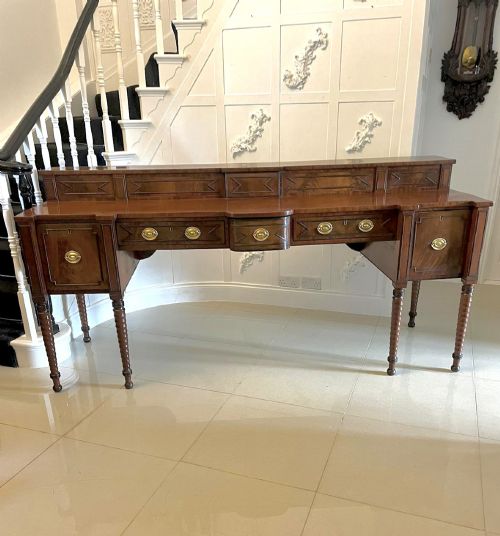
A figured mahogany server encompasses formal dining room storage and serving furniture, appearing most frequently on this page as sideboards, console tables, and chiffoniers. These pieces date from the 18th century through to the Victorian era, spanning George III, Regency, William IV, and later 19th-century styles.
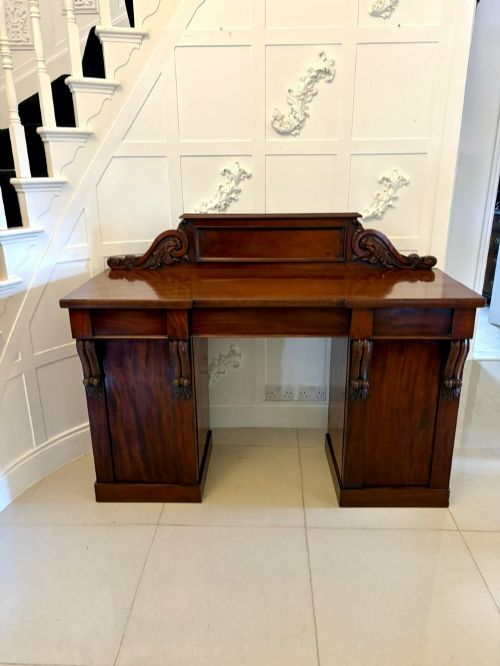
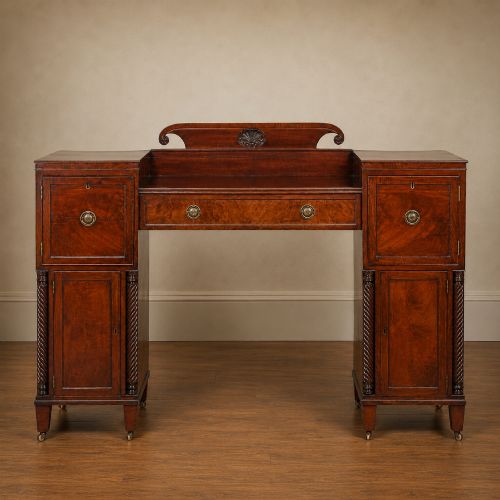
The primary form is the sideboard, ranging from bow-fronted and breakfront examples to pedestal designs and large four-door formats. Alongside these, buyers will find side tables, serving tables, and two-tiered chiffoniers sharing the same characteristic timber surfaces.
Origins trace across Georgian, Regency, and Victorian periods, demonstrating how dining furniture evolved from simple serving tables into complex pedestal and breakfront storage units. Each piece combines practical utility with the decorative impact of highly figured wood grain.
What varies in quality
Quality rests upon the selection and matching of the veneer, where book-matched flame patterns across symmetrical doors distinguish finer pieces from plain timber surfaces. The depth of the grain and the crispness of applied boxwood stringing or carved elements signal the maker's hand.
Proportion and structural form also separate standard production from superior examples, particularly in breakfront and pedestal configurations where architectural detailing and drawer construction demand greater joinery skill.
The listings span George III, Regency, William IV, and Victorian periods, alongside specific revival styles.
The Figured Mahogany Server Glossary
- Figured Mahogany
- Timber exhibiting decorative grain patterns such as flame, ripple, or fiddleback, caused by irregular growth in the tree. This wood is sliced into veneer to cover larger surface areas.
- Breakfront
- A cabinet or sideboard whose central section projects forward from the recessed outer sections. This architectural arrangement creates depth and shadow across the front elevation.
- Chiffonier
- A low sideboard or cabinet featuring shelves or a raised superstructure above the main surface. Originating in the Regency period, it served smaller dining spaces or drawing rooms.
- Pedestal Sideboard
- A form featuring two distinct pedestals flanking a central serving well or drawer section. These pieces often date from the Regency and William IV periods.
- Boxwood Stringing
- Narrow inlaid lines of pale boxwood set into contrasting darker wood surfaces. It creates geometric borders and outlines drawers on finer case furniture.
Figured Mahogany Server: Frequently Asked Questions
What is a figured mahogany server?
A figured mahogany server is a piece of dining room furniture designed for serving food and storing tableware, characterised by decorative timber grain.
These pieces typically take the form of sideboards, console tables, or chiffoniers dating from the Georgian and Victorian eras.
How do I date a sideboard?
Dating relies on stylistic markers such as the architectural breakfront shape of the Georgian period or the heavy pedestals of William IV design.
Secondary woods, construction methods, and hardware also provide clear indicators of whether a piece originates from the 18th or 19th century.
What is flame mahogany veneer?
Flame mahogany veneer is thin timber sliced from specific sections of the mahogany log where the grain ripples in a flame-like pattern.
Cabinet makers arranged these symmetrical slices across drawer fronts to maximise the visual impact of the natural wood.