
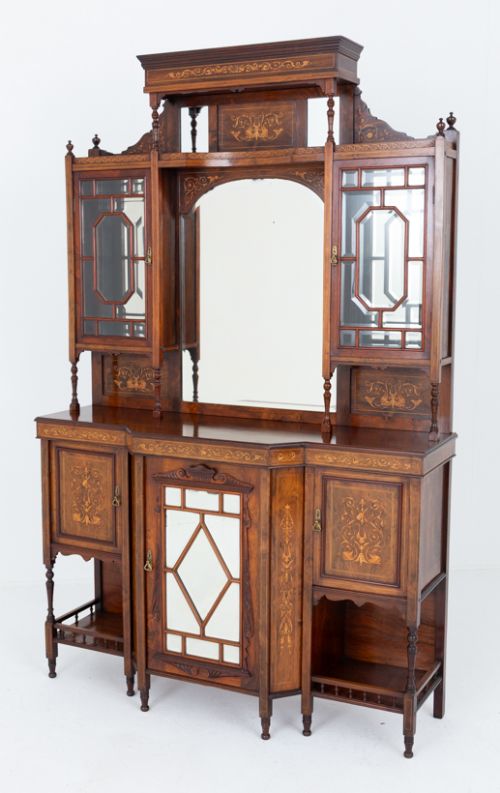


Rosewood Breakfront Cabinet
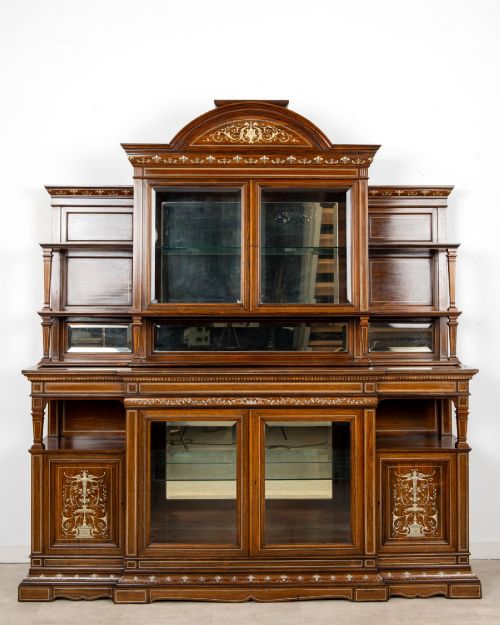
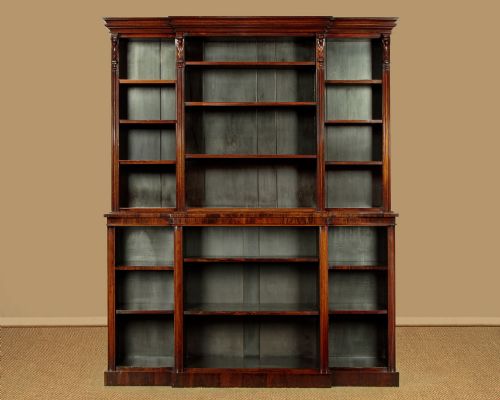
A rosewood breakfront cabinet brings stately symmetry and rich timber grain to a room, offering generous interior shelving behind a stepped facade.
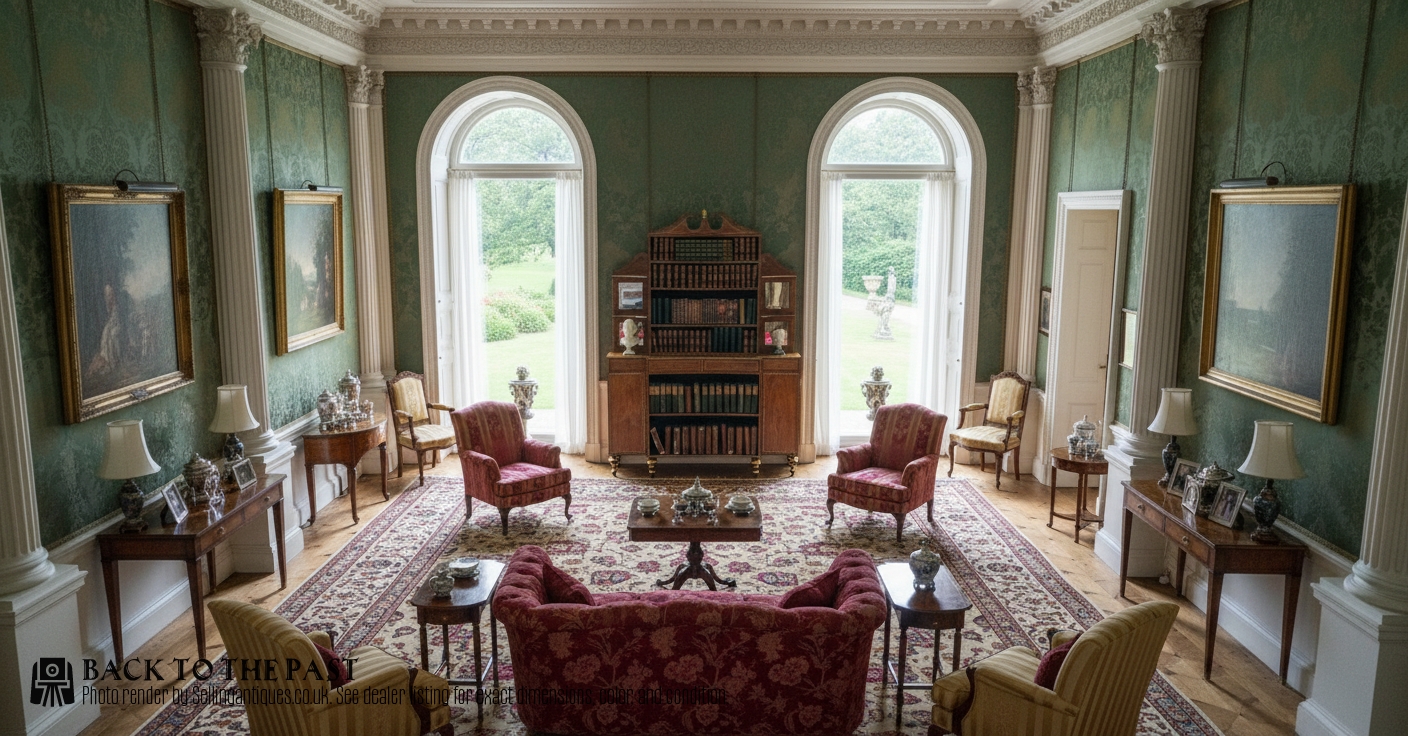
Rosewood Breakfront Cabinet
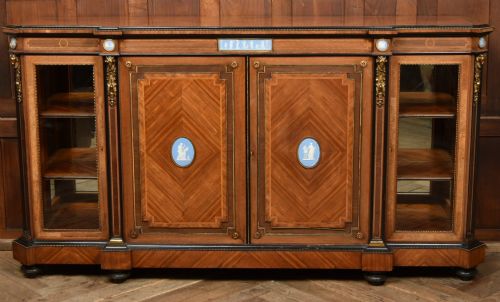
The selections span open bookcases, glazed display cabinets, and solid-door sideboards with internal shelving. Most examples found here originate from the nineteenth century, encompassing both formal Regency designs and later revival iterations.
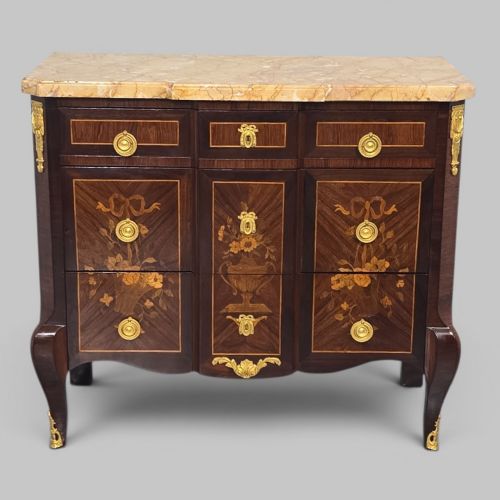
Makers often integrated brass grilles, mirrored door panels, or marble tops into the primary structure. This variety ensures collectors can find both low open bookshelves and towering four-door storage furniture.
How they were made
Cabinet makers utilised dense tropical rosewood veneers laid over sturdy secondary pine or oak carcases, aligning the dark grain patterns to emphasise the stepped breakfront facade. Artisans frequently added contrasting boxwood stringing, brass inlay, or parcel gilt detailing to delineate the architectural panels.
Structural embellishments often included turned barley twist columns, ormolu mounts, and pierced brass galleries fixed atop white Carrara or Sienna marble slabs. Glazed doors utilised individual wooden glazing bars to secure glass panes within the overarching framework.
Rosewood Breakfront Cabinet Retail Price Guide 2026
Typical asking prices for rosewood breakfront cabinet among the pieces listed under this phrase on Sellingantiques today, from the lower quarter to the upper quarter. They describe what is for sale here now, not the wider market.
Several clever Regency bookcases include leather dummy books on their shelves to hide actual storage cavities.
What varies in quality
The calibre of a piece rests heavily on the precision of the veneer work and the crispness of the applied brass or marquetry details. Superior examples exhibit continuous grain matching across the stepped sections and retain their original hardware, glass, and marble tops.
Construction methods also dictate worth, separating standard production items from workshop-attributed furniture boasting refined internal fittings like leather-backed dummy books or silk-lined display interiors. Subtleties in proportion and the weight of the bronze or brass mounts separate ordinary side cabinets from exceptional pieces.
Collinson and Lock·Gillow·Howard and Sons·Holland and Sons·Meakin
The Rosewood Breakfront Cabinet Glossary
- Breakfront
- An architectural cabinet design where the central section projects forward from the flanking side cupboards or shelves.
- Chiffonier
- A compact sideboard or low cabinet typically fitted with shelves or drawers beneath the main surface, originating in the nineteenth century.
- Marquetry
- The decorative art of applying small pieces of wood veneer to form geometric or floral patterns on a carcase.
- Ormolu
- Gilded bronze ornamentation applied to furniture, popular during the Regency and French-influenced periods.
- X-grille
- A latticework pattern formed of intersecting wooden or brass strips fitted across cabinet door glass.
Rosewood Breakfront Cabinet: Frequently Asked Questions
What rooms suit a breakfront cabinet best?
These large storage pieces anchor formal dining rooms or living spaces, providing an ideal surface for lamps while housing collections of books or glassware behind closed doors.
Their substantial footprint and mirrored or glazed variants also function effectively in grand hallways or study interiors.
How do I date a rosewood cabinet?
Stylistic markers such as brass inlay point firmly to the Regency era, whereas marquetry and display glass often indicate later Victorian manufacture.
Examining internal secondary timbers and construction techniques helps confirm the period of execution.
Are marble tops original to these cabinets?
Many nineteenth-century sideboards and credenzas were fitted with Carrara or Sienna marble slabs to provide a durable, decorative surface for serving.
Surviving pieces frequently retain these heavy stone tops alongside original brass galleries.
What is the difference between a chiffonier and a sideboard?
A chiffonier is typically smaller and lower, often featuring a raised shelf or back panel, whereas sideboards offer greater storage capacity for dining rooms.
Both forms utilise the stepped breakfront configuration in select nineteenth-century designs.