
Traditional Balloon Back Chairs
Traditional balloon back chairs are quintessential nineteenth-century seating, offering elegant curved profiles and sturdy timber frames that anchor a dining room.
Traditional Balloon Back Chairs
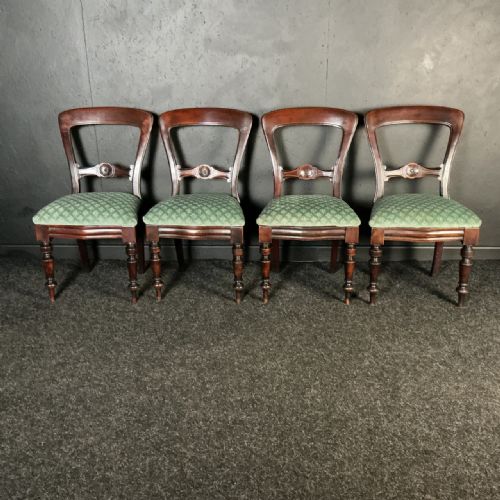
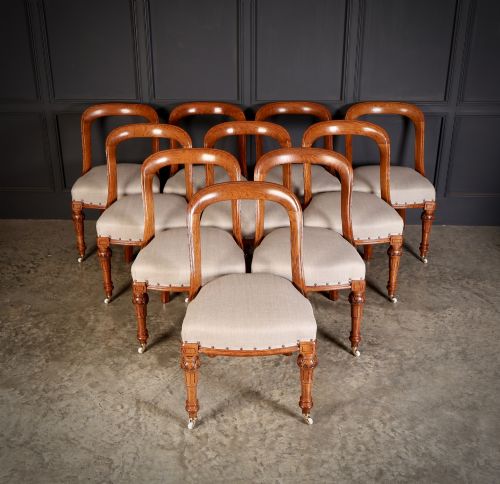
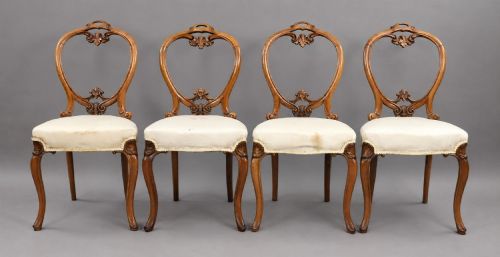
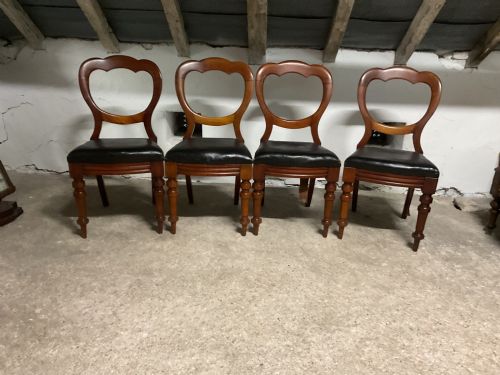
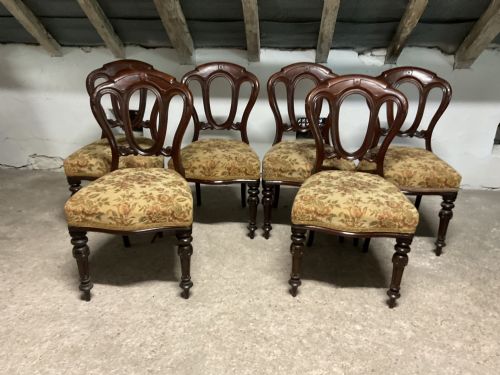
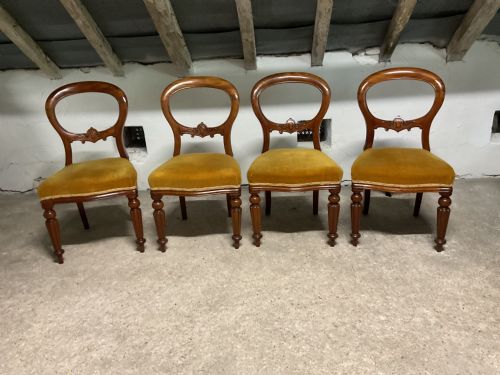
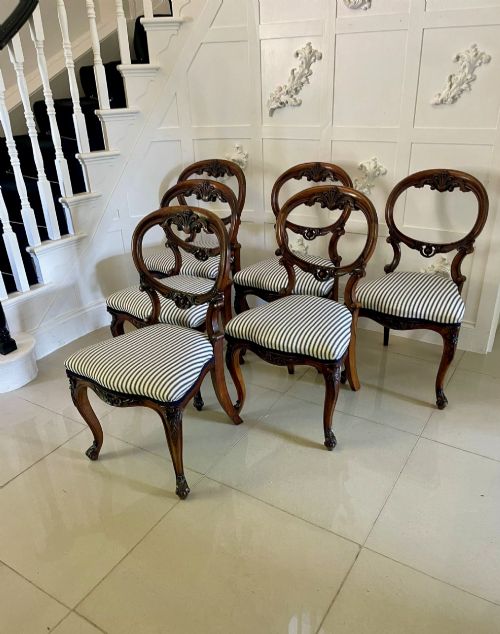
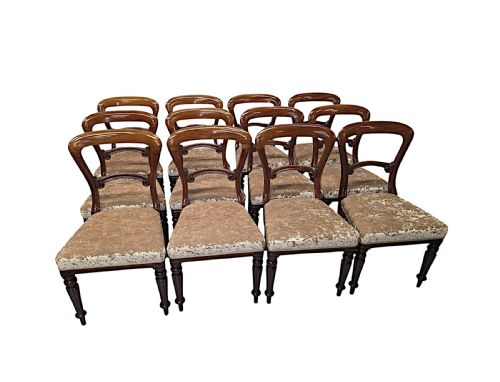
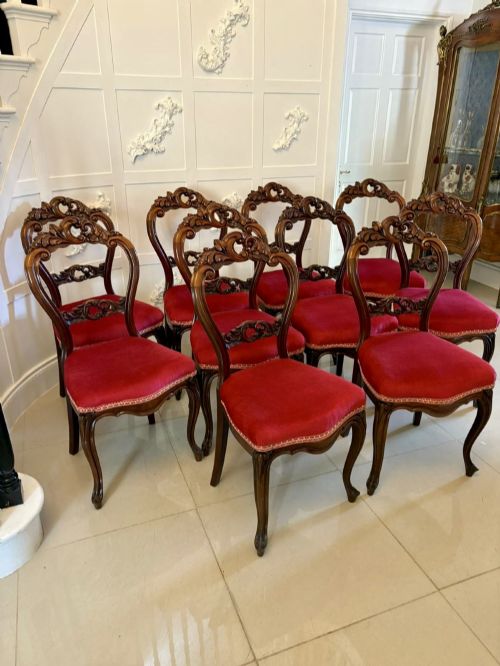
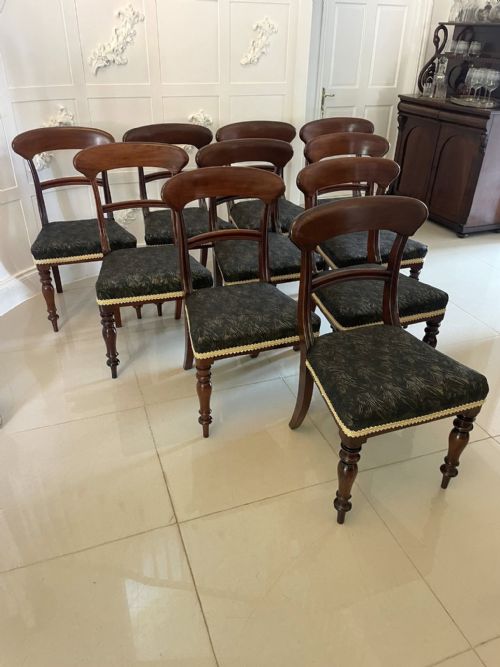
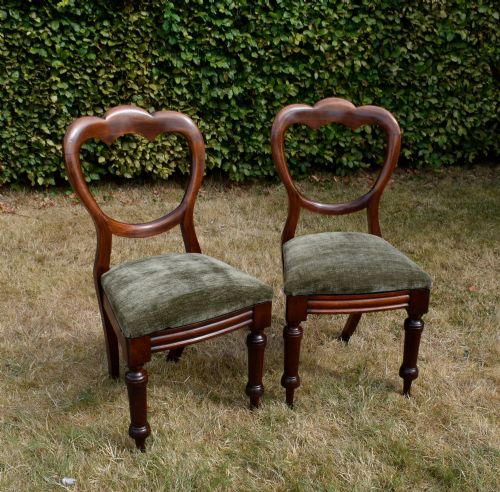
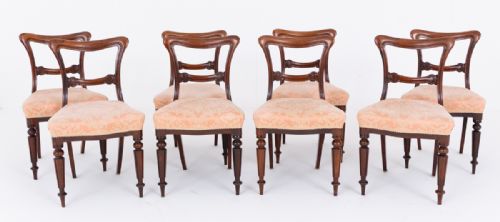
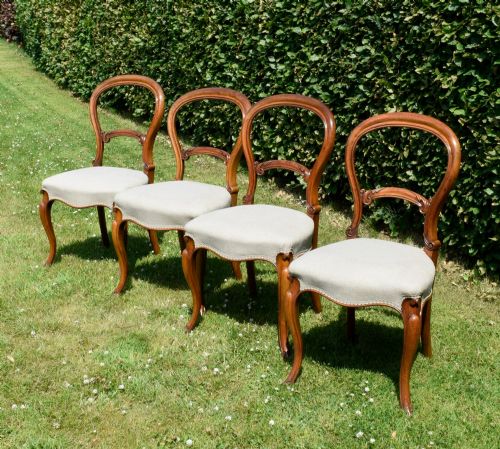
Traditional balloon back chairs are principally dining chairs and side chairs originating from the Victorian, Regency, and William IV periods. When browsing this selection, buyers frequently encounter sets of four, six, eight, or ten matching chairs gathered together from the nineteenth century.
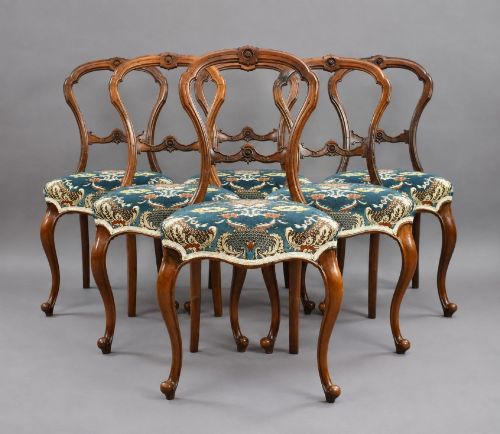
The defining characteristic of these pieces is the solid wooden backrest shaped into an oval or loop resembling a rounded balloon. Makers during the 1850s, 1860s, and 1870s produced these in significant quantities, utilising rich timbers to suit formal dining spaces of the era.
Materials and construction methods
Cabinet makers relied heavily on dense hardwoods such as mahogany and walnut, occasionally turning to rosewood or oak for specific commissions. These timbers were steam-bent or carved from solid stock to form the characteristic curved back rail without weakening the grain structure.
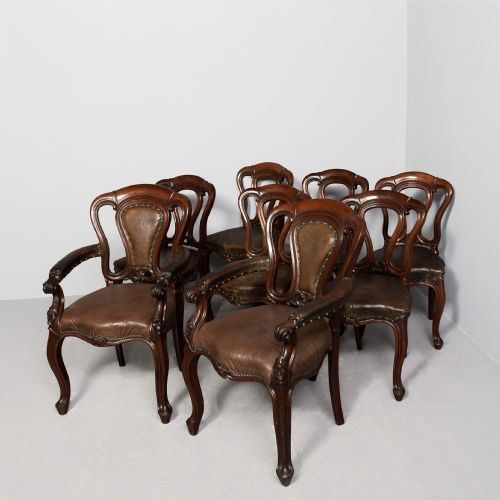
Upholstery completed the seating, utilising traditional materials like horsehair or modern sprung bases beneath coverings of fabric, leather, velvet, or textile. Drop-in seats or fully padded frames were secured into the wooden rails using traditional joinery methods.
Distinctions in craftsmanship
The distinction between standard examples and superior pieces rests on the depth of hand-carving and the choice of timber figure. Finer sets display crisp, intricate foliage or scroll motifs carved directly into the solid wood rather than applied mouldings.
Structural integrity also separates the grades, as well-executed joinery and substantial timber scantlings prevent the back frame from loosening over decades of daily use. The weight of the timber and the precision of the joints dictate how securely the chair withstands pressure.
Gillows·John Taylor & Son
The Traditional Balloon Back Chairs Glossary
- Balloon back
- A chair back shaped into a closed loop resembling an oval balloon, popular throughout the Victorian era.
- Mahogany
- A durable tropical hardwood with a reddish-brown tone, widely utilised by nineteenth-century cabinet makers for dining furniture.
- Walnut
- A dark, figured timber favoured for mid-nineteenth-century seating and decorative carving.
- William IV
- The architectural and furniture style bridging the Regency period and early Victorian era, known for robust classical proportions.
- Sprung settee
- An upholstered seat base containing metal coil springs designed to improve comfort and resilience.
Traditional Balloon Back Chairs: Frequently Asked Questions
How do I date traditional balloon back chairs?
Dating relies on observing timber choices, joinery techniques, and stylistic cues recorded across the nineteenth century. Victorian examples often show machine assistance alongside hand finishing, whereas earlier Regency pieces display heavier classical proportions.
Examining the underside of the seat frame reveals tool marks and construction methods that help narrow down the decade of manufacture. Comparing the backrest curvature with dated pieces in the listings provides further context.
Are these chairs suitable for daily dining use?
These pieces were built as functional dining furniture and remain entirely practical for modern daily use. Solid hardwood frames and robust joinery ensure they handle regular sitting without structural compromise.
Upholstery can be updated or reinforced to suit contemporary comfort preferences while retaining the historic wooden frame. Regular checks of the leg joints ensure long-term stability in a busy household.
What wood types are most common?
Mahogany forms the vast majority of surviving frames, appreciated for its strength and deep reddish hue. Walnut appears frequently in mid-century sets, offering a lighter brown colour with pronounced grain patterns.
Occasional sets employ rosewood or oak, reflecting specific regional preferences or high-end commissions from Victorian workshops. Each timber requires standard maintenance with appropriate wax polishes to preserve the surface.
How do I care for antique upholstery?
Maintenance depends on the specific fabric utilised, whether silk velvet, patterned textile, or leather. Gentle vacuuming with a soft attachment removes surface dust without stressing the fibres or the wooden frame.
Professional cleaning is recommended for antique textiles to prevent shrinkage or dye transfer. Leather surfaces benefit from periodic conditioning to maintain flexibility and prevent cracking.