
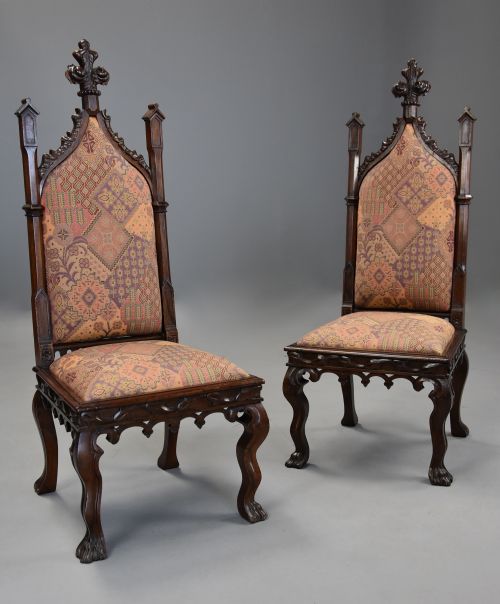
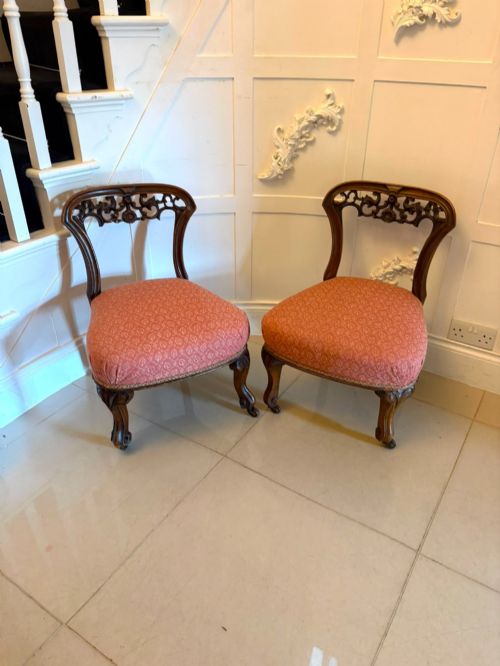
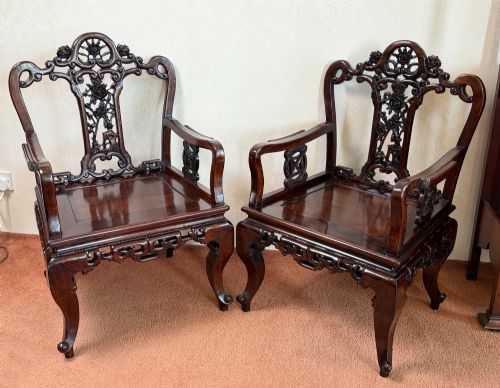
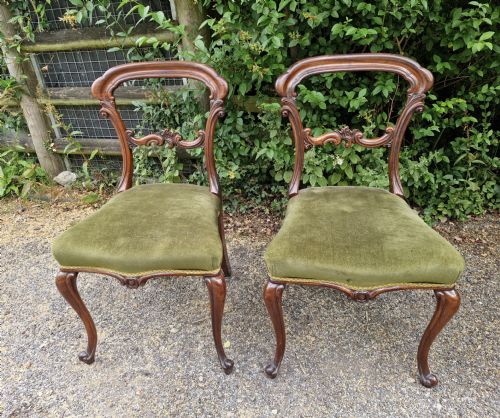
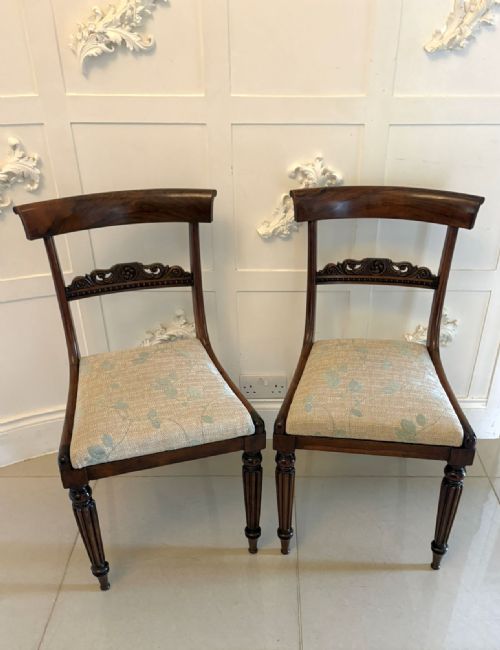
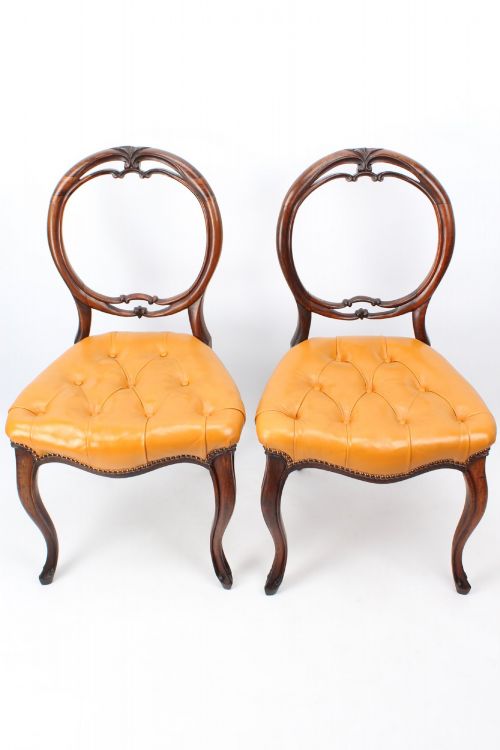
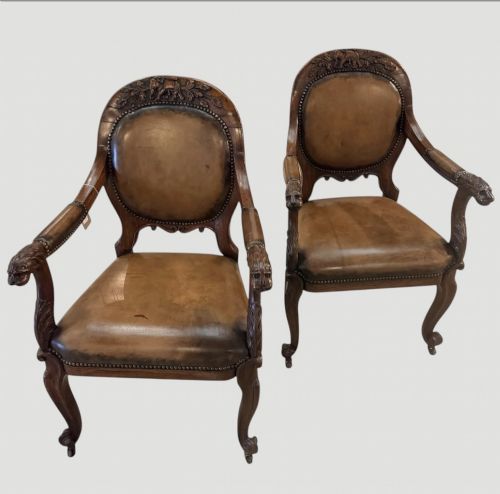
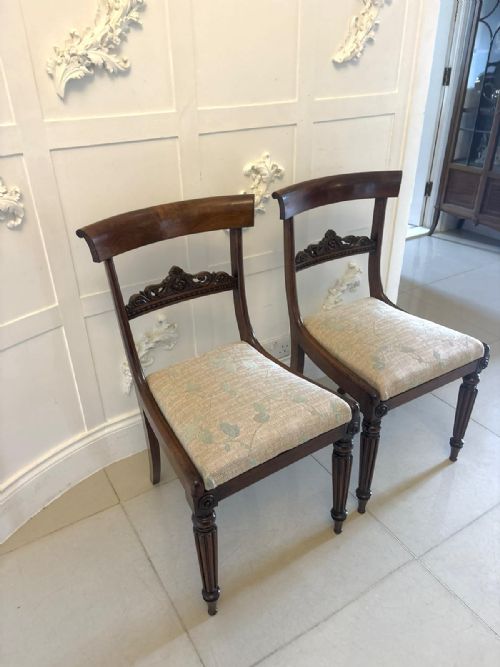



Pair Rosewood Chairs
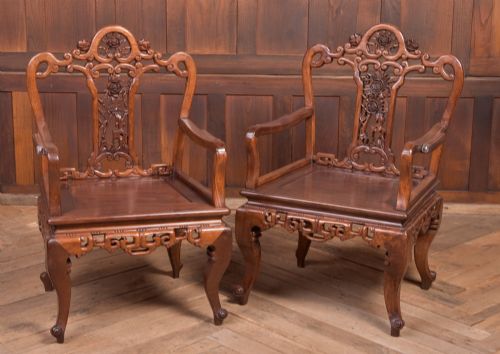
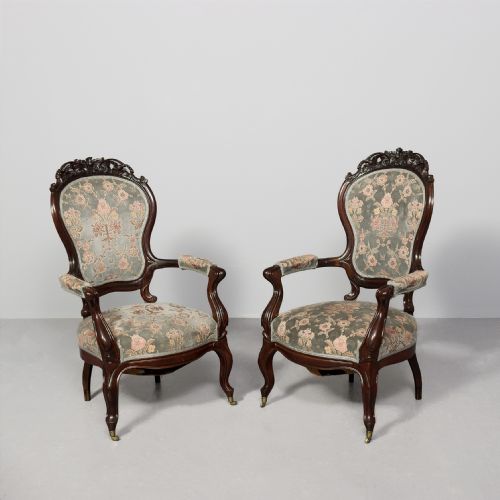
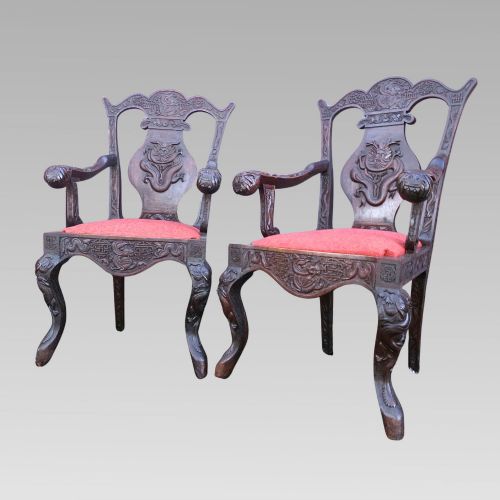
Pair rosewood chairs bring dual balance to a room, offering matched seating from the Regency, Victorian, and Edwardian periods shaped in mahogany alternatives and exotic hardwoods.
Pair Rosewood Chairs
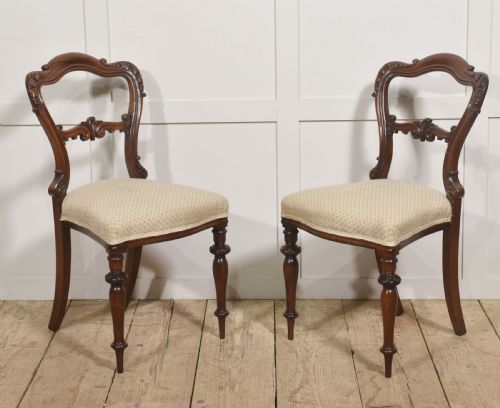
When searching for pair rosewood chairs, buyers encounter matched seating designed for dining rooms, libraries, and parlours, predominantly originating from the nineteenth century. These twin items serve symmetrical placement in formal interiors, ranging from compact side chairs to generous library armchairs.
The selection on this page centres heavily on Victorian and Regency interpretations, alongside Edwardian salon pieces and Anglo-Indian variants. Forms vary from balloon-back dining chairs to bergères and buttoned leather reading chairs, reflecting the shifting domestic fashions across the periods.
Makers utilised both solid timbers and simulated grain finishes to achieve the characteristic dark, dense appearance of the wood. Whether rendered as simple side chairs or carved armchairs, these paired items offer matching proportions that suit traditional room schemes.
How they were made
Joiners constructed these frames using dense tropical hardwoods, often selecting genuine rosewood for its heavy weight and distinct grain, or applying simulated finishes and paint to alternative timbers. Brass inlay and parcel gilt frequently highlight the structural lines, particularly on Regency examples.
Upholstery techniques dictate much of the comfort, employing materials such as velvet, leather, needlepoint, fabric, and cane panels within structural cane or open arm frames. Carved details, from balloon backs to Gothic revival motifs, rely on hand-chiselled execution directly into the hardwood.
Structural integrity depends on traditional mortise and tenon joinery hidden beneath the seats and backs. Where frames meet stress points, such as cabriole legs or scroll arms, makers integrated reinforcing blocks to support daily sitting.
Garden chairs made of rosewood remind us that nineteenth-century Victorians were willing to risk fine tropical timber against an English rain shower.
What varies in quality
The depth and crispness of the hand-carving distinguish finer workshops from standard production. Sharp relief work on balloon backs or floral cresting indicates skilled execution by the maker.
The selection and matching of the timber grain across both items determine visual harmony. Superior pairs display symmetrical figuring and rich natural polishing rather than heavy masking finishes.
Integration of secondary materials, such as precise brass stringing, well-fitted cane panels, or substantial leather and velvet upholstery, separates basic utility seating from high-status library and salon items.
W.A. Willcocks·Gillows
The Pair Rosewood Chairs Glossary
- Rosewood
- A dense, heavily grained hardwood prized for dark reddish-brown tones and durability. It takes a high polish and forms the primary structural material for these pairs.
- Balloon-back
- A chair back shaped in a continuous curving outline resembling a inflated balloon. This form is common in Victorian dining and side chairs.
- Bergère
- An enclosed upholstered armchair with wooden framing and woven cane sides or back. These provide lighter visual weight in library and drawing room settings.
- Simulated rosewood
- A painted or stained finish applied to common timber to imitate the distinctive grain of true rosewood. It allows the desired aesthetic at a different material cost.
- Ormolu
- Gilded bronze mounts applied to furniture framework for decorative contrast. They appear on select fine pieces to accentuate structural lines.
Pair Rosewood Chairs: Frequently Asked Questions
How do I identify Regency pair rosewood chairs?
Regency models often feature classical lines, sabre legs, and brass inlay or brass stringing. They lean towards restrained elegance compared to later Victorian carving.
Look for simulated finishes alongside solid timber frames, as painting to imitate exotic woods was common during this period.
Were these chairs always made as matching pairs?
Most items listed were constructed concurrently to furnish symmetrical spaces like drawing rooms or dining tables. Identical proportions and grain matching confirm their shared origin.
Some examples bring together two individual chairs of identical period style that share a nearly identical silhouette.
Where should I place these chairs in my home?
Matched pairs suit flanking positions, such as either side of a fireplace, a console table, or a hallway entrance. Their balanced appearance grounds symmetrical interior layouts.
Library armchairs work well in studies, while lighter side or salon chairs function effectively in bedrooms and living spaces.
How do I care for antique rosewood furniture?
Maintain stable indoor humidity levels to prevent the hardwood from drying out or splitting. Direct sunlight can fade the deep natural tones of the timber over time.
Apply microcrystalline wax sparingly to nourish the surface finish and protect against minor scuffs without building up heavy residue.