
Vintage Upholstered Salon Chairs
These vintage upholstered salon chairs bring formal Victorian and French revival elegance to a room, offering comfortable seating shaped by historic craftsmanship.
Vintage Upholstered Salon Chairs
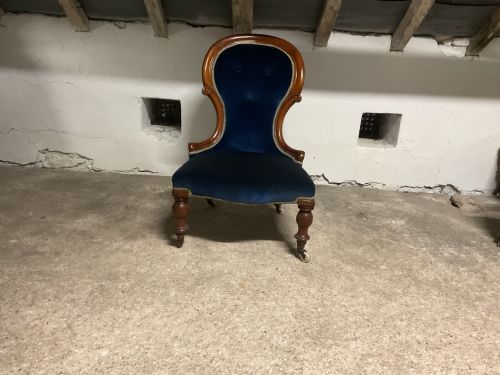
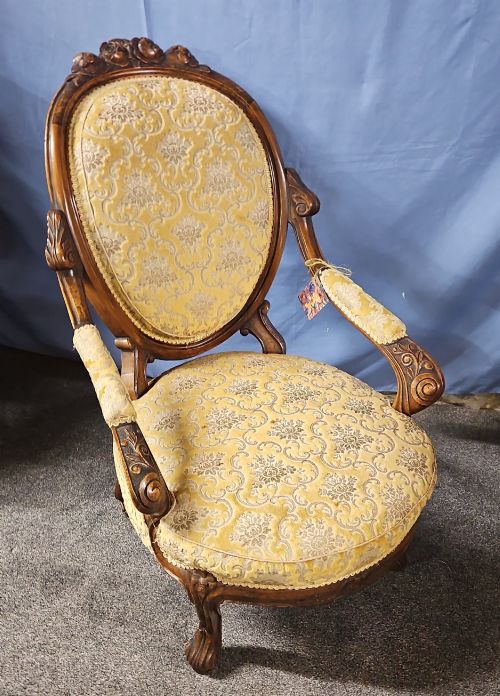
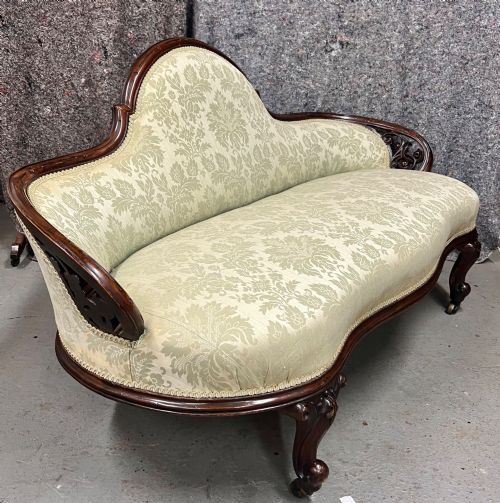
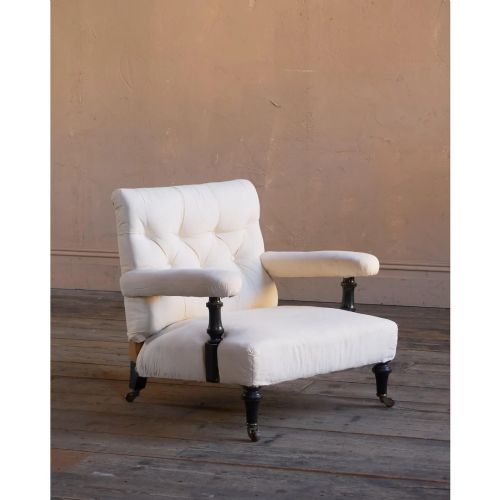
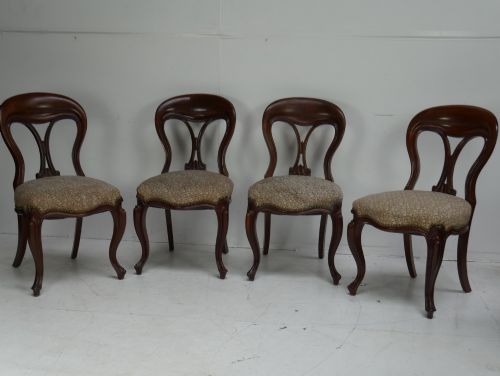
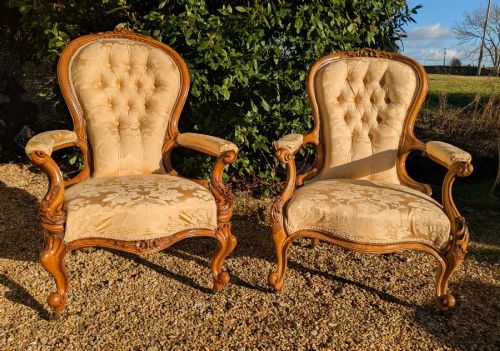
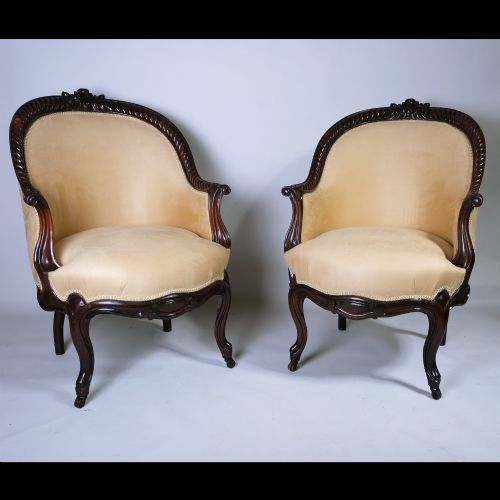
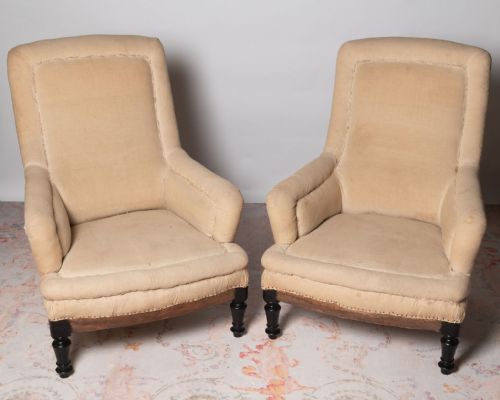
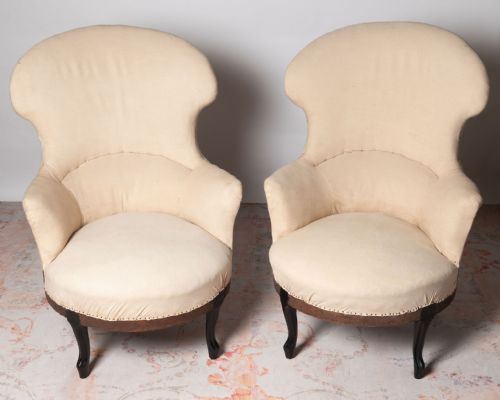
Vintage upholstered salon chairs encompass a varied group of seating originating from the eighteenth to the early twentieth century, spanning Victorian and Edwardian periods alongside French provincial styles. Buyers searching this phrase most frequently encounter nineteenth-century walnut and mahogany examples, including spoonback armchairs, nursing chairs, and carved open armchairs.
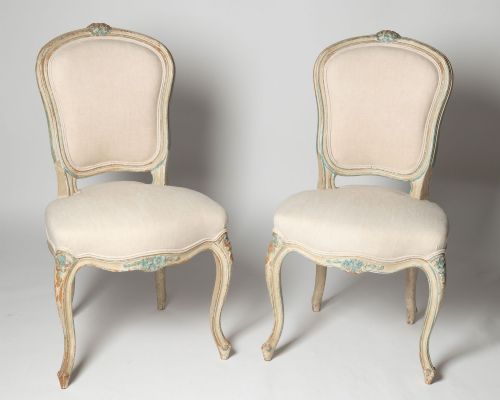
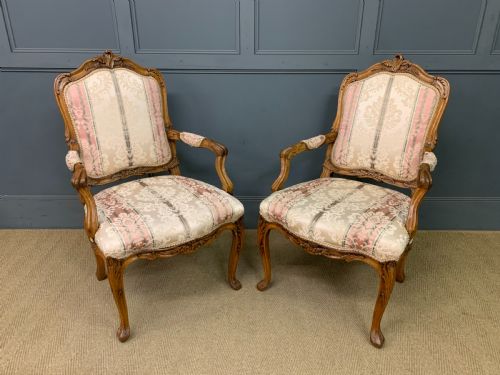
The selection includes matched pairs and occasional single pieces, often featuring stylistic influences such as Louis XV, Louis XVI, and Rococo revival. Alongside traditional armchairs, the category extends to dining chairs and occasional parlour seating dressed in velvet, tapestry, needlepoint, and contemporary fabric over traditional frames.
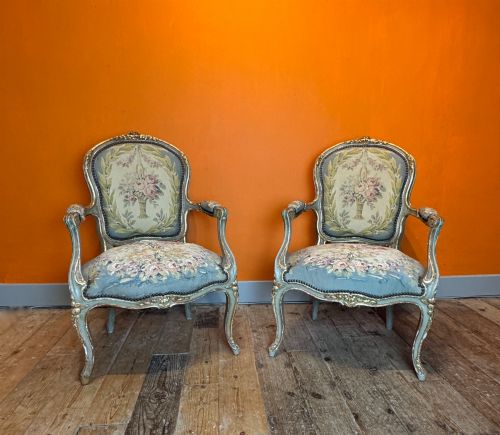
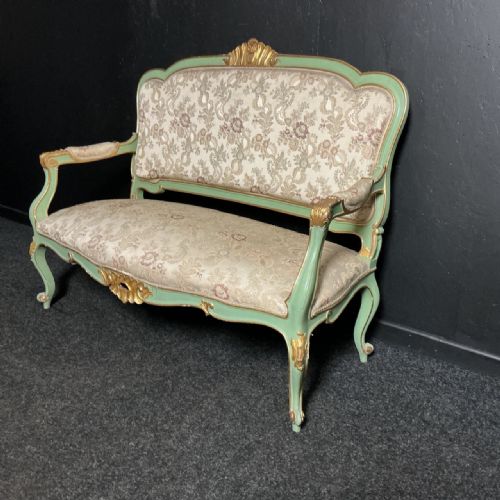
Many items reflect European workshops, with French painted and parcel gilt frames appearing alongside British walnut and mahogany constructions. These pieces were originally designed for formal entertaining and private withdrawing rooms, carrying generous proportions and decorative carved woodwork.
Materials and construction
Timbers form the structural backbone of these pieces, with solid walnut, mahogany, oak, and rosewood selected for their grain and strength. Carved details, gilding, and painted finishes define the exterior woodwork of French and Victorian frames, while brass accents and inlay work add surface interest.
Upholstery relies on textiles such as velvet, calico, needlepoint panels, and tapestry, supported by traditional internal padding methods. Woodworkers shaped frames using techniques including spoonback curves, barley twist turnings, and pegged joinery to ensure long-term stability.
The listings span the Victorian, Edwardian, and eighteenth-century periods, utilising walnut, mahogany, oak, and rosewood.
Factors separating tiers
The degree of hand-carved detail and the crispness of moulding separate standard production from finer work. Walnut and mahogany frames with deep, unblemished relief carving command attention over simpler turned structures.
Makers' marks or attributions to documented firms elevate an item's standing within the market. Original surface patination on the timber and the retention of period textiles or needlepoint panels contribute further to a piece's integrity.
Mellier And Co·C Hindley And Sons
The Vintage Upholstered Salon Chairs Glossary
- Bergère
- An enclosed armchair with upholstered sides and a padded back, typically featuring exposed wooden framing. This French form gained popularity during the eighteenth century and inspired later revival pieces.
- Spoonback
- A chair back shaped in a concave curve resembling the bowl of a spoon, designed to fit the human spine. This profile is frequently seen on Victorian walnut salon and nursing chairs.
- Fauteil
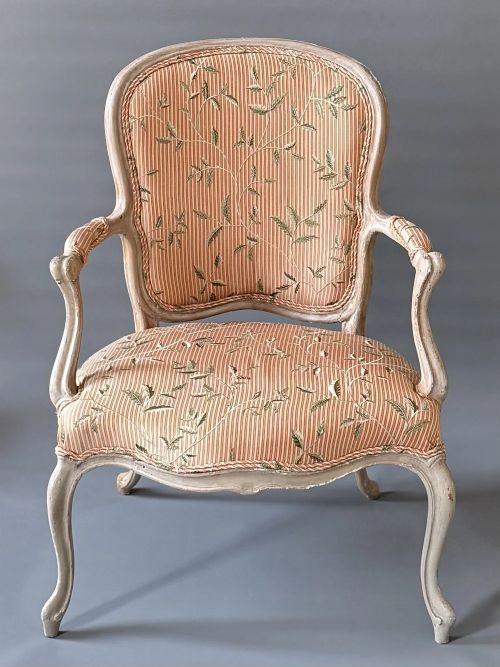
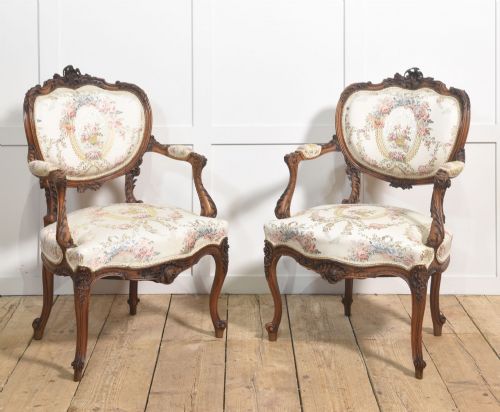
- An open-arm armchair with upholstered back and seat, featuring exposed wooden arms and frame. The style originated in France and is common in Louis XV and XVI revival seating.
- Parcel Gilt
- A surface treatment where specific carved details or highlights are partially gilded with gold leaf against a painted or polished wood background.
- Needlepoint
- Hand-stitched canvas embroidery utilising wool or silk yarn to create pictorial or geometric panels. These textiles are often integrated into the backrests and seats of nineteenth-century French chairs.
Vintage Upholstered Salon Chairs: Frequently Asked Questions
How do I identify a Victorian salon chair?
Victorian salon chairs typically display dark hardwoods like walnut or mahogany, often shaped into balloon backs or spoonbacks with tufted upholstery. Turnings such as barley twist legs and heavy carved ornament frequently appear on these pieces.
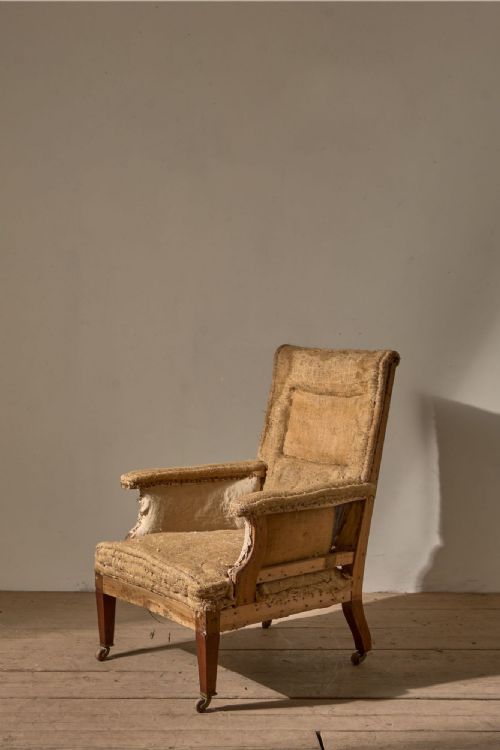
They were built for formal parlour use during the nineteenth century, prioritizing structured comfort and decorative presence. Look for traditional joinery and period fabric remnants beneath newer layers.
What is a French provincial style chair?
French provincial and revival chairs feature lighter painted, gilt, or natural walnut frames with curved cabriole legs and floral carvings. Styles often draw directly from Louis XV or Louis XVI court aesthetics.
These pieces brought refined continental elegance to nineteenth-century drawing rooms and boudoirs. Their exposed frames showcase delicate hand-carved motifs and subtle patination.
Are these chairs suitable for daily use?
Most antique salon chairs tolerate normal daily seating when their internal webbing and frame joints remain secure. Periodic checks of the wooden framework ensure stability over years of domestic life.
Heavily upholstered models offer supportive padding, though antique seat heights can sit lower than modern dining furniture. Placing them in low-traffic reading corners or parlours preserves their historic fabric.
How do I care for antique wood and upholstery?
Protect wooden frames by applying appropriate beeswax or polish sparingly to maintain the natural lustre of walnut and mahogany. Avoid placing antique textiles in direct sunlight to prevent the fading of velvet and needlepoint.
Gentle vacuuming with a soft brush attachment removes surface dust from upholstered panels without damaging delicate threads. Professional conservation cleaning is recommended for antique tapestry and needlework.