
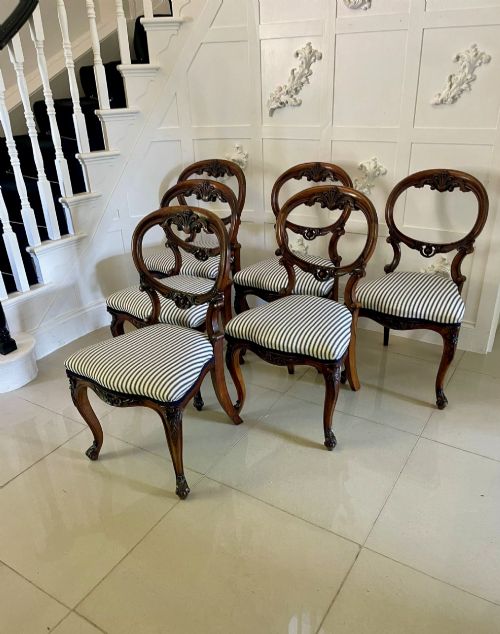
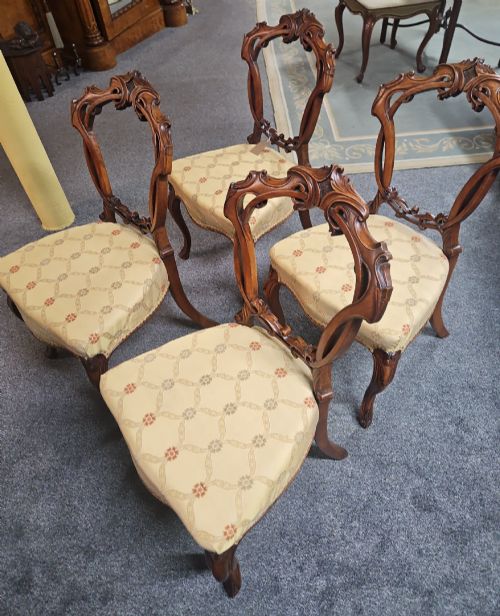
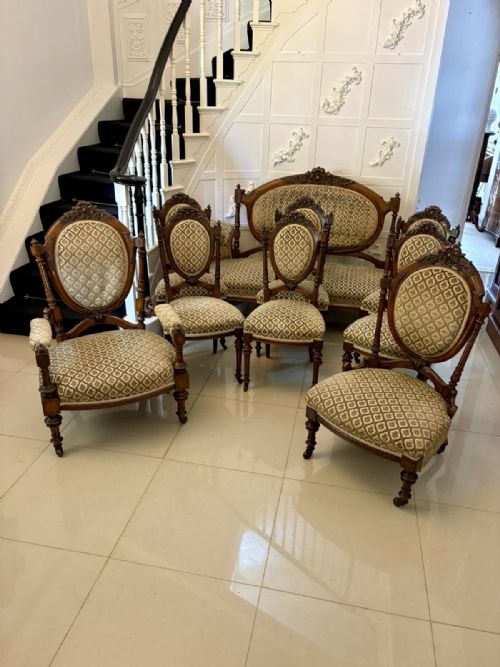
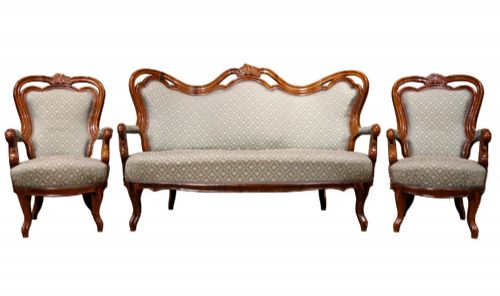


Walnut Salon Chairs Set
A walnut salon chairs set brings nineteenth-century drawing-room elegance into a modern room through rich timber frames and plush textile upholstery.
Walnut Salon Chairs Set
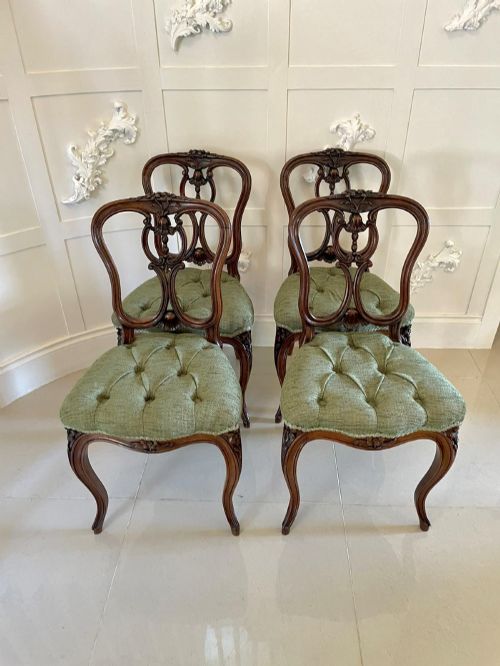
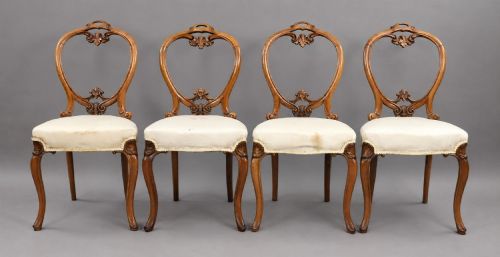
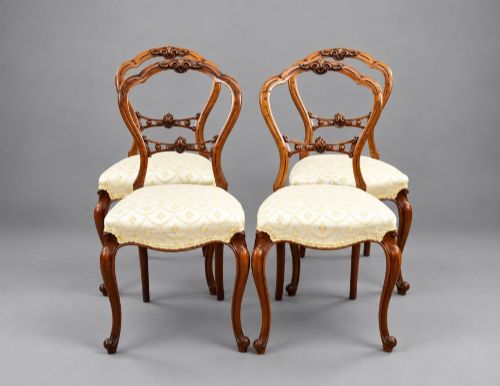
A walnut salon chairs set comprises matched groupings of seating designed for nineteenth-century formal rooms, appearing primarily as sets of four or six pieces.
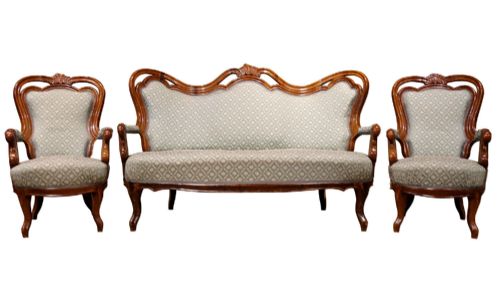
The evidence shows these groupings spanning the Victorian, Edwardian, and early twentieth-century periods, often linked to broader parlour or drawing-room suites.
Makers and workshops constructed these chairs in various Revival styles, drawing heavily on French Rococo, Louis XV, and Louis XVI design idioms.
Materials and technique
Craftsmen utilised solid walnut for the structural frames, often carving decorative floral and scroll motifs directly into the timber.
Makers incorporated various upholstery fabrics, including traditional textiles and velvet, secured over supportive stuffing to provide functional seating.
Some nineteenth-century makers evidently believed a drawing room was incomplete without at least eleven matching seats and matching footstools.
Judging the range
The distinction between standard domestic seating and exhibition-grade pieces lies in the crispness of the hand-carved detailing on the walnut frames and the harmonious matching within larger suites.
Superior examples demonstrate careful joinery and substantial timber selection that withstands centuries of use while retaining structural integrity.
Blyth & Sons·Morison & Co of Edinburgh
The Walnut Salon Chairs Set Glossary
- Balloon back
- A chair back shaped like an oval or balloon, popular during the Victorian era for dining and salon seating.
- Cabriole leg
- A furniture leg that curves out and then in, resembling the leg of an animal, frequently seen on revival pieces.
- Fauteuil
- An open-armed upholstered armchair with exposed wooden framing, originating in French design.
- Salon suite
- A matched set of reception room furniture typically comprising a settee and several matching chairs.
Walnut Salon Chairs Set: Frequently Asked Questions
How were walnut salon chairs used?
These chairs furnished formal drawing rooms and parlours where hosts received guests and held social gatherings. They provided movable, comfortable seating for conversation and musical recitals.
Over time, many of these sets transitioned into domestic dining spaces or smaller reception rooms while retaining their decorative character.
How do I care for antique upholstery?
Protect the fabric by keeping the chairs away from direct sunlight and heat sources that can fade or degrade historic textiles. Regular gentle vacuuming with a soft brush attachment removes dust without abrading the fibres.
When reupholstering is necessary to maintain structural support, select traditional materials that respect the period of the frame.
How do I identify Victorian styles?
Victorian seating often displays curved balloon backs and carved walnut frames influenced by earlier French monarchical styles. Examination of the timber grain and joinery helps distinguish mid-nineteenth-century production from later Edwardian revivals.
Matching sets frequently exhibit uniform hand-carved details that reflect the aesthetic preferences of specific decades between eighteen-fifty and nineteen-hundred.
Can I mix these chairs with modern tables?
The warm tones of walnut timber and classic upholstery allow these chairs to integrate effectively with contemporary dining or desk tables. Pairing antique seating with modern surfaces creates a layered interior that highlights the craftsmanship of the wood.
Ensure the seat height aligns comfortably with the table surface for daily practical use.