


Victorian Walnut Dining Set
When choosing a victorian walnut dining set, you select from matching groups of nineteenth-century seating crafted to anchor formal dining rooms.
Victorian Walnut Dining Set
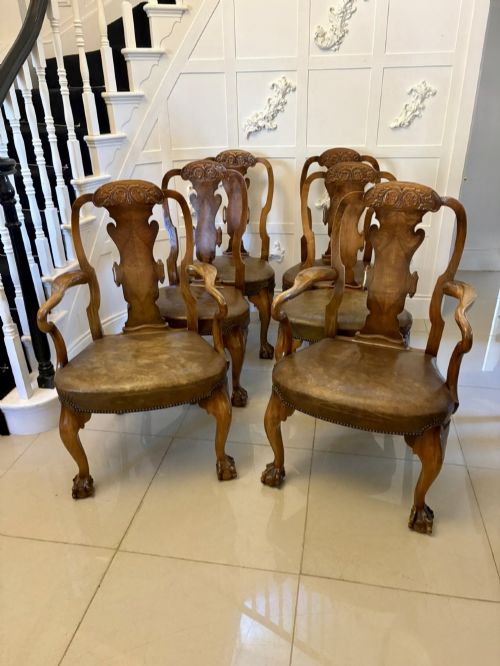
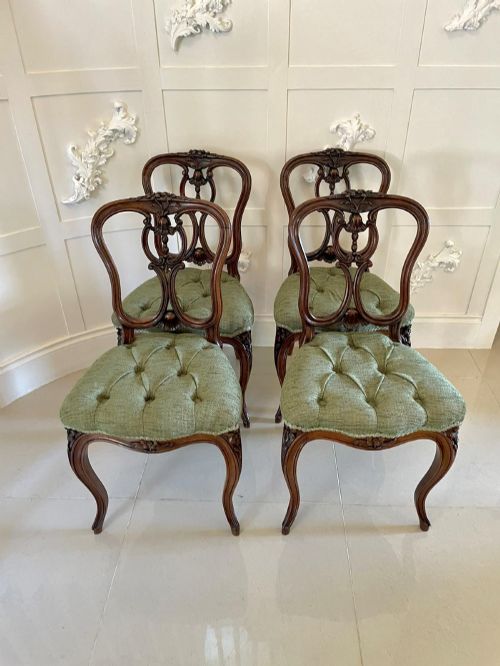
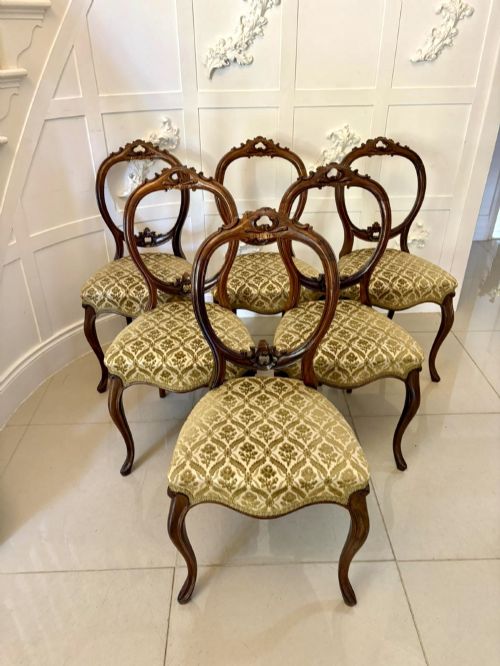
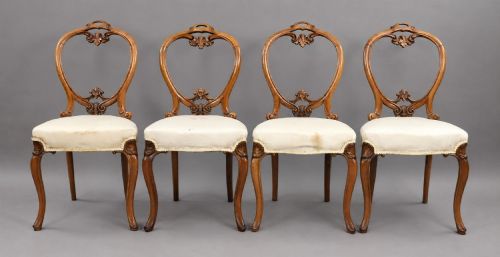
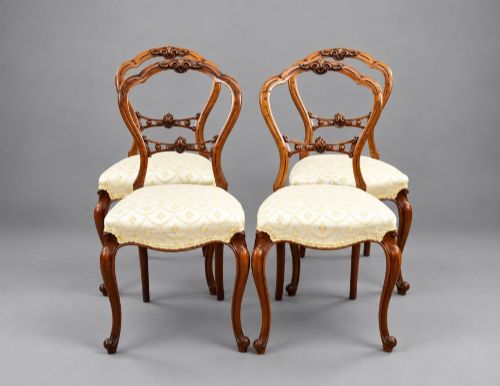
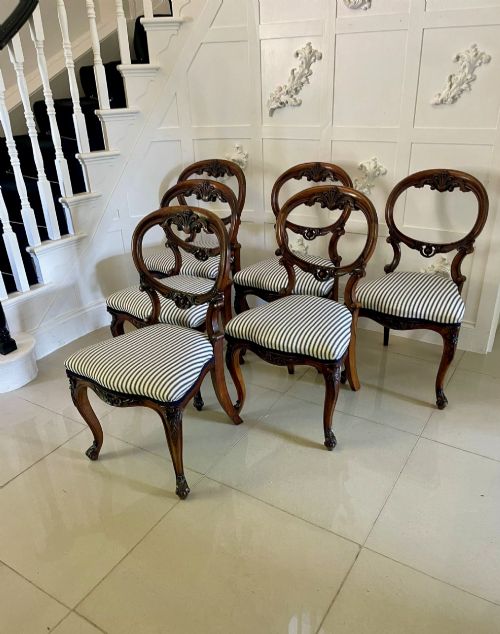
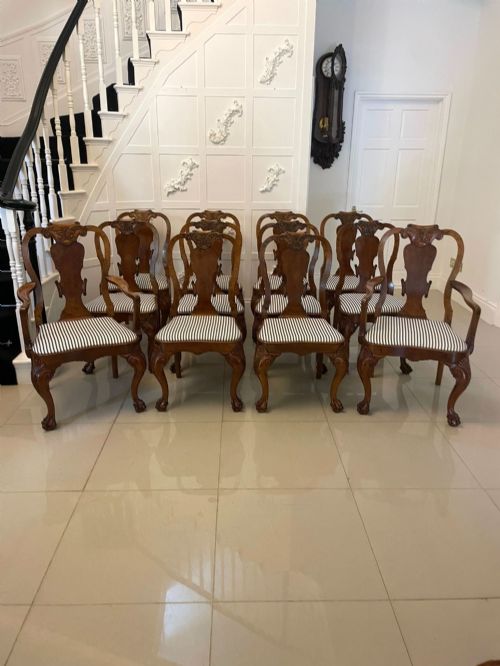
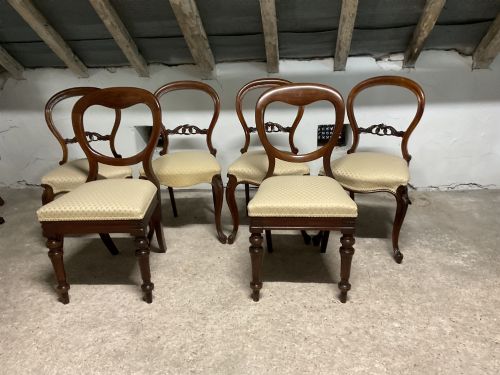
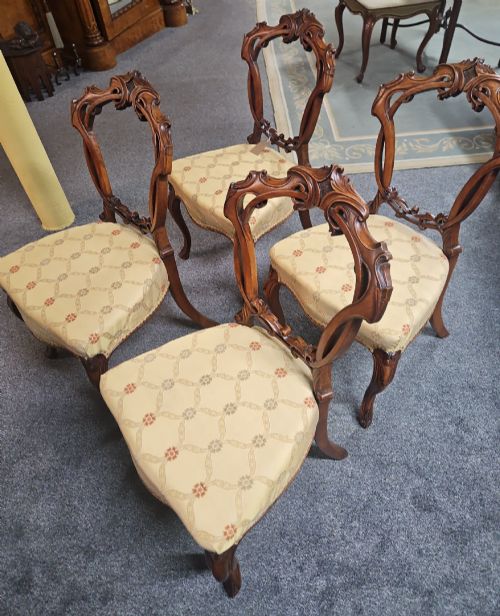
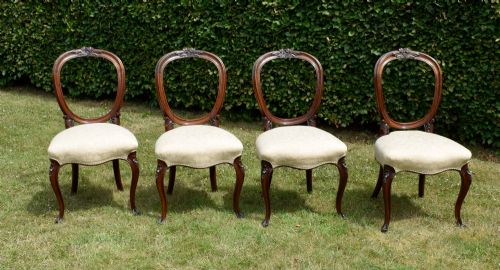
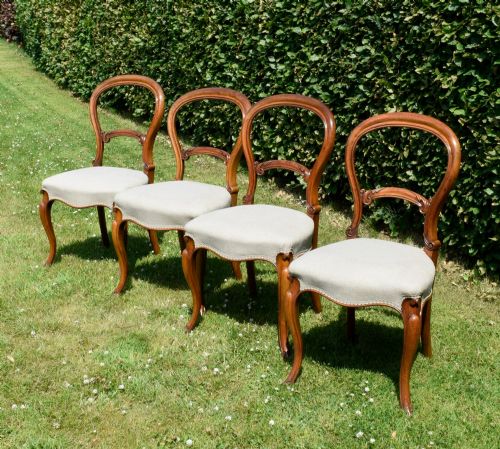
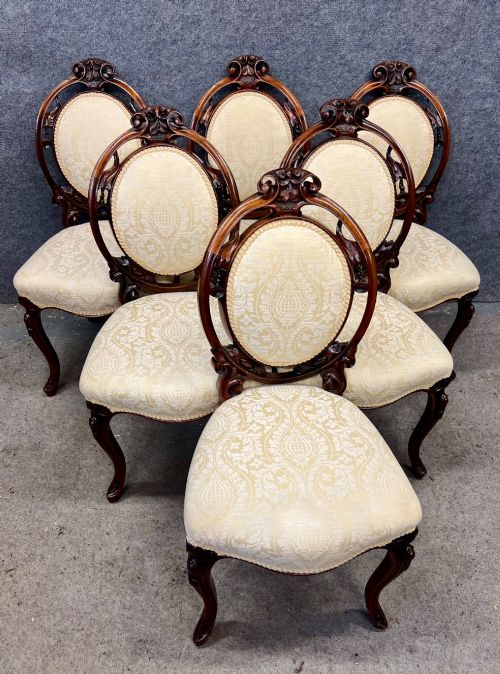
A victorian walnut dining set comprises matched groups of chairs produced during the nineteenth century, most frequently appearing in sets of four, six, eight, ten or twelve pieces. The forms on this page centre heavily on balloon-back and cabriole-leg dining chairs, alongside occasional side and salon variations.
The aesthetic vocabulary spans standard Victorian production to specific revivals and movements, including Rococo Revival, Louis XVI Revival, and the Aesthetic Movement. Buyers encounter both plain walnut timber and figured burr walnut surfaces, frequently paired with period textile or leather upholstery.
Materials and construction
Cabinet makers utilised solid walnut and decorative burr walnut veneers over supportive frames, carving structural elements by hand to achieve scrolled details and balloon backs. Selected pieces incorporate brass fittings or distinct applied ornamentation.
Seating support relied upon traditional upholstery techniques involving textile, velvet, and fabric coverings stuffed over webbed or sprung bases. Frames frequently utilise cabriole legs or turned supports designed to bear weight while maintaining slender proportions.
French cabinet makers occasionally lent their aesthetic influence to British dining rooms, creating unexpected continental accents on walnut frames.
Judging the range
Quality separates ordinary utility seating from master-carved examples through the crispness of hand-carved ornament and the choice of timber figure. Plain walnut timbers sit at the baseline, while intensely figured burr walnut veneers and extensive sculptural carving mark the upper tier.
The integrity of the frame construction and the matching consistency across larger groups dictate overall merit. Sets that retain uniform timber grain, matching upholstery styles, and original structural stability command greater attention than assembled groups.
Lamb of Manchester·Blyth & Sons
The Victorian Walnut Dining Set Glossary
- Balloon back
- A chair back shaped in a continuous oval or loop resembling a balloon, characteristic of mid-nineteenth-century seating design. This profile provides ergonomic support while presenting a light silhouette.
- Burr walnut
- A specialised wood veneer taken from the warted growths of walnut trees, displaying complex, swirling grain patterns. Cabinet makers prized this material for decorative surface panels.
- Cabriole leg
- A furniture leg that curves outward in a convex arc before tapering inward in a concave sweep, often ending in a scroll or carved foot. This form derives from classical motifs revived during the nineteenth century.
- Aesthetic Movement
- A late-nineteenth-century design approach emphasising artistic expression, simplicity, and stylized natural motifs over heavy historicism. Pieces in this manner break away from standard Victorian revival formulas.
Victorian Walnut Dining Set: Frequently Asked Questions
How many chairs come in a typical set?
Sets commonly appear in groups of four, six, eight, ten, or twelve matching chairs. Larger sets remain scarcer because many original dining groups became separated over time.
Buyers seeking formal dining arrangements frequently target groups of six or eight to suit standard dining tables. Single chairs or pairs also emerge for use as occasional seating.
How do I care for walnut dining chairs?
Walnut surfaces benefit from occasional gentle cleaning with a soft cloth and neutral furniture wax to maintain the timber lustre. Avoid placing antique seating near direct heat sources or strong sunlight.
Upholstered sections require regular light brushing or vacuuming using a low-suction attachment to protect fragile historic textiles and modern replacement fabrics alike.
Are these chairs suitable for daily use?
Nineteenth-century dining chairs were built for daily hospitality, utilising robust timber frames and traditional joinery. Proper maintenance ensures they handle regular seating.
Buyers intending frequent daily use should verify the structural tightness of the joints and the condition of the internal webbing or springs.