

Tin Glaze Ceramic Dish
When you handle a tin glaze ceramic dish, you hold centuries of European pottery traditions shaped by tin oxide and cobalt pigment.
Tin Glaze Ceramic Dish
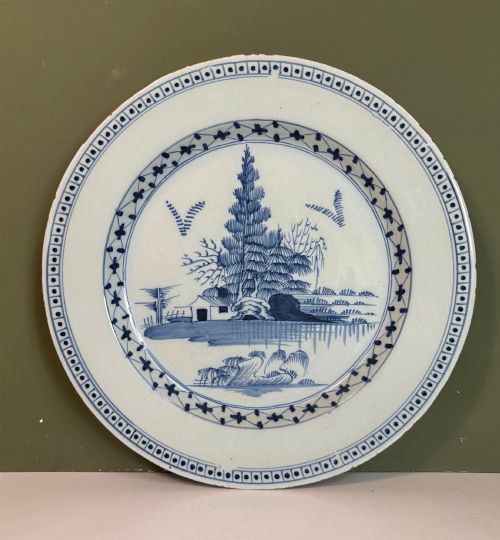
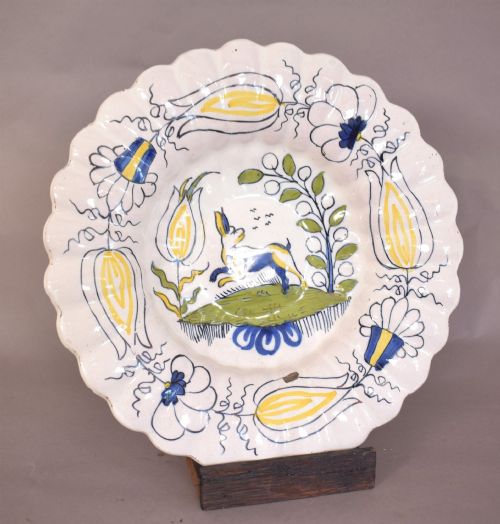
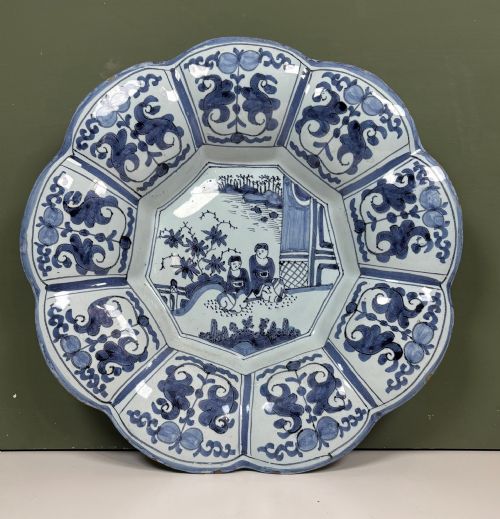
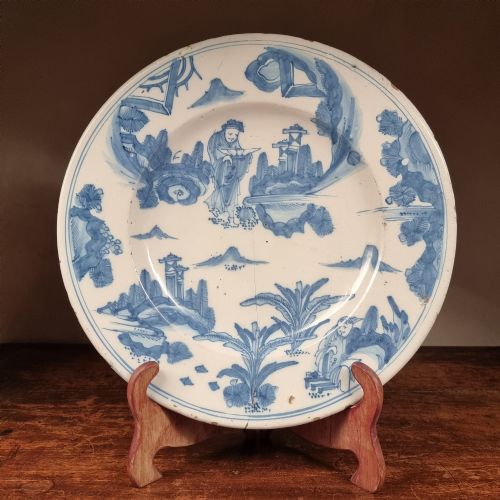
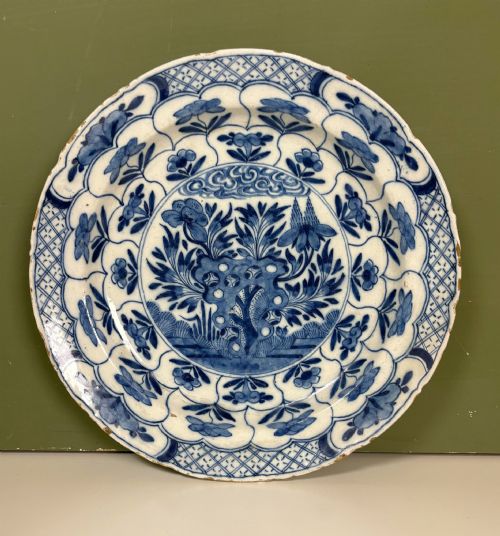
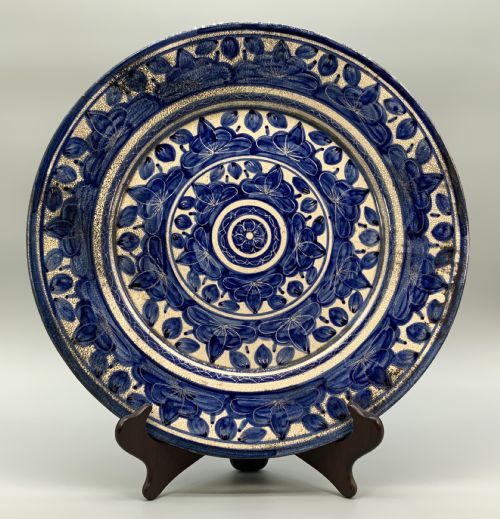
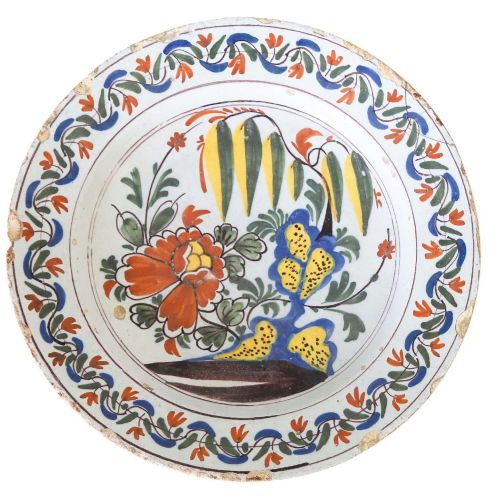
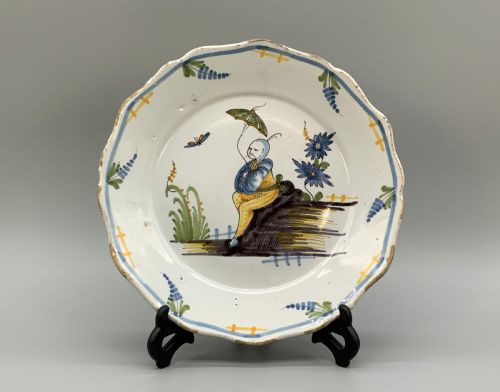
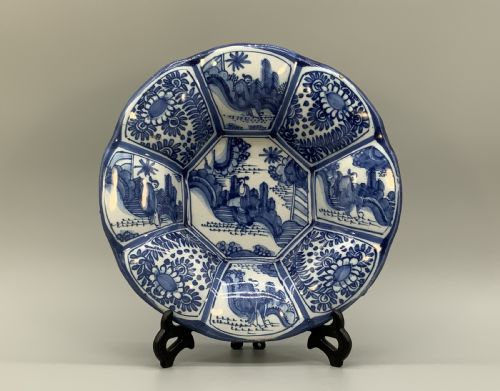
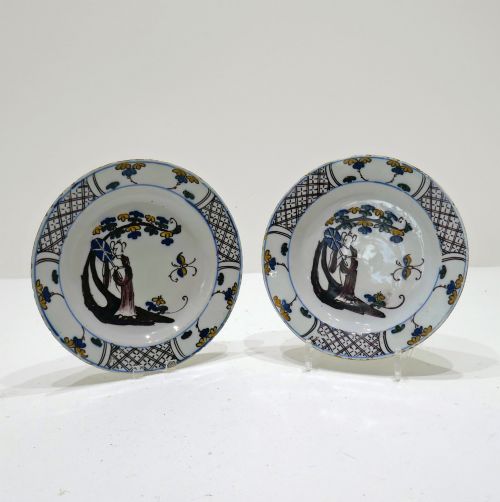
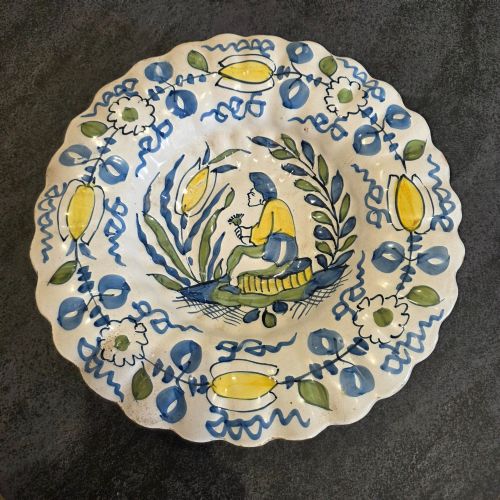
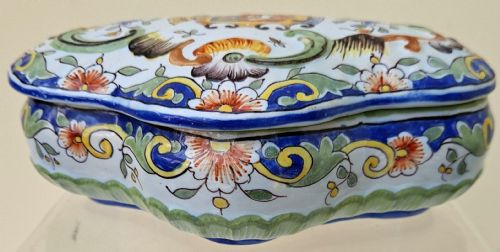
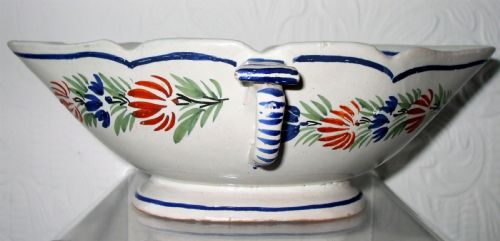
A tin glaze ceramic dish encompasses deep chargers, shallow bowls, and plates originating from Dutch, English, French, Spanish, and Italian kilns. The pieces on this page span from the seventeenth century through to the twentieth century, capturing centuries of evolving European pottery design.
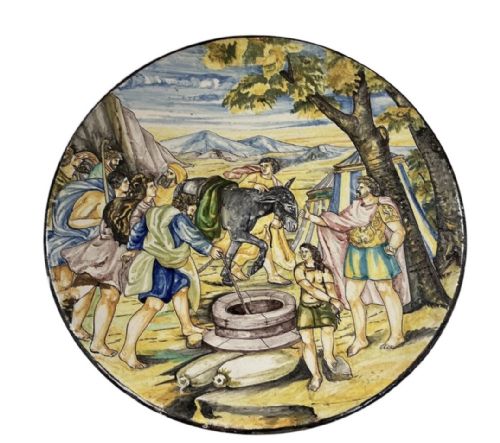
You will most frequently encounter eighteenth-century delft chargers and plates alongside nineteenth-century French faience and Italian maiolica. Forms range from large decorative wall chargers to lobed dishes, barber bowls, and table salts.
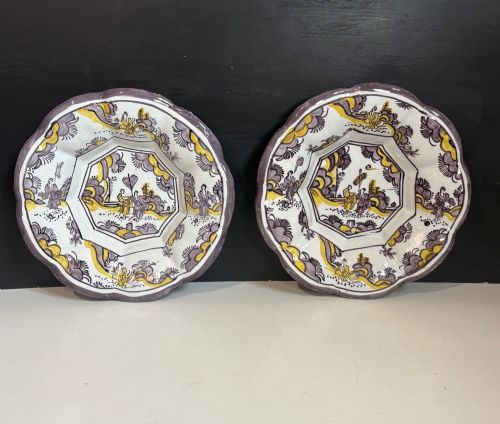
Regional variations define the aesthetic, with Dutch and English delft favouring blue and white or polychrome chinoiserie, while French workshops in Quimper and Desvres display distinct local palettes.
Materials and production methods
Potters formed these pieces using earthenware bodies coated in an opaque white tin glaze, which provided a smooth canvas for subsequent painting. Artisans applied cobalt oxide, manganese, and polychrome pigments directly onto the unfired or raw glaze.
The absorption of pigments into the porous tin glaze required skilled brushwork, as mistakes could not be corrected once applied to the surface. Kiln firing then fused the metallic oxides into the glaze, fixing the colours and producing the characteristic glossy finish.
The inventory includes functional table salts and sweetmeat presentiers alongside massive decorative wall chargers.
Evaluating craftsmanship and detail
The sophistication of the hand-painted decoration separates standard utilitarian wares from superior display pieces. Crisp execution in complex chinoiserie scenes, historical istoriato narratives, or floral motifs demonstrates greater painterly control.
The stability of the earthenware body and the evenness of the tin glaze application indicate workshop proficiency. Earlier seventeenth and eighteenth-century examples often exhibit delightful kiln imperfections that evidence their high age.
HB Quimper·Desvres
The Tin Glaze Ceramic Dish Glossary
- Tin-Glazed Earthenware
- Pottery fired from a clay body and coated with a glaze rendered opaque by tin oxide. This technique forms the white foundation characteristic of delftware and faience.
- Charger
- A large decorative plate intended for display on walls or sideboards rather than dining use. These pieces often feature elaborate painted scenes across a wide surface.
- Polychrome
- Decoration utilising multiple colours rather than a single pigment. On these ceramics, this typically involves combinations of yellow, manganese, green, and blue.
- Chinoiserie
- European artistic interpretations of Chinese decorative motifs. Potters adapted these fantastical landscapes and figures onto seventeenth and eighteenth-century delftware.
- Maiolica
- Italian tin-glazed earthenware developed during the Renaissance and later revived in the nineteenth century. These vessels frequently display rich pictorial narratives.
Tin Glaze Ceramic Dish: Frequently Asked Questions
How were tin glaze dishes used?
Many large chargers and platters served a purely decorative function, displayed upright on sideboards or hung on walls to impress guests.
Smaller plates, bowls, and specialised forms like barber bowls and salt cellars saw active service in elite dining and daily households.
How do I date a tin glaze dish?
Examine the composition of the earthenware body, the weight of the piece, and the chemical pigments used in the painted decoration.
Stylistic markers like seventeenth-century Kraak borders, eighteenth-century polychrome floral sprays, or nineteenth-century revival styles help narrow the production era.
What is the difference between delft and faience?
Delft specifically describes tin-glazed earthenware produced in the Netherlands and England, particularly originating around Delft from the seventeenth century onward.
Faience is the broader continental term used primarily for similar tin-glazed ceramics made in France, Spain, and other European regions.